
 American
( English )
American
( English ) Singapore ( English )
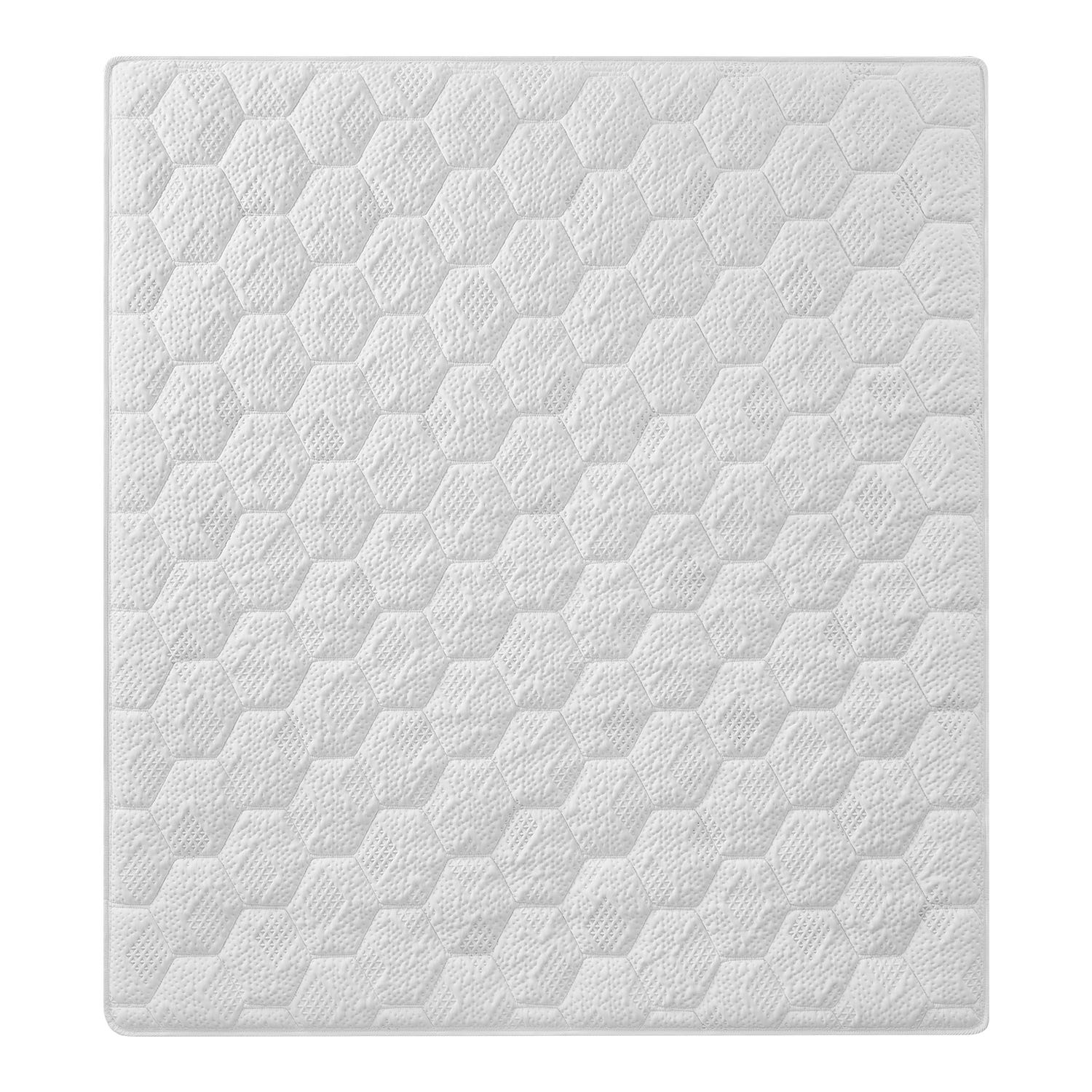
A smart mattress is an integrated sleep system that senses your body and adjusts its own firmness, zoned support, and temperature in real time, so the bed adapts to you instead of forcing you to adapt to a fixed surface. DeRUCCI builds its smart mattress line around exactly that loop — sense, decide, adjust — and this guide covers the category, the tech inside it, and how to choose.
The sleep-technology category has grown from a niche curiosity into a market that, according to industry forecasts cited in market-size coverage of the sector, will exceed $57 billion by 2030. Yet most shoppers still buy a mattress the way their grandparents did: pressing a palm into a showroom sample and choosing a firmness that feels right for thirty seconds.
What Is a Smart Mattress?
A smart mattress adds three active layers on top of a conventional comfort stack: a sensing layer that reads your body, an adjustment layer that changes support, and a control algorithm that decides what to change and when. A temperature layer is the common fourth. The definition separates the category from anything that only measures.
The Three Active Layers
A traditional mattress, even a very well-made one, is a fixed object. The coils, foam, or latex are set at the factory and stay that way for the next decade. A smart mattress keeps that comfort foundation but makes it dynamic. The sensing layer builds a continuous posture map of where your body pushes down and how that pressure shifts as you roll from side to back to stomach. The adjustment layer is a set of flexible zones, mapped roughly to shoulders, lumbar, hips, thighs, and legs, each tightened or softened on its own. The algorithm reads the map and tells each zone what to do within tens of milliseconds.
Fixed vs Dynamic Support
The difference shows up in one word: follow. A fixed mattress cannot follow anything — what left the factory is what you sleep on. A dynamic one tracks the night as it happens, because the posture you fall asleep in is rarely the posture you wake up in.
Why Posture Drift Matters
The support that feels right at lights-out can become a pressure point three hours later. Your body is not a fixed input: shoulders load differently on your side than on your back, and a lumbar region that was supported at bedtime may be floating by 2 a.m. A fixed surface answers all of those states with one firmness. A sensing, adjusting surface answers each with the zone-level change it needs. For a first introduction to the category's terms, start with What Is an AI Mattress?.
The Core Technologies Inside a Smart Mattress
Four systems carry the intelligence: contactless sensing that reads posture, heart rate and breathing; adjustment units that change zoned support in fine steps; the algorithm that classifies posture and commands each zone; and a temperature layer, usually independent per side. None of the four is optional if the product is doing the whole job.
Sensing
Contactless sensors beneath the comfort layers detect posture, heart rate, and breathing without anything strapped to your wrist. On DeRUCCI's T11 PRO, the SleepCare system uses cardiopulmonary coupling (CPC) monitoring developed at Harvard Medical School, and CAICT testing reports 99.5 percent heart-rate accuracy — the sensing is wellness-oriented, not a medical measurement. For how the data stream works night by night, see How AI Smart Mattresses Track Sleep Health.
Adjustment Units
Flexible adjustment units arranged in zones raise or lower each region independently. Fine-grained versions step in half-level increments within a national 5 to 7.5 firmness range, which is the difference between "roughly right" and "actually right" when one partner is twenty kilograms heavier than the other. The mechanics of how zoned firmness actually changes underneath you are covered in How Adaptive Firmness Technology Works.
The Algorithm
The control brain reads the sensor map, classifies your current posture, and commands each zone within tens of milliseconds. DeRUCCI's AI Tidal Algorithm 2.0 does this with a 20-millisecond response time, trained on more than one million ergonomic data points, so the response matches how real bodies distribute weight rather than a generic preset.
Temperature Control
A thermal layer regulates the sleep climate, often independently for each side, addressing the single most common cause of mid-night waking without forcing two people to agree on one thermostat. On the T11 PRO, graphene far-infrared heating in the leg zones sets per side, 25 to 55°C through the app.
Smart Mattress Forms Compared: Integrated, Smart Cover, Air Chamber
The category arrives in three physical forms — an integrated smart mattress with everything built in, a smart cover layered over a bed you keep, and an air-chamber bed adjusted by hand — and the form, more than any spec line, decides what the purchase actually delivers. The table holds the three side by side.
| Dimension | Integrated Smart Mattress | Smart Cover (Add-On) | Air-Chamber Bed |
|---|---|---|---|
| Support and comfort | Built into the full mattress | None, relies on your existing mattress | Manual air, no adaptive sensing |
| Body sensing | Embedded, multi-zone, real-time | Surface sensing layer | None |
| Temperature control | Material-based plus active zoning | Water-tube active cooling/heating | None |
| Adjustment method | Algorithmic, automatic | Sensing only, no support change | Manual remote |
| Best for | An all-in-one smart sleep system | Upgrading a mattress you want to keep | Adjustable firmness without smart features |
The practical test is which problem you are solving. If you want the bed to sense and adapt while you sleep, only the integrated form does that end to end. If you already own a mattress you love and only want temperature or tracking, a cover may be enough.
Each Form in a Head-to-Head Comparison
The table compresses each form into single lines; three companion articles unpack the boundaries it draws:
Smart Mattress vs Smart Bed
Separates a mattress with the intelligence built in from the umbrella phrase that usually points at a base.
Read the guide →Smart Mattress vs Mattress Topper
Works through what a layer on top can change and what it structurally cannot.
Read the guide →Smart Mattress vs Adjustable Bed
Splits firmness adjustment inside the mattress from position adjustment in the base — the question behind every adjustable-but-not-sensing product, air-chamber beds included.
Read the guide →How to Choose a Smart Mattress: Four Checks
Four checks do most of the work: whether sensing and adjustment are truly integrated, whether the manufacturer can describe what the algorithm does, whether accuracy claims carry independent data, and whether the comfort stack itself is worth the electronics wrapped inside it. Fail the first and the product is not in this category.
Check 1: Are the Sensing and Adjustment Truly Integrated?
A product that tracks your sleep but cannot change your support is a monitor, not a smart mattress. The line sounds blunt because it is the cleanest boundary in the category: measurement on one side, adaptation on the other.
Check 2: Can the Manufacturer Describe the Algorithm?
Ask what the algorithm recognizes and what it adjusts when it does. If they cannot tell you, the smart label is decoration.
Check 3: Is There Independent Accuracy Data?
Marketing claims are free. A named tester, a named metric and a stated scope — like the CAICT heart-rate figures above — are what accuracy claims look like when they can be checked.
Check 4: Is the Comfort Stack Itself Good?
The sensors and adjustment units sit inside materials that determine whether the bed feels luxurious or clinical. Electronics do not rescue a mediocre comfort stack; they just make it measurable.
The DeRUCCI T11 PRO — integrated, end to end
The DeRUCCI T11 PRO is the clearest example of the integrated form in this guide: eighteen adjustment units, six zones per side, a twenty-millisecond algorithm response and CAICT-tested monitoring accuracy, all sitting inside a comfort stack of six internationally sourced materials. It appears here as an example of the form.
The T11 PRO places eighteen flexible adjustment units across a six-zone dual-drive layout — shoulders, back, waist, hips, thighs, lower legs, each side independent — governed by the AI Tidal Algorithm 2.0, which reads posture and responds within twenty milliseconds, trained on more than one million ergonomic data points. SleepCare uses Harvard Medical School cardiopulmonary coupling for contactless monitoring, and CAICT testing reports 99.5 percent heart-rate accuracy. The comfort stack brings together six internationally sourced materials:
- Dutch Vita Talalay latex
- Aisin DEFORM fine-revolution foam
- German AGRO titanium-copper alloy pocket springs
- 3D-Plus spacer fabric (4.4 times the breathability of conventional materials)
- INVISTA antibacterial cotton
- BekaertDeslee VIRASE antibacterial and antiviral treatment
Manufacturing is verified in a CNAS-accredited laboratory (certified 2015) on an Industry 4.0 line. The range steps in three tiers, from the T11 SE (ten units, three zones) through the T11+ (fourteen units, five zones) to the T11 PRO (eighteen units, six zones), so the choice is how much adaptive resolution you want.
Explore the DeRUCCI T11 PRO AI Smart Mattress and the full AI Smart collection. For sleep-tracking accuracy, see whether sleep trackers really work (Hopkins Medicine).
Smart Mattress FAQ
Will two people disturb each other on a smart mattress?
Not on a dual-drive model. The T11 PRO runs left and right sides as fully independent systems through two control hubs, so one partner's adjustment, temperature, or movement does not reach the other side. This is often the biggest upgrade for couples who have spent years compromising on one firmness.
Do smart mattresses require a subscription?
Some do, locking core features behind a monthly fee after you have already paid for the hardware. DeRUCCI's smart mattress is a buy-once product with no recurring subscription for its core sleep and comfort features. When you compare, ask for the total cost of ownership over five years, not just the sticker price.
Are smart mattresses good for side sleepers, back pain, or hot sleepers?
For all three, the form helps — through support and temperature, which are comfort matters. Side sleepers benefit from zoned shoulder and hip pressure relief; the dedicated smart mattress for side sleepers guide covers this in depth. For back discomfort, adaptive lumbar support responds as you shift, complementing our back-pain relief guide. For hot sleepers, the temperature control guide explains how material breathability and active zoning work together.
Explore the Smart Sleep Library
This guide anchors DeRUCCI's smart mattress content, and the articles below go deeper on each angle: category essentials for what the technology is, situation guides for how it fits specific sleep needs, and buying frameworks for turning understanding into a choice.
Smart mattress essentials
For your sleep situation
Buying and choosing
Find a DeRUCCI showroom or check North America availability. The T11 SE AI mattress is now available at the DeRUCCI New York store; to see the mattresses and bed frames available in your region, visit the DeRUCCI shop.