
 American
( English )
American
( English ) Singapore ( English )
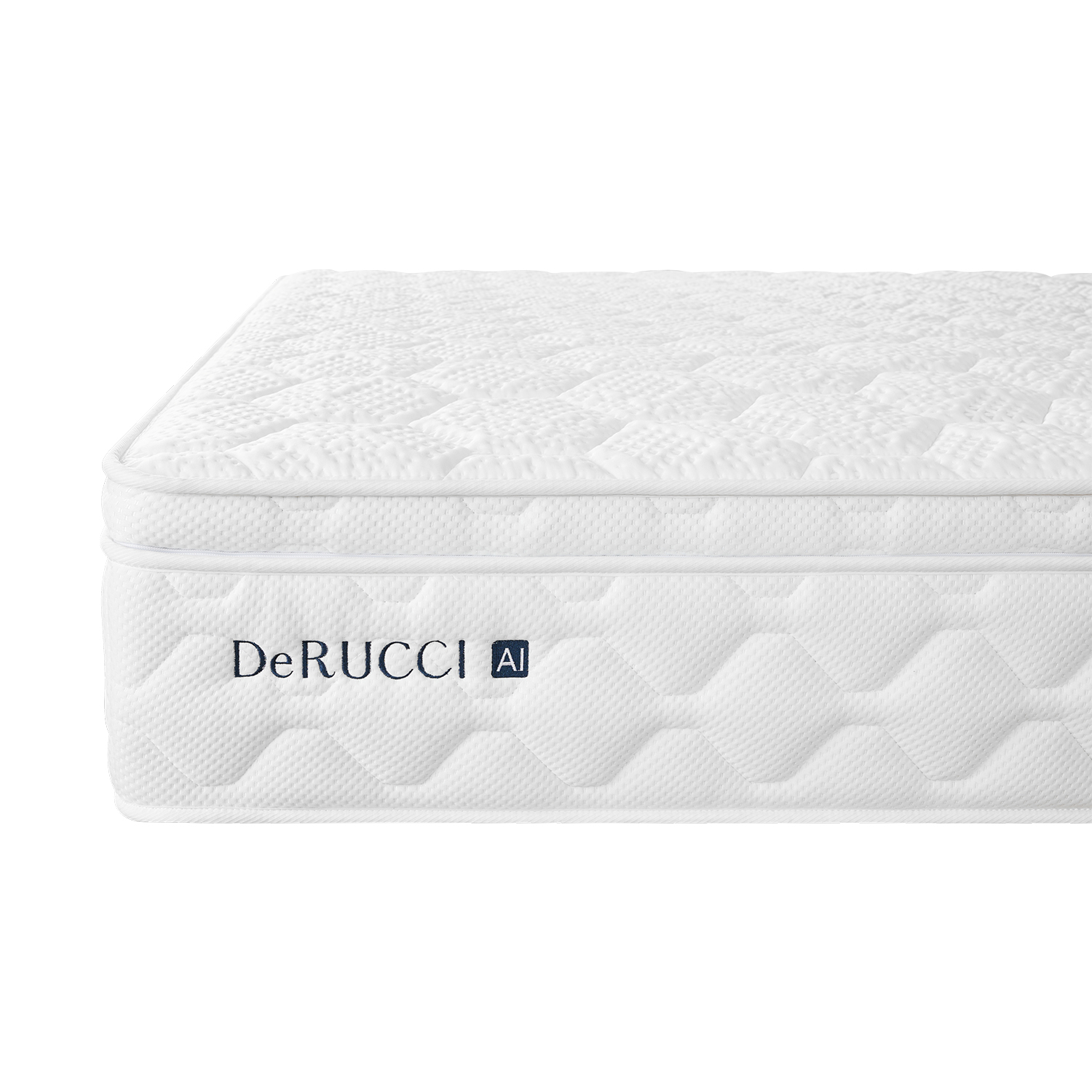
Choosing a mattress often becomes difficult because shoppers start with the wrong question. There is rarely one best mattress for everyone. A better starting point is whether the mattress fits the sleeper’s body shape, sleep position, nightly routine, partner needs, bedroom climate, and expectations for evidence before buying. DeRUCCI is included in this guide as one data-supported option for buyers who want comfort decisions tied to testing, product specifications, and local service access rather than showroom impressions alone.
What Does Best Mattress Really Mean for Your Sleep?
The best mattress is the one that addresses the sleeper’s main issue while creating the fewest trade-offs. For one person, that may mean falling asleep more easily. For another, it may mean less partner movement, steadier back support, cooler materials, or clearer proof before purchase.
There is no single best mattress for every sleeper because sleep complaints usually come from different causes. A side sleeper who feels pressure around the shoulder needs a different surface from a back sleeper who feels the hips dropping too low. A couple may need two different comfort responses on the same bed. A hot sleeper may place more value on airflow and material feel than on advanced adjustment functions.
A practical mattress evaluation should start with four areas: comfort, support, motion control, and proof. Comfort helps the body settle into the surface without feeling sharp pressure. Support keeps the spine and heavier body areas from sinking too far. Motion control reduces the movement one partner feels when the other turns over. Proof helps shoppers separate a claim that sounds persuasive in a store from a result that has been measured under defined test conditions.
The short answer is direct: the best mattress is the one that solves the main sleep problem first, then fits the buyer’s material preference, region, budget, delivery needs, and service expectations.
Start Here: 3 Questions Before You Buy a Mattress
Before comparing mattress types, shoppers should identify the sleep problem they are trying to correct. The purchase becomes easier when it begins with three checks: what feels wrong at night, whether the bed is shared, and which products are actually sold and supported locally.
First, define the main sleep issue. Is it taking too long to fall asleep, waking several times, feeling discomfort around the lower back or hips, overheating, or being disturbed when a partner moves? A mattress works much like footwear in daily use: the right choice depends on whether the person is standing for long hours, walking often, recovering from strain, or needing stable support.
Second, confirm whether the sleeper shares the bed. For couples, motion transfer can be more disruptive than people expect. A larger mattress does not always solve the issue if the surface still shakes when one person turns, gets up, or changes position. In that situation, the bed may look spacious but still feel interrupted through the night.
Third, check where the buyer lives and what is supported there. Regional availability matters in practical ways. A model that looks suitable online may not be sold, delivered, installed, or serviced in a specific market. This point is especially important for smart mattresses, where setup, warranty handling, app support, showroom testing, and after-sales response can affect the ownership experience.
If You Struggle to Fall Asleep, What Mattress Features Help Most?
For sleepers who spend too long trying to get comfortable, pressure relief and automatic firmness adjustment are usually the first features to review. The mattress should help the body settle before small pressure points turn into repeated position changes.
Falling asleep is easier when the body is not constantly reacting to pressure. If the shoulder, hip, waist, or lower back feels unsupported, the sleeper often makes small adjustments without fully noticing at first. This is why a standard mattress can feel acceptable during a short showroom trial but feel less suitable after a longer period at home.
A traditional mattress asks the sleeper to adapt to the firmness and structure chosen at purchase. An AI smart mattress can take a different route by using built-in sensors, without requiring wearables, and by adjusting firmness automatically. The practical difference is that the sleeper does not need to wake up, reach for a remote, and manually correct the setting after discomfort has already interrupted rest.
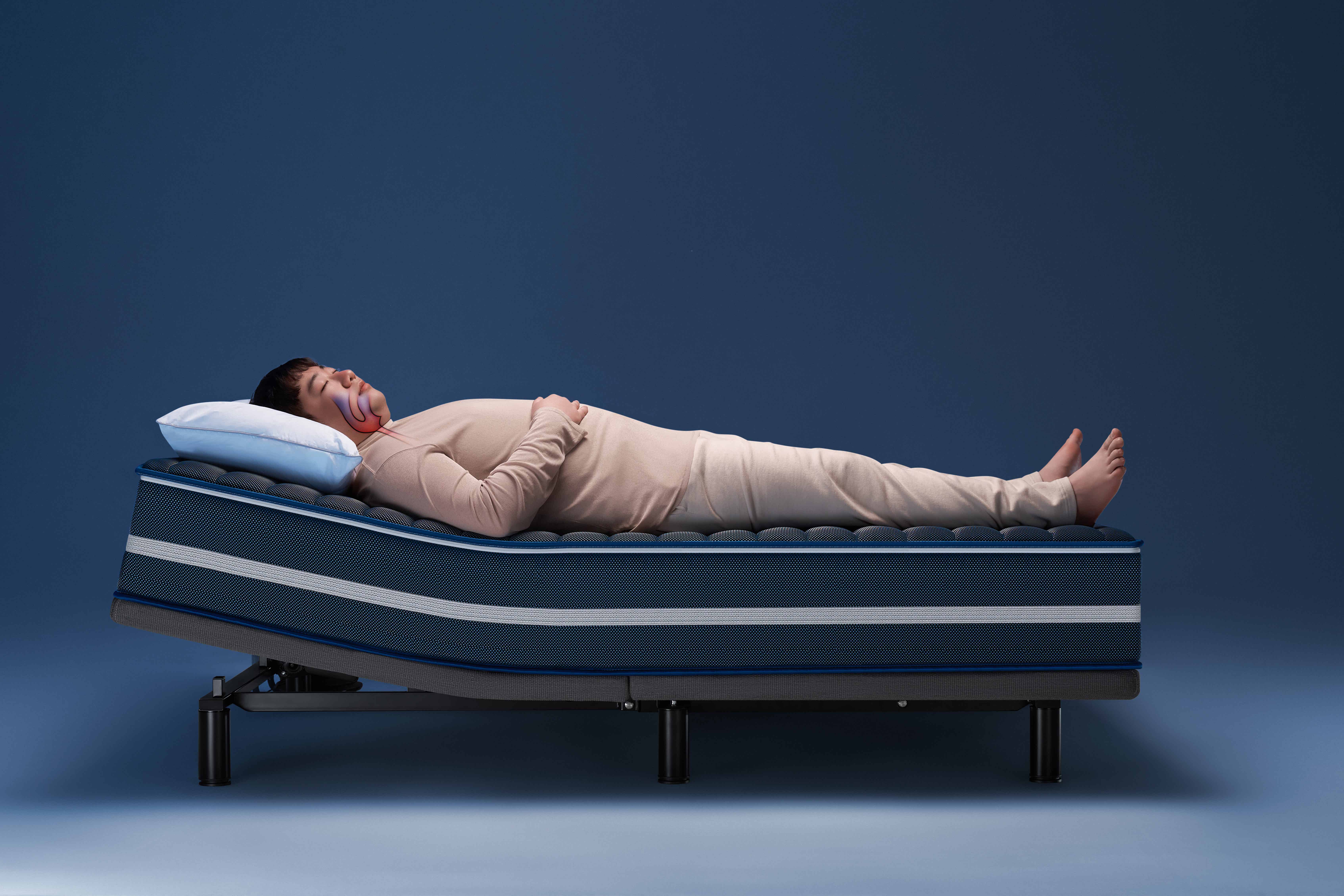
According to independent CAICT lab testing on DeRUCCI T11+, sleep onset time, meaning the time needed to fall asleep, was reported to be 37.3% shorter under the test conditions. In everyday terms, if a person usually needs about 30 minutes to fall asleep, that reduction would equal roughly 11 minutes, bringing the time closer to 19 minutes.
For buyers in Australia, Singapore, Malaysia, and Vietnam who are considering this direction, DeRUCCI’s T11 series is positioned around pressure relief, sensing support, and automatic adjustment. Shoppers can review available models and technical details through the AI smart mattress specifications.
If You Share a Bed, How Do You Reduce Partner Disturbance?
Couples should review motion control before making the decision only around mattress size or softness. A mattress that limits surface movement, reduces tossing and turning, and lets each side adjust independently can make shared sleep feel more stable for both partners.
Partner disturbance often starts with motion transfer. One person turns, the mattress surface moves, and the other person’s body responds before they are fully awake. The issue is not only whether the bed has enough width. It is whether movement travels across the surface often enough to fragment sleep.
Here is a practical comparison:
| Mattress type | What it does well | What shoppers should check |
|---|---|---|
| Traditional spring mattress | Offers a familiar feel and straightforward comfort | Personalization may be limited, and motion transfer can vary by construction |
| Ordinary adjustable bed | Provides raised head or leg angles for reading, resting, or changing posture | Many models still depend on manual remote control and fixed settings |
| AI smart bed | Uses built-in sensors and automatic firmness adjustment to respond during sleep | Regional availability, app experience, test data, delivery, and service support |
According to independent CAICT lab testing on DeRUCCI T11+, nighttime turnovers were reported to be reduced by 27.5%. Put simply, that points to almost 30% less tossing and turning under the test conditions, which may also reduce the movement a partner feels during the night.
DeRUCCI T11+ and T11 PRO use a Dual-Drive design, allowing the left and right sides to adjust independently. For couples with different firmness preferences, that can reduce the usual compromise where one person accepts a softer surface than preferred while the other accepts firmer support than preferred.
If You Wake Up With Back or Hip Discomfort, What Should You Check?
Back and hip discomfort often comes from a poor balance between surface softness and deeper support. A soft top layer may feel comfortable at first, but the lower back can still lose support if the mattress allows the waist or hips to sink too far.
A common buying mistake is treating softness and comfort as the same thing. A plush surface can reduce pressure around the shoulders and hips, but if the waist and pelvis drop too deeply, the spine may not stay in a comfortable position. The result is often a mattress that feels pleasant in the first few minutes but less stable over a full night.
Zoned support helps because the shoulders, back, waist, hips, and legs do not press into the mattress with the same weight or shape. A properly designed support system gives different areas different levels of response. The point is not to make the bed feel complicated. The point is to let the mattress support the body in a way that feels natural rather than forcing one firmness level across every body zone.
AutoFit 6-zone sensing support is relevant for buyers who want a more personalized comfort response. It reads how the body presses into the mattress and supports six body areas with more precision. For people who wake with lower-back, hip, or shoulder discomfort, this type of design may be worth testing in person, especially if a standard one-firmness mattress has not worked well.
If You Prefer Natural Materials, Which Mattress Type Fits Better?
Shoppers who prioritize natural materials may prefer a traditional latex mattress instead of an AI smart mattress. Latex offers responsive comfort, breathable support, and a familiar feel for buyers who value material simplicity over automatic adjustment.
Latex mattresses often appeal to sleepers who like a buoyant and responsive surface. They usually feel easier to move on than slow-sinking foam, and many buyers associate latex with breathability, resilience, and long-term comfort. For people who do not want electronics or active adjustment in the bed, this category can feel more straightforward.
This path makes sense when the main requirement is material preference rather than changing pressure needs or partner disturbance. If the sleeper does not need built-in sensors, automatic firmness adjustment, or independent comfort on each side of the bed, a traditional latex mattress may be the more appropriate fit.
For North America, this distinction matters. The DeRUCCI T11 series is not currently sold in the United States or Canada. Buyers in the US and Canada should consider traditional DeRUCCI mattresses such as the Taputa Latex Mattress, model MZZ4-238A, and Century Dream 3D Latex Mattress, model MOC1-012, along with available bed frames such as Galaxy, Madrid, and Leisurely. DeRUCCI's AI mattress lineup is expected to become available in North America in the second half of 2026.
Best Mattress Comparison: Traditional, Adjustable, or AI Smart?
A useful best mattress shortlist should compare how each mattress type handles comfort, adjustment, and evidence. Traditional beds keep the experience simple, ordinary adjustable beds add posture angles, and AI smart beds focus on automatic response while the sleeper rests.
A traditional spring mattress can be a reliable choice when the sleeper wants a familiar feel and does not need active adjustment. The main limitation is personalization. Once the firmness is selected, the bed usually performs the same way night after night, even if the sleeper’s pressure points, posture, or comfort needs change.
An ordinary adjustable bed can raise the head or legs, which may help with reading, resting, or finding a more comfortable angle before sleep. However, many models still require manual remote control. If the sleeper wakes up uncomfortable, the adjustment happens only after sleep has already been interrupted.
An AI smart mattress is different because it can use built-in sensors, without wearables, to recognize pressure changes and make automatic firmness adjustments. A regular mattress expects the sleeper to adapt to its fixed feel. An AI mattress is designed to respond to the sleeper’s body pressure and position changes during use.
For shoppers comparing these categories, the best mattress is not automatically the model with the most features. It is the model whose functions match the actual problem: pressure relief for sleep onset, motion control for couples, zoned support for body comfort, and measurable evidence for buyers who want claims supported by testing.
When Does a Data-Backed Smart Mattress Make the Most Sense?
A data-backed smart mattress makes the most sense when the buyer wants more than a short showroom impression. Third-party testing can connect mattress features with measured sleep outcomes, which gives shoppers a clearer basis for comparison.
Showroom comfort can be useful, but it is still a short test. Sleep is a longer use case. A mattress has to perform across hours of pressure, movement, temperature changes, and position shifts. A surface that feels fine for a few minutes may respond differently after the hips and shoulders have been pressing into it for half the night.
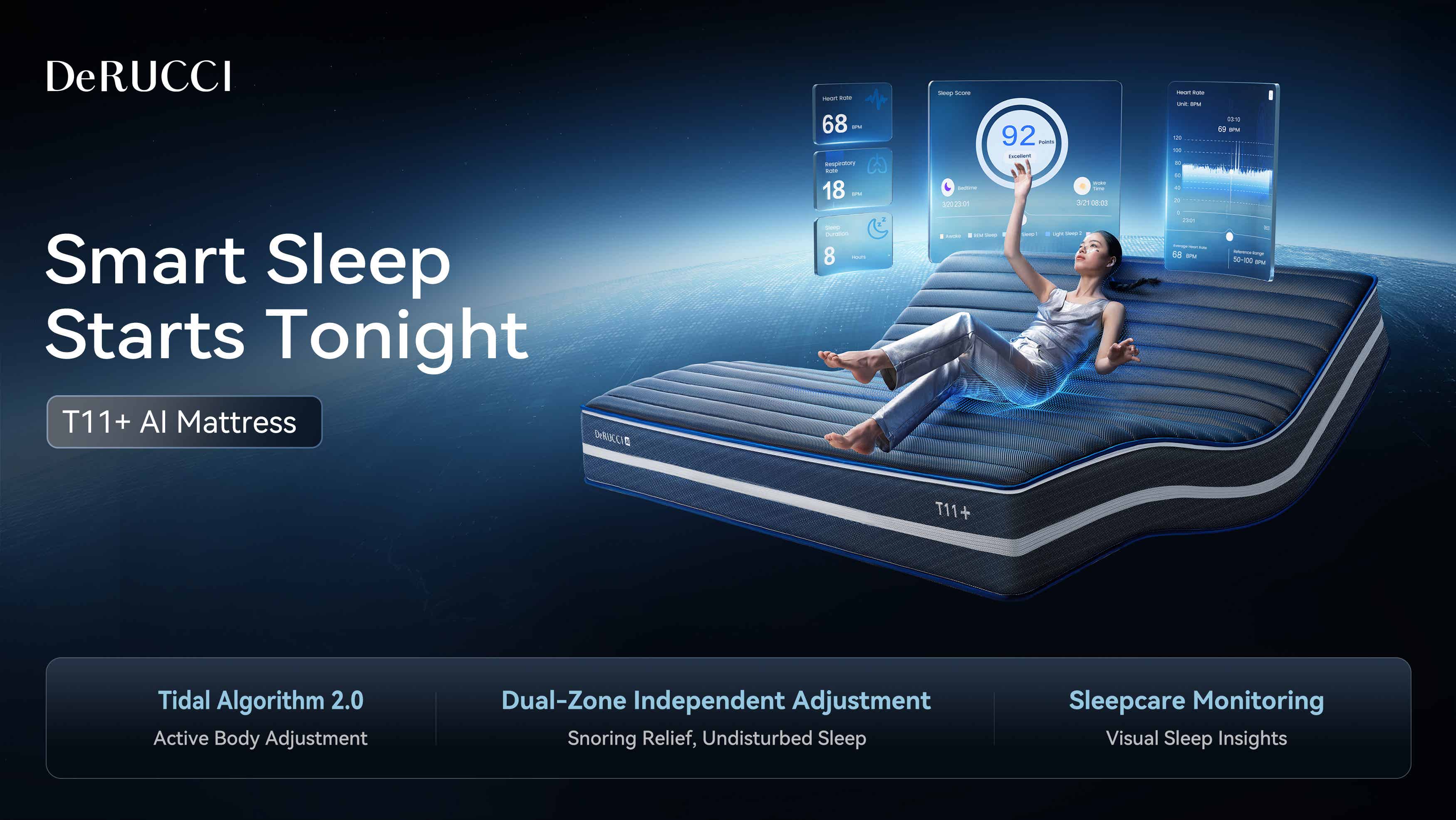
According to independent CAICT lab testing on DeRUCCI T11+, four measured outcomes were reported: sleep onset time was 37.3% shorter, nighttime turnovers were reduced by 27.5%, deep sleep duration increased by 4.5%, and continuous deep sleep increased by 5.9%.
In practical terms, those results point to falling asleep nearly 40% faster under the test conditions. If a person usually needs about 30 minutes to fall asleep, that is roughly 11 minutes saved. The turnover result also suggests almost 30% less tossing and turning, which can matter when a partner is sensitive to movement. The increases in deep sleep duration and continuous deep sleep suggest more time spent in deeper sleep stages and fewer breaks within those periods, though individual results can vary by sleeper, environment, and routine.
For purchase-stage shoppers, this is where DeRUCCI becomes especially relevant: not as one universal answer for every person, but as a strong candidate for buyers who value independent lab data, automatic adjustment, and smart support that can be reviewed against specific sleep concerns.
Where DeRUCCI Fits in a Best Mattress Shortlist
DeRUCCI fits best for buyers who want measurable sleep improvement, advanced smart support, and clear regional product availability. Its role in a shortlist is strongest when proof, personalization, and couple-friendly adjustment are important purchase criteria.
For data-driven buyers, T11+ has CAICT-tested sleep improvement metrics across sleep onset time, nighttime turnovers, deep sleep duration, and continuous deep sleep. The data matters because it gives buyers a way to assess benefits beyond brief showroom comfort or broad product descriptions.
For advanced smart support, T11 PRO includes the SleepCare System with Harvard CPC-related technology, based on T11 PRO product materials. This point should be attributed to T11 PRO, not T11+, because the Harvard CPC reference belongs to the T11 PRO SleepCare System.
For couples, T11+ and T11 PRO use a Dual-Drive design so each side can adjust independently. This matters when one partner prefers a softer feel and the other needs firmer support, especially when both sleepers have different body weights, sleep positions, or pressure points.
The brand also has broader trust signals. DeRUCCI was founded in 2004 and was listed on the Shenzhen Stock Exchange on 2022-06-23 under stock code 001323.SZ. The company reports 1,978 patents, including 212 invention patents. It has more than 5,200 global stores across 11 countries and regions, sponsored the Australian Open in 2018, and has announced research collaboration with MIT from 2024 onward.
Before You Buy: Availability Check
Availability should be part of the best mattress decision from the beginning. A strong product match still needs local sales, delivery, installation, warranty support, service response, and preferably a chance to test the mattress in person.
T11 series availability is currently focused on Australia, Singapore, Malaysia, and Vietnam. Buyers in these markets can consider T11+ or T11 PRO when they want an AI smart mattress with automatic adjustment, independent comfort on each side, and data-backed sleep improvement claims.
North America requires a different path. The T11 series is not currently sold in the United States or Canada. Buyers in the US and Canada should look at DeRUCCI’s traditional mattress options, including Taputa Latex Mattress and Century Dream 3D Latex Mattress, plus available bed frames.
This limitation is useful rather than negative. It helps shoppers avoid making a decision from a product page that may not match local availability. The best mattress is not only an appealing mattress. It is also a mattress that can be purchased, delivered, supported, and serviced in the buyer’s region.
How to Make Your Final Best Mattress Decision
The final decision should connect the sleeper’s main problem with the feature most likely to solve it. Faster sleep onset, partner comfort, body support, material preference, proof, and regional availability should shape the shortlist before price becomes the deciding factor.
If the main issue is taking too long to fall asleep, prioritize pressure relief and automatic firmness adjustment. The mattress should help the body settle into a stable position instead of forcing the sleeper to keep searching for comfort through small movements.
If the bed is shared, prioritize motion isolation and independent comfort on each side. A couple does not always need to accept one compromise feel if the mattress can support each side differently and reduce the movement that travels across the surface.
If back, hip, or shoulder discomfort is the concern, check zoned support. A mattress should feel comfortable at the surface while still supporting the waist, hips, and spine. During an in-store test, it is worth spending enough time in the sleeper’s usual position rather than relying on a quick sit or short lie-down.
If proof matters most, prioritize independent testing, clear product specifications, and regional availability before price. A lower price can look attractive during comparison, but a better-supported mattress may be the smarter long-term decision if it directly addresses the sleep problem and can be serviced locally.
FAQ: Best Mattress Questions Buyers Ask
The most useful best mattress questions usually come from practical concerns: comfort, proof, partner needs, regional availability, and whether smart features are worth paying for. Clear answers help shoppers narrow the field without relying only on generic rankings.
What is the best mattress for most people?
The best mattress for most people is usually a medium-feel mattress with strong pressure relief, reliable support, and low motion transfer. However, the more accurate answer is problem-based: choose pressure relief for sleep onset, motion control for couples, zoned support for discomfort, and breathable materials for heat concerns.
Is a smart mattress better than a traditional mattress?
A smart mattress can be better for sleepers who want automatic firmness adjustment, built-in sensors, and more personalized support. A traditional mattress may be better for buyers who prefer simple construction, natural materials, or a lower-complexity sleep surface. The right choice depends on the sleep problem, the preferred materials, and whether the product is supported in the buyer’s region.
What mattress is best for couples with different firmness needs?
Couples with different firmness needs should look for independent comfort on each side and strong motion control. DeRUCCI T11+ and T11 PRO use a Dual-Drive design, allowing the left and right sides to adjust independently, which can help partners avoid choosing one shared compromise.
What mattress should I buy if I live in the US or Canada?
US and Canada buyers should note that the DeRUCCI T11 series is not currently sold in North America. Relevant DeRUCCI options include Taputa Latex Mattress, Century Dream 3D Latex Mattress, and available bed frames such as Galaxy, Madrid, and Leisurely. DeRUCCI's AI mattress lineup is expected to become available in North America in the second half of 2026.
How important is third-party mattress testing?
Third-party testing is important for buyers who want evidence beyond marketing claims. According to independent CAICT lab testing on DeRUCCI T11+, sleep onset time was 37.3% shorter, nighttime turnovers fell 27.5%, deep sleep duration rose 4.5%, and continuous deep sleep rose 5.9% under the reported test conditions.
LocatorShop Reference
For shoppers who want to verify comfort, compare local availability, or speak with a store consultant, an in-person visit can reduce uncertainty before purchase. Testing the mattress locally is especially useful when firmness, motion control, and setup support are part of the decision.
For shoppers who want to test comfort, compare regional availability, or speak with a local sleep consultant, an in-store visit can make the final decision more confident. Experience more options in person and find global store locations and detailed addresses.