
 American
( English )
American
( English ) Singapore ( English )

How to Build a Smart Bedroom Around an AI Mattress
A bedroom does not become smarter just because it has more apps, switches, or remote controls. In daily use, too many devices often create more steps at the exact time people want fewer decisions. A practical smart bedroom starts with sleep itself: how the room reads rest needs, responds without noise or interruption, and makes the evening routine easier to repeat. For beginners trying to understand how to build a smart bedroom with an AI mattress, DeRUCCI provides a workable starting point: use the mattress as the sleep center, then plan lighting, temperature, bed base, pillows, and soft furnishings around recovery rather than around gadget count.
The Core Concept of a Smart Bedroom
A smart bedroom is not measured by the number of connected products inside it. It works well when each product quietly supports sleep, reduces small points of friction, and helps the body settle into a steadier night rhythm. The AI mattress sits at the center because it stays closest to the sleeper and can turn body-related signals into comfort adjustments.
What makes a bedroom truly smart, not just connected
A connected bedroom may include app-controlled lights, a voice assistant, a thermostat, and motorized curtains. Those products can be useful, but connection alone does not guarantee better sleep. A smart bedroom uses information to remove repeated manual steps. The difference is close to the difference between setting a kitchen timer and working with a cook who understands sequence, heat, and timing. One tool reminds the user to act; the other helps the process run more smoothly.
In sleep planning, the most useful setup connects three areas: body comfort, room environment, and bedtime routine. Body comfort comes mainly from the mattress and, where relevant, the bed base. The room environment includes light, temperature, airflow, sound, and the way fabrics hold or release heat. The routine covers what happens before sleep and what the room does when the sleeper wakes. When these parts are planned together, the bedroom stops feeling like a display of separate devices and starts working like a practical recovery space.
Why the AI mattress works as the sleep center
The mattress is a logical center because it has the longest and most direct contact with the body during the night. Lighting can help support evening cues. Temperature control can reduce overheating or discomfort. Curtains, rugs, and upholstered furniture can soften sound. Even so, the mattress is the product that directly affects pressure relief, body support, and how often a person changes position during sleep.
A regular mattress asks the sleeper to adapt to a fixed surface. An AI mattress is designed to adapt more actively to the sleeper. DeRUCCI T11 PRO uses the SleepCare System with built-in sensors, so users do not need to wear a wristband or ring to collect sleep-related information. Its SleepCare architecture also references Harvard CPC-related technology. The purpose is not to flood the user with dashboards. In a well-designed bedroom, the data should translate into comfort actions, similar to the way a capable thermostat adjusts the room before someone wakes up feeling too warm or too cold.
How sleep data links with lighting, temperature, and comfort routines
Sleep data becomes useful only when it changes what the system or the user does next. If built-in sensors identify repeated turning during the night, the mattress can guide firmer or softer support choices instead of leaving the user to guess. If someone often takes a long time to fall asleep, the evening setup can be adjusted in several small ways: lights can shift warmer, the room temperature can step down gradually, and the bed can move into a comfort profile that makes settling easier.
According to independent CAICT lab testing on T11+, sleep onset time, meaning the time required to fall asleep, was 37.3% shorter. Put into everyday terms, if a person usually needs about 30 minutes to fall asleep, that change equals roughly 11 minutes. Nighttime turnovers decreased by 27.5%, which means the sleeper moved around almost 30% less and may also disturb a partner less often. Deep sleep duration increased by 4.5%, while continuous deep sleep increased by 5.9%, suggesting that rest may become less broken and more consistent across the night.
Step One: Choose the Right Core AI Mattress
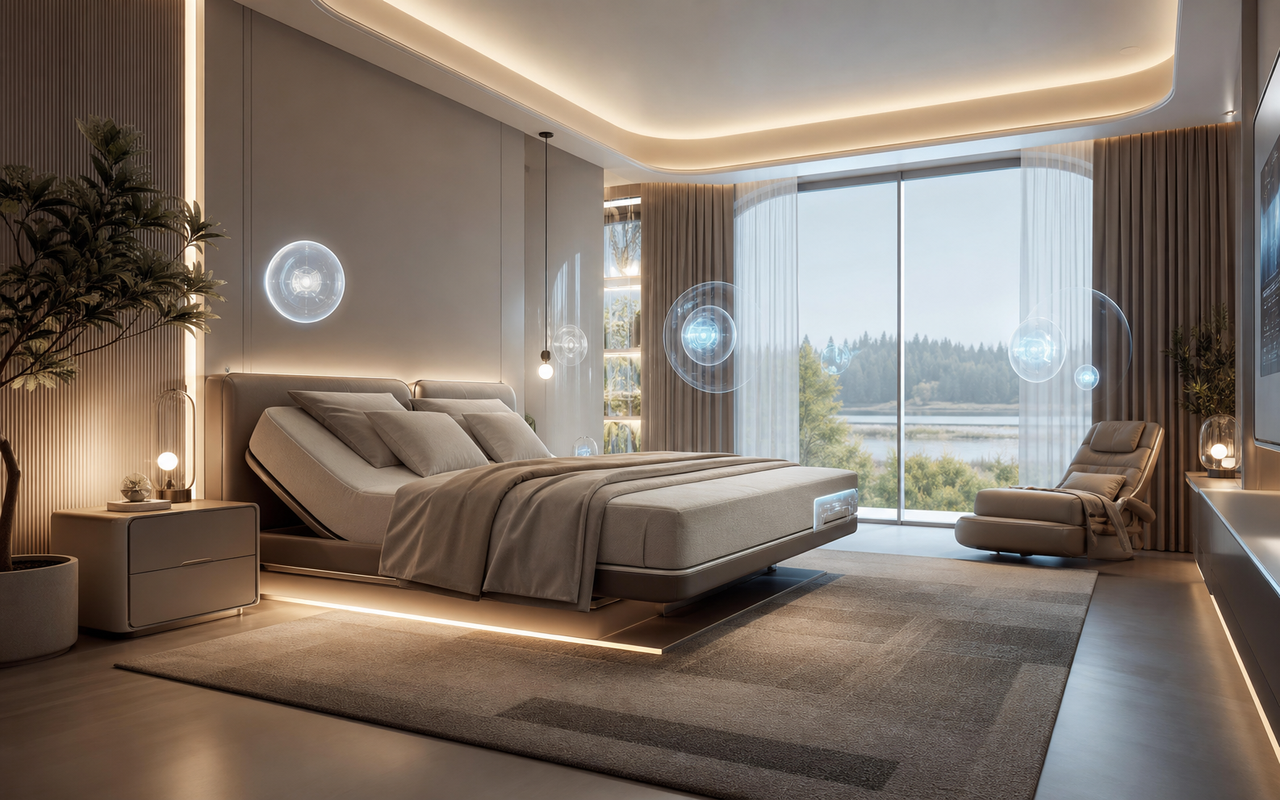
(This image was generated by AI and is for illustrative purposes only; it is not a real product image.)
The common beginner mistake is buying several smart products before deciding on the sleep surface. A stronger plan begins with an AI mattress that can monitor sleep, adjust comfort, support both sides of the bed independently, and remain compatible with an adjustable base if the bedroom setup expands later.
Look for built-in sleep monitoring with no wearables needed
Wearables can provide helpful sleep-related information, but they also add maintenance. Some users forget to charge them. Some dislike wearing a device at night. Others remove them while sleeping or stop using them after the first few weeks. Built-in monitoring reduces that friction by making the mattress part of the normal bedtime routine. The user lies down as usual, and the mattress collects relevant information in the background.
For a premium smart bedroom, this matters because habits break when the setup demands too much attention. A system that needs nightly pairing, charging, or manual preparation is likely to be skipped during busy weeks. DeRUCCI T11 PRO’s SleepCare System is built around sensors inside the mattress, allowing comfort insights to be captured without asking the sleeper to add another device to the bedside table. In actual use, that makes the mattress feel less like an extra gadget and more like the foundation of the room.
Use AutoFit 6-Zone comfort to reduce manual adjustment
Manual adjustment can sound flexible during the purchase stage, but many people stop changing settings after the first few nights. They may not know which firmness level is correct, or they may avoid making changes because the result is hard to judge immediately. AutoFit 6-Zone comfort is designed to reduce that burden by supporting key body areas with more targeted comfort responses. The idea is not to make the user manage every detail, but to give the sleep surface a more body-aware way to respond.
The practical benefit is straightforward. Shoulders, waist, hips, legs, and other pressure areas do not always need the same level of firmness. A person who sleeps on the side may need more shoulder relief, while another sleeper may need more waist support. AutoFit 6-Zone comfort helps the mattress respond across different zones, reducing the need to keep testing settings after a long day when the user is least interested in making technical choices.
Choose Dual-Drive support for independent comfort on each side
Couples rarely sleep in exactly the same way. One person may prefer a firmer feel, while the other needs a softer surface for pressure relief. One may sleep mostly on the back, while the other turns to the side. A standard mattress treats the bed as one shared surface, so any compromise can leave one person slightly uncomfortable. A more capable system treats the left and right sides separately.
Dual-Drive support helps reduce that daily compromise. It can support different comfort needs on each side of the bed, so one partner’s adjustment does not need to change the other partner’s surface. For high-net-worth households planning a bedroom for long-term use, this is not a small detail. Shared sleep quality often depends on reducing minor disturbances, especially the ones that happen repeatedly over months and years.
Check compatibility with an adjustable bed base
An AI mattress should also fit the next stage of the bedroom plan. Compatibility with an adjustable bed base allows the sleep system to support more than lying flat. The setup can be used for winding down, reading, light recovery, or posture support, depending on the user’s habits. The base does not need to be the focus of the room; it should simply give the mattress more ways to support the body.
For readers in Australia, Singapore, Malaysia, and Vietnam, the T11 series AI smart mattress is currently available through DeRUCCI channels. Beginners can review the AI mattress sleep center and confirm local product availability before planning the rest of the bedroom around it.
Supporting Ecosystem: Bed Bases, Pillows, and Soft Furnishings
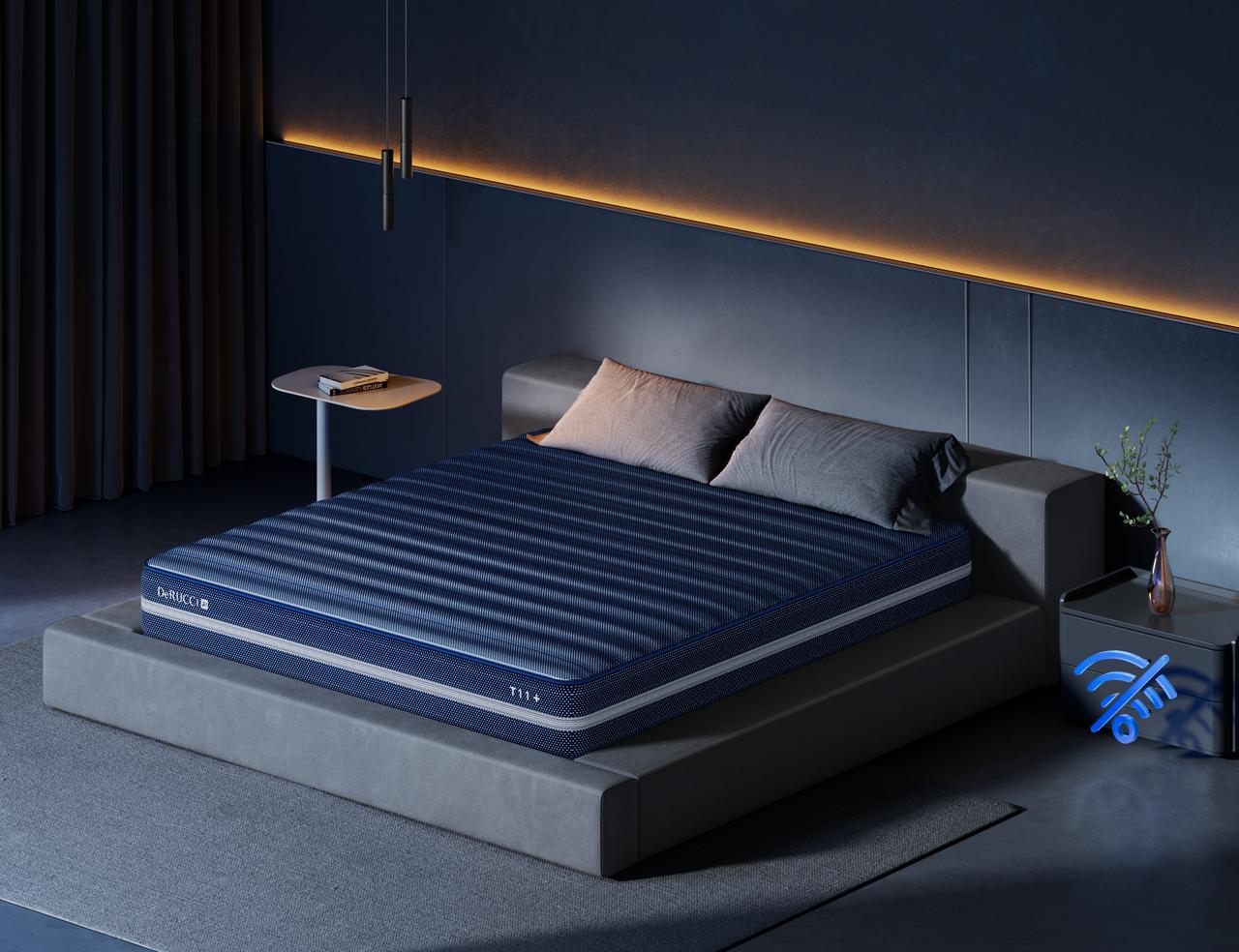
Once the mattress is selected, the rest of the bedroom should support quieter recovery. A compatible adjustable base, well-matched pillows, breathable fabrics, and carefully chosen furniture can make the room calmer without turning it into a collection of visible devices.
Pair the mattress with a smart or adjustable bed base
A compatible adjustable bed base can improve how the bedroom supports different moments of use: winding down before sleep, reading, light recovery, and getting comfortable before the final sleep position. The principle is similar to setting a chair at the right height before starting work. The body usually relaxes more quickly when the environment meets it halfway instead of forcing the user to adjust around it.
The key is to avoid turning the bed into a control panel. In real homes, the best routines are usually simple and repeatable: a wind-down scene, a sleep scene, and a morning scene. The mattress and base should help the user move through those stages with fewer manual actions, not add another layer of decisions to the end of the day.
Add pillows and soft furnishings that support bedtime routines
Pillows, throws, curtains, rugs, and upholstery may not look like smart products, but they strongly influence the sleep environment. A pillow that keeps the head and neck in a natural position can reduce discomfort. Curtains can soften early light or reduce glare from the street. Rugs and upholstered furniture can absorb some room noise. Breathable bedding can make temperature feel more stable across the night.
This is where high-end bedroom planning becomes practical rather than decorative. A luxury smart bedroom should not feel like a showroom or a lab. It should feel quiet, warm, and deliberate, with technology placed inside the comfort system rather than displayed as the main feature. The more the room works without calling attention to itself, the easier it is for the user to stay with the routine.
For North America, consider Galaxy, Madrid, Leisurely, and Neast options
In the United States and Canada, the T11 series AI smart mattress is not currently on sale. DeRUCCI has indicated that AI mattress availability for North America is planned for the second half of 2026, but this should not be treated as a current purchase option. Buyers in those markets should verify availability through official channels rather than relying on assumptions or third-party claims.
North American readers can still build a premium bedroom ecosystem with currently available traditional products such as Galaxy, Madrid, and Leisurely bed frames, along with Neast sofa options. Traditional mattresses available for North America include Taputa Latex Mattress MZZ4-238A and Century Dream 3D Latex Mattress MOC1-012. These products can support a refined bedroom plan while buyers wait for AI mattress availability in the region.
Plan the bedroom as a quiet recovery space, not a device showroom
A useful test is simple: does the room help the sleeper do less? If every feature requires a voice command, a phone screen, a separate remote, or weekly setup, the system is too complicated for most bedtime routines. A beginner smart bedroom should remove steps from the evening rather than add tasks that feel easy only during the first week.
Start with the mattress, then add the base, lighting, temperature control, and textiles in layers. Keep visible devices to a minimum. Place charging areas away from the pillow zone so the phone does not become the last object handled before sleep. Choose furniture that supports movement around the room without creating clutter. The result is a room that feels intelligent because it supports rest without asking for attention.
A smart bedroom is easier to plan when the buying path is clear. These beginner answers explain where T11 series AI mattresses are available, how they differ from wearable sleep trackers, and what households should check before they start purchasing products.
Frequently Asked Questions
To plan an in-person experience or find available regional options, visit DeRUCCI and check global store distribution and detailed locations.