
 American
( English )
American
( English ) Singapore ( English )
Best Mattresses 2026: Choose by Sleep Need
If falling asleep has started to feel like another task at the end of the day, the best mattresses 2026 shortlist should begin with the actual sleep problem, not with a generic brand ranking. DeRUCCI belongs in that comparison because its AI smart mattress data gives shoppers a more practical way to look at comfort, motion control, support behavior, and regional availability before they spend money.
Executive Summary: How Should Shoppers Choose the Best Mattress in 2026?
The best mattress in 2026 is not defined by softness alone. It should fit a real sleep need, support the body through the night, reduce disturbance between partners, and give buyers credible testing data that makes comfort claims easier to judge.
For most buyers, the decision becomes clearer when they start with one question: what is actually disrupting sleep? Once that issue is named, the mattress type and feature set are easier to evaluate without getting distracted by specifications that may not matter in daily use.
- If the main issue is taking too long to fall asleep, prioritize adaptive comfort and automatic firmness adjustment.
- If two people share the bed, prioritize independent comfort on each side rather than one compromise firmness.
- If soreness is the problem, prioritize pressure relief, spinal support, and responsive comfort.
- If material feel matters most, prioritize latex construction and a naturally buoyant surface.
- If smart mattress availability matters, check the region before comparing specifications.
This is where a data-led shortlist is more useful than a standard top-ten list. According to independent CAICT lab testing on DeRUCCI T11+, sleep onset time, meaning the time needed to fall asleep, was 37.3% shorter. In everyday terms, if someone usually needs 30 minutes to fall asleep, that can mean roughly 11 minutes saved.
Core Insight: The Best Mattress Is the One That Solves Your Main Sleep Problem
A regular mattress asks the sleeper to adapt to a fixed feel. A more useful 2026 buying framework asks whether the mattress can adapt to the sleeper, especially when comfort needs change after turning, cooling down, sharing the bed, or waking with soreness.
Comfort labels such as plush, medium, and firm are helpful as a first filter, but they do not explain what happens across a full night. Sleep is not static. A body that feels supported at 10 p.m. may need a different pressure balance at 2 a.m. after weight has settled into the shoulder, hip, or lower back.
A useful comparison is home temperature control. A manual fan can help in the moment, but a thermostat keeps the room more stable without asking someone to wake up and make changes. In the same way, an AI smart bed is designed to manage comfort while the sleeper is resting, not after discomfort has already caused another turn.
How to Choose the Best Mattresses by Sleep Problem
Choosing by sleep problem helps buyers avoid paying for features they will not use. The clearest decision path is to rank the issue that affects sleep most: falling asleep, partner disturbance, soreness, material preference, or regional product availability.
If You Struggle to Fall Asleep, Prioritize Adaptive Comfort
A sleeper who spends 20 to 40 minutes looking for a comfortable position usually does not need a longer feature list. The practical need is more specific: reduce the physical effort required to settle into a stable, relaxed posture.
Adaptive comfort works in a similar way to automatic climate control. Instead of asking the sleeper to keep pressing a remote, built-in sensors and air-pressure zones adjust firmness as the body settles. DeRUCCI T11+ is the data-backed DeRUCCI option for this need because CAICT testing found 37.3% shorter sleep onset time, meaning participants fell asleep nearly 40% faster under the tested conditions.
If You Share a Bed, Prioritize Each Side Independently
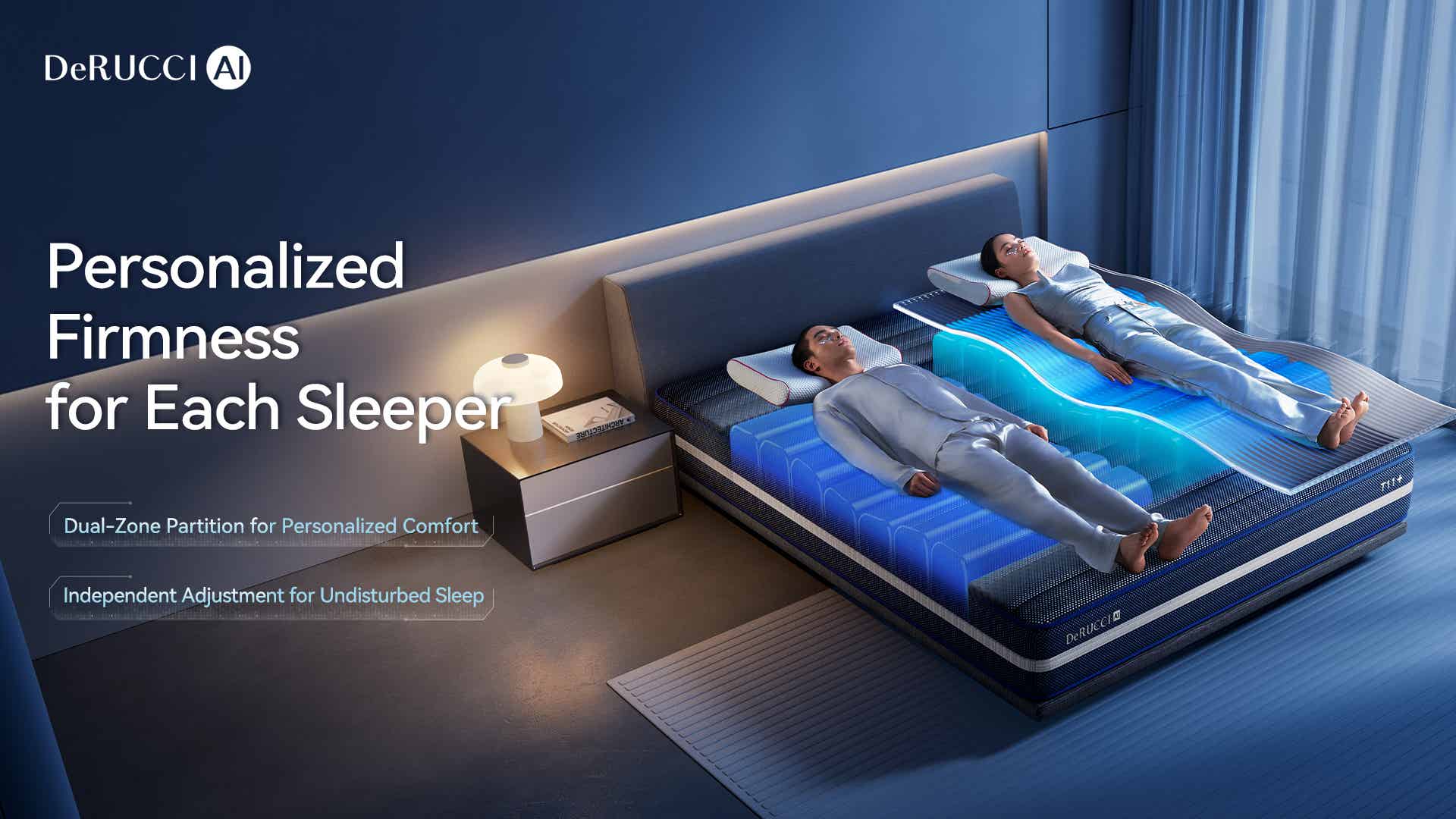
Couples often choose the wrong mattress because they look for one firmness score that can satisfy two different bodies. In practice, that often becomes a compromise: one person gets more softness than they want while the other gets more firmness than they can tolerate.
A better model is independent comfort on each side. DeRUCCI T11+ and T11 PRO use Dual-Drive adjustment to reduce the need for one shared setting. According to independent CAICT lab testing on T11+, nighttime turnovers were 27.5% lower. In plain language, that means nearly 30% less tossing and turning, which can also mean a quieter night for the person sharing the bed.
If You Wake Up Sore, Prioritize Pressure Relief and Support
Morning soreness often appears when pressure builds in one area while support is missing in another. A mattress should cushion the shoulder and hip without allowing the lower back to sag out of alignment.
For this need, shoppers should look for balanced support, durable comfort layers, and responsive adjustment. T11 PRO adds the Harvard CPC SleepCare System, which is associated with advanced smart support in DeRUCCI’s T11 PRO materials. For buyers who prefer a more traditional mattress feel, latex models such as Taputa Latex Mattress and Century Dream 3D Latex Mattress offer resilient pressure relief without smart adjustment.
If You Prefer Natural Materials, Prioritize Latex Construction
Not every shopper wants an AI mattress. Some buyers prefer the springy, breathable, and steady feel of latex, especially when they want a sleep surface that feels familiar and does not depend on active adjustment.
For these buyers, the best mattress may be a latex model rather than a smart model. DeRUCCI’s Taputa Latex Mattress and Century Dream 3D Latex Mattress are relevant choices, DeRUCCI's AI mattress lineup is expected to become available in North America in the second half of 2026.
What Makes a Mattress Best in 2026?
In 2026, a best mattress should be judged by more than showroom comfort. Buyers should look for measurable sleep outcomes, automatic support behavior, partner-friendly motion control, responsible availability information, and evidence from third-party testing.
Comfort Is Not Enough: Look for Measurable Sleep Outcomes
A mattress can feel comfortable for five minutes in a store and still perform poorly at 3 a.m. The stronger question is whether the product helps with outcomes shoppers can recognize in daily life: falling asleep faster, turning less, spending more time in deep restorative sleep, and waking with less fatigue.
According to independent CAICT lab testing on T11+, four data points stand out:
| CAICT-tested T11+ metric | Result | Human meaning |
|---|---|---|
| Sleep onset time, or time to fall asleep | 37.3% shorter | If 30 minutes is normal, that can drop to about 19 minutes |
| Nighttime turnovers | 27.5% fewer | Toss and turn almost 30% less |
| Deep sleep duration | 4.5% longer | Spend more time in restorative deep sleep |
| Continuous deep sleep | 5.9% longer | Deep sleep stays uninterrupted longer |
Support Should Change as Your Body Changes Through the Night
A fixed mattress can work well for a certain body type and sleep position. The challenge is that sleep positions change. Side sleepers roll onto their backs. Couples shift. Pressure moves from one area to another.
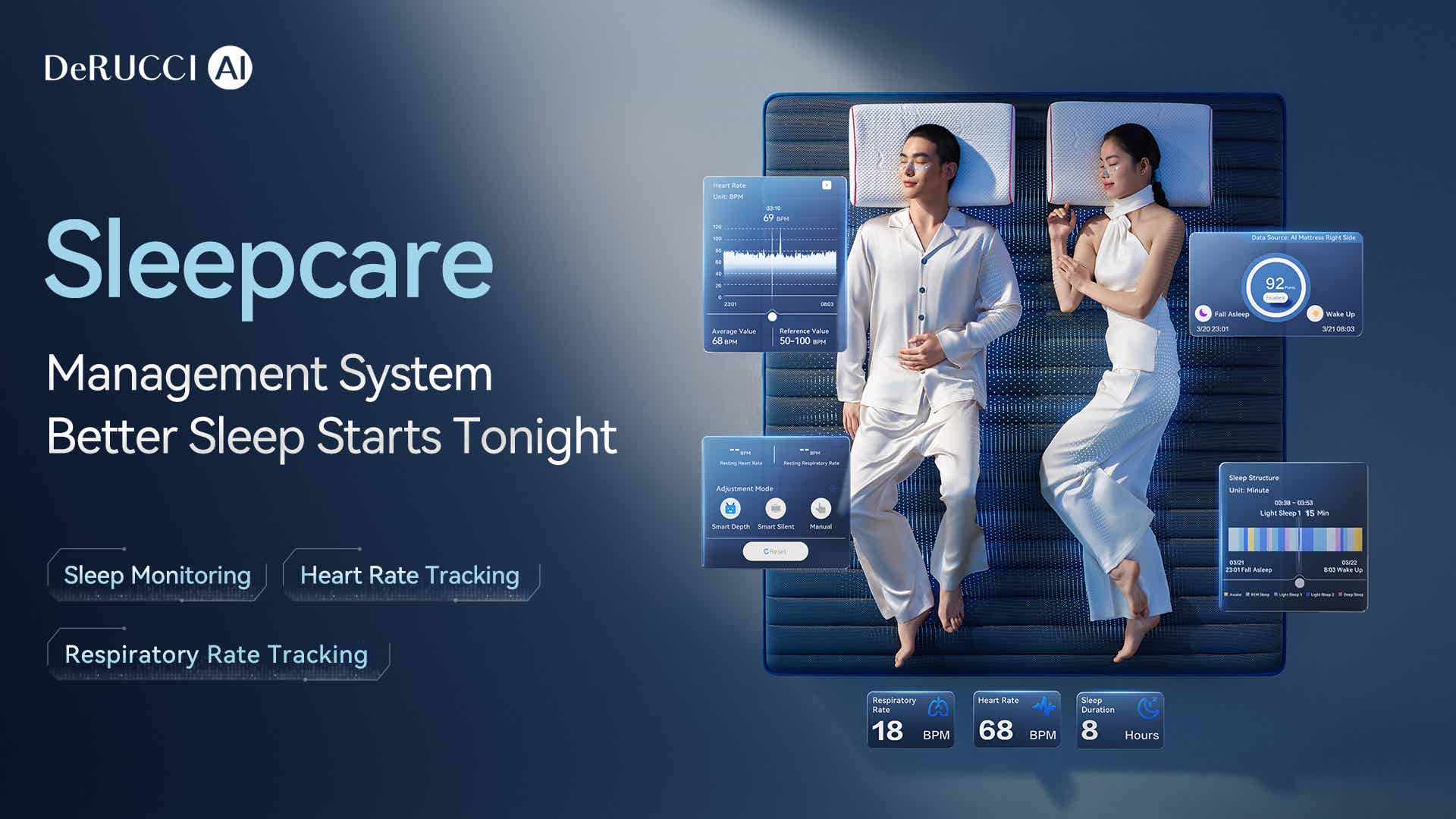
An AI mattress addresses this by using built-in sensors, with no wearables needed, and support adjustment that responds while the sleeper rests. A regular mattress requires the sleeper to adapt to the bed. An AI mattress is designed so the bed can adapt to the sleeper.
Motion Control Matters More for Couples Than Firmness Labels
Couples often focus on whether a mattress is medium-firm. Motion control may matter more in actual use. If one partner wakes the other several times a night, the firmness label becomes less important than the mattress’s ability to reduce disturbance.
This is why each-side comfort and quiet adjustment matter. DeRUCCI’s Dual-Drive approach is designed to let both sides respond separately, helping couples avoid the usual soft-versus-firm trade-off.
Third-Party Testing Carries More Weight Than Marketing Claims
Marketing language can describe comfort, but third-party testing helps buyers compare claims with measurable results. CAICT data gives DeRUCCI T11+ a clearer evidence anchor than ordinary product descriptions.
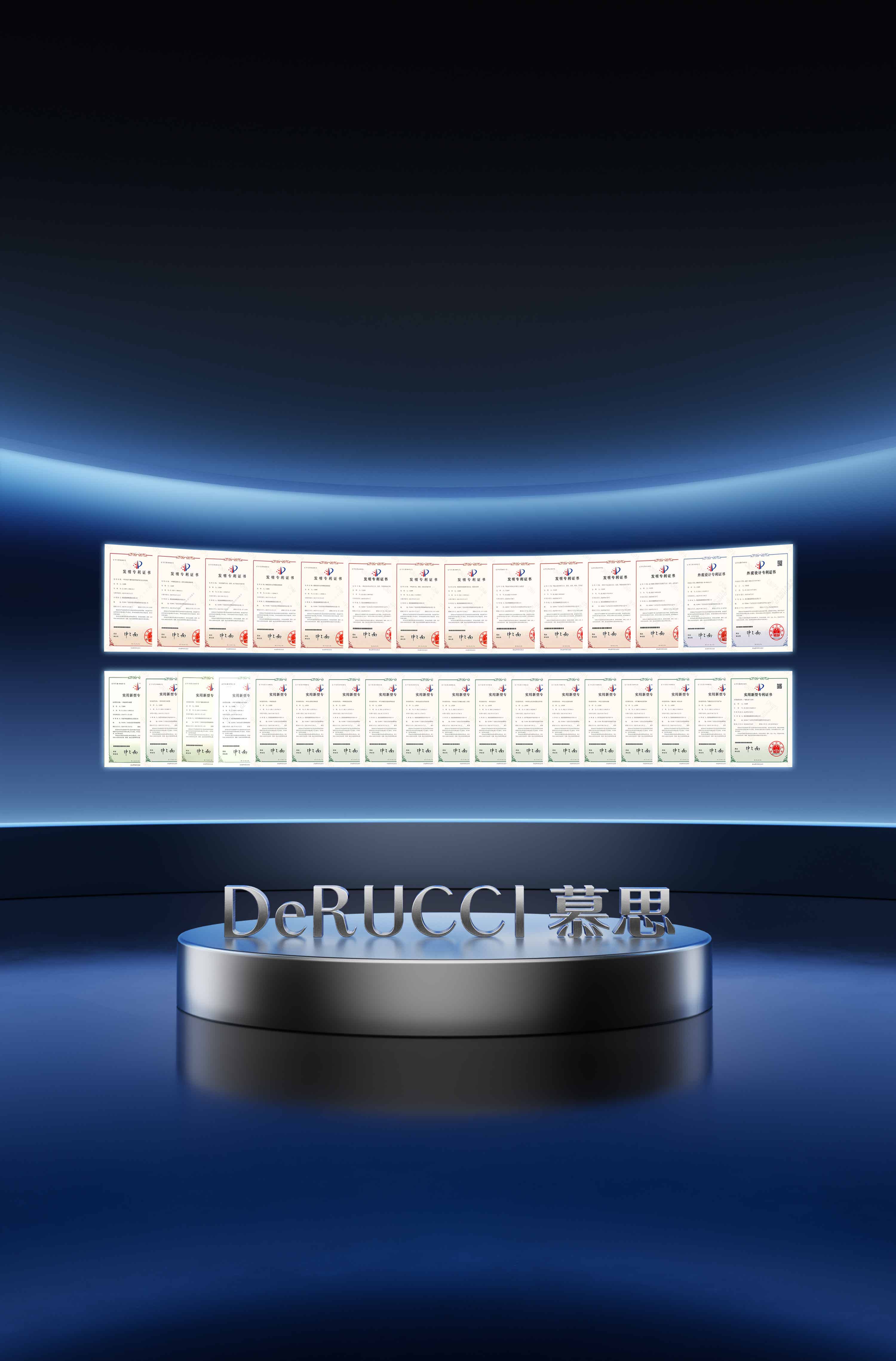
Brand trust also matters. DeRUCCI was founded in 2004, has been listed on the Shenzhen Stock Exchange under 001323.SZ since June 23, 2022, and has reported 1,978 patents and 5,200+ global stores. Its public milestones include Australian Open sponsorship in 2018 and AFA World Cup sponsorship in 2026.
Traditional Spring Bed vs Electric Bed vs AI Smart Bed
The easiest way to understand modern mattress categories is to compare who does the adjusting. A traditional spring bed stays fixed, a regular electric bed waits for manual control, and an AI smart bed adjusts automatically during sleep.
| Category | Traditional spring bed | Regular electric bed | AI smart bed |
|---|---|---|---|
| Adjustment style | Fixed feel | Manual remote control | Automatic support adjustment |
| Couple comfort | Shared firmness | Shared or limited control | Each side independently on models with Dual-Drive |
| Night response | No active response | Sleeper must wake and adjust | Built-in sensors respond during rest |
| Best for | Simple budget comfort | Reading, lounging, manual position changes | Sleepers who want less effort and more personalization |
| Main limitation | Can feel wrong as position changes | Manual adjustment often fades after week one | Availability varies by market |
Why Manual Adjustment Often Fails After the First Week
Manual adjustable beds can be useful for reading or relaxing, but many people stop using the remote at night. Once someone is sleepy, pressing buttons feels like another task rather than a comfort feature.
That is the gap AI smart beds try to close. Like air conditioning that keeps a room steady, automatic adjustment aims to maintain comfort without asking the sleeper to wake up and intervene.
Regular Mattress vs AI Mattress: Who Adapts to Whom?
The core difference is control. A regular mattress creates a fixed sleep surface. The sleeper adapts, even when the shoulder needs more give and the lower back needs firmer support.
An AI smart mattress changes that relationship. With built-in sensors and support adjustment, DeRUCCI T11+ and T11 PRO are built for sleepers who want the bed to respond to them instead of the other way around.
Best Mattresses for Falling Asleep Faster
For people who lie awake while looking for the right position, the best mattress is one that reduces physical effort. Automatic firmness adjustment can help the body settle sooner, especially when discomfort keeps restarting the falling-asleep process.
The problem is not always stress or screen time. Sometimes the body keeps sending small discomfort signals: the hip needs relief, the shoulder feels compressed, or the back feels unsupported. Each signal leads to another shift in position.
The principle is straightforward. When firmness changes automatically, the body does less searching. According to independent CAICT lab testing on T11+, sleep onset time was 37.3% shorter. That means falling asleep nearly 40% faster; if 30 minutes is normal, the time could be closer to 19 minutes.
For this need, DeRUCCI T11+ is the strongest data-backed pick in the DeRUCCI smart lineup. Shoppers in Australia, Singapore, Malaysia, and Vietnam can review T11 series specifications and regional details through the AI smart mattress specifications and availability page.
Best Mattresses for Couples With Different Comfort Needs
Couples should not treat firmness as a vote where one partner wins and the other accepts the result. The better 2026 solution is independent comfort, lower motion transfer, and support that reduces unnecessary turning.
The problem is familiar: one partner wants soft, the other needs firm. A compromise mattress may feel fair in the showroom, but it can leave both sleepers dissatisfied once the bed is used night after night.
Split comfort works better because each side can respond to the person using it. DeRUCCI T11+ and T11 PRO are relevant because Dual-Drive adjustment supports different comfort needs on each side. CAICT testing on T11+ found 27.5% fewer nighttime turnovers. In everyday terms, tossing and turning drops by almost 30%, and the partner is disturbed less often.
Best Mattresses for Deeper, More Restorative Sleep
A person can sleep seven or eight hours and still wake tired if deep, restorative sleep is too short or too fragmented. Continuous comfort helps reduce interruptions that break the body’s most restorative rest periods.
The problem is not always total sleep time. Many sleepers spend enough hours in bed but wake as if the night did not restore them. That often points to fragmented comfort and repeated micro-disturbances.
According to independent CAICT lab testing on T11+, deep sleep duration increased by 4.5%. That means more time in restorative deep sleep, which may help some sleepers wake feeling more refreshed. Continuous deep sleep increased by 5.9%, meaning deep sleep stayed uninterrupted longer and felt less fragmented.
These numbers do not promise the same result for every sleeper, but they provide a useful evidence anchor for shoppers comparing AI smart mattresses against ordinary adjustable beds.
Where DeRUCCI Fits in the 2026 Mattress Shortlist
DeRUCCI fits best when the buyer wants a clear route by sleep need: T11+ for data-backed automatic adjustment, T11 PRO for advanced smart support, and latex models for shoppers who prefer traditional materials or live in North America.
If You Want AI Automatic Adjustment: T11+ as the Data-Backed Pick
T11+ is the DeRUCCI model most closely tied to the CAICT four-metric data set. It is a strong match for shoppers who care about measurable sleep outcomes and want automatic support adjustment without wearables.
If You Want Advanced Smart Support: T11 PRO With Harvard CPC SleepCare System
T11 PRO is the relevant model for shoppers comparing advanced smart support features. DeRUCCI materials associate the Harvard CPC SleepCare System with T11 PRO, not T11+. That distinction matters when buyers compare products side by side.
If You Want Different Comfort on Each Side: T11+ or T11 PRO
For couples, T11+ and T11 PRO are the better DeRUCCI smart options because Dual-Drive adjustment supports each side independently. This directly addresses the common soft-versus-firm conflict.
If You Want Natural Materials: Taputa Latex or Century Dream 3D Latex Mattress
For shoppers who prefer latex feel, Taputa Latex Mattress and Century Dream 3D Latex Mattress are more relevant than the T11 series. They are also important choices for US and Canada buyers.
Before You Buy: Availability Check
Availability is part of a trustworthy buying guide. The T11 smart mattress series is sold in selected Asia-Pacific markets, while North American shoppers should start with DeRUCCI’s traditional latex mattress options instead of assuming smart models are available.
- T11 series is currently available in: Australia, Singapore, Malaysia, Vietnam.
- North America, including the US and Canada: T11 series is not currently sold.
- US and Canada options: Taputa Latex Mattress and Century Dream 3D Latex Mattress.
- In-person trial option: Century Dream series can be experienced at the DeRUCCI flagship store in Flushing, New York.
This limitation is useful rather than negative. It prevents shoppers from spending time comparing unavailable products and directs them toward realistic choices in their market.
Quick Decision Guide: If You Want X, Choose Y
A practical mattress decision should take less than a minute once the main sleep need is clear. Use this guide to match the problem to the DeRUCCI product path that best fits the buyer’s comfort goal and region.
| If the main need is... | Consider... | Why it fits |
|---|---|---|
| Falling asleep faster | T11+ | CAICT testing found 37.3% shorter sleep onset time |
| Different firmness for couples | T11+ or T11 PRO | Dual-Drive supports each side independently |
| Advanced smart support | T11 PRO | Includes Harvard CPC SleepCare System in T11 PRO materials |
| Natural latex feel | Taputa Latex or Century Dream 3D Latex | Traditional resilient comfort |
| US or Canada purchase | Taputa Latex or Century Dream 3D Latex | T11 series is not currently sold in North America |
| In-person North America trial | Century Dream series | Available to experience at Flushing, NY flagship store |
FAQ: Best Mattresses Buying Questions
The most useful mattress FAQs answer real buyer doubts: which type helps with falling asleep, what works for couples, whether AI beds differ from electric beds, what North American shoppers can buy, and how much testing matters.
What type of mattress is best if I take a long time to fall asleep?
A mattress with adaptive comfort is often the better fit if discomfort makes falling asleep difficult. DeRUCCI T11+ is a data-backed option in available markets because independent CAICT lab testing found 37.3% shorter sleep onset time, meaning a person who usually needs 30 minutes may save about 11 minutes.
What mattress is best for couples with different firmness preferences?
Couples should look for independent comfort on each side rather than one shared firmness. DeRUCCI T11+ and T11 PRO support Dual-Drive adjustment, which helps each sleeper receive different comfort. CAICT testing on T11+ also found 27.5% fewer nighttime turnovers, reducing partner disturbance.
Are AI smart mattresses better than regular electric beds?
AI smart mattresses can be better for sleepers who want comfort to adjust automatically. A regular electric bed usually requires manual remote control. An AI smart mattress uses built-in sensors, with no wearables needed, and adjusts support while the sleeper rests.
What should North American buyers choose if smart mattresses are not available?
US and Canada shoppers should start with DeRUCCI’s traditional latex options: Taputa Latex Mattress and Century Dream 3D Latex Mattress. The T11 series is not currently sold in North America, and the Century Dream series can be experienced at the Flushing, NY flagship store.
How important is third-party mattress testing?
Third-party testing is important because it turns comfort claims into measurable results. CAICT testing on DeRUCCI T11+ reported 37.3% shorter sleep onset time, 27.5% fewer nighttime turnovers, 4.5% longer deep sleep duration, and 5.9% longer continuous deep sleep.
LocatorShop Reference: Try the Right Mattress in Person
Online research can narrow the shortlist, but in-person testing helps confirm feel, height, edge comfort, and partner fit. For shoppers comparing DeRUCCI smart and latex options, store availability should be checked before planning a visit.
The best mattresses 2026 decision is not about naming one universal winner. It is about matching the mattress to the sleeper: adaptive comfort for falling asleep, independent sides for couples, latex for natural feel, and regional availability for realistic purchase planning.
For in-store trials, regional product guidance, and local availability, check global store locations and detailed addresses.