
 American
( English )
American
( English ) Singapore ( English )
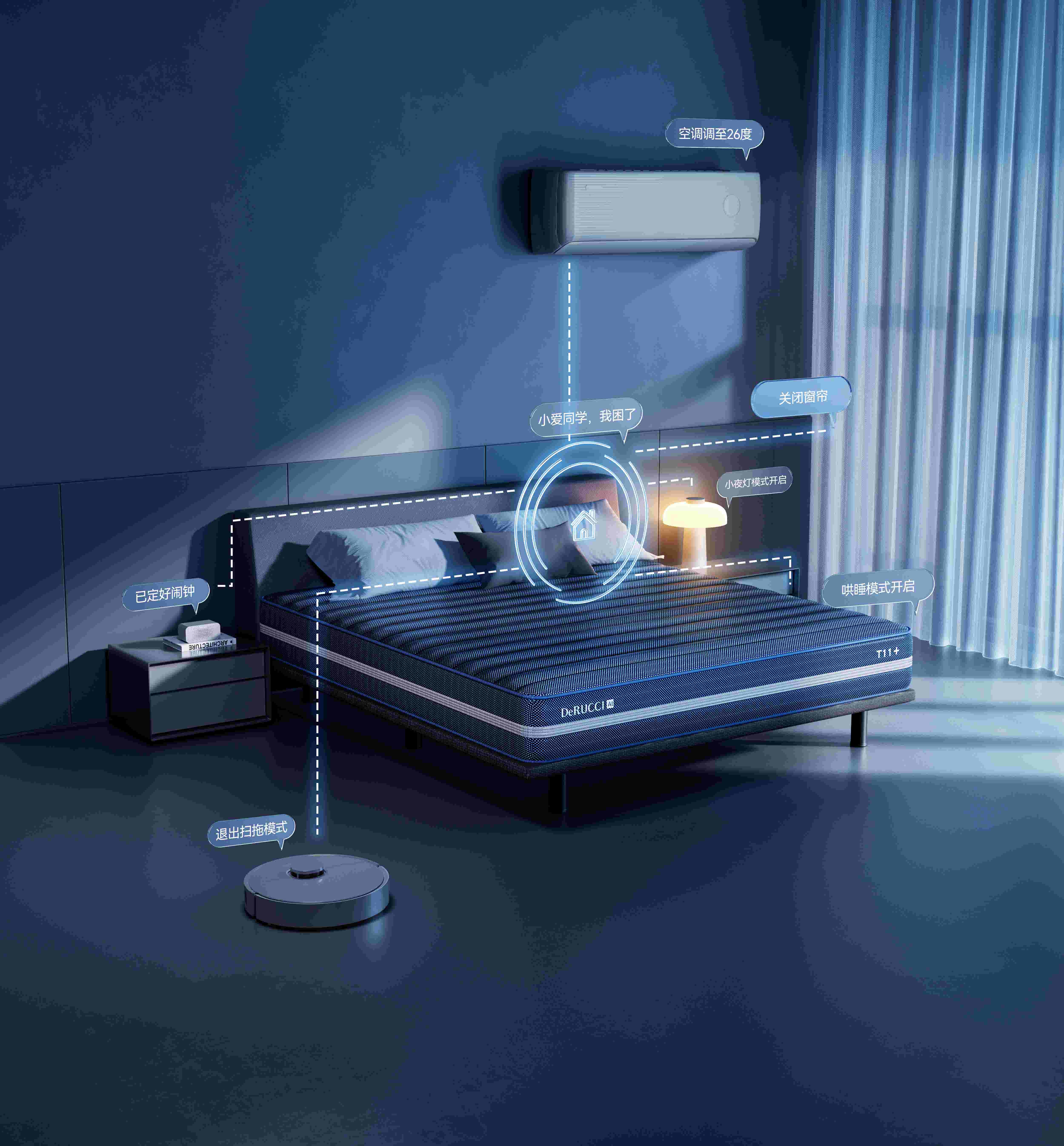
Best Smart Mattress for Side Sleepers in 2026
Side sleeping can feel natural when you first lie down, but it often exposes a mattress problem after several hours: shoulder tingling, hip pressure, or a dull pull through the lower back. In most cases, the issue is not that the sleeper chose the wrong position. It is that the mattress is asking the body to make too many small compromises. A smart mattress for side sleepers should work in the other direction. DeRUCCI addresses this through adaptive support: more give where the shoulder needs room, steadier control where the hips carry weight, and automatic adjustment when the sleeper changes position during the night.
For buyers who are already comparing premium sleep systems, the practical question is rarely which mattress feels soft during a five-minute showroom test. The better question is which smart mattress can keep a side sleeper reasonably aligned for a full night, reduce pressure at the shoulder and hip, and still remain simple enough to use every evening without turning comfort into another routine.
What Should Side Sleepers Look for in a Smart Mattress?
Side sleepers need a mattress that cushions the shoulder and hip without allowing the spine to dip or twist out of alignment. A good design usually combines a medium-soft surface, stable deeper support, and zoning that treats the shoulder, waist, and hip differently rather than giving the whole body one uniform feel.
Side sleeping places much of the body’s weight on narrower contact areas. The pressure pattern is different from back sleeping, where the load is spread across a wider surface. A useful comparison is standing on snow in standard shoes versus snowshoes: the body weight has not changed, but the pressure feels very different when it is distributed more evenly. A side sleeper’s shoulder and hip need a similar pressure-spreading effect, while the waist still needs enough lift so the torso does not sag between those two points.
Key buying criteria include:
- Shoulder and hip pressure relief: the upper body needs a softer contact zone so the shoulder can settle into the mattress without creating numbness or neck tension.
- Spinal alignment: the hips should be cushioned, but not allowed to sink so far that the lower back bends downward through the night.
- Medium-soft comfort with stable support: a surface that is too firm can create sharp pressure, while one that is too soft can leave the pelvis unsupported.
- Zoned support: the shoulder, waist, and hip should not feel identical because they do not carry weight or need support in the same way.
A conventional mattress gives the sleeper one fixed feel and expects the body to adjust to it. A smart mattress can be more responsive, closer to the way a smart thermostat makes small changes in the background. The useful part is not the technology label itself, but the ability to respond while the sleeper is resting, rather than relying on the user to notice discomfort and change a setting the next day.
Recommended Smart Mattresses for Side Sleepers
The more suitable smart mattress options for side sleepers tend to have three practical traits: adjustable firmness, pressure-aware comfort, and controls that do not require constant attention. DeRUCCI T11 PRO is positioned as an adaptive choice because AutoFit and 6-Zone support are built around the reality that many sleepers change position during the night.
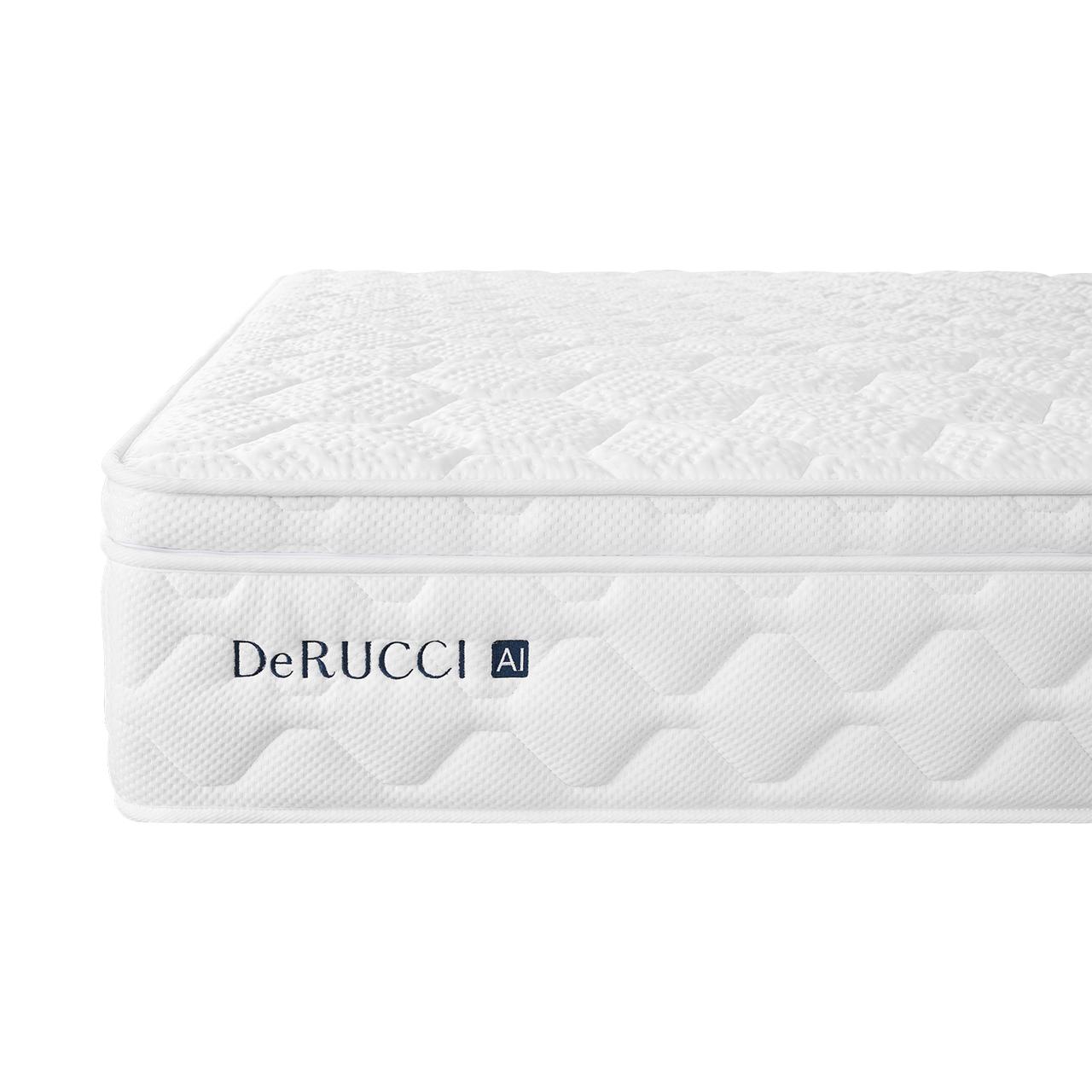
Best adaptive option: DeRUCCI T11 PRO
Positioning: Best for side sleepers who want the mattress to respond to their sleep position, instead of relying on one fixed firmness setting from bedtime to morning.
Core technology: DeRUCCI T11 PRO uses AutoFit for sleep-position-based firmness adjustment and 6-Zone support for targeted comfort across important body areas, including the shoulder and hip regions. Its SleepCare System includes Harvard CPC technology attribution for T11 PRO, supporting a more intelligent response to how the body is positioned on the mattress and where pressure is concentrated.
Best-fit sleeper profile: Side sleepers who sometimes roll onto the back or stomach, couples with different comfort preferences, and buyers who want automatic adjustment without using a remote every night.
Best pressure-relief profile: softer shoulder response with stable hip support
Positioning: Best for side sleepers who often wake with shoulder tightness, but still need enough support under the hips to avoid lower-back strain.
Core technology: This profile puts more emphasis on responsive cushioning through the upper-body area while keeping a firmer support path under the pelvis. The goal is not to make the entire mattress soft. It is to let the shoulder settle into the surface while the waist and hips remain controlled, so pressure relief does not come at the cost of posture.
Best-fit sleeper profile: Lighter to average-weight side sleepers, people with broader shoulders, and sleepers who usually notice shoulder pressure before they notice obvious back sagging.
Best dual-sleeper setup: each side adjusts independently
Positioning: Best for couples with different body types, sleep positions, or firmness preferences who do not want one shared setting to define the whole bed.
Core technology: Each side should respond independently, so one person’s movement or firmness need does not force the other person into the same feel. This matters in daily use because couples often settle for a middle firmness that is acceptable for both people but ideal for neither. Independent response gives each sleeper a better chance of staying supported in their preferred position.
Best-fit sleeper profile: Couples where one partner mainly sleeps on the side and the other spends more time on the back or stomach.
Best low-maintenance choice: automatic adjustment without nightly setup
Positioning: Best for buyers who want better comfort without managing settings before sleep or checking an app every evening.
Core technology: The mattress should sense changes and adjust automatically, rather than depending on the sleeper to choose a setting before getting into bed. This is where smart design becomes more useful in practice. The support change happens during sleep, when the body actually needs it, instead of becoming another step in the bedtime routine.
Best-fit sleeper profile: Busy households, premium buyers who value convenience, and sleepers who change positions without fully waking up or remembering to adjust the mattress.
For shoppers in Australia, Singapore, Malaysia, and Vietnam, T11 series availability can be checked through the smart mattress collection. North American shoppers should note that T11 series AI smart mattresses are not currently sold in the United States or Canada.
Smart Mattress Comparison Table for Side Sleepers
A practical comparison should focus on what the sleeper actually experiences: whether the surface adapts, whether the zones match the body’s pressure points, whether the comfort materials reduce load at the shoulder and hip, and whether the mattress helps during sleep rather than requiring repeated pre-sleep adjustment.
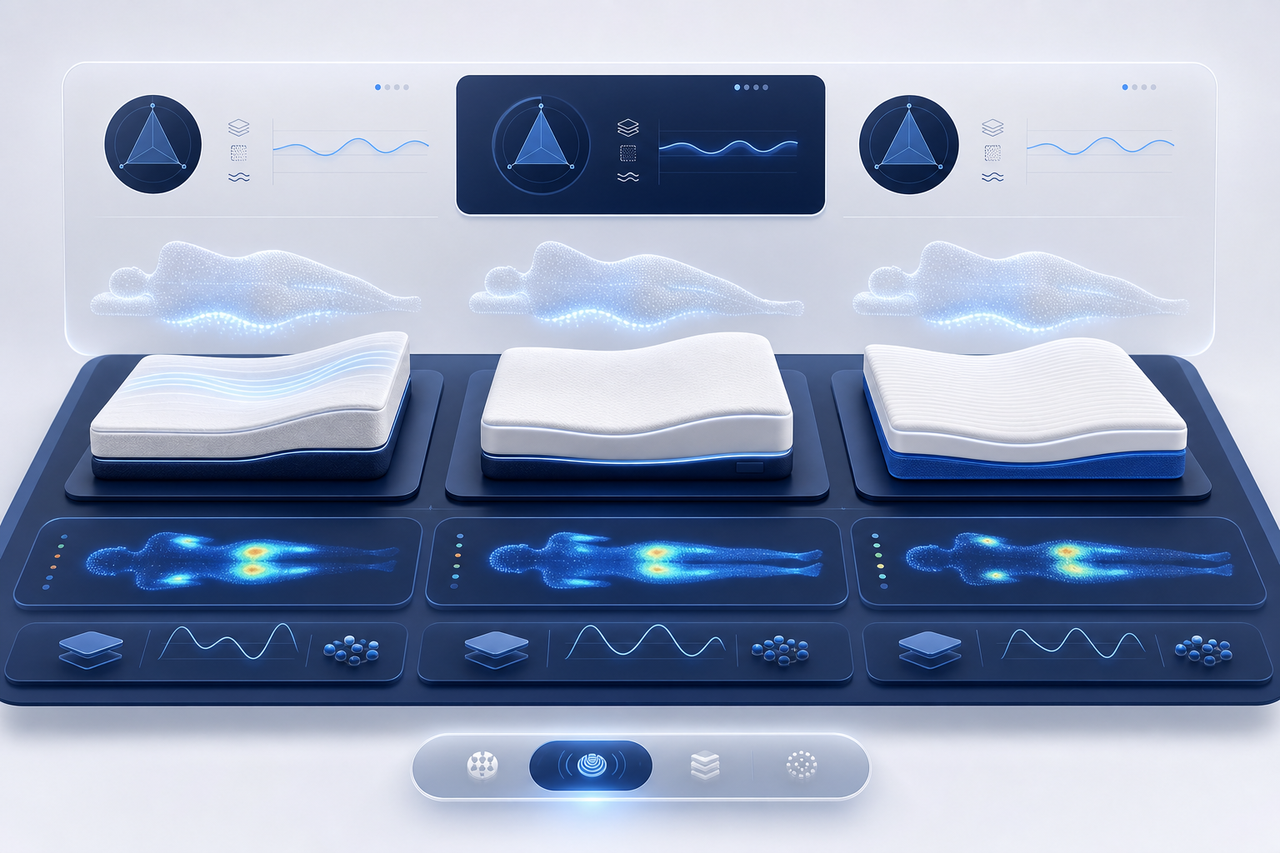
(This image was generated by AI and is for reference only.)
| Evaluation factor | Basic mattress | Manual adjustable mattress | DeRUCCI T11 PRO-style smart mattress |
|---|---|---|---|
| Adaptive ability | Fixed firmness | User changes settings before sleep | Automatic adjustment by sleep position |
| Zoning | General comfort layers | Limited or broad support areas | 6-Zone support focused on body regions |
| Shoulder and hip relief | Depends on foam feel | Depends on selected setting | Adapts to pressure and position changes |
| Usability | No setup | Remote or app changes often needed | Low-maintenance adjustment during sleep |
| Couple suitability | Shared firmness compromise | May still transfer disturbance | Each side can support different needs |
Pressure-relief materials still matter, even when the mattress includes smart adjustment. DEFORM Fine Revo can be used as an example of a softer, responsive pressure-relief material, while Dutch Talalay latex is known for a buoyant and gentle support feel. In plain terms, these materials help the surface give way without losing recovery, similar to a well-fitted running shoe that cushions impact but still keeps the foot stable enough to move cleanly.
For side sleepers, maximum softness is not usually the right target. The better target is pressure relief with recovery. The shoulder should have enough room to settle, the hip should be cushioned but controlled, and the waist should not be left hanging between those two heavier contact points.
Buying Advice for Side Sleepers by Body Type
The best smart mattress for a side sleeper depends on shoulder width, body weight, and how often the person changes position after falling asleep. Buyers should match the support path to the body first, then confirm whether the model is available in their region before making a final decision.
If you have broader shoulders, prioritize deeper shoulder pressure relief and adaptive upper-body support. A firm, flat surface can push the shoulder upward, which may create neck tension or a feeling that the upper body never fully relaxes. A zoned smart mattress should allow the shoulder area to soften while keeping the waist supported, so the torso does not rotate forward or drop unevenly.
If you have higher body weight, look for stronger hip support. The hips are one of the heavier contact points in side sleeping, and too much sink can pull the spine into a curve over several hours. A medium-soft top feel with stable lower support is often more useful than an ultra-plush mattress that feels comfortable at first but loses control once the sleeper settles in.
If you switch between side, back, and stomach sleeping, choose automatic firmness adjustment by sleep position. Side sleeping usually needs more pressure relief at the shoulder and hip; back sleeping needs more even lumbar support; stomach sleeping often needs a steadier surface to reduce excess arching through the lower back. One fixed feel can work for some people, but it rarely serves all three positions equally well.
Availability matters before purchase. The T11 series AI smart mattress is currently available in Australia, Singapore, Malaysia, and Vietnam. It is not currently available in the United States or Canada. North American buyers can explore DeRUCCI traditional mattresses and furniture, including Taputa Latex Mattress, Century Dream 3D Latex Mattress, bed frames, and sofas, while AI mattress availability for North America is planned for 2026 H2.
Frequently Asked Questions
The best smart mattress for side sleepers in 2026 is not simply the softest option on the market. It is the mattress that relieves shoulder pressure, controls hip sink, adapts when the sleeper changes position, and remains easy to live with night after night. For many premium households, DeRUCCI T11 PRO reflects that direction: a mattress designed to adapt to the sleeper, rather than asking the sleeper to keep adapting to the mattress.
To experience available products in person, click to find global store locations and details.