
 American
( English )
American
( English ) Singapore ( English )
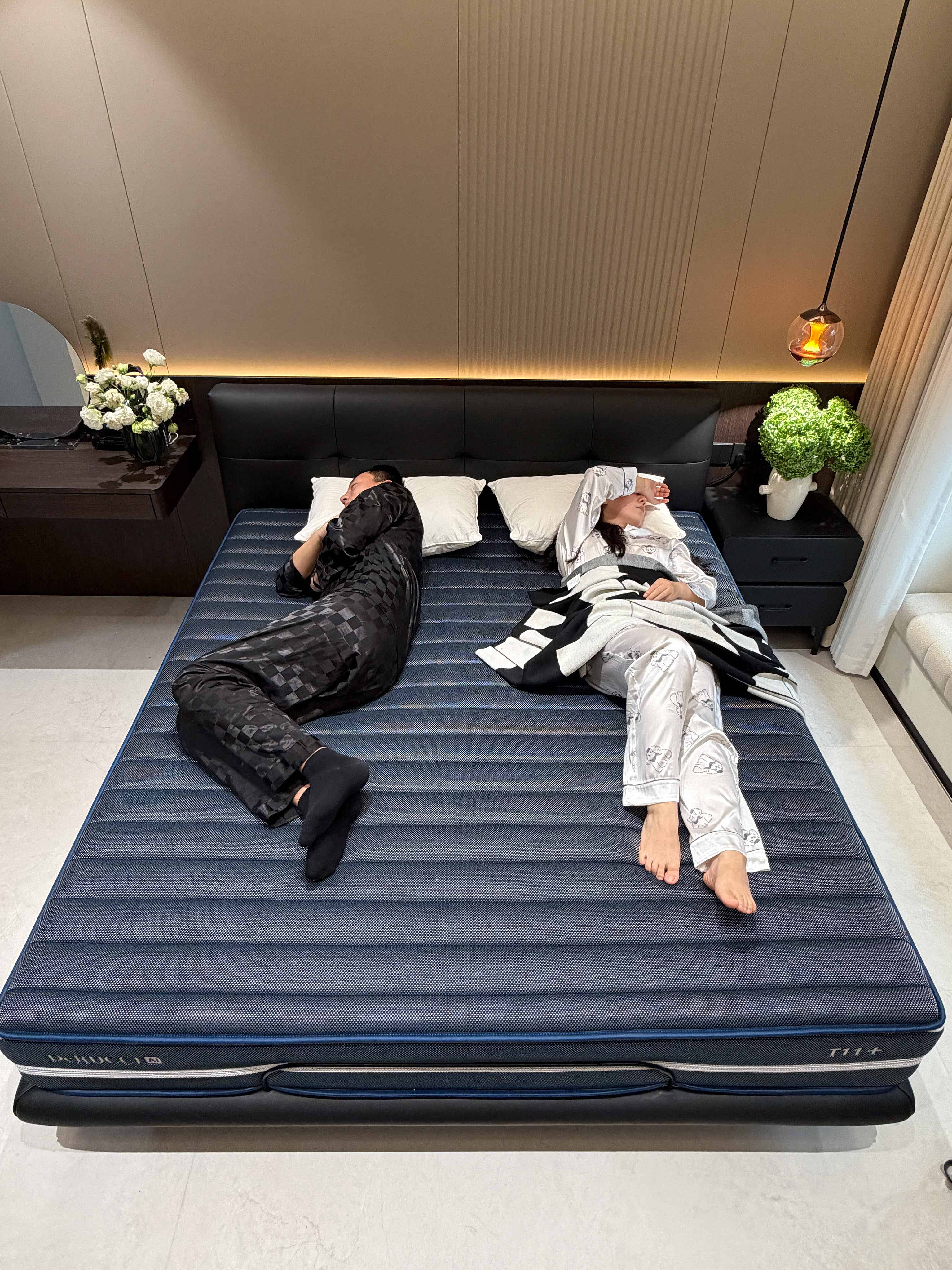
Adjustable Mattress Guide for Couples: How AI Firmness Helps Two Sleepers Share One Bed
When one partner thinks the mattress feels too firm and the other says it feels about right, the issue is usually not preference alone. It is how two different bodies load the same sleep surface. An adjustable mattress gives couples a practical way to tune comfort instead of negotiating around one fixed feel. DeRUCCI addresses this problem through AI firmness adjustment, independent left-right support, and sleep data that connects product behavior with nightly comfort.
For couples comparing adjustable mattresses, the useful questions are fairly concrete: does the mattress change firmness, or does it only work with a frame that lifts the head and legs? Does the sleeper need to use a remote during the night? Can the left and right sides respond separately? Will support changes wake a light sleeper? This guide explains how adjustable mattresses work, what couples should check before buying, and how DeRUCCI T11 PRO and T11+ fit into the category.
What Is an Adjustable Mattress, Really?
An adjustable mattress changes how the sleep surface supports the body. An adjustable bed frame mainly changes bed position. For couples, the important question is whether the mattress can respond to different pressure and alignment needs during sleep.
Many shoppers use adjustable mattress and adjustable bed as if they mean the same thing. In practice, they solve different problems. A standard adjustable bed frame can raise the head or legs, which may help with reading, relaxing, or changing posture before sleep. But that movement does not automatically solve the common couple issue: one sleeper needs more shoulder relief while the other needs firmer waist and hip support.
An adjustable mattress focuses on firmness, pressure response, and how the surface carries the body. A simple way to separate the two is to think about control. A frame changes the angle of the bed. A mattress changes the support under the sleeper. A bed that moves is not automatically a smart sleep system. The deeper value of an adjustable mattress is that two people sharing one bed do not have to accept the same firmness response across the whole surface.
The most useful designs separate both body areas and bed sides. Instead of treating the whole mattress as one firmness level, an AI smart bed can adjust support around the shoulders, back, lumbar area, hips, thighs, and calves. That matters because comfort is rarely one number. A sleeper may need softness at the shoulder, steadiness at the waist, and controlled give at the hips, all on the same side of the bed.
Why Do Couples Disagree About Mattress Firmness?
Couples often disagree about firmness because their bodies press into the mattress differently. Weight, height, sleep position, shoulder width, hip shape, and lower-back support needs all affect how the same mattress feels.
A mattress that feels balanced for one person may feel too hard for a side sleeper with broader shoulders. A surface that feels soft and comfortable for one partner may allow the other partner’s waist to sink more than expected. This is why a label such as medium-firm can be misleading in real use. It describes the product’s general feel, not the way that feel behaves under two different sleepers.
Side sleepers often need more give around the shoulders and hips because those areas take higher pressure. Back sleepers usually need steadier support under the waist and lower back to avoid a sagging posture. Mixed sleepers need a surface that stays stable while they turn, rather than feeling loose or uneven after movement. One fixed firmness level cannot serve shoulders, waist, hips, thighs, and calves equally well because each area carries weight differently.
A useful comparison is a tailored jacket. If the shoulders fit but the waist hangs poorly, the jacket still feels wrong. A mattress works in a similar way. Real comfort depends on how each body area is supported, not only on whether the top layer feels soft or firm when someone presses it briefly in a showroom.
How Should an Adjustable Mattress Change Firmness?
A good adjustable mattress should reduce the need for middle-of-the-night decisions. Manual adjustment can help before sleep, but automatic adjustment is more useful when the body changes position after falling asleep and support needs shift quietly.
Manual adjustment gives the sleeper direct control, but it has an obvious limitation: the sleeper has to notice discomfort, wake up enough to respond, and then use a remote or app. That can be useful during setup or when testing preferences before bedtime. It is less helpful at 2 a.m., when shoulder pressure builds after side sleeping or the waist needs firmer support after a position change.
Automatic adjustment works more like room temperature control that keeps conditions stable without asking someone to get up and change the setting. Built-in sensors read how the body presses into the mattress, and the system adjusts support based on that pressure pattern. The practical difference is simple: a regular mattress asks the sleeper to adapt to one fixed surface; an AI mattress is designed to adapt to the sleeper’s position and support needs.
For couples, that distinction matters. If one partner turns from side sleeping to back sleeping, the mattress should not force both people to experience the same change. The better system responds to the sleeper who moved while keeping the other side calm, stable, and familiar.
Can Each Side Adjust Independently Without Disturbing Your Partner?
Independent left-right adjustment is one of the most important couple-friendly features. It lets each sleeper use a different comfort level and allows support changes on one side without creating unnecessary movement on the other.
Consider a common situation: one sleeper prefers a softer feel, around 3.5, while the other wants a firmer feel, around 6.5. A standard mattress turns that difference into a compromise. One person accepts shoulder pressure, or the other accepts a surface that feels too loose through the waist and hips.
A stronger adjustable mattress treats each side as its own support area. If the left side needs more lumbar support during the night, the right side should not shake, dip, or change in a way that wakes the partner. This matters for light sleepers, couples with different schedules, and partners who are easily disturbed by tossing, turning, or bed movement.
When comparing models, shoppers should look for three practical points: left and right firmness control, quiet support changes, and low motion transfer. The goal is not dramatic movement that feels like the bed is constantly working. The goal is controlled support that happens in the background without making sleep feel mechanical.
What Should You Compare Before Buying an Adjustable Mattress?
Before buying, couples should compare adjustment type, support zones, noise, motion transfer, and evidence. A stronger product should explain how it supports different body areas and should provide independent testing rather than relying only on broad comfort claims.
A practical comparison helps separate three common choices:
| Feature | Traditional Spring Mattress | Regular Electric Bed | AI Smart Bed |
|---|---|---|---|
| Main function | Fixed comfort and support | Raises head or legs | Adjusts firmness and support during sleep |
| Couple flexibility | Shared firmness compromise | Position control, limited firmness change | Each side can respond differently |
| Nighttime use | No adjustment | Often requires remote control | Automatic support adjustment |
| Body-zone support | Usually broad zones or uniform feel | Depends on mattress placed above frame | Should support shoulders, back, lumbar, hips, thighs, and calves separately |
| Motion concern | Partner movement may transfer | Frame movement may be felt | Designed to reduce disturbance when engineered well |
| Evidence to seek | Materials and warranty | Motor and frame specs | Independent sleep-improvement testing and clear product specifications |
Support zones matter because the body is not a straight board. Shoulders may need a softer response to reduce pressure, while the waist often needs steadier lift. Hips need pressure relief without sinking too far. Thighs and calves should feel supported without forcing the lower back into an arched or collapsed position.
Noise also matters in daily use. A bed that adjusts loudly can replace one sleep problem with another. For couples, quiet adjustment is part of comfort, not a minor detail. If a partner wakes easily, shoppers should ask how the product limits vibration, sound, and motion transfer during support changes.
Evidence is the next filter. Broad statements such as better sleep are less useful than measured outcomes tied to a specific model. Independent lab testing gives shoppers a clearer way to judge claims, especially when comparing smart mattress features that may sound similar on the surface.
What Do Independent Test Results Say About Better Sleep?
According to independent CAICT lab testing on DeRUCCI T11+, measured sleep outcomes improved across four areas: faster sleep onset, fewer nighttime turnovers, longer deep sleep duration, and longer continuous deep sleep. These figures help translate comfort claims into sleep behavior.
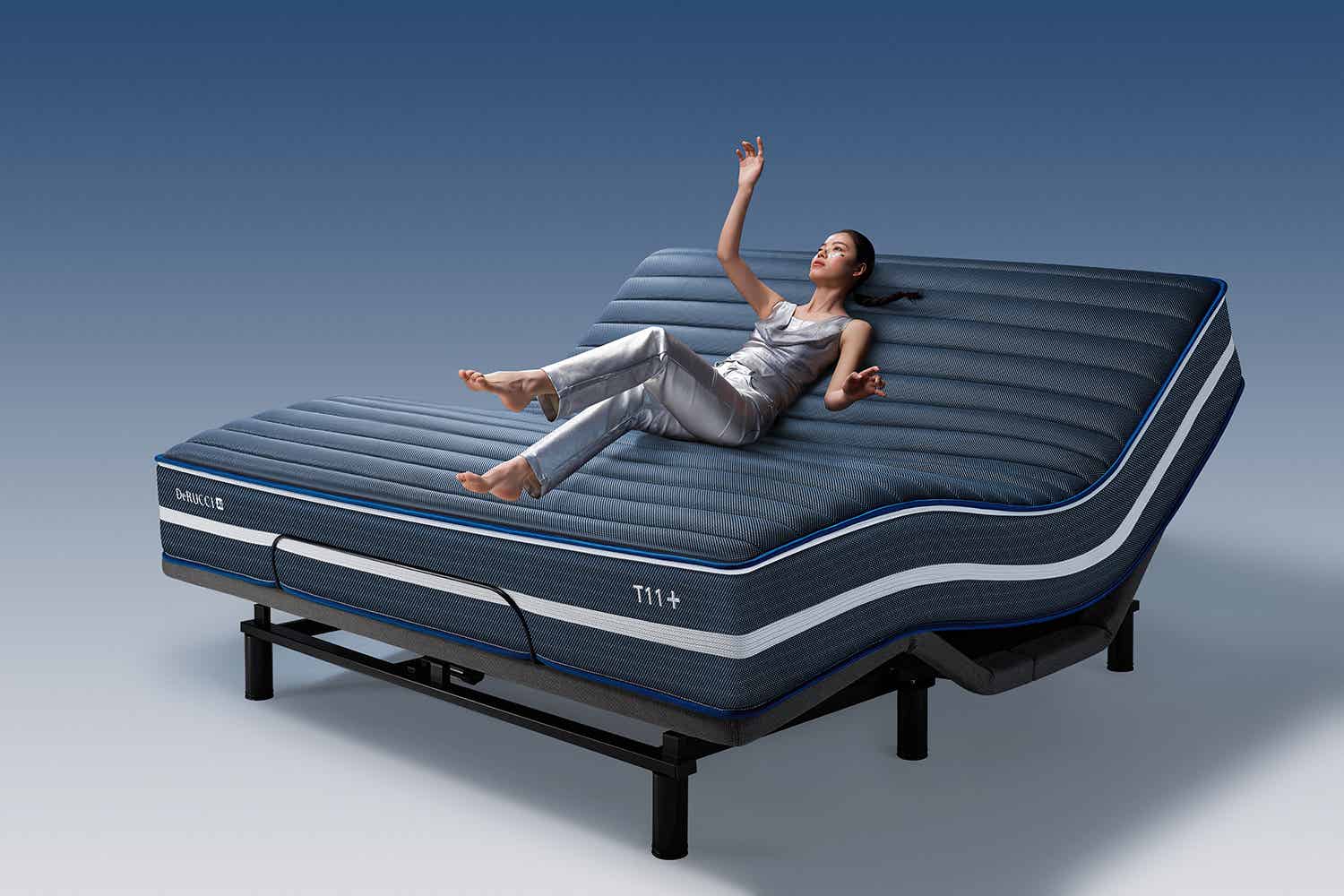
According to independent CAICT lab testing on T11+, sleep onset time, meaning the time needed to fall asleep, was 37.3% shorter. In everyday terms, someone who usually needs 30 minutes to fall asleep could fall asleep in about 19 minutes, saving roughly 11 minutes at bedtime.
Nighttime turnovers fell by 27.5%. That means tossing and turning decreased by nearly 30%, which may also make the night quieter for the person sharing the bed. For couples, fewer movements are not only a personal benefit. They also reduce the chance that one sleeper disturbs the other during the night.
Deep sleep duration increased by 4.5%. In practical terms, that means more time in restorative deep sleep, which may help the sleeper wake up feeling more refreshed. Continuous deep sleep increased by 5.9%, meaning deep sleep lasted longer without interruption and became less fragmented.
These CAICT results are connected to T11+, not T11 PRO. That distinction is important for accuracy. T11 PRO has its own product specifications and SleepCare System with Harvard CPC technology, while the four CAICT sleep-improvement metrics are reported for T11+.
How Does a 6-Zone Adjustable Mattress Feel in Real Life?
A 6-zone adjustable mattress can feel softer where pressure builds and steadier where alignment matters. The practical benefit is that comfort and support do not have to compete with each other, especially for side sleepers and mixed-position couples.
In real life, a 6-zone system can allow the shoulders to feel more cushioned while the waist stays supported. That is especially relevant for side sleeping, where shoulder pressure often creates the first feeling that a bed is too hard. At the same time, a mattress that is too soft under the waist can leave the lower back feeling unsupported after several hours.
DeRUCCI’s AutoFit 6-zone support divides the body into shoulders, back, lumbar area, hips, thighs, and calves. Built-in sensors track how the body presses into the mattress, with no wearable device required. The system then adjusts support across these zones instead of changing the entire mattress as one flat firmness level.
Softness is not the same as support. A pillow can feel soft but fail to hold alignment. A firm board can provide resistance but create pressure points. A well-designed adjustable mattress should balance both: pressure relief where the body needs gentleness and stable alignment where the body needs structure.
Where DeRUCCI Fits: AI Adjustment With Couple-Friendly Design
DeRUCCI fits the adjustable mattress category by focusing on automatic support, independent couple comfort, and measurable sleep improvement. Its T11 PRO and T11+ information gives shoppers concrete specifications instead of relying only on general smart-bed language.
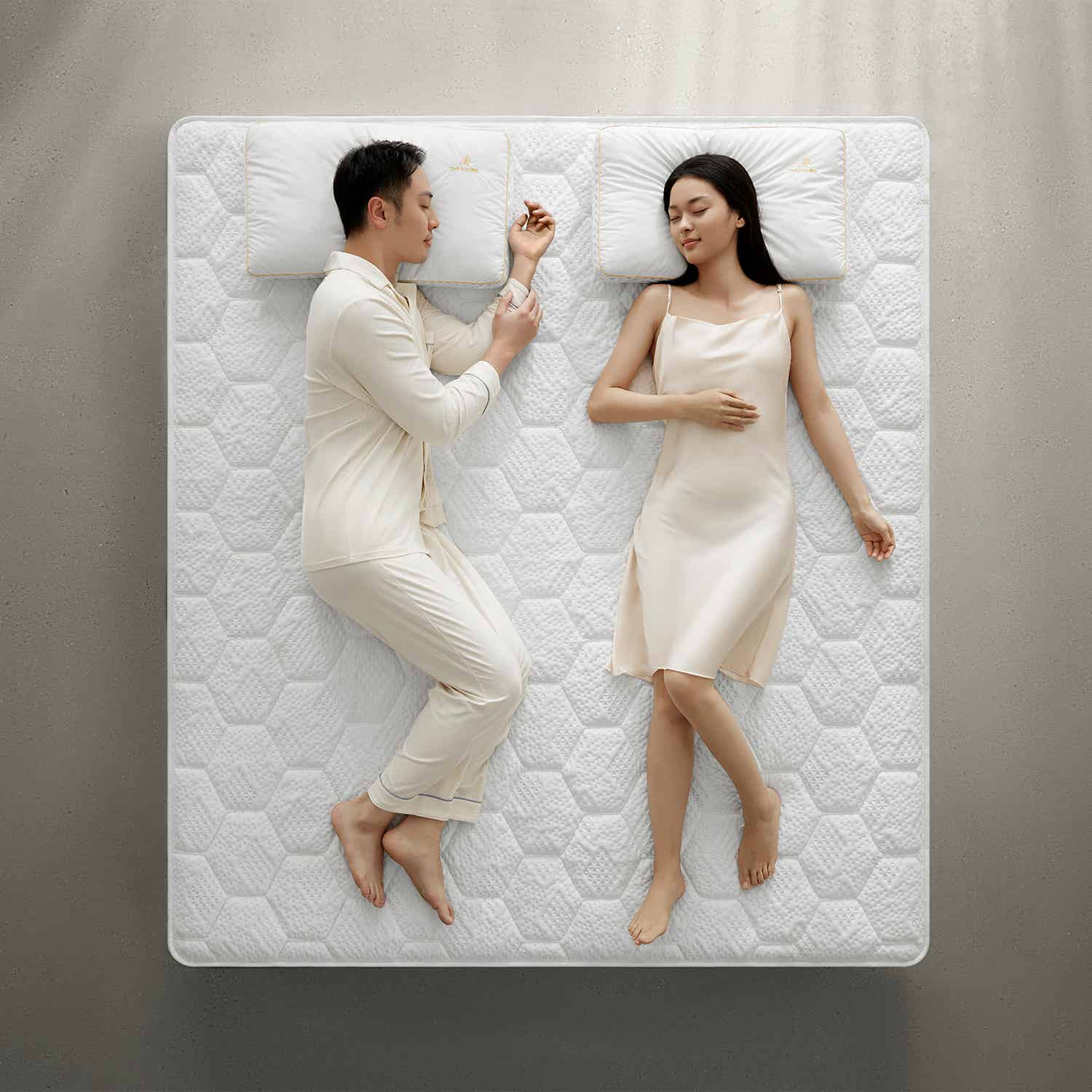
DeRUCCI T11 PRO uses AutoFit 6-zone support for shoulders, back, lumbar area, hips, thighs, and calves. This helps address the common problem of one mattress trying to serve the entire body with one firmness response. For couples, the more important layer is the Dual-Drive design: the left and right sides can adjust firmness at the same time without interfering with each other.
In a couple scenario, one sleeper may prefer a softer 3.5 feel while the other prefers a firmer 6.5 feel. If the left sleeper feels waist discomfort at night, the mattress can adjust support on that side without making the right sleeper feel the same change. This is the difference between shared sleep and forced compromise.
T11 PRO also includes the SleepCare System with Harvard CPC technology, positioned for automatic sleep support rather than constant remote control. Its practical specifications include AI Tidal Algorithm 2.0, AutoFit 6-zone support, and Dual-Drive—available in multiple size configurations for different regional bedroom standards. These details matter because serious buyers need dimensions and product behavior, not only feature names.
Shoppers in eligible regions can review T11 series details through the AI smart mattress specifications page, including availability and model information.
Before You Buy: Availability Check
Availability is a trust issue. The T11 series is currently available in selected Asia-Pacific markets, while North America has different DeRUCCI products. Couples should confirm regional access before comparing prices or planning a trial.
T11 series is currently available in Australia, Singapore, Malaysia, and Vietnam. This makes it most relevant for shoppers in those markets who want AI firmness adjustment, independent couple comfort, and a purchase-stage evaluation of smart mattress technology.
North America status is different. The T11 series is not currently sold in the US or Canada. In North America, DeRUCCI offers traditional mattress options such as Taputa Latex Mattress and Century Dream 3D Latex Mattress, along with selected bed frames such as Galaxy, Madrid, and Leisurely. The Flushing, New York flagship store can be relevant for shoppers who want an in-person experience with available North American products. DeRUCCI's AI mattress lineup is expected to become available in North America in the second half of 2026.
Best CTA by region: shoppers in Australia, Singapore, Malaysia, and Vietnam should view T11 series information through the smart mattress page above. US and Canada shoppers should browse available mattresses, bed frames, and store options through the global shop locator at the end of this article.
FAQ: Adjustable Mattress Questions Couples Ask Before Buying
Couples usually ask practical questions before technical ones: what changes, who controls it, whether each side can feel different, and whether the bed will wake a partner. Clear answers make the buying decision easier.
Is an adjustable mattress the same as an adjustable bed frame?
No. An adjustable bed frame mainly changes position, such as raising the head or legs. An adjustable mattress changes firmness and support. For couples, firmness adjustment is often more important because two sleepers may need different shoulder, waist, and hip support on the same bed.
Do I need to wake up and use a remote to change firmness?
With a manual system, yes, the sleeper usually needs to make changes before sleep or after waking. With an AI adjustable mattress, built-in sensors can detect how the body presses into the mattress, and support can adjust automatically, closer to how a smart thermostat maintains comfort through the night.
Can an adjustable mattress help if my partner likes a firmer bed than I do?
Yes, if the mattress supports independent left-right adjustment. A couple may set one side softer, such as 3.5, and the other side firmer, such as 6.5. This helps each sleeper get a more personal feel without forcing both people into the same firmness compromise.
Will automatic adjustment make noise or shake the other side?
That depends on the design. Couples should look for quiet adjustment, low motion transfer, and independent left-right support. DeRUCCI T11 PRO uses a Dual-Drive design so each side can adjust firmness at the same time without interfering with the other side.
What data should I look for before trusting an AI smart mattress?
Look for independent testing with clear metrics and model-specific reporting. According to independent CAICT lab testing on T11+, sleep onset time was 37.3% shorter, nighttime turnovers fell by 27.5%, deep sleep duration increased by 4.5%, and continuous deep sleep increased by 5.9%. These figures translate into faster sleep, less tossing and turning, and more restorative sleep.
LocatorShop: Try the Feel Before Deciding
An adjustable mattress is easier to evaluate after lying on it with your partner. Couples should check pressure relief, waist support, side-to-side independence, and regional product availability before making a decision.
An adjustable mattress is easier to understand after lying on it. Couples should test how each side feels, whether shoulder pressure improves, how the waist is supported, and whether left-right adjustment feels calm rather than disruptive. To find regional stores and available products, click to check global store locations and detailed addresses.