
 American
( English )
American
( English ) Singapore ( English )
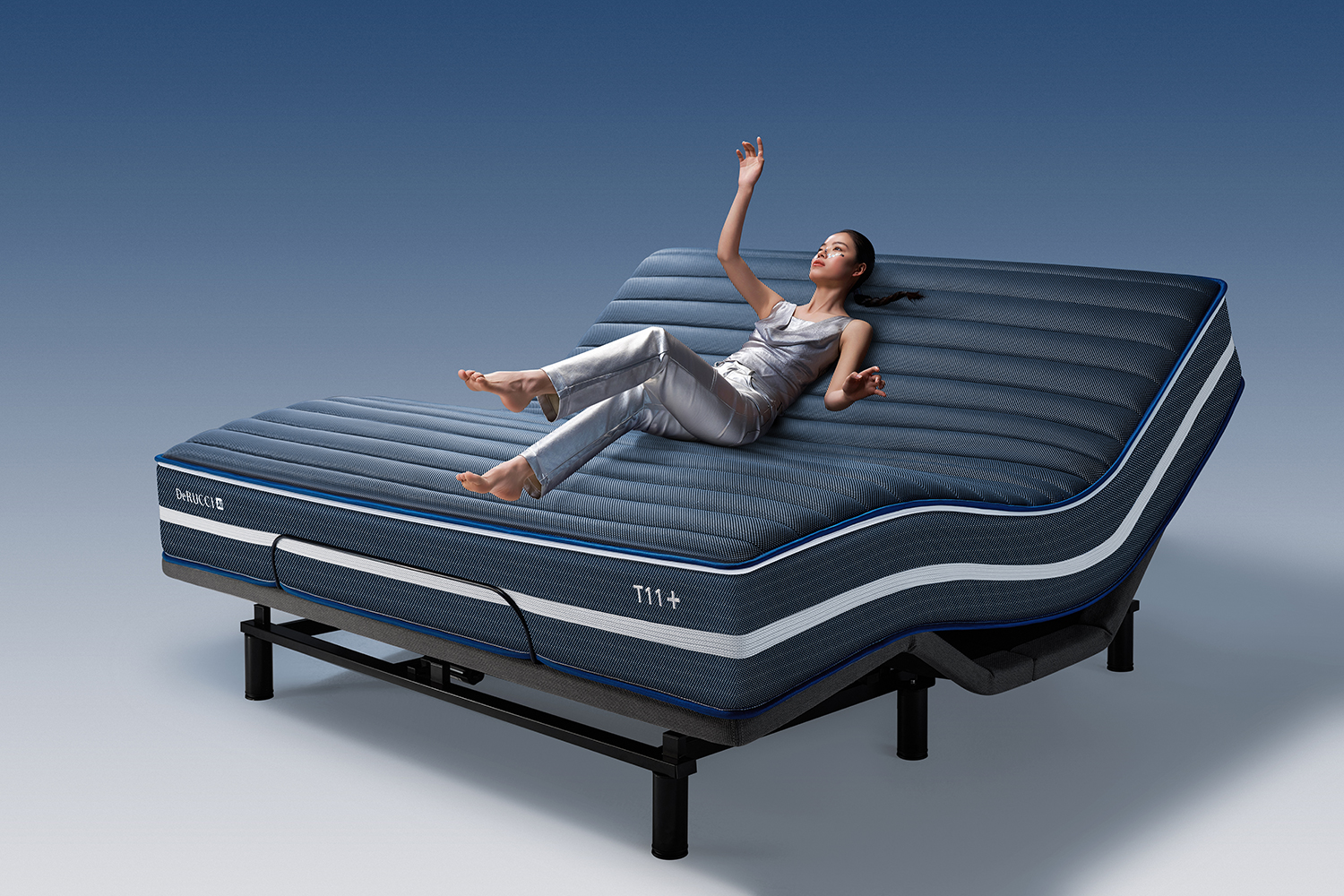
How a Smart Mattress Regulates Temperature for Hot Sleepers
If you often get into bed feeling comfortable and wake later because the surface has become warm or damp, the room temperature is only one part of the issue. A smart mattress regulates temperature for hot sleepers by combining active heat management, breathable materials, and timing controls that fit the way body temperature changes overnight. DeRUCCI treats this as a full comfort system: the mattress should help the sleeper settle into a steadier thermal environment, rather than making them keep adjusting the duvet, fan, or air conditioning after lights out.
Why Sleeping Hot and Sweating Disrupts Sleep
Sleeping hot interrupts rest because the body uses temperature as one of its signals for sleep. When heat collects under bedding, the nervous system can remain more alert, sleep onset may take longer, and deeper sleep can become easier to disturb. For hot sleepers, temperature control is not a decorative upgrade; it is part of the basic comfort conditions that help the body stay asleep.
Body temperature does not stay fixed through the night. Before sleep, the body usually moves heat away from the core and toward the skin, which is one reason people begin to feel drowsy in the evening. In practical terms, the body is trying to prepare a cooler internal condition for rest. If the mattress, sheets, protector, or duvet holds too much warmth close to the skin, that signal becomes less clean and the sleeper may feel unsettled even when the bedroom itself seems cool enough.
This is why night sweating can feel so frustrating. It is not only moisture on the skin; it is the body responding to a sleep surface that is holding more warmth than the sleeper can comfortably manage. A hot sleeper may wake up, push the blanket away, cool down too far, and then wake again because the body has become chilled. These small interruptions may not always feel severe at the time, but they can reduce how rested the sleeper feels in the morning.
Many buyers first suspect mattress firmness when they wake hot. Firmness can play a role, but heat usually comes from the whole sleep setup: mattress surface, comfort layers, sheet fabric, duvet fill, pajamas, humidity, and airflow around the bed. A firm mattress can still retain warmth if its layers are dense, while a softer mattress can feel comfortable if its materials allow air to move. The more useful question is whether the bed helps heat move away from the body at the moments when the sleeper needs it most.
How a Smart Mattress Actively Regulates Temperature
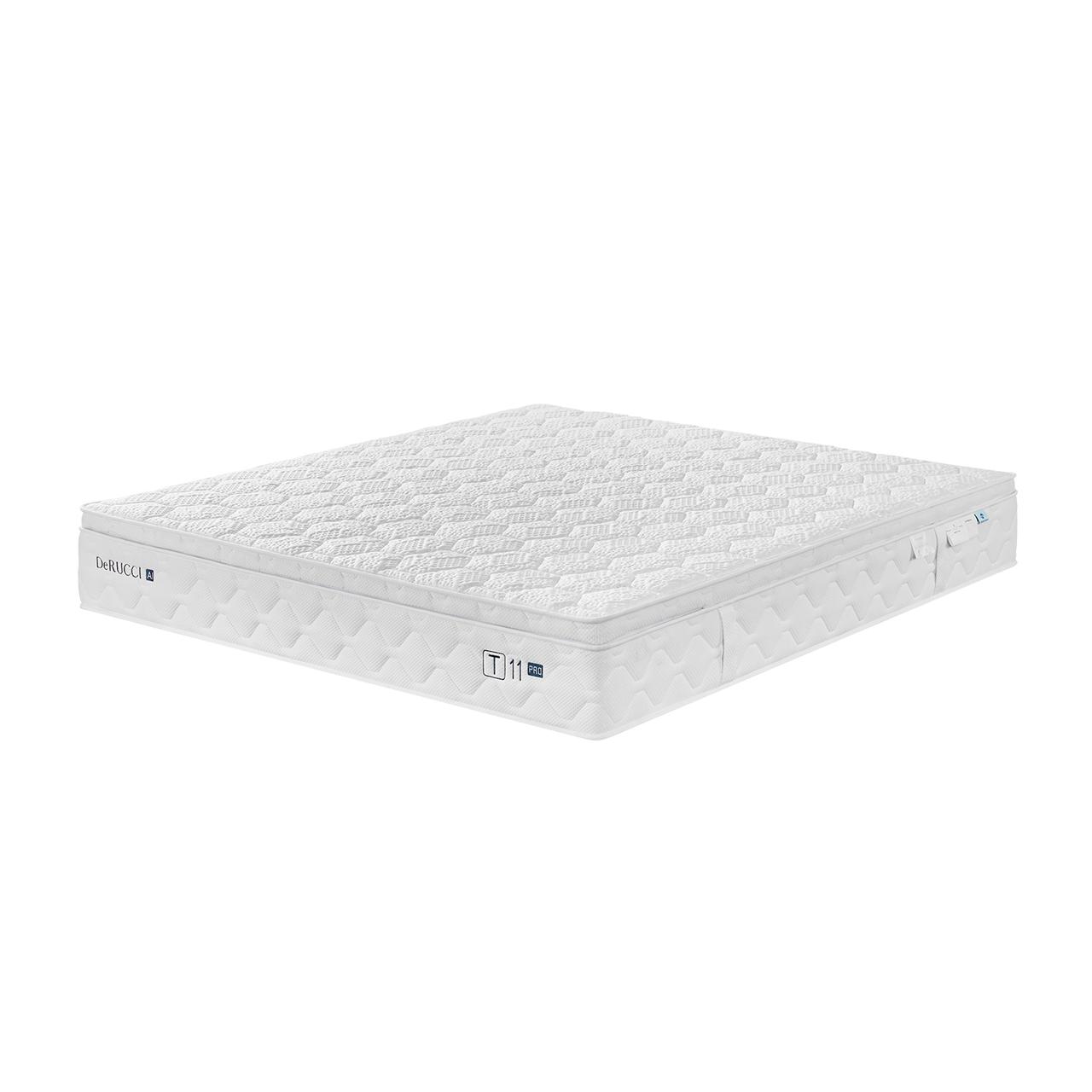
A smart mattress goes beyond ordinary cooling fabric because it can manage warmth according to a chosen setting and schedule, rather than relying only on passive heat release. In the DeRUCCI T11 series, app-based temperature settings, leg-area graphene far-infrared technology, and timed routines are designed to support a steadier bedtime experience for people who tend to sleep hot.
Passive cooling materials work much like breathable clothing. They help heat and moisture move away from the body, but they do not actively change the thermal condition of the bed. Active temperature control is closer to setting a household thermostat before going to sleep. The sleeper chooses a setting and a routine, and the mattress supports that comfort plan before the sleeper has to wake up and make a manual adjustment.
Within the DeRUCCI T11 PRO AI smart mattress system, graphene far-infrared technology is applied in the leg area, with far-infrared wavelengths in the 6-15 micrometer range. In day-to-day use, this feature is intended to support targeted temperature comfort in an area where some sleepers notice imbalance, such as cold feet or uneven warmth. For hot sleepers, the value is not aggressive heating or dramatic cooling. The practical benefit is more controlled comfort during the period when the body is trying to settle into sleep.
The app allows temperature settings for the leg area and supports 1, 2, or 4-hour timers. That timing matters because the body does not need the same thermal support all night. A sleeper may want a comfortable transition during the first part of the night, then prefer the function to stop once the body has settled. Similar to preparing the bedroom before bedtime, a timed mattress routine can reduce the need to wake up later and change the room temperature or bedding.
One detail hot sleepers should understand is that the surface of the mattress may feel different from the number shown in the app. Bedding changes heat transfer. A thick duvet, dense mattress protector, or heavy sheet set can affect how warmth reaches the body and how quickly heat can move away. For that reason, a smart mattress should not be evaluated by the app setting alone. It should be judged by how the complete bed setup feels after 20 to 30 minutes of real lying time.
For buyers in Australia, Singapore, Malaysia, and Vietnam, the DeRUCCI T11 series AI smart mattress can be reviewed through the official AI smart mattress temperature control page. Buyers in North America should note that the T11 series AI smart mattresses are not currently sold in the United States or Canada. DeRUCCI currently indicates that North American AI mattress availability is tentatively planned for the second half of 2026.
How Breathable Materials Support Cooling
Active temperature control works best when the mattress materials give heat and moisture a path to move away from the body. In a smart mattress, airflow layers, open textile structures, and responsive comfort materials help reduce the warm, closed-in feeling that can build under the sleeper. DeRUCCI combines active temperature support with material choices intended to keep the sleep surface more breathable.
A mattress can be thought of as something the body uses for seven or eight hours at a time. If the materials do not breathe, even a cool room can feel uncomfortable after body heat builds up. In mattress design, breathability depends on how easily air can pass through the surface and support layers. That makes the structure of the material just as important as how soft it feels during a short showroom test.
DeRUCCI uses 3D-Plus spacer fabric with an X-shaped structure to improve airflow. Instead of creating a flat, tightly compressed surface, the design leaves open pathways inside the fabric. For a hot sleeper, this gives body heat more room to disperse rather than staying directly under the back, hips, or shoulders. The material is described as offering 4.4 times breathability, which can be read in practical terms: air moves more freely, so the bed is less likely to feel stuffy once it is covered with sheets and bedding.
Dutch Talalay latex also supports ventilation through honeycomb-style air holes. Many sleepers value latex because it tends to feel buoyant rather than allowing the body to sink deeply into the surface. The honeycomb openings add another route for air movement, helping reduce the trapped-heat feeling that can occur when the body presses into dense comfort foam for long periods.
The most dependable cooling experience usually comes from using both approaches together: active temperature control and breathable comfort layers. Active control helps shape the bedtime routine, while breathable materials help carry warmth and moisture away from the sleeper. Either approach can feel limited on its own. A mattress with active temperature features but restricted airflow may still feel heavy under bedding. A breathable mattress without active control may depend too much on the room temperature and the season.
For hot sleepers, this combination can also reduce overcorrection. Instead of lowering the air conditioner too much and waking cold at 3 a.m., the mattress can support a more local and measured comfort adjustment. The aim is not to make the bed feel icy. The aim is to create a sleep surface that stays calmer, drier, and easier to remain settled on through the first part of the night.
Buying Advice for Hot Sleepers
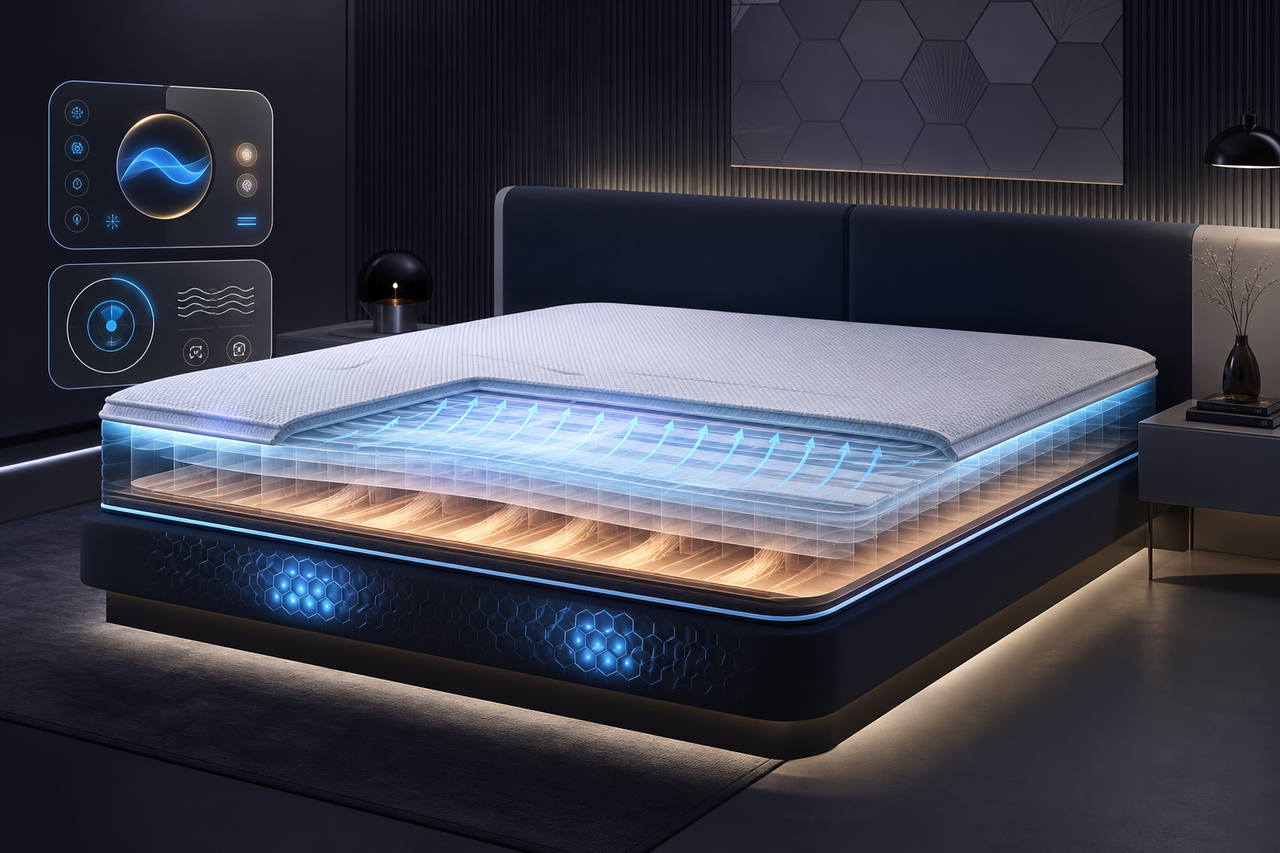
(This image was generated by AI and is for illustrative purposes only; it is not a real product image.)
Hot sleepers should compare smart mattresses by looking at the full comfort system, not by relying on one cooling claim. A useful evaluation checks active temperature settings, breathable materials, bedding compatibility, timer options, and market availability. DeRUCCI T11 series AI smart mattresses are most relevant for buyers in Australia, Singapore, Malaysia, and Vietnam who want premium sleep support with temperature-aware features.
Start with the mechanism. Does the mattress actively regulate temperature, or does it mainly use cooling fabric on the surface? Both can help, but they address different parts of the problem. Cooling fabric helps heat move away when conditions allow it. Active control lets the sleeper set a thermal routine. In practice, a stronger solution often combines both rather than depending on one material claim.
Second, check the comfort layers. Look for breathable surface materials, open airflow structures, and latex or fabric systems that allow ventilation. Dense layers can feel comfortable during a five-minute showroom trial but become warmer after a full night, especially under a duvet. Hot sleepers should lie down long enough to notice whether the surface begins to feel closed-in once body heat has had time to build.
Third, review bedding compatibility. A smart mattress cannot fully offset a heat-trapping duvet or a protector that blocks airflow. Lightweight sheets, breathable mattress protectors, and blankets matched to the season help the mattress perform closer to its intended design. The bed should be judged as a complete setup, not as a mattress in isolation.
Fourth, confirm availability before comparing models in detail. The DeRUCCI T11 series AI smart mattresses are currently available in Australia, Singapore, Malaysia, and Vietnam. They are not currently available for purchase in the United States or Canada. North American shoppers can still review DeRUCCI traditional mattresses, bed frames, and living products through the global site, but they should not treat T11 series AI models as a current North American purchase option.
For high-net-worth households, the final decision often comes down to consistency rather than a single feature. A premium mattress should make sleep easier night after night, especially for couples who do not share the same temperature preference. DeRUCCI positions the T11 series around adaptive sleep comfort, combining temperature-aware functions with breathable material engineering instead of relying on one surface-level cooling promise.
Smart mattress temperature control raises practical questions because sleepers want comfort they can feel, not technical claims that are hard to verify at home. The answers below explain what hot sleepers should expect, how bedding changes the result, and what to compare before choosing a temperature-aware smart mattress for a premium bedroom setup.
Frequently Asked Questions
For store experience, regional availability, and local product guidance, visit DeRUCCI online and check global store locations and details.