
 American
( English )
American
( English ) Singapore ( English )
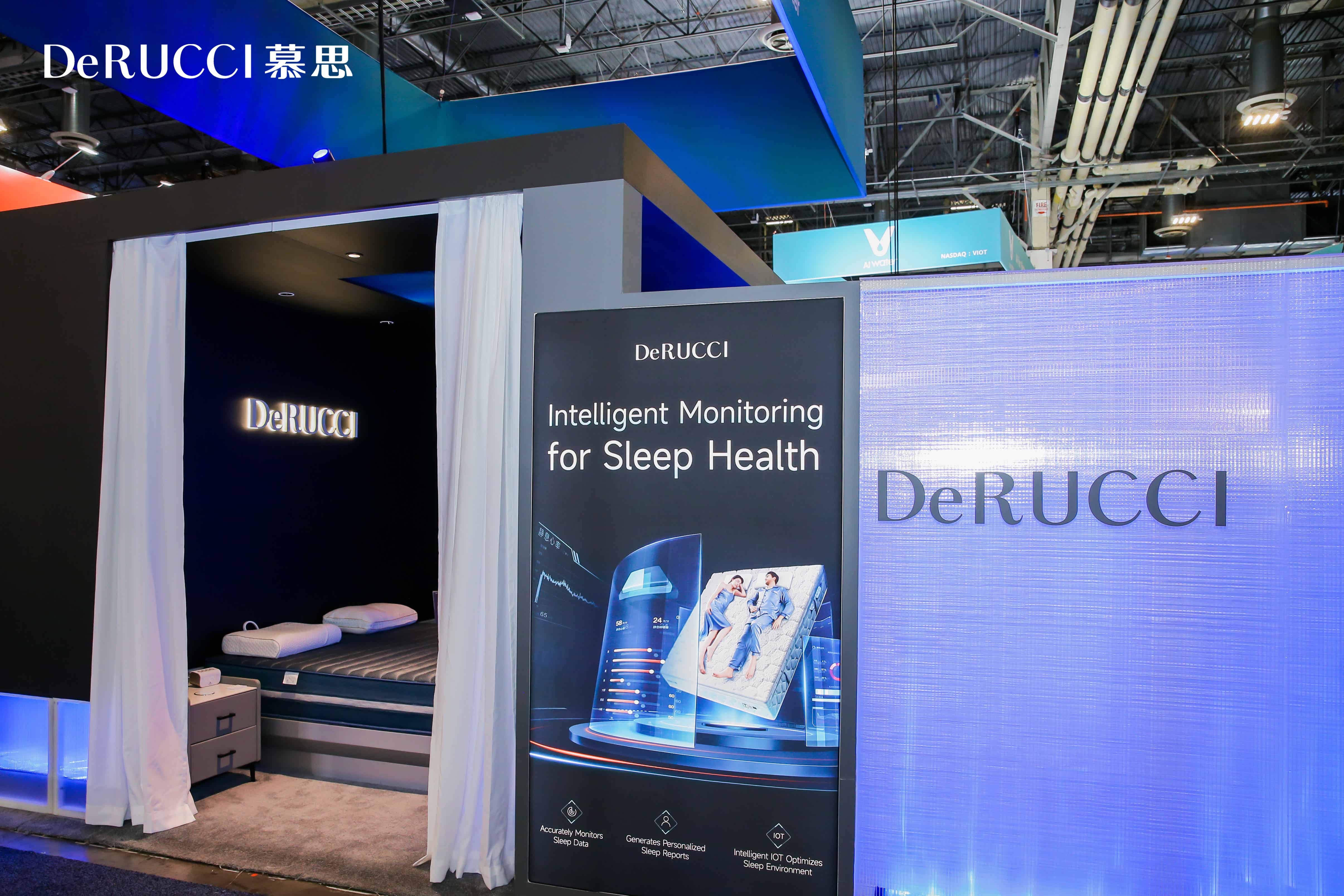
What DeRUCCI Sleep Science Means for Your Bed
A bed can feel reassuring in a showroom and still feel wrong at 3 a.m. That gap is familiar to many buyers, and it is not always caused by a poor in-store test. DeRUCCI sleep science is relevant because a bed is not only a piece of furniture. It works every night as a support system shaped by sleep research, body measurements, material choices, and the problems people actually report after repeated nights of use.
A conventional mattress expects the sleeper to fit into a fixed construction. A more developed sleep system tries to fit the sleeper more closely. The difference is similar to climate control that adjusts temperature in the background rather than asking someone to get up and turn a dial. The better buying question is not whether the surface feels pleasant for five minutes. It is whether the bed has been designed around how people sleep for several continuous hours, across different postures, body types, and household routines.
Executive Summary
DeRUCCI sleep science links sleep research, ergonomic measurement, and smart sensing development to the bed a customer eventually uses at home. Its practical value is straightforward: product decisions should be informed by current sleep problems, measured support needs, and technology that can reduce trial-and-error over time.
This article separates a brand history from a sleep science story. Brand history records what a company has done over time. Sleep science explains how a company approaches comfort, body support, and product development. For DeRUCCI, the main trust markers in available 2025 materials are 12 consecutive years of annual Sleep White Papers with the China Sleep Research Society, more than 1 million ergonomic data points from TS Data Generations 1-8, research collaboration with MIT on FiberCircuits smart fiber technology, and 1,978 patents reported in official brand and annual report materials.
The question for a buyer is practical rather than theoretical: does this research make the bed more relevant to a real bedroom? The answer depends on what kind of claim is being made. A current product feature, a partner-supported research result, and a technology still under validation should not be treated as the same thing.
Core Insights
The main point is that sleep science should be judged by what it changes in practice: product standards, support design, sensing capability, and the clarity of each claim. A useful statement tells the shopper what was measured, which source supports it, and what it may mean for nightly comfort.
Key points for shoppers:
- A mattress should be designed around current sleep problems, not around assumptions that may no longer match daily life.
- Annual white papers can help identify how sleep patterns are changing across households and age groups.
- More than 1 million ergonomic data points can inform shoulder, waist, and hip support rather than leaving those decisions to broad firmness labels.
- MIT FiberCircuits research shows investment in future sensing work, but it should not be presented as a feature already built into current products.
- T11 PRO is a current smart sleep example using the Harvard CPC-powered SleepCare System for heart rate, breathing, and daily sleep analysis without wearable devices.
- Availability matters: the T11 series is currently available in Australia, Singapore, Malaysia, and Vietnam, while North America currently focuses on traditional mattresses such as Taputa Latex and Century Dream. DeRUCCI's AI mattress lineup is expected to become available in North America in the second half of 2026.
Why Does DeRUCCI Sleep Science Matter When You Buy a Bed?
DeRUCCI sleep science matters because many shoppers run into the same issue: a bed may feel acceptable in a store, then fail during real sleep. Research-based design helps connect short showroom comfort with longer-night support, pressure relief, and fewer adjustments during the night.
Start with the real problem: the bed feels fine in the store but not at 3 a.m.
Testing a mattress briefly in a showroom is like judging running shoes by standing still in them. You can notice the first layer of comfort, but you cannot see how your body responds after hours of side sleeping, back sleeping, heat buildup, small position changes, or movement from a partner.
That is why sleep science has to stay close to lived experience. A shopper may describe a mattress as too firm, while the more specific issue is shoulder pressure. Another shopper may call a mattress too soft, when the actual problem is insufficient waist support. A better bed decision starts by translating those broad feelings into support needs that can be designed, tested, and explained.
Principle explained simply: a regular mattress makes you adapt to it; a smarter sleep system adapts to you
A traditional mattress is built from fixed materials and fixed layers. It can be a good match for one body shape and a poor match for another. An AI smart bed, when properly engineered, can use built-in sensors and automatic support adjustment to respond more actively to the sleeper instead of relying only on a single preset feel.
A regular mattress asks the sleeper to adapt to the bed. A smarter sleep system is designed so the bed can adapt more closely to the sleeper’s body, posture, and nightly changes.
What counts as useful evidence: research that changes product standards, not research used as decoration
A scientific tone in a brochure is not enough. Useful evidence should answer three plain questions: what was measured, who measured it, and how the finding affected the product.
For a bed, the strongest evidence is not a research label placed beside a product photo. It is evidence that can influence firmness design, zoning, material selection, sensing features, or product testing standards. If the research does not change any of those decisions, it has limited value for the buyer.
What Is DeRUCCI Sleep Science in Plain English?
In plain English, DeRUCCI sleep science refers to the research methods behind comfort, support, and sleep improvement. It is not only a company timeline. It is the work of studying sleep problems, measuring bodies, testing technologies, and applying those findings to sleep products.
Define the concept: research methods behind comfort, support, and sleep improvement
Sleep science in bedding should be practical. It looks at how people fall asleep, how long they rest, how the body presses into a mattress, how partners affect each other’s sleep, and how support can be adjusted for different sleepers.
For consumers, this means a mattress should not be judged only by a soft or firm label. The more useful questions are specific. Does the shoulder sink enough when side sleeping? Is the waist held up rather than left unsupported? Are the hips balanced? Does the bed reduce the need to keep changing position through the night?
How this differs from brand history
Brand history describes what happened: when a company started, where it expanded, and which milestones it reached. Sleep science explains how the brand works: how it gathers evidence, studies sleep behavior, and turns that knowledge into product decisions.
That difference matters. A long history can create familiarity. A clear research method gives buyers a more concrete reason to trust the way a product is designed.
The three research pillars
DeRUCCI sleep science can be understood through three main pillars:
- Annual Sleep White Papers with the China Sleep Research Society.
- TS Data Generations 1-8 with more than 1 million ergonomic data points.
- Next-generation smart fiber research through MIT collaboration and the FiberCircuits project.
Readers who want primary brand context can review the healthy sleep research and brand story.
How Do Annual Sleep White Papers Affect the Bed You Bring Home?
Annual sleep research matters because household sleep problems change over time. If more people are sleeping less, taking longer to fall asleep, or waking without feeling restored, bed design should respond to those conditions instead of relying on older comfort assumptions.
According to available 2025 materials, DeRUCCI and the China Sleep Research Society have jointly published annual Sleep White Papers for 12 consecutive years. That continuing work matters because it provides a recurring view of how sleep difficulties are changing, rather than relying on a one-time survey.
The 2025 findings reported that 62% of surveyed people experience sleep difficulties. In everyday terms, poor sleep is not a niche issue. It is a common household problem that affects bedrooms, couples, workdays, and recovery routines.
The same materials note that average sleep duration declined from 7.02 to 6.67 hours. That is a decrease of 0.35 hours, or about 21 minutes per night. For a busy adult, 21 minutes may sound modest, but over a week it adds up to nearly two and a half hours of missed rest.
Consumer meaning: the product should follow current sleep problems
A bed designed around older assumptions may miss pressures that are now more common: later work schedules, more screen exposure, urban noise, partner disturbance, and stress-related restlessness.
White paper research does not mean a mattress can cure sleep problems. It means product teams have a clearer map of what sleepers are dealing with. Much like a clinician checking current symptoms before giving advice, bedding research should begin with what people are experiencing now, not with a generic comfort claim.
How Does 1M+ Ergonomic Data Change Mattress Support?
More than 1 million ergonomic data points matter because support should not be guessed from a generic body type. Real measurements can guide how a mattress supports different heights, weights, sleeping positions, shoulders, waists, and hips.
T11 PRO English materials state that TS Data Generations 1-8 accumulated more than 1 million ergonomic data points. In plain language, this means DeRUCCI has measured a large base of body data and used it to inform support design.
The closest practical comparison is tailoring. It is like working with a tailor who has measured a million bodies before fitting yours, instead of assuming everyone should wear size L. The more body data a design team studies, the better it can understand where support needs commonly differ.
What this means for your body
For a side sleeper, the shoulder and hip usually need pressure relief, while the waist still needs to be supported. For a back sleeper, the lower back needs steadier contact. For a heavier sleeper, the mattress has to manage deeper compression without losing support too quickly. For a lighter sleeper, the surface needs to respond without feeling hard or unyielding.
Ergonomic data helps translate those needs into product decisions. It does not make every mattress perfect for every sleeper, and a buyer still needs to test the feel. But it reduces the chance that support is based only on broad assumptions or a single standard body profile.
What Does Future Sensing Research Mean for Everyday Sleep?
Future sensing research matters because the next stage of bedding may rely less on manual adjustment and more on beds that can read sleep-related signals. The important point is accuracy: research validation should be described carefully, without suggesting that unfinished work is already inside current products.
DeRUCCI began collaboration with MIT in 2024 and announced the FiberCircuits smart fiber project on 2025-10-27. The goal is to study how sensing capability can be woven into mattress fibers so a bed may understand signals such as heart rate and breathing without requiring wearable devices.
This is not the same as saying the technology is already in current mattresses. The FiberCircuits project is in a from-zero-to-one research validation stage. That distinction is important because it protects consumers from overstatement and gives the research a more accurate place in the product story.
Consumer meaning: future beds may sense more naturally
Many people do not like wearing devices to sleep. A watch can feel tight. A ring can be distracting. A phone under the pillow is not a good long-term solution. Future smart fiber research points toward sensing that may become more natural because it is built into the sleep environment itself.
The consumer benefit is not novelty for its own sake. It is lower friction. If future beds can read breathing and heart rate more naturally, sleep support may become easier to personalize without adding another device to the bedtime routine.
Where Does Current Smart Sleep Technology Fit In?
Current smart sleep technology should be evaluated separately from future research. T11 PRO is a present product example, while FiberCircuits is a research direction. Keeping those two areas separate helps shoppers understand what they can buy now and what is still being developed.
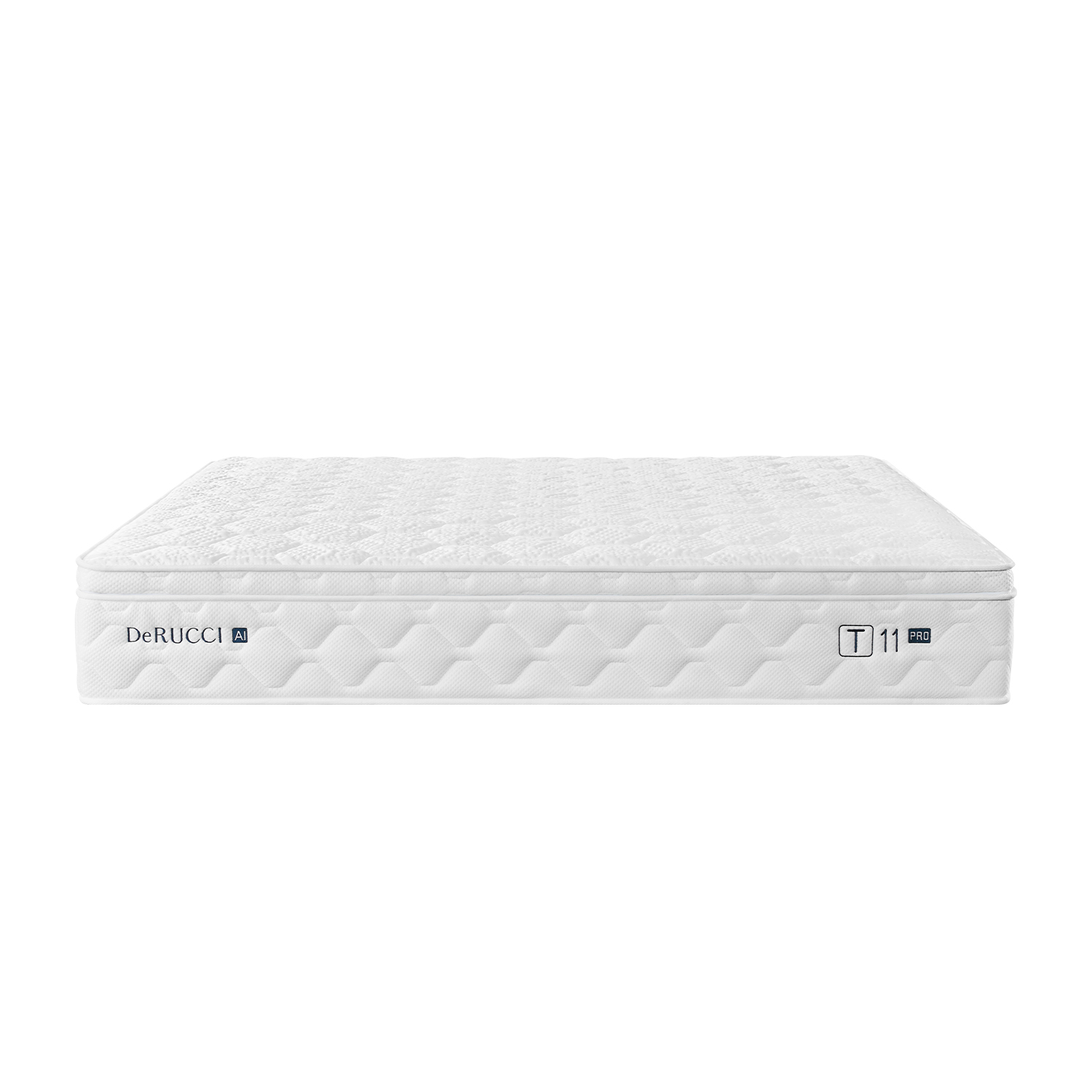
Once the sleep problem and research method are clear, DeRUCCI’s smart sleep products are easier to evaluate. The T11 PRO example uses a Harvard CPC-powered SleepCare System to track heart rate, breathing, and daily sleep analysis without wearable devices.
For the sleeper, the point is simple: the bed can gather sleep-related signals without asking the user to wear extra equipment. That is more convenient than a device that has to be charged, worn correctly, and remembered every night.
Smart comfort can be understood in the same practical way as a smart thermostat. It adjusts while someone is asleep instead of asking that person to wake up and change settings. In bedding, this matters because many sleep disruptions occur when the person is not fully awake or able to make a careful adjustment.
Data use caution
Product features should be tied to verified sources without overstating research that is still in progress. Harvard CPC belongs to the T11 PRO SleepCare System materials. FiberCircuits belongs to MIT collaboration and future smart fiber research. Keeping those claims separate makes the overall explanation more reliable.
How Should Shoppers Compare Traditional, Electric, and AI Beds?
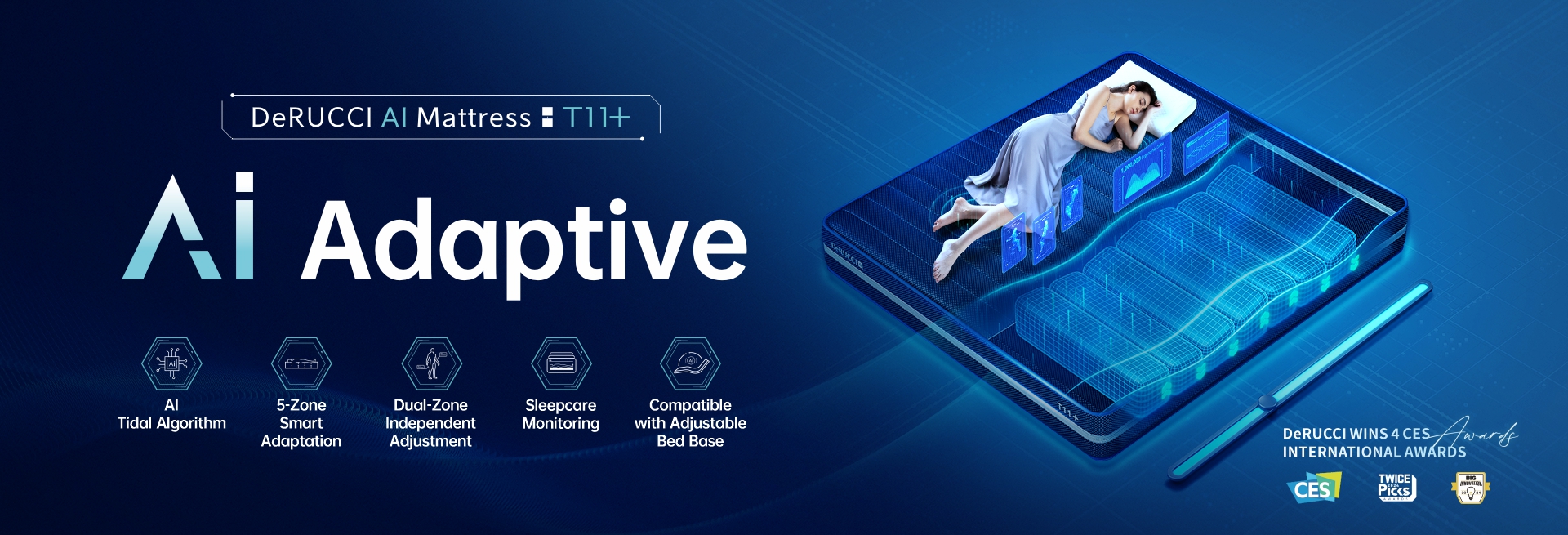
Not every bed that moves is truly smart. The useful comparison is whether the bed is passive, manually adjustable, or able to sense and respond during sleep. Movement is visible, but the quality of the response is what matters most for nightly use.
| Bed type | How it works | Consumer meaning |
|---|---|---|
| Traditional spring bed | Passive support from fixed materials | Comfort depends on the original construction; the sleeper adapts to the bed. |
| Ordinary electric bed | Adjustable angles, usually through manual control | Helpful for position changes, but the user often has to operate it while awake. |
| AI smart bed | Built-in sensors, automatic firmness or position support, and independent side adjustment when supported by the model | The bed can respond more actively to the body during sleep, reducing manual guesswork. |
The buying takeaway is straightforward: movement alone does not make a bed smart. A bed that raises the head or feet can still be useful, but intelligence depends on whether the system senses sleep-related needs and responds with automatic support adjustment.
For couples, independent side control matters when it is supported by the product design. If one person moves or needs a different support setting, the other should not feel every adjustment. Night comfort is often shared comfort, and partner disturbance is one of the practical issues a bed has to manage.
What Trust Signals Support DeRUCCI Sleep Science?
Trust in DeRUCCI sleep science comes from several signals working together: years of sleep product experience, patent data, long-term white paper work, and research collaboration. The strongest claims use specific numbers and sources instead of broad phrases.
The experience signal is 22 years of brand accumulation in healthy sleep products and systems. Experience does not automatically prove that every product is the right fit for every sleeper, but it does show that the company has spent many years working in the sleep category rather than treating it as a short-term trend.
The expertise signal is measurable intellectual property. Official brand and annual report materials cite 1,978 patents, including 212 invention patents, 1,124 utility model patents, and 642 design patents. In practical terms, that means the brand has documented a large body of product and design development rather than relying only on general claims.
The authority signal includes research collaboration with MIT on smart fiber technology and long-term Sleep White Paper work with the China Sleep Research Society. These relationships matter because they connect the brand’s product direction with recognized research communities.
The trustworthiness signal is careful wording. A reliable article should not say many patents when 1,978 is available. It should not describe future research as current product performance. It should not confuse faster sleep onset with shorter total sleep time.
Before You Trust the Claims: What Should You Check?
Before trusting any sleep claim, shoppers should check whether it describes a current product, a tested result, or future research. They should also check the source, availability, and wording so they do not mistake a development direction for proven product performance.
Check the claim type
Ask whether the statement is about:
- A current product feature.
- A tested performance result.
- A research collaboration.
- A future technology direction.
These are not the same. A current product feature can help a shopper decide what to buy. A research collaboration can show where the brand is investing. A tested result may support performance, but it has to be tied to the correct product, test condition, and source.
Check the source
Reliable sleep claims should point to official brand profiles, annual report data, white paper findings, lab testing, or partner announcements. A claim without a source may still be worth noting, but it should not carry the same weight as a documented statement.
Before You Buy: Availability Check
T11 series is currently available in: Australia, Singapore, Malaysia, Vietnam.
North America, including the United States and Canada, currently focuses on traditional mattresses such as Taputa Latex Mattress and Century Dream 3D Latex Mattress, along with bed frames such as Galaxy, Madrid, and Leisurely. Shoppers in North America should verify local product availability before comparing T11 series features.
Check wording around sleep data
If a study says sleep onset time is shorter, that means people fall asleep faster. It does not mean total sleep time is shorter. For example, a 37.3% shorter sleep onset time would mean falling asleep nearly 40% faster; if someone usually takes 30 minutes, that is about 11 minutes saved.
That kind of translation matters because data should help shoppers understand the likely experience. It should not make the claim sound larger than it is or create confusion about what was actually measured.
LocatorShop: Where to Experience the Bed in Person
Research can build confidence, but in-person experience still matters. Shoppers should test comfort, ask about local availability, confirm whether a product is traditional or smart, and compare support feel across sleeping positions before making a final decision.
A bed is personal. The best next step is to combine research confidence with physical testing. Shoppers can ask store teams which models are available in their country, whether T11 series products are sold locally, and how support differs across traditional mattresses, electric beds, and AI smart beds.
To experience more sleep solutions in person, find global store locations and detailed addresses.