
 American
( English )
American
( English ) Singapore ( English )
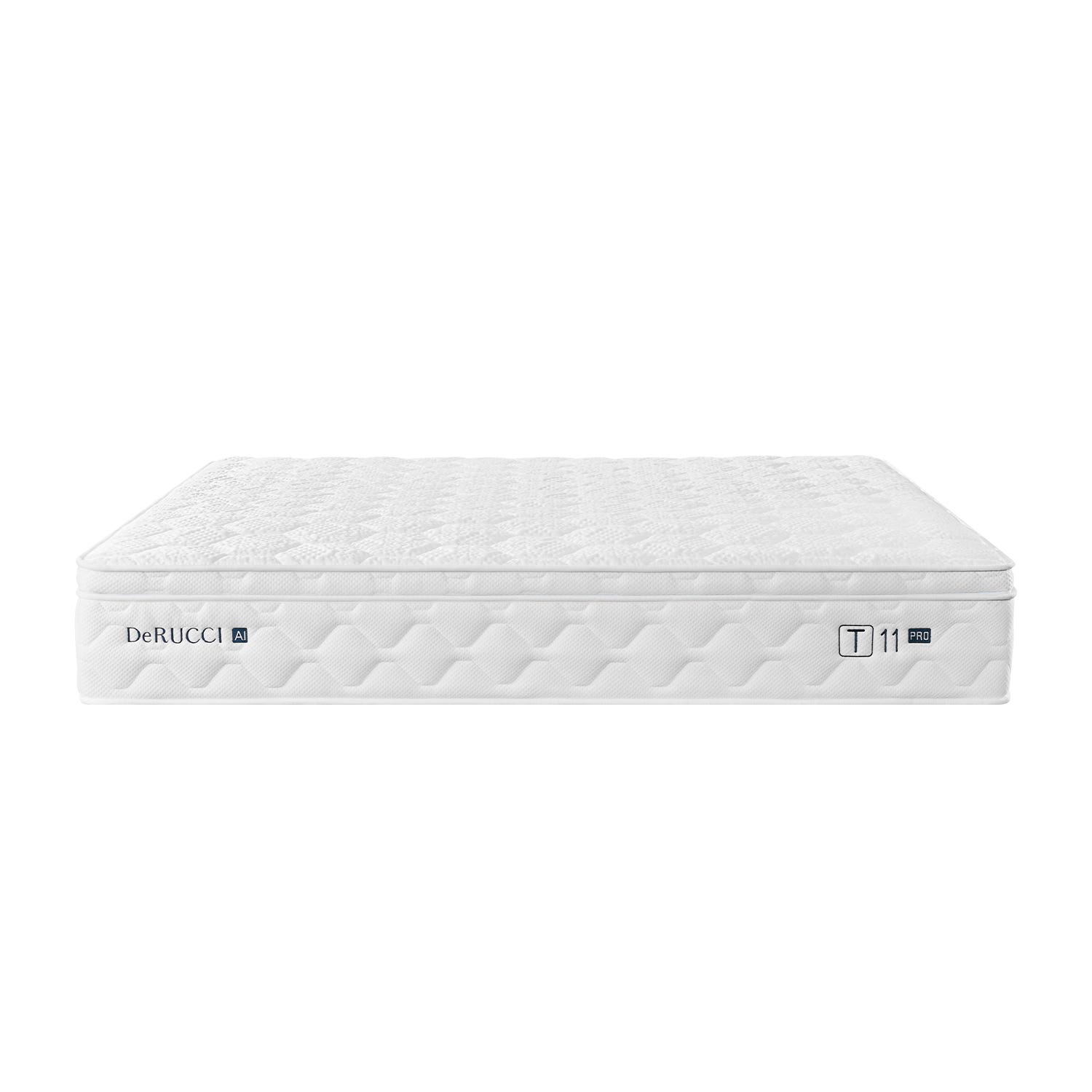
A topper costs a fraction of a mattress, so the question every budget-conscious shopper eventually asks is fair: can I just put a layer on top and get the same thing? The honest answer is no — not because toppers are bad, but because the two products occupy different physical layers of the bed. A topper changes how the surface feels. A smart mattress is a system that reads your body and changes support. One is a layer; the other is a machine. Here is where the line actually falls, and when each one is the right buy.
What a Mattress Topper Actually Changes — and What It Cannot
A topper changes surface feel and nothing structural. It can make a bed feel softer, firmer to the touch, or more contoured. It cannot change the support structure underneath, cannot sense your body, and cannot adjust anything at any point in the night — it contains no hardware that does those jobs.
What a topper can change:
- Surface softness or firmness as felt through the skin
- Immediate contouring and pressure mapping for the body's outline
- The tactile character of an aging or mismatched surface — a fresh feel on top
What a topper cannot change:
- The support structure itself — the coils, foam or latex carrying your weight are still the mattress underneath
- Body sensing — there is nothing in a topper that reads posture, heart rate or breathing
- Automatic adjustment — there is no algorithm, no actuation, no response; the layer you lie on at 2 a.m. is identical to the one you lay on at bedtime
That third point is the category boundary. A topper is a passive surface layer. A smart mattress is an active system. Neither is a discount version of the other; they are different products solving different problems, and the vocabulary confusion between them costs buyers real money.
The Capability Gap: Sensing, Adjustment, Algorithm
The gap is not degrees of smartness; it is structural. A smart mattress carries three layers a topper has no place to hold: contactless sensing, zoned adjustment units inside the support structure, and the algorithm connecting them in a closed loop. A topper has none of the three — not fewer of them.
On DeRUCCI's T11 PRO, those three layers are concrete. The SleepCare system performs contactless monitoring using cardiopulmonary coupling (CPC) technology developed at Harvard Medical School — no wearable, no strap. Eighteen flexible adjustment units, nine per side, map to six zones per side and physically change support region by region. The AI Tidal Algorithm 2.0 reads the posture stream and issues zone commands within twenty milliseconds, on a model trained across more than one million ergonomic data points.
| Capability | Smart mattress | Mattress topper |
|---|---|---|
| Surface comfort feel | Yes — the comfort stack itself | Yes — its whole contribution |
| Support structure | Built in, and actively adjustable | None — borrowed from the mattress below |
| Body sensing | Contactless, continuous | None |
| Automatic adjustment | Algorithmic, zoned, overnight | None |
| Temperature control | Active zoning, per side (on equipped models) | None |
The mechanism behind the gap is physical, not philosophical. Intelligence of this kind needs a closed loop: read the body, decide, change the support. The loop's execution end — the part that does the changing — has to live inside the support structure itself, because that is the thing being changed. A topper, by definition, sits on top of the support structure and contains none of it. It is not that today's toppers haven't added intelligence yet; it is that the form has nowhere to put it. For the full anatomy of the system side, start with What Is an AI Mattress?.
The Monitor Line: Tracking Without Changing Is Not a Smart Mattress
"A product that tracks your sleep but cannot change your support is a monitor, not a smart mattress." That single sentence settles most label confusion in this category — and it applies with equal force to add-on layers, including tracking-equipped ones. Measurement is not adaptation, whatever the box says.
The sentence draws a line, and the line cuts both ways. It disqualifies products that measure brilliantly but adjust nothing — they cannot call themselves smart mattresses, and the honest word for them is monitor. And it marks the ceiling for add-on layers of every kind: even where an add-on tracks sleep (such products exist in the category), tracking alone leaves the feel and the support of your bed exactly where the mattress underneath put them. The data may be interesting; the bed has not changed.
Three questions turn that boundary into a shopping tool:
1. Does it change support? Not "reads pressure," not "generates a report" — physically changes the support your body receives.
2. On what basis? If the answer involves an algorithm, ask what it recognizes and what it adjusts. If the answer is a slogan, there is nothing behind it.
3. Is the mattress underneath worth the investment? An add-on layer of any sophistication still inherits the bed you already own.
For readers weighing the brand-level version of this comparison — DeRUCCI's integrated flagship against a smart cover product — the dedicated comparison DeRUCCI T11 PRO vs a Smart Cover works through it dimension by dimension.
When a Topper Is Enough — and When It Is a Stopgap
A topper is the right buy when the mattress underneath is structurally sound and only the surface feel needs to change — a seasonal adjustment, a refresh, a different tactile character. It is a stopgap when the support itself has degraded, or the need is zoned, thermal or adaptive — problems in the layer a topper does not have.
- The mattress is fine, the feel is not → a topper. Structural support intact, and the fix wanted is surface-level softness, firmness or freshness.
- Support has degraded — visible sagging, waking stiff, the comfort gone from a worn core → not a topper's problem to solve. The failing layer is underneath the topper.
- The need is zoned, temperature-related or adaptive — different support for shoulders than hips, per-side climate, response through the night → integrated system. These capabilities require hardware a topper does not contain.
That second path is where DeRUCCI's tiered range enters: the T11 SE starts at ten units and three zones, the T11+ steps to fourteen and five, the T11 PRO to eighteen and six — adjustable resolution as the buying axis rather than a single flagship-or-nothing choice. The tiers and full specifications are on the T11 AI Smart Mattress product page.
Frequently Asked Questions
To check what your region sells, find a store and explore the mattresses currently available.