
 American
( English )
American
( English ) Singapore ( English )
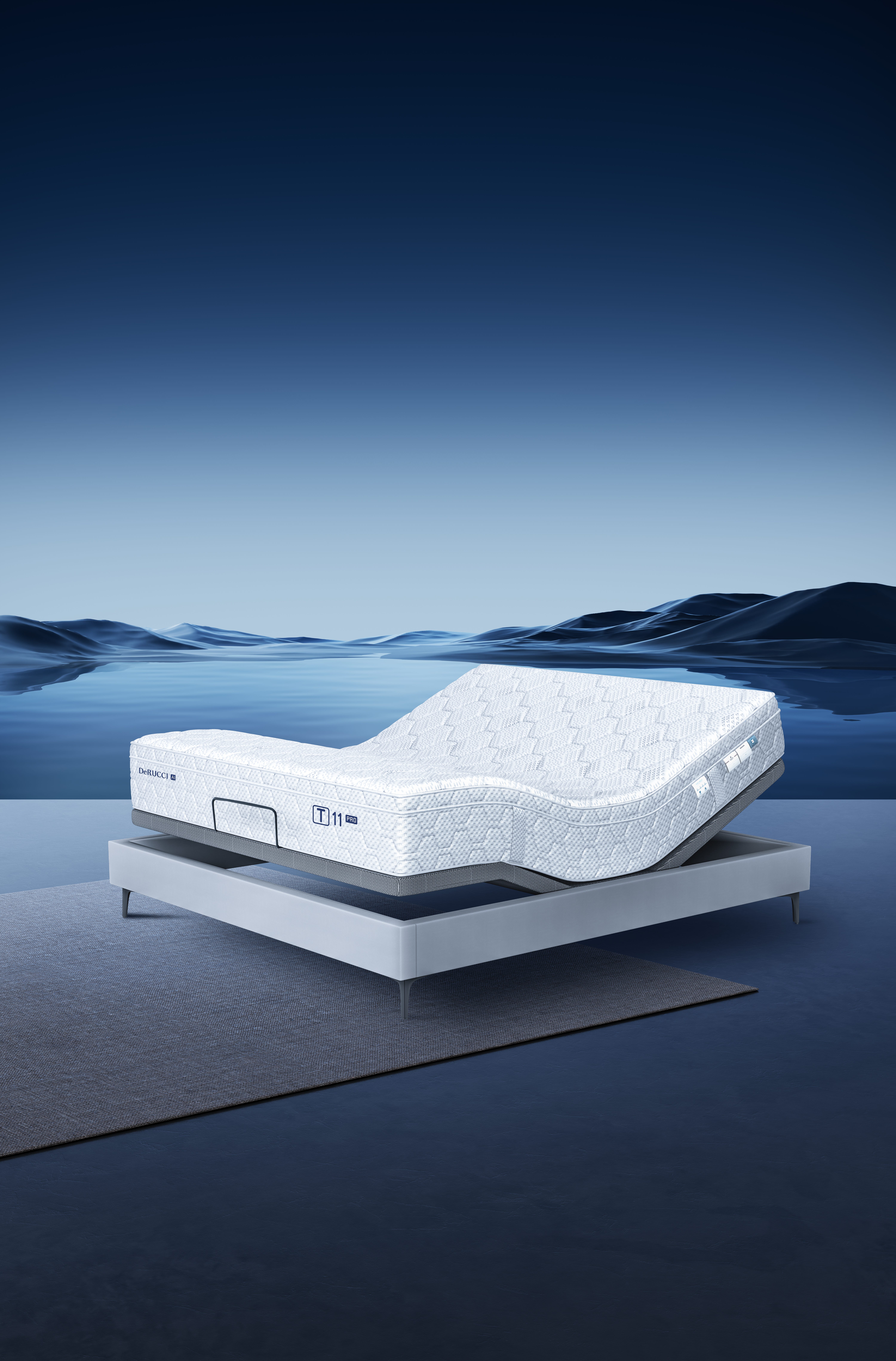
"Adjustable" is doing double duty in this category, and the overlap is where the confusion lives. A smart mattress adjusts firmness — inside the mattress, under your body, all night. An adjustable bed adjusts position — the base mechanically lifts your head or legs to an angle you choose. Both names promise adjustment, and they describe two different mechanisms operating on two different layers of the same bed. This guide separates them, walks through how each mechanism physically works, and answers the question that follows naturally: do you have to pick one?
Two Kinds of "Adjustable": Firmness Inside the Mattress vs Angle Under It
The distinction is mechanical, not marketing. When a smart mattress adjusts, flexible units inside the mattress change the firmness of specific zones while the bed stays level — the surface responds, the body's angle stays put. When an adjustable bed adjusts, motors in the base raise the head or foot — your position changes relative to the floor.
| Smart mattress | Adjustable bed | |
|---|---|---|
| What gets adjusted | Firmness of individual support zones | The angle of the head and/or foot of the bed |
| Layer it lives in | Inside the mattress body | The base frame, under the mattress |
| How it's driven | Sensing plus algorithm, automatic | Motors, commanded by remote or app |
| Typical experience | Zones soften or firm as posture shifts through the night | Reading angle, elevated legs, zero-gravity recline on demand |
| Representative form | Integrated smart mattress | Motorized adjustable base |
Both mechanisms are real, both are useful, and they answer different nightly needs. The firmness side handles what your body does while asleep: rolling from side to back, loading a shoulder, dropping the lumbar. The position side handles what you do while awake or semi-awake: sitting up to read, elevating tired legs, finding a reclined angle for lounging. No amount of angle change firms a soft shoulder zone, and no amount of zone adjustment tilts your torso.
How Each Mechanism Works: Zoned Units vs Mechanical Lift
The two mechanisms sit at two interfaces of the bed. Firmness adjustment happens between your body and the support surface — flexible units inside the mattress change how hard specific zones push back, reading each shift as it happens, unnoticed. Angle adjustment happens between the bed and the floor — a motorized frame rotates bed sections. One is continuous; the other is deliberate.
In the mattress layer, DeRUCCI's T11 series is the working example. The T11 PRO carries eighteen flexible adjustment units, nine per side, mapped to six zones per side — shoulders, back, lumbar, hips, thighs, calves — governed by the AI Tidal Algorithm 2.0, which reads posture and responds within twenty milliseconds. Two control hubs run the left and right halves independently, so one sleeper's adjustment never queues behind the other's. How this mechanism works — how zoned firmness actually changes beneath a sleeper — is unpacked in How Adaptive Firmness Technology Works.
In the base layer, DeRUCCI's Serene series is the brand's own adjustable-base line: Serene Lite (BOS1-001), Serene Plus (BOS1-002) and Serene Premier (BOS1-003). These are independent products with their own specifications — carbon-steel frames, head lift up to 65°, foot lift up to 45°, and on the higher tiers preset positions including zero-gravity, massage, and app control. The Serene specs belong to the base, and pairing one with a T11 mattress is a combination of two products, each with its own spec sheet.
Not Rivals but Layers: Compatibility and the Combined Setup
The question "which one?" assumes a choice that mostly does not exist. The T11 series is built to be compatible with adjustable bed bases, so the two mechanisms stack: mattress-layer zones adapt all night while base-layer angles change whenever you command them. Compatibility is an option, not a requirement — each layer works alone.
- Only the mattress layer → a T11 on a flat base or frame. Full sensing, full zoned adjustment, no lift.
- Only the position layer → an adjustable base under a conventional mattress. All the angles, none of the adaptation.
- Both layers → a T11 on a compatible adjustable base. Firmness adapts through the night; angles change on command; the two dimensions are controlled independently.
For couples weighing the combined setup, the pairing questions have their own dynamics — who adjusts what, and whether one partner's changes reach the other side. On the mattress layer, the T11 PRO's two control hubs keep the halves independent: one sleeper's firmer lumbar zone does not queue behind or override the other's softer shoulder zone. On the base layer, the geometry differs by design — some frames lift the head as one section, others split it so each partner gets an independent angle, which is worth checking in the base's own specifications before choosing. The Adjustable Mattress for Couples guide works through those questions in detail.
One practical note on sequencing: neither layer needs the other to be present to function, but both need power and both have moving parts, so the combined setup is worth planning as a system — where the base plugs in, where the mattress's control hubs sit at the tail of the bed, and how the two remotes or apps divide the work. None of that is complicated; all of it is easier to think about before delivery day than after it.
Matching the Mechanism to What You Feel at Night
A one-line map from symptom to layer: wake with a sore shoulder or an unsupported lower back, and the issue lives in the mattress layer — firmness. Want your upper body or legs elevated for reading, lounging or a reclined position, and the issue lives in the base layer — angle. Want both, stack them.
On the mattress side, the T11 range steps by adjustment resolution: the T11 SE at ten units and three zones, the T11+ at fourteen and five, the T11 PRO at eighteen and six. More resolution means finer mapping of where support changes, not a different category of product — the tiers and their full specifications are listed on the T11 AI Smart Mattress product page. A deeper framework for matching specific comfort problems to the right layer of product is its own topic, covered in the feature-matching guide on this site.
Frequently Asked Questions
To see what your region stocks, find a store and check the mattresses and adjustable frames currently available.