
 American
( English )
 Singapore ( English )

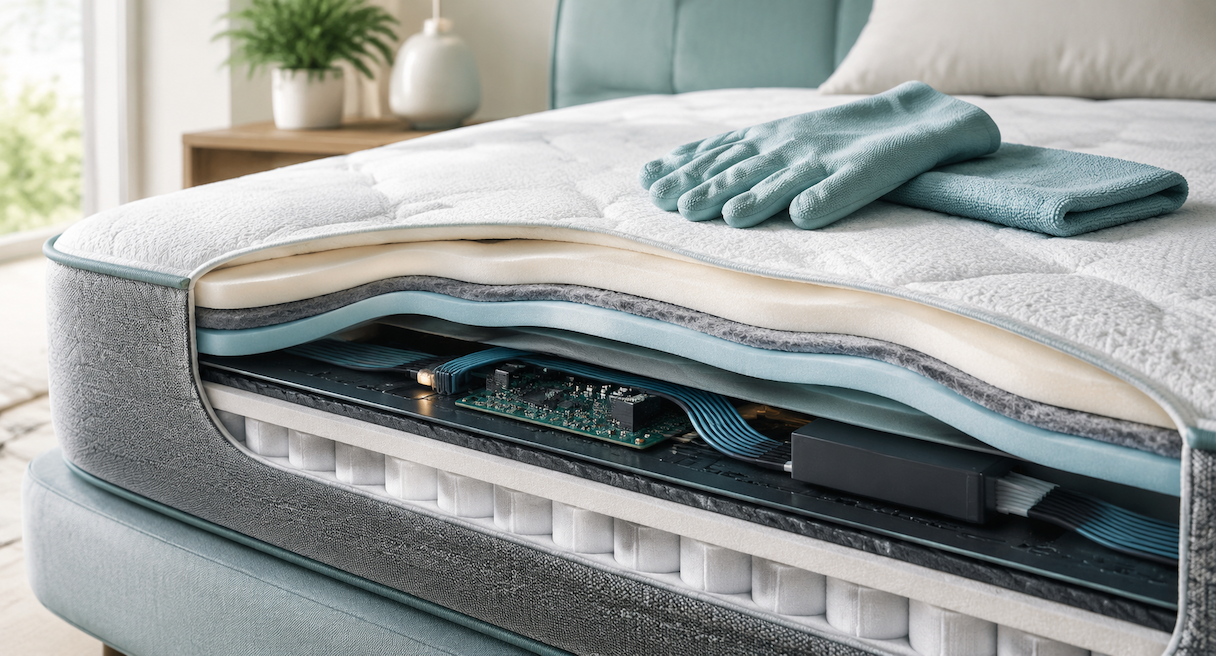
How to clean a mattress is a question most search results answer with foam-bed habits such as blotting, dabbing, airing out, and flipping. A smart mattress changes those terms. Under the fabric sit sensors, a control box, internal wiring, and, in some models, air chambers or heating elements, so water and rough handling reach equipment an ordinary bed never carries. DeRUCCI's care guidance for its T11-series smart mattresses reads accordingly, closer to electrical rules than fabric care, and this page follows the same order, from structure to routine to power safety.
Why a Smart Mattress Can't Be Cleaned Like a Regular One
A smart bed carries its intelligence in layers. Under the fabric sit sensors, a control box, and internal wiring, with air chambers or heating elements in some models. Those parts set the cleaning logic: prevent stains before they arrive, handle spots dry, and keep water far below what the electronics can tolerate.
The layers deserve a plain-language tour. The control box is a small dedicated computer, the sensing layer is a grid of measurement strips under the quilting, wiring binds the two together, and air chambers or heating elements round out certain models. None of it is sealed away the way a phone hides its internals behind glass. Fabric, foam, and electronics share one vertical stack, so a wet routine touches all three.
The structure itself is an industry-wide fact, and the care rules that follow come from DeRUCCI's guidance for its own line. The rules compress into three sentences. Prevent stains before they reach the surface. Handle spots dry. Never introduce more water than the internal electronics can tolerate.
What happens when those rules lose is stated plainly in the same guidance. The wet wipe, the soak, and the casual flip that freshen an ordinary bed permanently damage the parts that make a smart bed smart. What works instead fits in one breath (dry methods, a dedicated cleaner, cool air), with heavy washing, soaking, and any untrained opening of the build locked out. Readers who want the full architecture in plain terms can start with what is a smart mattress; the rest of this page stays on the care discipline.
The Eight-Point Care Routine That Prevents Stains
DeRUCCI's care guidance lists eight habits, and the count matters as much as any single item. Three protect the surface before stains reach it, one keeps dust down, and three govern electricity, covering correct connections, matching cords, and repairs left to the dealer. The eighth keeps air moving under the bed.
According to that care guidance, eight habits carry the whole routine, and the table keeps every one of them. The grouping exists purely for readability. Protection comes first, the daily habit follows, the stain rule that belongs to the next section sits in the middle, and the electrical rules close the list. The guidance's own opening principle, prevention before a stain ever reaches the surface, lands directly on the protection rows and the vacuuming row.
| Group | # | Care point from the guidance |
|---|---|---|
| Protection | 4 | Use a protective cover, fitted sheet, or protective pad to shield the surface from stains |
| Protection | 7 | When the bed sits unused for a long stretch, lay an easy-clean sheet over it |
| Protection | 8 | Keep the mattress on a breathable base or bed frame |
| Routine | 5 | Vacuum the surface on a regular schedule |
| Stain response | 6 | For oil stains, wipe with the dedicated DeRUCCI cleaner, then dry with a hair dryer on the cool-air setting |
| Electrical | 1 | Before use, confirm the power cord is correctly connected |
| Electrical | 2 | Use a power cord that matches the rating on the nameplate |
| Electrical | 3 | Leave disassembly, repair, and modification to the dealer and arrange service through them |
Vacuuming deserves its one beat of emphasis. Dust works into the quilting over months and takes the surface texture with it, so a regular pass with the vacuum keeps the bed feeling the way it did in the first week, whichever way you sleep on it. The row also does double duty in prevention, since grit that never settles cannot stain.
The three electrical rows look administrative. They connect directly to the safety section below, because cords and adapters are the parts of a smart bed most exposed to daily wear.
Spot Cleaning, Done Right: Power Off, Dry Towel, Dedicated Cleaner, Cool Air
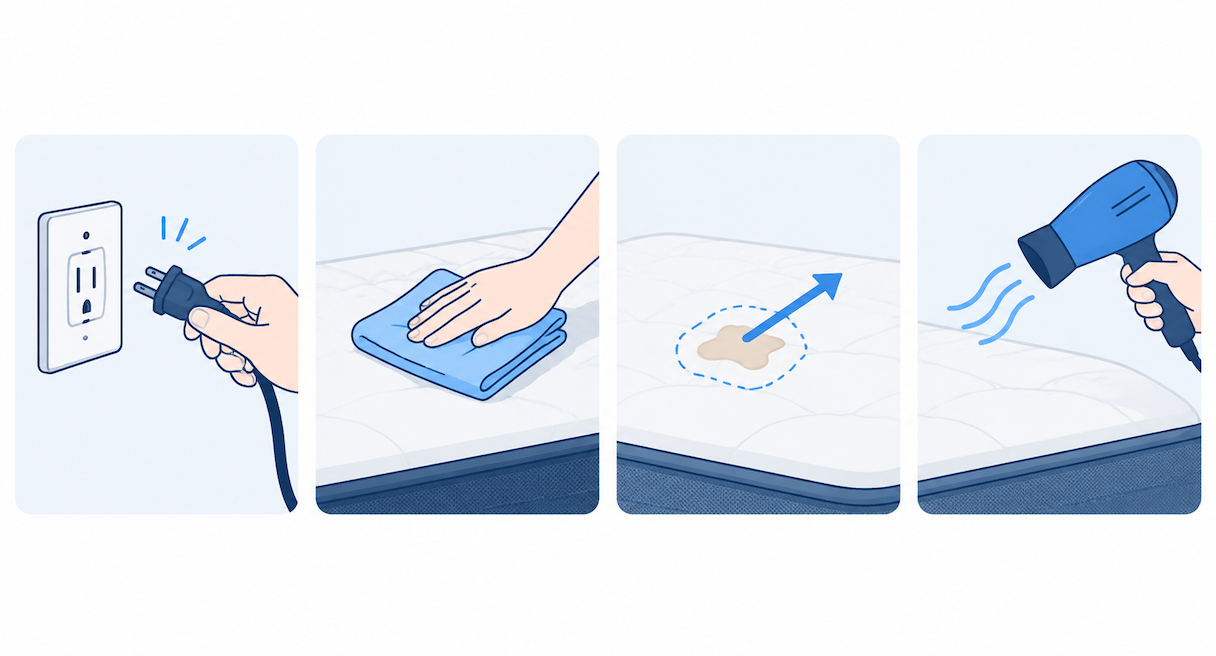
The guidance's sequence has four moves and a hard limit. Cut the power first, lift loose dust with a dry towel, work the stain from the outside inward with the dedicated cleaner, then dry with cool air from a hair dryer. Never wash the surface with large amounts of water.
The guidance turns spot work into a fixed sequence, and each step has a reason attached.
1. Cut the power. The sequence starts with the bed disconnected, before any towel or cleaning product touches the surface.
2. Pat with a dry towel. Loose dust lifts off the quilting under a dry towel worked in a patting motion.
3. Wipe the stain from the outside in. Apply DeRUCCI's professional care product and work from the outer edge of the stain toward its center. The direction matters, since wiping outward pushes the stain into clean fabric and widens the contact area.
4. Dry on cool air. Set a hair dryer to its cool setting and dry the worked area, exactly as the guidance specifies.
Never wash the surface with large amounts of water. Moisture that soaks into the inner layers leaves dampness, material deformation, and mold growth behind, per the same guidance. That stated chain of consequences is why the dry sequence exists, and why the sequence replaces washing instead of preceding it.
The sequence above belongs to the electronics context, meaning a stain on or near a bed with powered layers. The wider laundry list of everyday stains and odors on ordinary mattresses follows a different playbook, covered in how to clean a mattress and keep it fresh longer, and this page leaves those general techniques to it.
(This image is AI-generated for reference only, not an actual product photo.)
Power Components: The Safety Line That Isn't Cosmetic
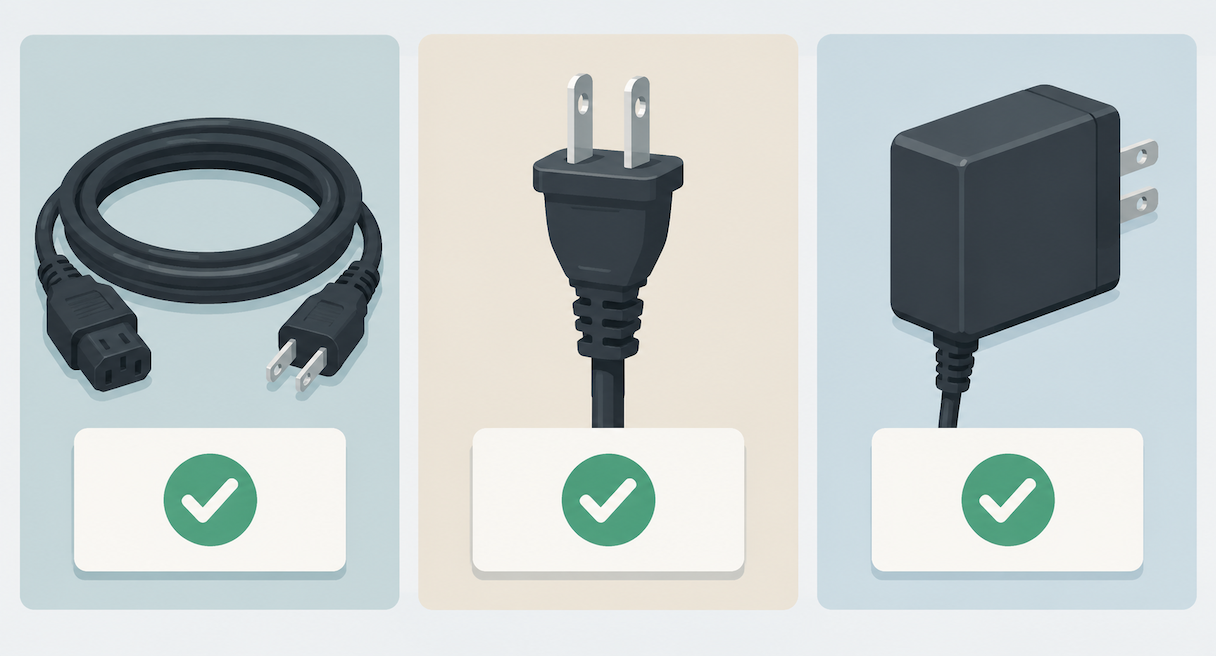
Power parts carry the one line the guidance states verbatim: no damaged or substituted power components. When a powered bed fails electrically, the usual suspects are damage and wrong substitutes — a frayed cord, a cracked plug housing, a wall adapter that does not match the nameplate — and the worst case is a genuine hazard. The response is to stop using the bed and request a replacement.
Owners tend to read a scuffed cord as cosmetics, and the guidance exists to correct that reading. Its one sentence on the subject comes through translation intact. "No damaged or substituted power components." The instruction that follows is equally direct, stop using the mattress and ask for the replacement.
Three companion rules from the same guidance frame daily use. Arrange service through the dealer instead of dismantling, repairing, or modifying the bed yourself. Use the matching power cord and a compatible adapter, and retire damaged plugs and substitute parts instead of working around them. Keep heavy wet washing out of the routine, since moisture trapped in the layered build leads to deformation or mold.
The numbers behind those rules describe a low-voltage design. Inside the mattress the supply runs at 24 volts, the converter works at 5 volts, and both sit far under the 36-volt threshold cited for human safety. In plain terms, the converter steps wall electricity down to the levels the bed's electronics are built for, the same family of engineering that keeps a phone charger tame at home. Those figures are material and electrical safety statements about accidental spills, per the guidance, and warranty terms are a separate subject governed by the official documents for each region.
When a power part fails the check, the replacement route runs through your dealer or productdepartment@derucci.com, with the request handled through DeRUCCI service. A companion piece in this series takes the pre-purchase electrical checklist further for buyers still comparing models.
(This image is AI-generated for reference only, not an actual product photo.)
What the Care Guidance Is — and Isn't
Read the care and electrical points as user responsibilities inside the guidance, ahead of any published list of exemptions. Count them as the categories of action most likely to appear in warranty terms you have not seen, and confirm the actual terms for your region through official channels before purchase.
The distinction has practical weight for anyone holding a warranty document. A user-responsibility notice describes what careful ownership looks like. An exemption clause describes what happens when ownership goes wrong. The guidance issues the first kind and leaves the second to regional paperwork, which means two buyers in two markets may hold different formal terms even as they follow identical care instructions.
Region-specific exemptions follow a conservative default that favors the reader. Until a retailer confirms a term in writing, count it as unset, and put the binding version of any clause in writing before you rely on it.
The electrical figures carry the same boundary. A 5-volt converter running far under the 36-volt human-safety threshold is a statement about materials and electrical design under accidental spills, and the guidance keeps it separate from warranty questions, such as whether a spill event falls under coverage. For the framework that does govern coverage, the current official terms through the service channel are the authoritative version.
Frequently Asked Questions
---
Care carried out this way keeps the electronics layer working for the long haul. The wider path from sleep problems to mattress choices continues in the series hub, and to see the current range in person, you can find a store and check global showroom addresses.