
 American
( English )
American
( English ) Singapore ( English )
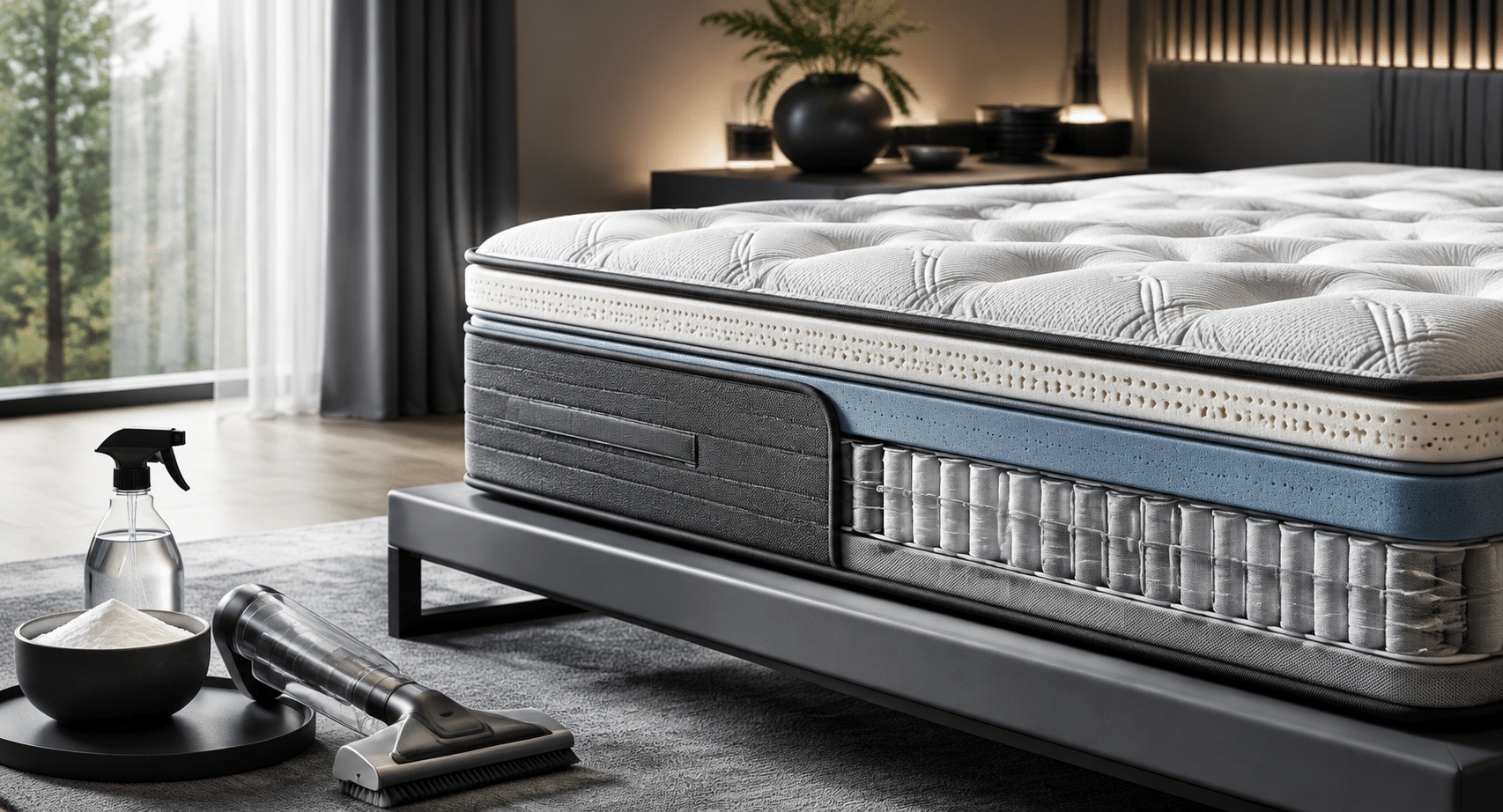
A mattress collects what every night leaves behind: skin cells, body oils, microscopic dust mites, and the slow buildup of odors that no freshly washed sheet can fully hide. Cleaning it is not a single job but a rhythm: small weekly habits, the occasional spot treatment, and a deeper reset a few times a year. This guide walks through what you need, the maintenance that prevents most problems, how to treat stains by type, and where material choice itself can reduce how often a deep clean is required.
What You'll Need Before You Start
Most mattress stains and odors can be handled with a short list of household items rather than specialty chemicals: a vacuum with an upholstery attachment, baking soda, a mild detergent, white vinegar, and cold water. Having these ready before you start keeps the job to a single uninterrupted session, so the stain never sits longer than it has to.
Gather the basics first:
- Vacuum cleaner with upholstery attachment: lifts dry dust, skin cells, and mite debris from the surface and seams.
- Baking soda: draws out moisture and neutralizes lingering odors when left to sit.
- Mild dish detergent or enzyme cleaner: breaks down organic stains like sweat and body oils.
- White vinegar: a diluted acid that lifts color from coffee, juice, and similar spills.
- Cold water: essential for protein stains like blood; hot water sets them permanently.
Avoid bleach and harsh solvents unless a manufacturer explicitly permits them. They can weaken cover fabrics and foam. A spray bottle and a few clean white cloths, which do not transfer dye, round out the kit.
Weekly Maintenance: Vacuum, Deodorize, Air Out
A short weekly routine removes most of what causes odors and dust-mite debris before they accumulate, so vacuum the surface, dust it with baking soda, and let the bed breathe. Consistency matters far more than intensity, because a few steady minutes a week prevents most of the buildup a deep clean would otherwise have to reverse.

(This image is AI-generated for reference only, not an actual product photo.)
Strip the bed and run the upholstery tool across the entire surface, paying attention to the seams and piped edges where dust collects. Sprinkle a thin, even layer of baking soda, leave it for thirty minutes to an hour, then vacuum it away. The soda absorbs both moisture and the mild sourness that builds from nightly perspiration. Whenever the weather allows, open a window or turn on a fan; airflow through and around the mattress does more for freshness than any product applied to it. Every few months, rotate the mattress head-to-foot, and flip it only if the manufacturer specifies a double-sided build, so no single zone carries the entire load.
Spot Cleaning Stains and Odors
Stains respond best when matched to their chemistry: protein stains like blood come out with cold water, organic stains like sweat respond to enzyme cleaners, and acidic stains like coffee lift with diluted white vinegar. Treating the wrong type with the wrong agent is what sets a stain permanently, so blot first and match the cleaner to the stain second.
The universal first step is to blot, never rub. Rubbing pushes the residue deeper into the quilted cover and the foam beneath. From there, match the cleaner to the stain:
- Blood: cold water only. Hot water cooks the proteins and bonds them to the fabric. Dab with cold water, then a small amount of hydrogen peroxide if the cover allows it.
- Sweat and body oils: a few drops of enzyme or mild detergent in cool water; the enzymes digest the oils directly.
- Coffee, juice, wine: dab with diluted white vinegar, roughly one part vinegar to two parts water, then blot with a damp cloth.
- Urine: blot, apply an enzyme cleaner, and let it dry fully to break down the crystals that cause lingering odor.
Work in small circles from the outside of the stain inward, use as little liquid as possible, and dry the area thoroughly with a fan before redressing the bed. A damp mattress is a mattress on its way to mold.
Deep Clean & Anti-Mite Defense: Clean Less by Choosing the Right Materials
After a mattress has been cleaned, the more durable question is how to clean it less often, because materials engineered to resist microbes and dust mites reduce the cleaning burden at the source rather than after the fact. DeRUCCI's VIRASE® antiviral fabric, INVISTA antibacterial cotton, and the brand's 2007 washable 3D mattress are built for exactly that, turning cleaning from a recurring chore into a lighter routine.

(This image is AI-generated for reference only, not an actual product photo.)
Move from reactive cleaning to active defense. DeRUCCI's VIRASE® treated fabric meets ISO 18184:2014, reducing viral activity by more than 99% within two hours alongside antibacterial and anti-mite properties, while INVISTA antibacterial cotton exceeds 99% bacterial reduction. The same thinking runs through the whole build: DeRUCCI introduced the industry's first fully washable 3D mattress in 2007, and its Golden Service program has delivered over 5,160,000 professional anti-mite treatments to owners (Source: DeRUCCI Golden Service program data). The DeRUCCI mattress materials guide details how these antibacterial and antiviral layers are arranged across the range, and the DeRUCCI golden service explains the professional anti-mite service available to owners. Choosing materials that do part of the work does not eliminate cleaning. It changes how often a deep clean is genuinely needed.
Common Cleaning Mistakes (and a Maintenance Checklist)
Most mattress damage comes not from neglect but from cleaning too aggressively: soaking the surface, using bleach, or sealing the bed before it is dry. A short checklist run seasonally prevents nearly all of these failure modes, so the bed lasts longer between deep cleans and the work you do actually sticks.
The mistakes that age a mattress fastest:
- Over-wetting the surface: excess liquid soaks into foam and breeds mold; use a spray bottle and blot.
- Bleach and strong solvents: they yellow cover fabrics and break down fibers unless explicitly approved.
- Skipping the dry step: a mattress must be fully dry before the sheets go back, or trapped moisture does the damage the cleaning was meant to prevent.
- Rubbing instead of blotting: rubbing grinds residue deeper instead of lifting.
A simple seasonal checklist: vacuum the full surface, treat any visible stains, deodorize with baking soda, rotate the mattress, and confirm it is completely dry before redressing. For sleepers who want the routine to go further, the most effective move is pairing it with a mattress whose fabric is already engineered to resist mites and bacteria, so the cleaning you do goes further.