
 American
( English )
 Singapore ( English )

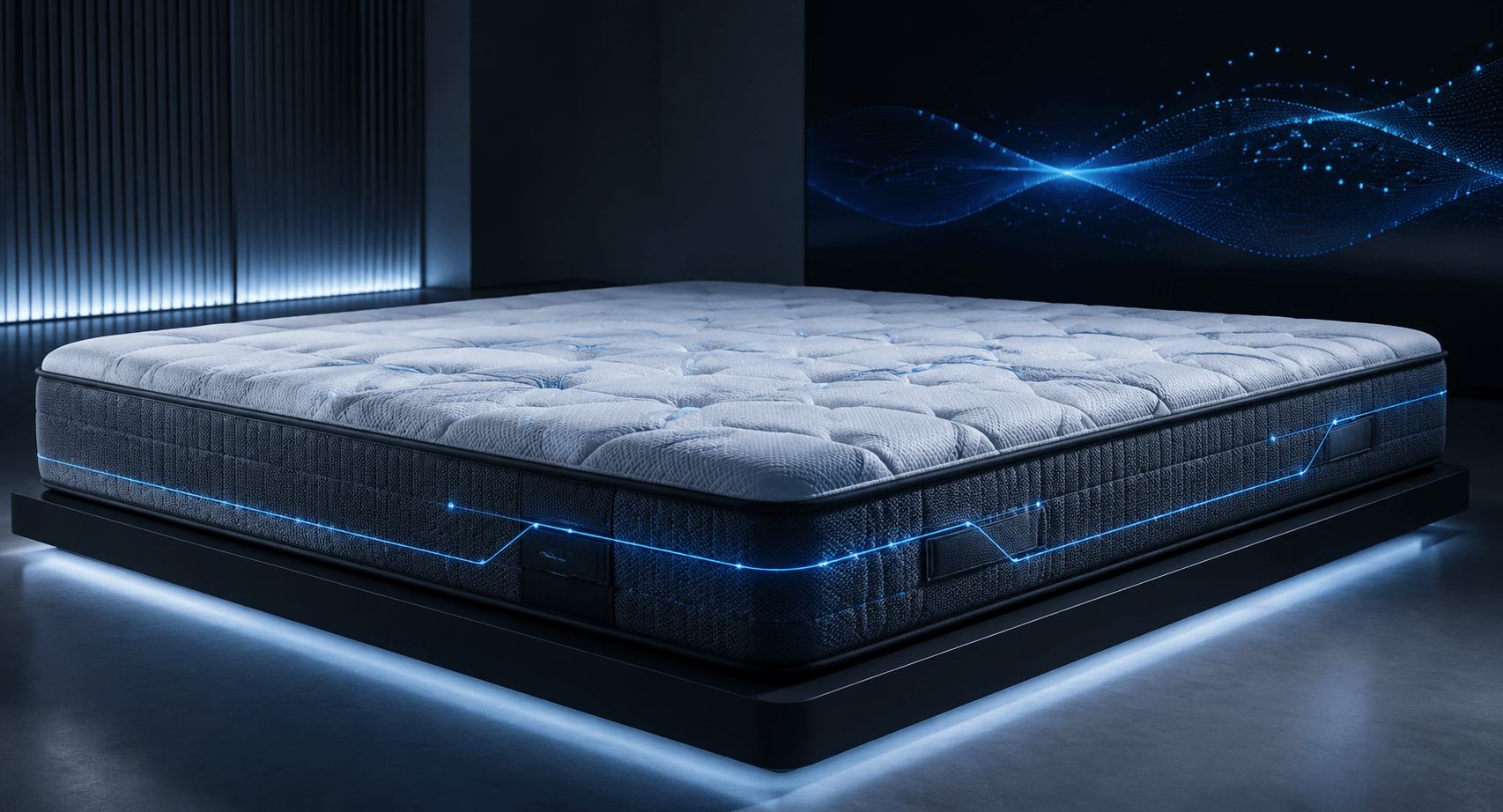
What Is a Smart Mattress?
A smart mattress senses how your body is lying on it and adjusts its own firmness, temperature, and zoned support in response, so the surface adapts to you instead of forcing you to adapt to the surface.
The key word is "adapts." A traditional mattress, even a very well-made one, is a fixed object: the coils, foam, or latex are set at the factory and stay that way for the next decade. A smart mattress adds three layers on top of that fixed comfort stack: a body-sensing layer that reads pressure and posture, an adjustment layer of flexible cells that can raise or lower specific zones, and a control algorithm that decides what to change and when. Some models add a temperature layer for couples who disagree about how warm the bed should be.
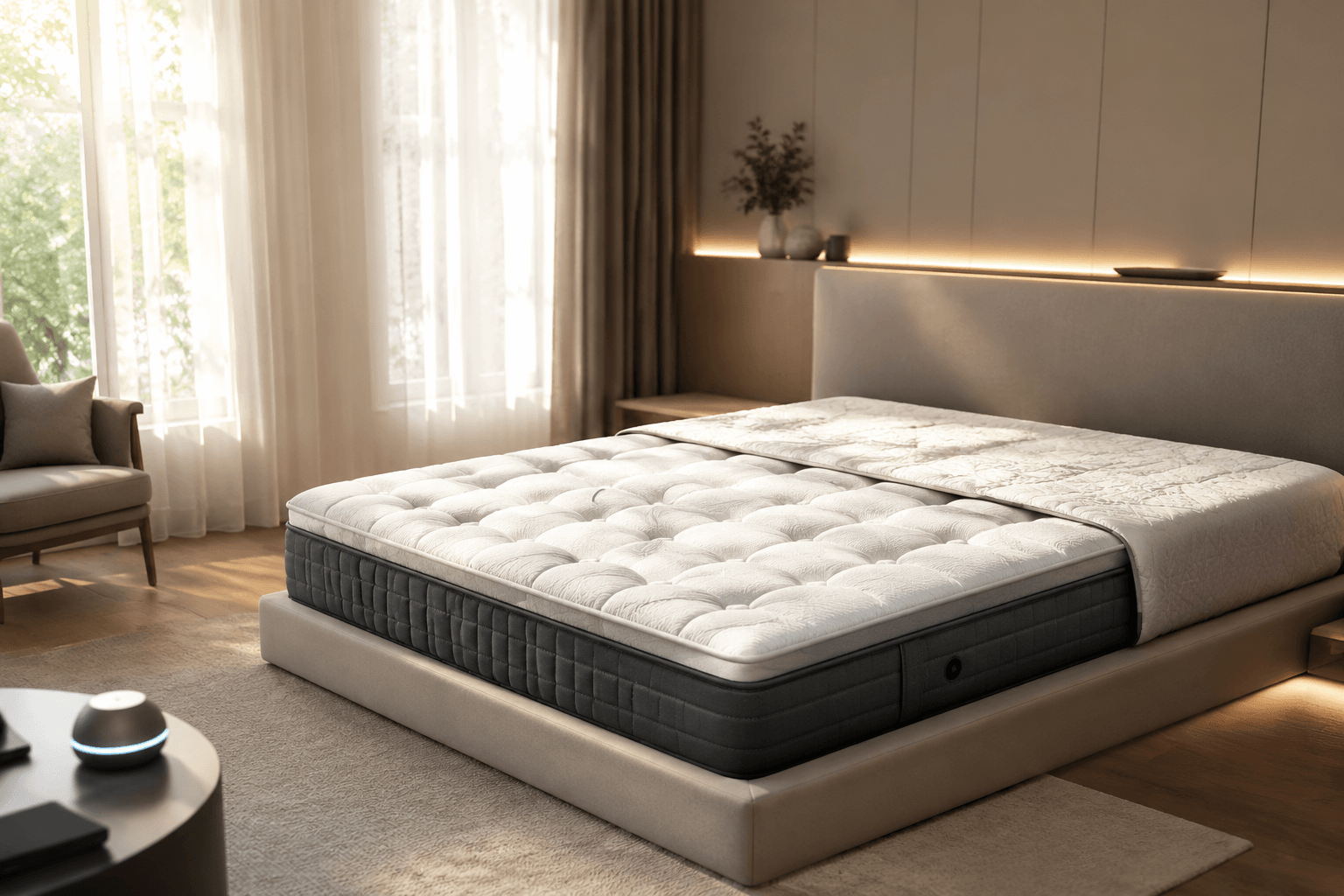
(This image is AI-generated for reference only, not an actual product photo.)
The Core Technologies Inside a Smart Mattress
Strip away the marketing and every credible smart mattress is built from the same four comfort layers: body sensing, zoned adjustment, an adaptive algorithm, and optional temperature control.
The body-sensing layer is a grid of pressure or strain sensors under the top comfort layers that reads where your body is pushing down and how that pressure shifts as you roll from side to back to stomach. The output is a continuous posture map, not a single firmness number. The zoned adjustment layer is the actuator: flexible cells arranged in zones that map roughly to shoulders, lumbar, hips, thighs, and lower legs, each tightened or softened independently. Fine-grained versions step in 0.5-level increments within a national 5 to 7.5 firmness range, which is the difference between "roughly right" and "actually right" for a partner 20 kilograms heavier than you.
The adaptive algorithm reads the sensor map, classifies the current posture, and tells each zone what to do within tens of milliseconds. The better implementations are trained on large ergonomic datasets, so the response matches how real bodies distribute weight. The temperature layer, when present, closes the loop on comfort with independent zoning and App controls for each side.
Smart Mattress vs. AI Mattress vs. Smart Bed: Why the Form Matters
These three terms get used interchangeably in marketing copy, and they should not be, because each describes a different physical product with a different decision mechanism.
A smart mattress is a mattress first, with adaptive comfort built into a familiar form factor. An AI mattress is technically a subset, but the naming signals an explicit algorithmic decision framework, where the manufacturer can describe what pattern the algorithm recognized and what it learned about your body over weeks of use. If you cannot tell what the algorithm is actually doing, the "AI" label is decoration.
A smart bed is the broadest term, because it includes the bed frame or base, not just the mattress: adjustable head and foot tilt, preset positions for reading or watching, and the mattress may or may not have any sensing built in. The practical test is which problem you are solving. Posture and pressure support while you sleep points to a smart or AI mattress. Reading or lounging angles points to a smart bed.
Adaptive Comfort: Why Body-Sensing Firmness and Temperature Matter
The strongest argument for a smart mattress is that fixed firmness is a compromise, and your body is not a fixed input.
Bodies shift during the night. The posture you fall asleep in is rarely the posture you wake up in, and the support that feels right at lights-out can feel like a pressure point three hours later. A zoned, sensing mattress tracks that shift and redistributes support as it happens.
Couples are the other obvious use case. Two people with a 25-kilogram gap, or different sleep positions, are poorly served by any single fixed firmness. Independent left-right zoning removes the compromise without forcing either partner to lose. Temperature zoning addresses the same mismatch on the thermal side, for couples who disagree about how warm the bed should be.
Adaptive comfort sits firmly on the lifestyle side: it helps your mattress match your body through the night, takes the small nightly negotiations over temperature and firmness off the table, and lets a single bed hold two very different preferences at once.
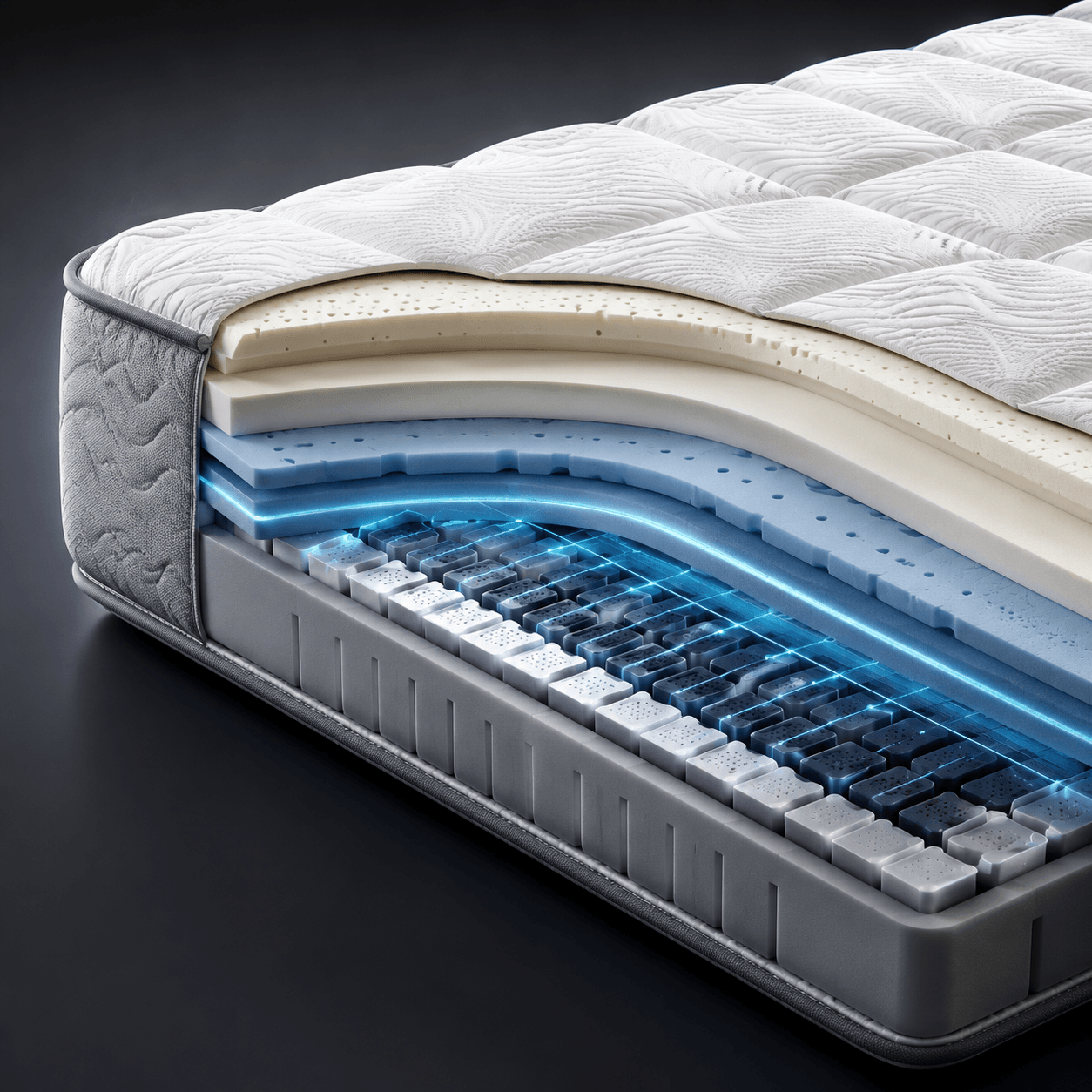
(This image is AI-generated for reference only, not an actual product photo.)
Inside the DeRUCCI T11 Series: How Adaptive Comfort Becomes a Product
Seeing how a specific product implements the smart-mattress stack makes the category legible, which is where the DeRUCCI T11 AI mattress series comes in.
The T11 Pro lays out every layer in concrete numbers. The adjustment layer uses 18 flexible adjustment units split into six zones per side, shoulders, back, waist, hips, thighs, and calves, with left and right sides driven independently so two partners each get their own support map. Each zone steps in 0.5-level increments within China's national 5 to 7.5 firmness range, on top of DeRUCCI's patented adaptive adjustment technology (patent 202010801174.3).
The algorithm layer is what DeRUCCI calls the AI Tidal Algorithm 2.0, doing posture recognition in milliseconds with a roughly 20ms response window, trained on more than one million ergonomic data points accumulated across eight generations of DeRUCCI's TS data system. The temperature layer uses graphene far-infrared heating in the leg region, with independent App control for each side, a 25 to 55 degrees Celsius range, and a one, two, or four-hour timer. The comfort layer is the 28-decibel operating noise ceiling, quieter than a typical air conditioner on low, achieved through six motor and isolation patents. Build quality is backed by CNAS national laboratory accreditation, originally certified in 2015, and a 24-volt safe-voltage architecture.
The T11 SE AI mattress is now available at the DeRUCCI New York store. The broader T11 series is not yet broadly available, with wider availability to follow, so the shop page for current availability is the right entry point, including traditional lines like the Taputa Latex and Century Dream mattresses. To see how the T11 fits into the wider DeRUCCI smart sleep system, that page walks through the full ecosystem.
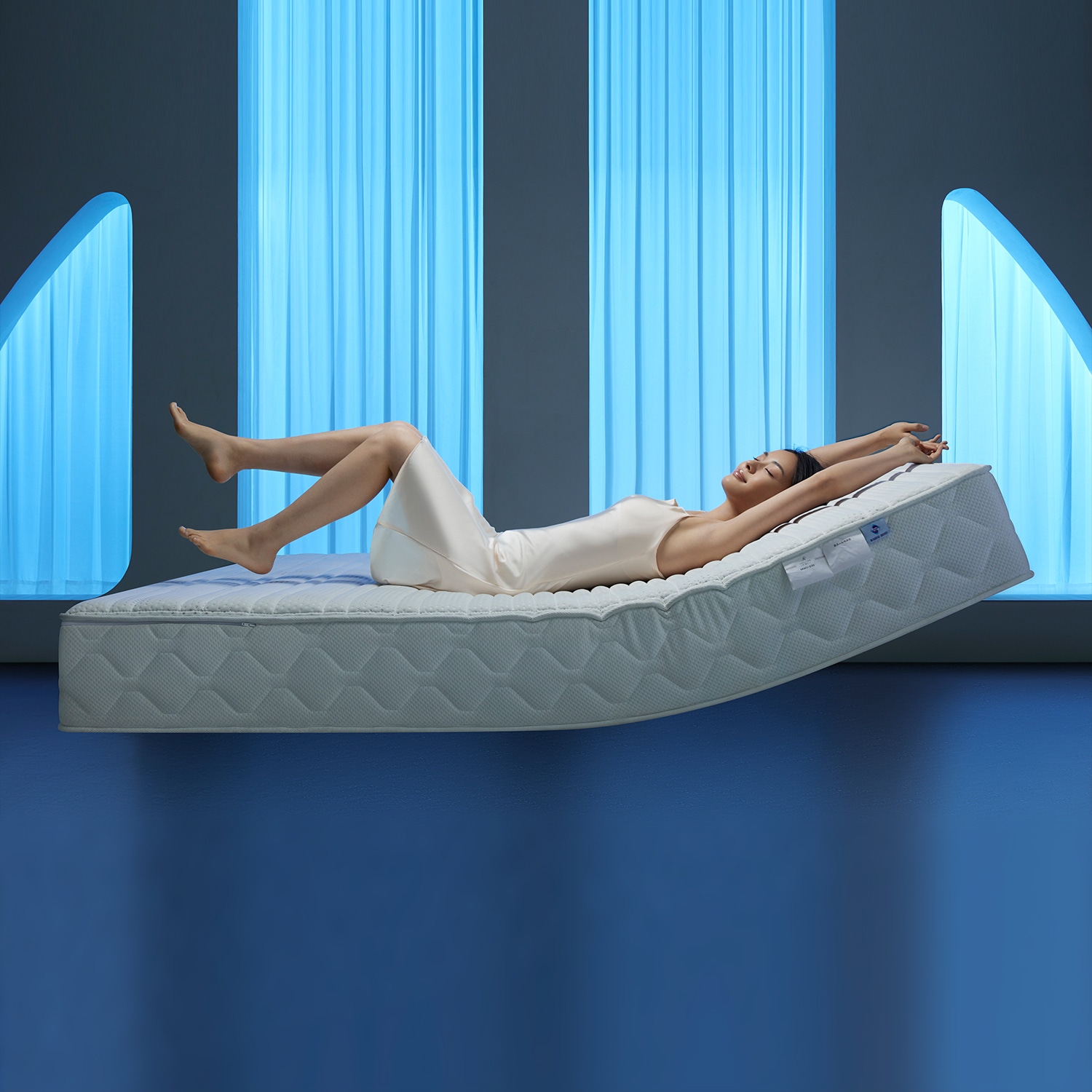
Who Should Consider a Smart Mattress (and What to Check Before You Buy)
The strongest candidates share one of three traits: a long-standing firmness disagreement with a partner, a clear sense that fixed firmness leaves them sore in the morning, or a real preference for adjustable temperature on each side of the bed.
If any of those describe you, the buying checklist is short. Spend real time testing the bed in a showroom, because a six-minute lie-down tells you almost nothing about how the adaptive algorithm will behave over a full week. Ask the staff to walk you through how the sensing and adjustment respond to your body, read a range of independent reviews to see how it performs across real nights, and think about how you actually sleep: if your support needs shift through the night, or you and a partner prefer different firmness, adaptive comfort is where a smart mattress earns its place.
Is a smart mattress worth the premium over a high-end traditional mattress? Only if you will actually use the adaptive features. For couples with very different bodies, or anyone who wakes up with pressure points that a fixed mattress cannot solve, the math is favorable. If you sleep alone and are happy with your current firmness, a traditional premium mattress gives you the same comfort for less.
Does "AI mattress" mean anything different from "smart mattress"? It should. A smart mattress adjusts in response to sensors. An AI mattress is expected to run an explicit algorithmic model that learns your body over time. In practice the labels get blurred, so the test is whether the manufacturer can describe what the algorithm actually does.
Can two partners with very different bodies share a smart mattress? Yes, if the mattress has independent left-right zoning. Each side adjusts itself to the body on it, instead of forcing one partner to compromise.
Find the Right DeRUCCI Mattress for You
A smart mattress earns its price when adaptive comfort solves a problem you actually have. Browse the DeRUCCI shop to see current availability across the traditional line, and explore the smart sleep system to see how the T11 series fits into the wider ecosystem.