
 American
( English )
American
( English ) Singapore ( English )

The number on a warranty page answers a small question; the terms around it answer the rest. This guide reads smart mattress warranty terms and warranty exclusions the way a claims file reads them, using DeRUCCI coverage as the worked example, cited to the official manual throughout. A year count is the denominator of a fraction; what each stage pays for, who supplies evidence, and where the boundary sits form the numerator.
365 Days, 3 Years, 10 Years: Reading the Warranty Framework Correctly
What each stage pays for matters more than the year count. According to the official manual, coverage runs in three stages from the delivery date, and each stage changes the bill: new hardware, charge-free repairs, then materials and logistics with labor free.
According to the official manual, the framework runs from the delivery date in three stages. Within 365 days, verified quality issues are handled by replacement: a defective component is swapped for a brand-new part at no charge; when a part swap cannot resolve the issue, the whole product is replaced, brand-new, at no charge. Within 3 years, repairs for verified quality issues are free of charge — the customer bears nothing. Through year ten, the product stays serviceable: necessary material and logistics costs are billed to the owner, labor free. These boundaries are quoted as printed: a 365-day stage and a loose "one-year stage" differ once a claim lands.
The reading axis: compare on two dimensions — the stage, and what you pay at that stage — and the year number stops doing the work:
| Stage | What the stage delivers | What the customer pays |
|---|---|---|
| 365 days | Brand-new part; brand-new unit when a part swap cannot resolve the issue | Nothing for verified quality issues |
| 3 years | Repairs for verified quality issues | Nothing — parts and labor covered |
| 10 years | The product stays serviceable | Necessary material and logistics costs; labor free |
A shopper weighing a ten-year promise against a five-year promise, with the per-stage rows out of view, is comparing year counts alone. The full stage table, exclusion reading beside it, lives in smart mattress warranty exclusions.
What Each Part Brings to the Table
Part-level facts and part-level promises are different documents. The chambers carry test evidence — 280 kg through 10,000 bend cycles, CNAS-certified — and the control box carries CE certification; those are quality and operating facts. The staged framework covers the whole unit, and part-level durations belong to the questions you ask in writing.
Four layers publish checkable facts. The adjustment unit: high-elasticity rubber air chambers in a TPU composite, set in even columns beneath the surface, bend-tested at 280 kg through 10,000 cycles with no abnormality, in testing certified by CNAS. The control layer: a CE-certified control box below the foot end of the bed. The electrical layer: an internal 24-volt supply, below the roughly 36-volt threshold cited for human safety. The running-cost layer: about 0.3 kWh for an eight-hour night — a rounding error on a power bill — with no subscription or monthly fee.
Read those as four verifiable facts — quality and operating evidence in the form of certifications, measured figures and published specifications. The official framework stages coverage at the whole-unit level; for part-level duration, the move repeats at every boundary in this piece: ask in writing, and treat the answer as the terms once it arrives.
What's Not Covered — and How to Verify Before You Buy
The exclusion list lives in DeRUCCI's official documentation for your region, and the working rule is strict: a region-specific exemption clause is treated as unset until the retailer confirms it in writing. Ask for the page before you order, and ask for the signature.
Exclusion clauses decide more claims than stage boundaries, and they are the category's least standardized text. The product manual for your region carries the exclusion list; read it before you order, with the regional official channel confirming what the current text says. Anything region-specific — climate conditions, installation terms, service boundaries — stays undetermined until the retailer confirms it in writing. Guessing clause contents serves nobody: assuming coverage the text withdraws is as useless as fearing exclusions it never lists.
Two boundary facts travel here to prevent misreading. The electrical-safety statement — insulation materials and the 5-volt converter far below the roughly 36-volt human-safety threshold — describes electrical design; it makes no promise about how liquid events or misuse are handled. The care guidance — contact the dealer for service work and avoid unauthorized disassembly, use the matched power cord and adapter, keep heavy wet washing out of the routine — reads as a user-responsibility note: the behavior class most likely to appear in the clauses you have not yet seen.
This section ends on a document request, not a guess: ask the regional official channel for the warranty terms in written form, and attach the answer to your order file. Terms evolve; the text in force at your purchase is the one that governs, so re-confirm when you order. To ask in person, use the store locator at the end of this guide.
The Claim Evidence Checklist: Ask Before You Sign
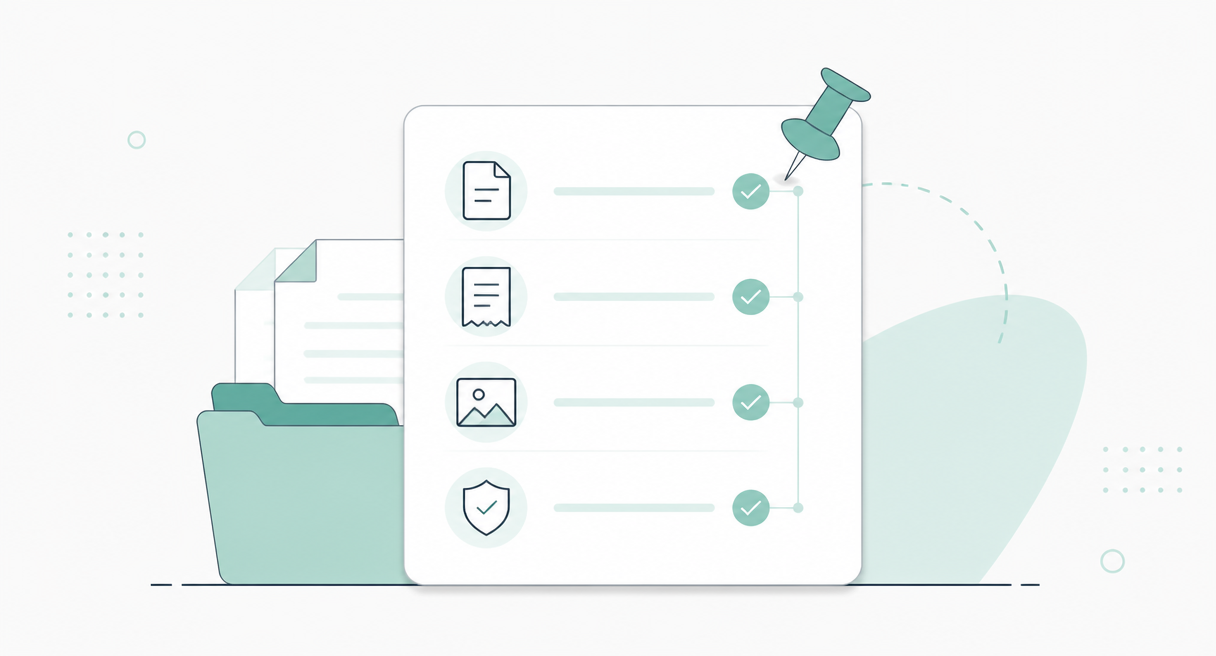
Before you sign, run the first question worth asking, then the documents behind all of them. Ask how a first-year quality defect is resolved — part, whole unit, or in-place repair — and who makes that call; then require three written documents: warranty terms verbatim, dealer authorization, and a service-response commitment.
Start with the first question: when a verified quality defect appears during the first year, does service replace the part, replace the whole unit, or repair in place — and who decides which path is taken? The DeRUCCI framework answers the path half: within 365 days, a verified quality issue brings a brand-new replacement part at no charge, and a brand-new whole unit when a part swap cannot resolve the issue. The adjudication half — who selects the path — has no printed position: it is a question for the dealer to answer in writing.
The trap this checklist exists for is the headline year count. A fair comparison runs year by year — coverage per stage, evidence duty per stage; the headline number alone supplies none of it.
One timing question belongs on the list ahead of the signature: if an air chamber ever drifts softer over weeks, ask how the fault gets confirmed — through the app's diagnostics, a technician's visit, or both — and start dated notes on day one. A claim runs on a documented record, and early notes make the record complete.
(This image is AI-generated for reference only, not an actual product photo.)
Who Decides
The repair-path adjudicator — the party that determines part swap, whole-unit swap or in-place repair — is the unanswered half of question one. Ask the dealer for the answer in writing, including the route when you dispute the call; until it exists on paper, treat the adjudication rule as undetermined.
What to Get in Writing
Three documents anchor the file, each present or not: warranty terms verbatim, dealer authorization documents, and a written service-response commitment. Add two lines of your own: the written first-year path answer, and the written text of any regional exemption clause. Paper created before the order is the evidence that works during a claim; the DeRUCCI Service page is the official entry point when one needs attention.
How Escalation Works
The channel facts: the service page and the product department mailbox, productdepartment@derucci.com, are the documented entry points for DeRUCCI service. No published process clock exists to cite; if a response window matters to you, it belongs inside the written service-response commitment above.
One cost note: where the ten-year stage bills material or logistics costs, the figures belong to your store conversation, in the same written exchange. The checklist is a pre-signature move, which places it inside the buying process; for mattress selection itself, see the Best Mattress Guide.
Frequently Asked Questions
---
Read the stages, check the parts you can check, and get the boundary in writing before you sign. Where the warranty sits inside the wider purchase, the smart mattress buying decision guide lays out the full decision path, and you can find a store to request the written warranty terms in person.