
 American
( English )
American
( English ) Singapore ( English )
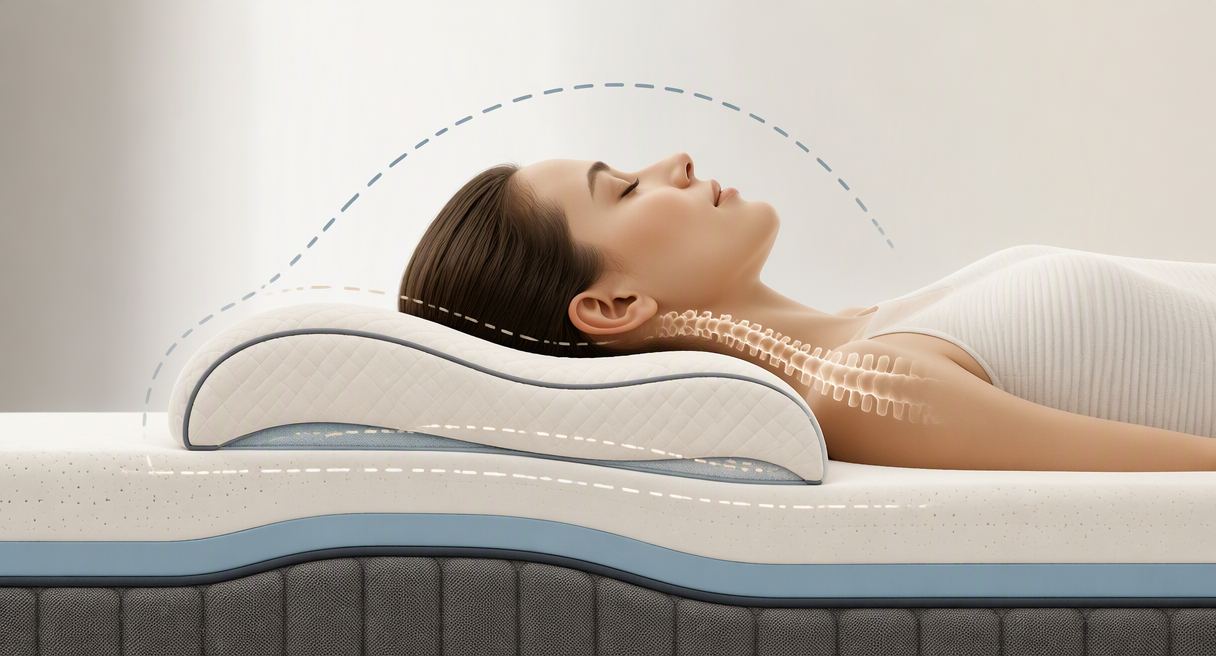
The search for the best smart mattress for neck pain often starts after a new bed fails to settle the problem, and it usually stops one variable short. A mattress sets the spinal-support baseline; a pillow sets the cervical curve riding on top of it. The two behave as coupled variables: adjust one, and the other keeps working under stale assumptions. Neck pain, adjustable firmness, and temperature belong to one matching task, and the fix is a seven-step sequence that tunes mattress and pillow together. DeRUCCI maintains this piece in its sleep-education library.
Why Neck Pain Is a Two-Variable Problem
Neck comfort at night is governed by two coupled variables. The mattress sets how deep the shoulder and torso sink, which fixes the support baseline; the pillow sets the angle of the cervical spine above that baseline. Change the bed and leave the pillow untouched, and the neck rides at its old angle all night.
Public whitepaper evidence lists two classic pillow errors. The belief that a taller pillow is safer holds the neck bent forward, like nodding through the night. Dropping the pillow altogether lets a back sleeper's neck tip rearward with nothing holding it. The correct logic runs the other way: pillow height depends on mattress give and sink depth.
The coupling is what shoppers miss. The same pillow produces a different neck angle on a soft bed, where the shoulder sinks deep, and on a firm bed, where it barely sinks. A mattress change therefore obligates a pillow recalibration: the new baseline moves the reference frame the pillow was tuned against. Skipping that recalibration is a common single-variable miss among buyers who report back.
The attention behind the question is large: a neck-and-shoulder-care topic on social platforms has passed 1.75 billion views. The same consumer whitepaper gives principle-level posture rules: side sleepers fill the gap between neck and shoulder; back sleepers keep the head level. Position-by-position mechanics are unpacked in what is the best sleeping position.
The Pillow Variable: Height and When to Reset It
Pillow height is a relative quantity that shifts with mattress softness: a deeper shoulder sink on a softer surface calls for a comparatively lower side-sleeping pillow, and an identical pillow produces different neck angles on two different beds. Height and recalibration timing form the decision axes.
Height rules run by direction — treat what follows as directional geometry. Side sleeping: the pillow fills the neck-to-shoulder gap, and shoulder width sets the floor of what fills it. Back sleeping: the head stays level, the neck held, never tipped rearward. The softer the bed and the deeper the sink, the comparatively lower the side-sleeping pillow height; after any mattress change, re-check height before anything else.
The mattress side of the interface tiers upward. In the T11 series, the three-zone tier includes a shoulder zone; the six-zone PRO adds named per-zone Shoulder Support, and the Tidal 2.0 adaptation architecture is designed to keep the spine in alignment. The functional link to pillows: shoulder-zone support changes how deep the shoulder sinks, which moves the reference frame your pillow height was set against.
On temperature, the active heating in this series is the T11 PRO's graphene far-infrared leg-zone heating, set per side in the app across 25–55°C — a comfort feature built for the legs. Neck-side temperature comfort comes from bedding and the bedroom environment, and the DeRUCCI bedroom collection indexes the official range for that side of the setup.
The Seven-Step Sequence: Adjust Mattress and Pillow Together
Run the tuning as an ordered sequence: fix the mattress baseline, choose pillow height for your position, move a single variable per window, then verify through morning self-checks and sleep-structure trends. Give each setting several nights, judge the pairing by how the neck feels on waking, and settle the final match with a store visit in your real sleep position.
Step 1: Fix the Mattress Baseline
Confirm what the mattress-side variable is: fixed firmness or adjustable. If adjustable, pick the mode before anything else. The named modes run as Intelligent Deep, which reads body signals through the night and adapts continuously, and Intelligent Sensorless, which adjusts in ways designed to go unnoticed. During a neck-sensitive stretch, start from the imperceptible mode or a firmness held on manual control, so the night carries fewer moving variables.
Step 2: Set Pillow Height for Your Main Position
Side sleepers fill the neck-to-shoulder gap, with shoulder depth setting the floor. Back sleepers keep the head level. Softer surface, deeper sink — re-check the side-sleeping height first, per the rule above. Read pillow height against shoulder depth and main position; the right call is the height that keeps your neck level on the bed you actually sleep on.
Step 3: Change One Variable at a Time
Mattress first, pillow second, never both inside the same window. Two simultaneous changes destroy attribution: when the result moves, you can no longer tell which lever moved it.
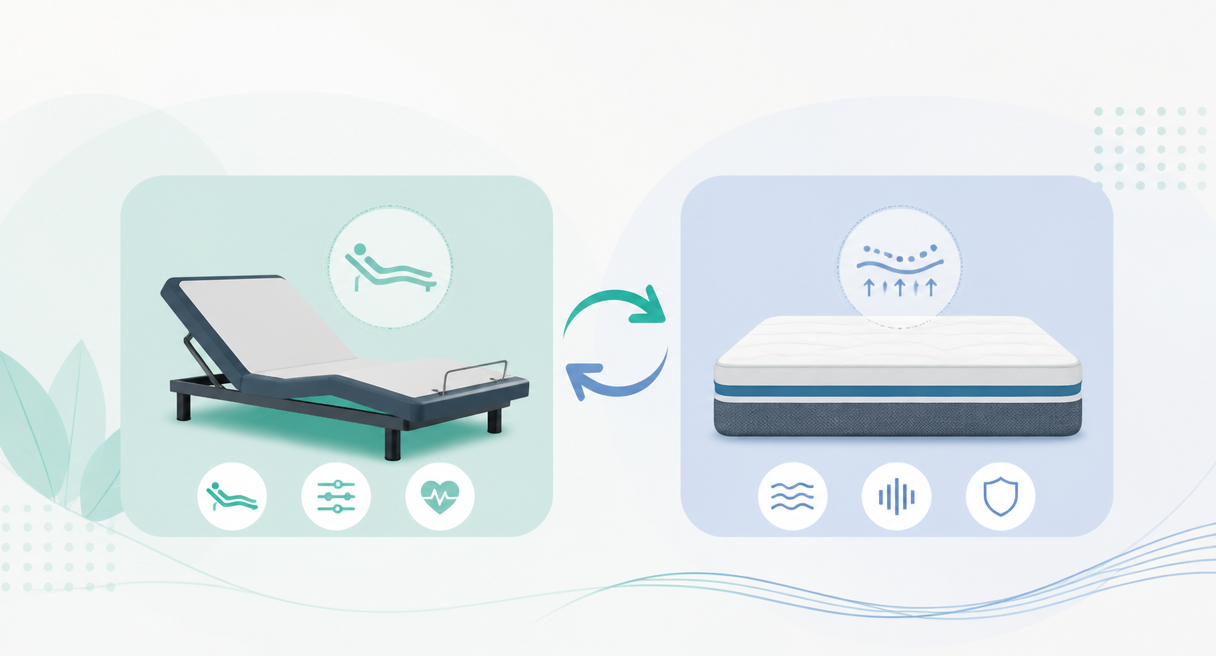
(This image is AI-generated for reference only, not an actual product photo.)
Step 4: Verify Through Two Channels
Channel one is the morning neck self-rating, a subjective read. Channel two is sleep-structure data. The certified reference: according to independent CAICT lab testing of the T11 SE tier, nighttime movements fell by 27.5 percent — a sleep-structure metric that shows up as calmer nights with less tossing.
Step 5: Read the Report Inside Its Limits
The sleep-management report generates inside a 20:00-to-10:00 window once in-bed time passes three hours and sleep time passes two; missing those thresholds explains most missing-report moments. Read the multi-night trend for internal consistency — one night's absolute numbers tell you little on their own, and the trend is where the tuning signal lives.
Step 6: Give the Setup an Adaptation Window
A new mattress-and-pillow pairing settles over several nights: the body adapts to the new baseline, and first-night impressions often soften within the first week. Let the setup run a full week before re-judging height or firmness, and make the next change from that settled read.
Step 7: Settle the Final Match in Store
The sequence ends on the floor where you can lie down: visit a store in your real sleep position, feel the shoulder-zone response and the pillow-height pairing on the surface you would sleep on, and let your own neck cast the deciding vote between the last two candidates.
What the sequence delivers, stated as outcomes: a better match between the support system and your posture, fewer nighttime movements on the report trend, and improved morning neck feel on the self-rating — two channels corroborating each other, judged after an adaptation window.
For the consideration stage, confirm which models the store actually displays before traveling, since floors vary by region. The T11 SE AI mattress is now available at the DeRUCCI New York store; other tiers and regions are a store-confirmation question. The mattress-side shopping checks are laid out in the companion piece best smart mattress for neck pain.
Frequently Asked Questions
---
Set the baseline, set the height, move one lever at a time, and read both evidence channels. The full decision path is mapped in the smart mattress buying decision guide, and you can find a store to test the pairing in your own sleep position.