
 American
( English )
American
( English ) Singapore ( English )
The Three Main Sleeping Positions Explained
The way you sleep falls broadly into one of three positions, side, back, or stomach, and each shapes your breathing, spinal alignment, and pressure points in different ways, which is why there is no single "best" position for everyone.
More than 60% of adults sleep on their side, making it the most common position, with back sleeping second in popularity and stomach sleeping generally discouraged. Side sleeping helps keep the airway open, back sleeping keeps the spine straighter, and stomach sleeping twists the neck while flattening the natural curve of the lower back. Knowing the trade-offs of each is the first step to choosing what suits your body.
How Your Sleeping Position Affects Spine, Pressure & Health
Your position decides where pressure concentrates and how well your airway stays open, side sleeping eases breathing and reduces snoring but loads the shoulder and hip, while back sleeping aligns the spine but can worsen snoring in some people.
According to Harvard Medical School, side sleeping is considered the optimal position for breathing because it keeps the tongue and soft tissues from relaxing into the back of the throat, which cuts down on snoring. Sleeping on the left side also discourages acid reflux. The trade-off is that the spine is not as well aligned on the side, which can concentrate pressure on the neck, back, or hips, and many people with shoulder issues cannot stay on the affected side for long.
Which Position Is "Best" for You?
There is no universal best position, the right choice depends on your body, your pain patterns, and whether you snore, so matching the position to your specific needs matters more than copying what works for someone else.
If you snore or deal with reflux, side sleeping is usually the better fit. If back or hip pain is your main issue, back sleeping with a pillow under the knees keeps the spine neutral. Stomach sleeping is best avoided when possible, since it twists the neck and flattens the lumbar curve. The practical test is simple: notice how you wake up, stiff and sore points to a position-to-body mismatch worth adjusting.
Why Your Mattress Matters As Much As Your Position
Even the best position fails on the wrong surface, because pressure points at the shoulder and hip, exactly where side sleepers load their weight, decide whether you stay asleep or shift restlessly through the night.
Relieving that pressure is exactly what DeRUCCI's T11 Pro AI smart mattress is engineered to do. It uses dual-side, six-zone independent active support, with up to 18 adaptive units across the shoulder, back, waist, hip, thigh, and lower leg (patent 202010801174.3), so each region receives the firmness it needs, and two sleepers can set their own configurations on the same mattress. Firmness adjusts in 0.5-step increments within a national-standard range, covering roughly 90% or more of body types, which means a side sleeper's shoulder and hip can sink in without losing lumbar support. To see how DeRUCCI approaches zoned support, visit the DeRUCCI smart sleep system page, or explore the T11 series AI mattress. (The T11 SE AI mattress is now available at the DeRUCCI New York store.)
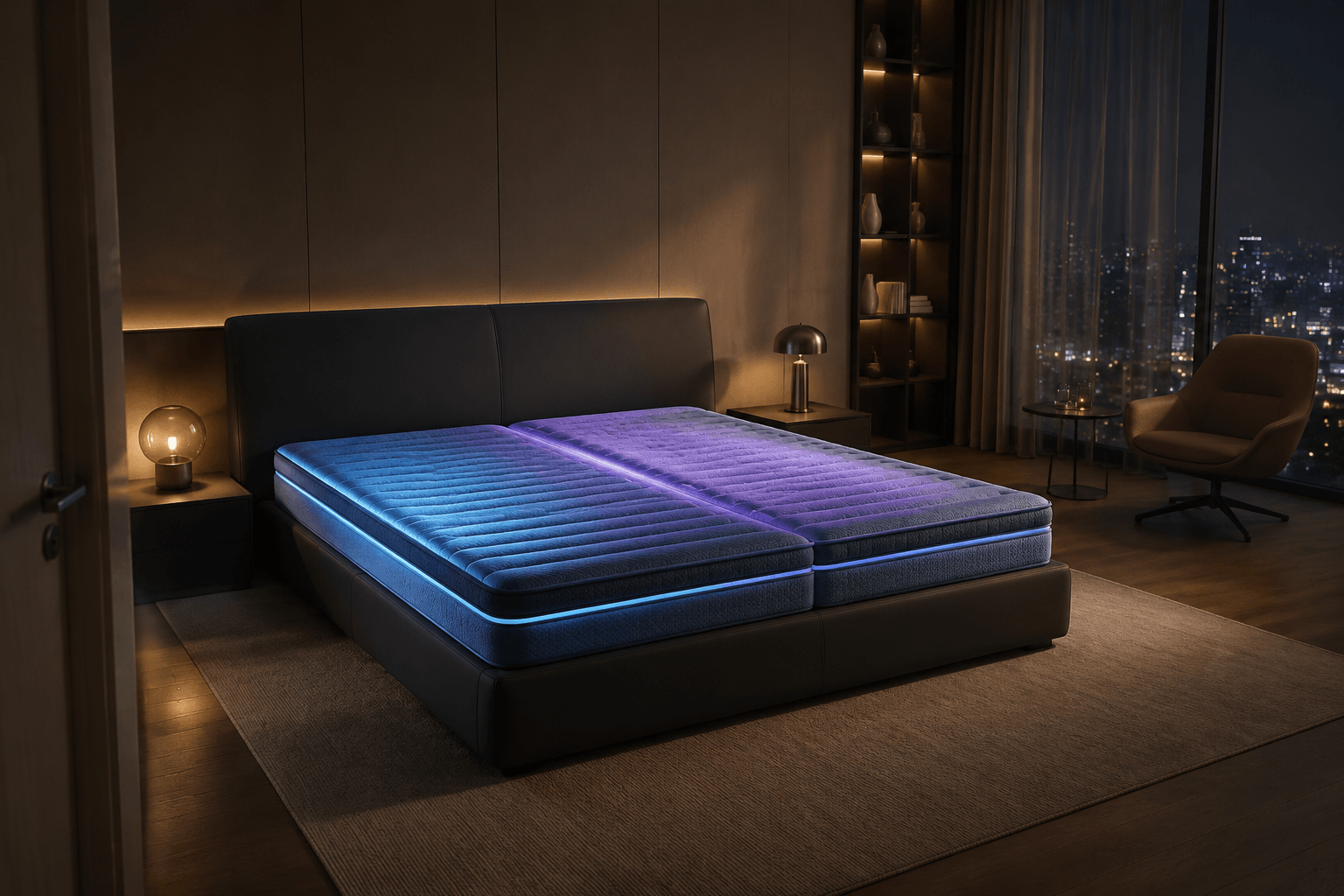
(This image is AI-generated for reference only, not an actual product photo.)
Tips to Sleep Better in Any Position Tonight
Whichever position you choose, a few small supports, the right pillow height, a knee pillow, and a pressure-relieving surface, help your body hold that position comfortably through every cycle.
Match your pillow height to your position: side sleepers need a taller pillow to fill the gap between ear and shoulder, back sleepers a thinner one, and stomach sleepers the thinnest possible (or none). Place a pillow between the knees when side sleeping, or under the knees when back sleeping, to keep the spine aligned. Above all, pair your position with a mattress that relieves pressure where you load it most, so you stay settled rather than tossing to find relief.
Frequently Asked Questions
Which sleeping position is healthiest? For most people, side sleeping is considered the healthiest overall because it keeps the airway open, reduces snoring, and can ease acid reflux. Back sleeping is good for spinal alignment but may worsen snoring for some.
Is sleeping on your stomach bad? Generally yes. Stomach sleeping twists the neck to one side and flattens the natural curve of the lower back, which can cause neck and lower-back pain over time. It is best avoided when possible.
What is the best sleeping position for back pain? Back sleeping with a pillow under the knees tends to help, since it keeps the spine neutral and takes pressure off the lumbar region. Side sleeping with a pillow between the knees can also work if back sleeping worsens snoring.
How does your mattress affect sleeping position? A mattress that relieves pressure at the shoulder and hip lets you hold your preferred position longer without shifting. Zoned support that adapts to different body regions is especially helpful for side sleepers, who load weight unevenly.
Find a DeRUCCI Showroom Near You
Better sleep is easier to choose in person. Explore DeRUCCI's mattresses and smart sleep systems, then find a store and check global showroom addresses to experience them firsthand.