
 American
( English )
American
( English ) Singapore ( English )
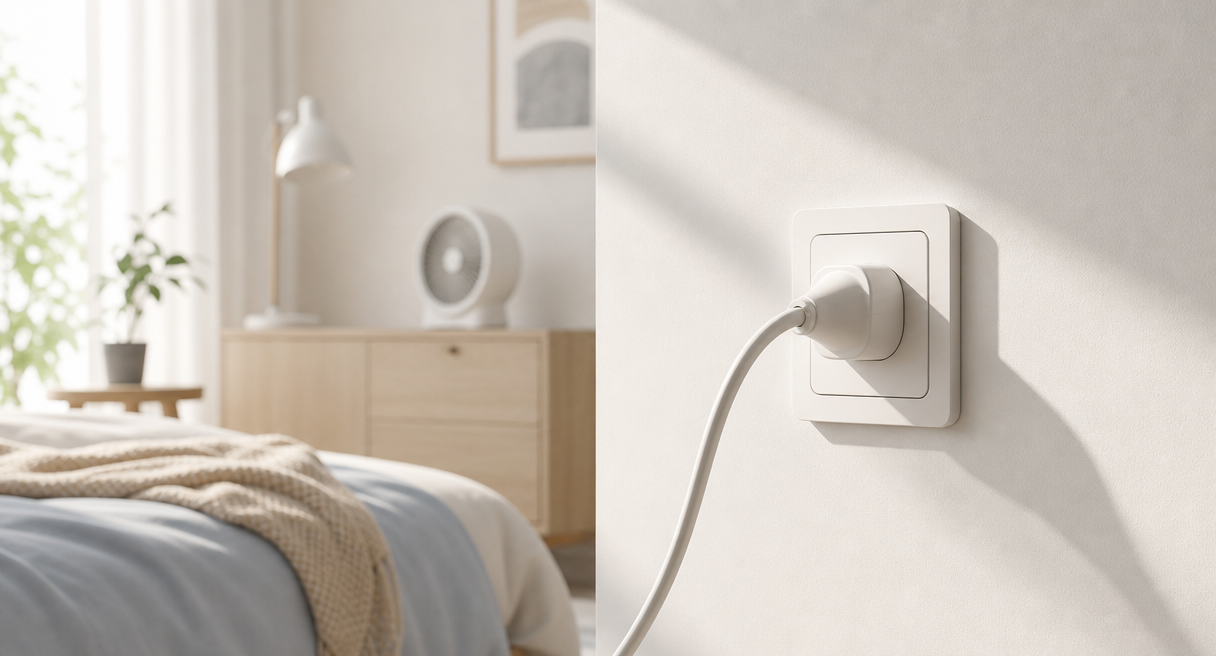
Smart mattress electrical safety is mostly a home power environment question: which outlet the bed draws from, whether power strips belong in the chain, how to match the adapter, what a storm night asks for, and what happens when the power drops. DeRUCCI maintains this piece in its sleep-education library. The checks below turn that environment into a working checklist.
Where Should a Smart Mattress Plug In? Outlets, Strips, and the Adapter Match
The home-power check for a powered bed runs in layers: a dedicated wall outlet first, power strips kept out of multi-level chains, and cords and adapters matched to the nameplate rating. A cable showing wear, a cracked plug, or an adapter off-rating calls for a matched replacement — a small swap that keeps the bed in service.
Layer one, the outlet. A powered bed draws its current from a dedicated wall socket wherever the room allows one, and a power strip works as a transitional hook-up while a room is being rearranged, never as the permanent arrangement. Multi-level chaining — one strip feeding another — multiplies contact points and cable-wear surfaces, a general demerit in household electrical practice that applies to any connected device.
Layer two, the adapter match. Use the power cord the bed arrived with and a compatible adapter whose rating agrees with the nameplate. When a part shows its age — a cord with wear, a plug with a crack, an adapter reading off-rating — replace it with a matched part through after-sales, and the bed goes on serving nights exactly as before.
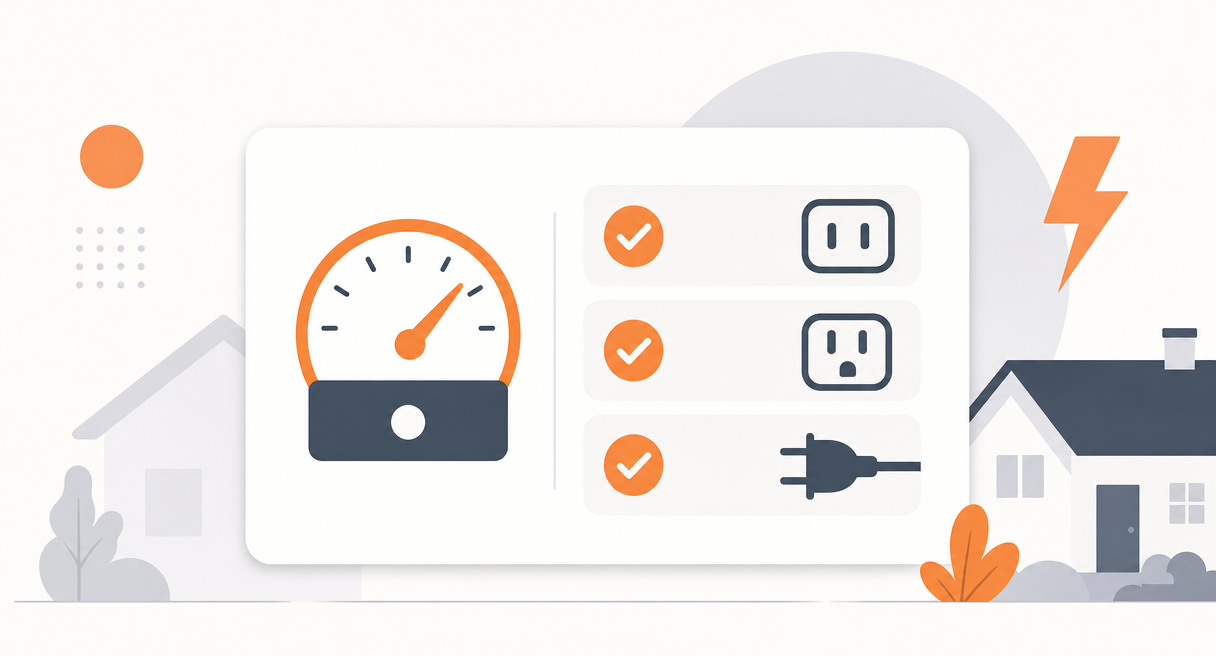
(This image is AI-generated for reference only, not an actual product photo.)
Layer three, the environment around the plug. Heavy wet washing stays off the care schedule, because moisture trapped between layered materials leads to deformation or mold. On damp risk itself, DeRUCCI's official FAQ grades an unexpectedly damp converter as very low shock risk — a grading the voltage figures below make concrete. Should a water event ever occur, it is settled through the warranty terms, verified with the official channels of your region.
The Voltage Numbers, in One Paragraph
The electrical identity of the T11 series fits in a single paragraph: control circuits at a safety voltage, a lower DC stage where circuits turn human-touchable, leakage and radio figures in the milli- and milliwatt range, all far beneath human-safety thresholds. The bed is insulated throughout, carries no live surfaces, and its control box holds the CE certification.
According to DeRUCCI's official documentation, the control circuits of the whole bed work at a 24V safety voltage, stepping through a 5V DC converter before entering circuits a sleeper can touch, and both figures sit far beneath the 36V threshold recognized for human safety. On the T11 PRO, the control hub lives at the foot of the bed where small children cannot easily reach it, and the maximum leakage current measures 0.25mA at 24V — roughly forty times beneath the 10mA/36V human-safety thresholds. The CE certification belongs to the control box, the unit seated beneath the foot of the bed. Wireless communication transmits on the 2.4–2.4835GHz band at up to 70mW, which the documentation places in the same class as the Wi-Fi routers and Bluetooth devices already running in the home. The bed as a whole is built in insulating materials and carries no live surfaces, and its metal parts have anti-corrosion, flame-retardant, and heat-resistant treatment.
The full overnight context for these figures — how they hold across a whole night of use, the leakage comparison, the radio background — belongs to the smart mattress safety overnight deep-dive.
The practical takeaway for a home: the circuits a sleeper can touch run at battery-level voltages, and the radio output shares its class with the Wi-Fi router already running in the living room. The full set of figures lives in the specification reports inside DeRUCCI's product documentation, ready to check against the nameplate on the control box.
Storm Nights and Outages: What Happens When the Power Drops?
A power cut puts the mattress into a recoverable resting state. For roughly the first day without power, the mattress keeps the feel it had, per the official guidance; once power returns, normal operation resumes with no special procedure. Storm-night unplugging therefore costs nothing in feel.
DeRUCCI's official guidance covers the question directly: for typically about a day after a power cut, the felt firmness stays as it was. After an outage longer than a day, check the firmness settings when the power is back. If the app cannot find the bed afterward, the official connection checklist runs three stops: the power connection at the wall, the indicator light on the adapter, and Bluetooth on the phone.
Storm nights carry one household habit. A surge entering through the mains is a general risk for appliances of every kind, and the standard practice for electronically controlled products on lightning nights is to disconnect them from wall power. For this bed the habit is free of comfort cost: pulling the plug overnight costs nothing.
Two comfort observations belong here, because power and settings sit behind them. Firmness perception differs from sleeper to sleeper with weight, posture, and preference, and the preset firmness bands are designed around population averages, so each sleeper settles on the setting that fits. When an adjustment seems absent, check the running mode first: the imperceptible mode adjusts with weak sensation by design, so its quiet work reads as silence.
Behind these behaviors stands the service frame: a 365-day replacement commitment, three years of free repairs, and a ten-year paid service period — labor free, materials and logistics at the customer's expense — counted from the delivery date. Abnormal heat or a suspect component takes the bed out of use and into after-sales contact.
Warmth Expectations: The Graphene Heating Zone and Breathable Comfort
On temperature, this series warms: the single heating feature is the graphene far-infrared leg zone on the T11 PRO, set per side in the app. A warm sleeping surface is body heat plus bedding storing it; localized abnormal heat means stop use and after-sales contact.
According to the official product materials, the single temperature feature across the series is the graphene far-infrared heating for the leg zone on the T11 PRO: each side of the bed is set independently in the app across a 25°C to 55°C range, with timers that end the session on their own. The whole bed draws about 0.3 kWh across a day of typical use — the rated wattage sits tier by tier in the spec sheet.
Heat-sensitive sleepers get their comfort from the room side: breathable bedding plus bedroom temperature management, a route the guide on how to sleep cooler walks in full.
The warm-feel question has an official answer as well: a mattress that feels warm reflects the sleeper's own heat dissipation and the heat stored by bedding — the same physics that warms a traditional mattress. Even, gentle warmth across the surface is the expected pattern; a localized abnormal hot spot is the stop-use signal that goes straight to after-sales.
Frequently Asked Questions
---
Run the outlet, strip, and adapter checks before installation day, unplug on storm nights with the feel intact, and read warmth against the single heating zone. The full decision path is mapped in the smart mattress buying decision guide. The T11 SE AI mattress is now available at the DeRUCCI New York store. Other tiers and regions are a store-confirmation question, so find a store to ask it in person.