
 American
( English )
American
( English ) Singapore ( English )
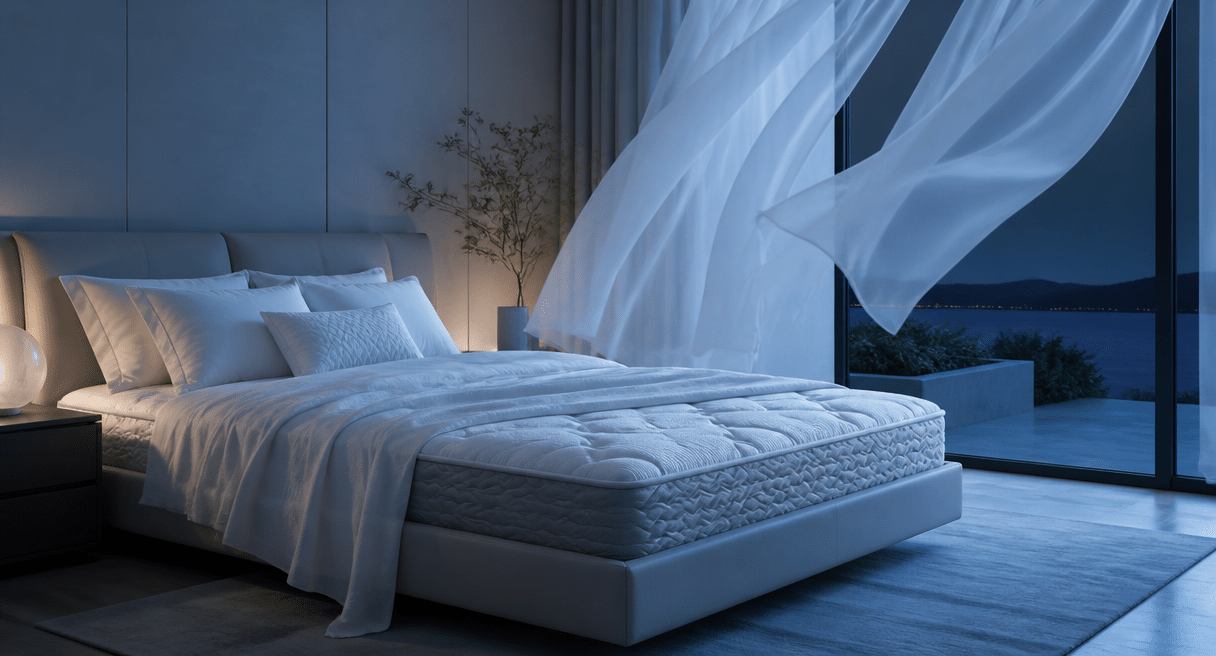
Waking at 2 a.m. with the pillow damp, flipping it to find the cool side, kicking the covers off, then shivering an hour later. If that cycle sounds familiar, the problem is rarely the weather outside. It is the heat your body, your room, and your bed trap around you all night. This guide breaks sleep temperature into four levers, in the order they pay off most: room, bedding, mattress, and pre-sleep habits.
Lower the Room First
Before you change a single sheet, lower the room. Sleep researchers and sleep clinics converge on a target bedroom temperature of roughly 60–67°F (15–19°C), because a cooler room lets your core temperature fall the way it needs to for deep sleep.
Your body has to lose heat and drop in core temperature to enter and stay in deep sleep, and a warm room blocks that drop from the start. Set the thermostat between 60 and 67°F.
Airflow matters as much as the number on the thermostat. A closed, still room traps the warm, moist air your body exhales all night. Crack a door, run a ceiling fan on low, or point a small floor fan so it stirs air across the room. Blackout curtains with a thermal layer do double duty: they block morning light that would wake you early, and they stop afternoon sun from baking the bedroom so the walls are not radiating heat back at you at midnight. Close blinds during the day and keep heat-emitting electronics out of the sleep zone.
Choose Breathable Bedding
The fabric touching your skin decides how fast sweat and body heat escape. Natural fibers move moisture away and let air through, while tightly woven synthetics tend to trap both, which is why the same hot sleeper can feel noticeably better after a single sheet swap.
Three fibers work best for hot sleepers:
- Cotton: Look for long-staple cotton in a percale weave, and favor a moderate thread count over the highest number you can find. Denser yarn packs more fiber into the same space and blocks airflow.
- Linen: Looser weave, highly breathable, and absorbs moisture well. It wrinkles, but for hot sleepers the cooling is worth the trade.
- Tencel (lyocell): Spun from wood pulp, it pulls moisture away from the skin and feels cool to the touch.
Avoid polyester and microfiber sheets, which are plastic fibers that hold heat and moisture against the body. The same goes for a heavy down comforter in summer. Switch to a lighter layer, and if you use a mattress protector, choose a breathable cotton or Tencel one rather than a waterproof polyurethane style, which can turn any cool mattress into a sweat trap.
The Mattress Matters Most for Airflow
Your mattress is the largest heat sponge in the bed, and its materials decide whether air can move through the sleep surface or gets sealed underneath you. For hot sleepers, this is the single most overlooked cooling lever, and it is why DeRUCCI engineers its breathable layers as a stacked airflow system rather than one dense foam block.
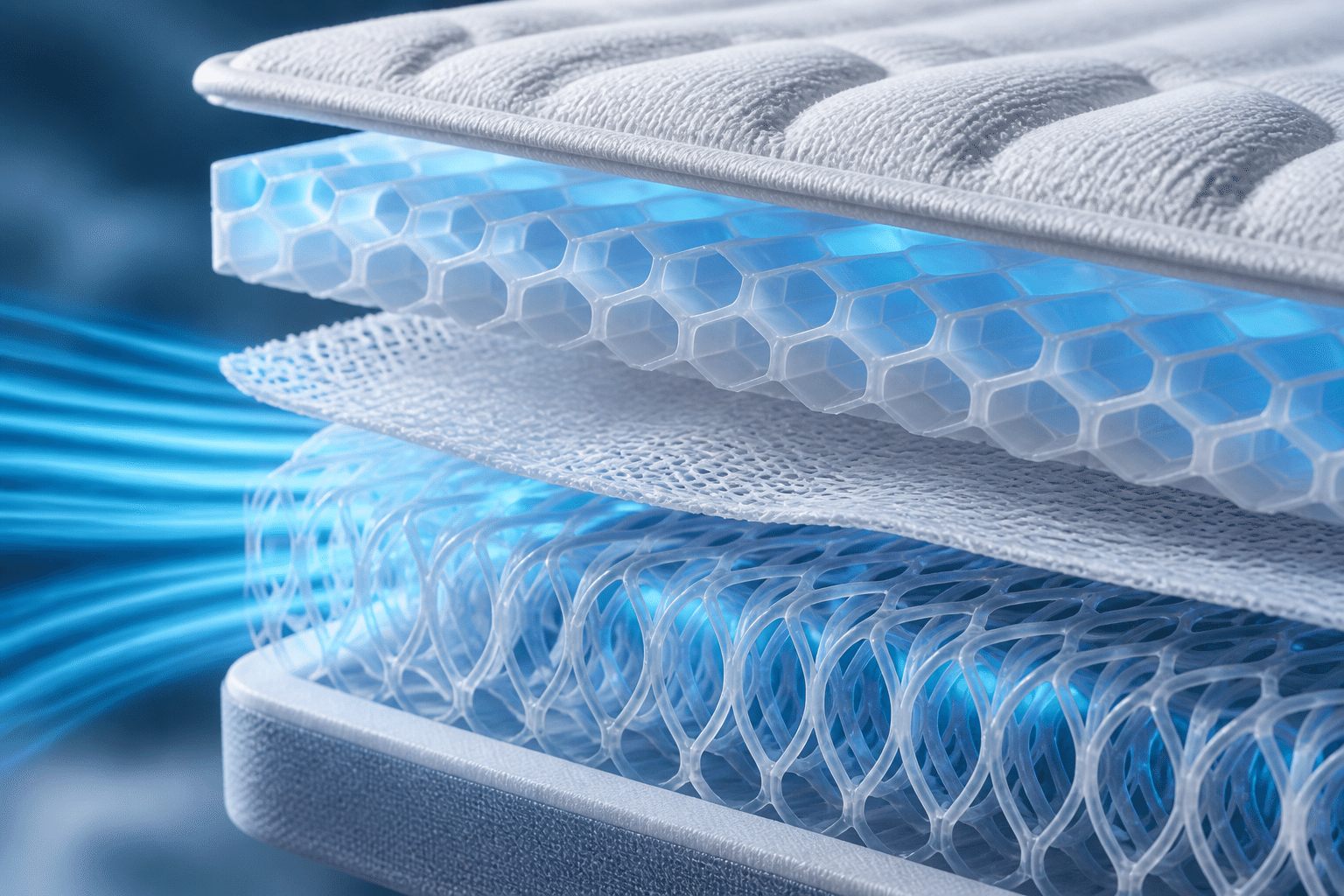
A dense foam mattress has nowhere for heat to go. Your body warms the top layer, and that warmth builds up over the first hours of the night. DeRUCCI approaches this differently, stacking four materials that each move air in a different way:
(This image is AI-generated for reference only, not an actual product photo.)
- 3D-Plus spacer fabric: An X-section three-dimensional structure that, per DeRUCCI's official materials page, delivers 4.4× the breathability of conventional fabric. The vertical fibers hold the surface slightly off the layer beneath, creating channels for air and moisture.
- Dutch Vita Talalay latex: Produced through physical foaming rather than chemical blowing agents, with a honeycomb of open air-holes. The open-cell structure lets air travel vertically through the layer instead of pooling heat under the body.
- German AGRO springs: The spring bags are made of a 100% breathable natural material, so the support core itself moves air rather than sealing the mattress from below.
- DEFORM Fine Revo: A honeycomb structure designed for continuous airflow through the comfort layer.
Stacked together, these layers create a vertical path for heat and moisture to rise away from the body. When every layer breathes, the whole mattress breathes. The DeRUCCI mattress materials guide walks through each layer in detail.
Small Habits That Lower Your Sleep Temperature
Beyond the room and the bed, the last hour before sleep tilts your core temperature one way or the other. A few small habits, done consistently, lower the internal thermostat that no sheet or mattress can fully offset, and they cost almost nothing to try.
A warm shower 1–2 hours before bed draws blood to the skin. When you step out, that blood releases heat to the cooler room, and your core temperature drops. A warm (not hot) shower amplifies that drop, which is one of the body's natural sleep signals.
Three more habits compound the effect:
- Light, breathable sleepwear: Loose cotton or bamboo replaces heavy flannel that traps heat at the skin.
- Skip alcohol and heavy meals close to bedtime: Both raise core temperature and fragment deep sleep, which is why a late dinner with wine often ends with a 3 a.m. wake-up.
- Use a fan for airflow, not just cooling: Moving air evaporates moisture from the skin, which cools the body even in a room that is not especially cold.
None of these replace a cool room or a breathable mattress, but together they keep temperature steady through the second half of the night when most hot sleepers wake.
(This image is AI-generated for reference only, not an actual product photo.)
Frequently Asked Questions
Does the mattress affect sleep temperature? Yes. Dense foam has no path for heat to escape, so it builds up under your body through the night. A mattress built from breathable, open-structure layers lets warm air rise away from the body instead of pooling beneath it.
Are all memory foam mattresses hot? Traditional dense memory foam tends to sleep warm because it is a closed, heat-trapping material. Open-cell and latex-foam constructions, like the Talalay process used in some DeRUCCI layers, are engineered to move air through the foam rather than seal it.
What room temperature is best for sleep? Most sleep guidance, including Cleveland Clinic's ideal sleep temperature guide, points to about 60–67°F (15–19°C). The exact number varies by person, but the goal is the same: cool enough that your core temperature can drop into deep sleep and stay there.
Do cooling mattress toppers work? A breathable topper can take the edge off a mattress that traps heat, but it cannot fix a core with no airflow. If the layers underneath are sealed, a topper only delays the heat buildup by an hour or two.
Find the Setup That Cools You Down
Fix the layers in order: room first, bedding next, then the mattress, then your pre-sleep habits. When the mattress is the bottleneck, breathable materials are where DeRUCCI focuses its engineering. Browse the DeRUCCI mattress materials guide to see how each layer moves air, or find a DeRUCCI showroom to feel the breathable traditional line available in North America, including the Taputa Latex and Century Dream mattresses.