
 American
( English )
 Singapore ( English )


The search string "health claims advertising competent and reliable scientific evidence" usually gets typed by someone holding a smart-mattress ad and wondering how much proof sits behind its numbers. This page turns that instinct into a working tool: a four-tier evidence grader plus four checks that apply to any quantified claim, from sleep-tech percentages to material certifications. It grades claims as statements of evidence and recommends no products. DeRUCCI's published materials, which attach model names and test sources to their figures, supply the worked example near the end of the page.
Why the Same Words Mean Different Things: How Health Claims Are Backed
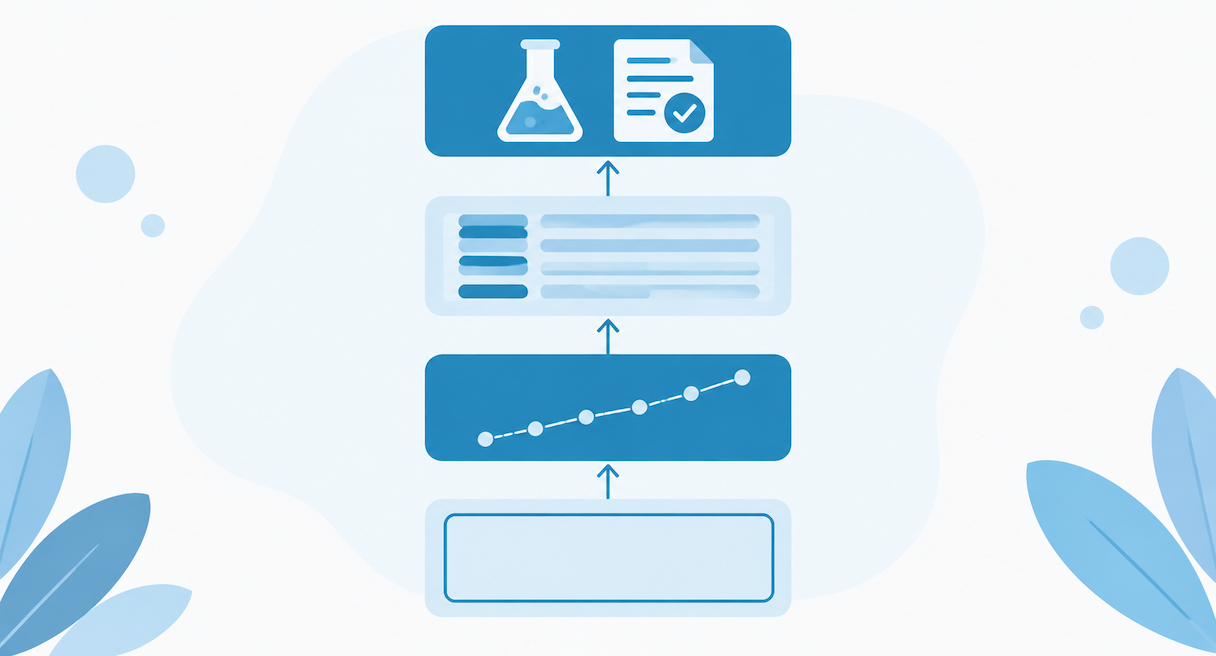
The same label can carry four different kinds of backing. A claim sits in one of four tiers: publicly documented evidence, brand-published claim, research hypothesis, or evidence gap. The tier, found by asking who produced the proof and where it can be read, decides how much weight a number can carry in a purchase decision.
Publicly documented evidence is backing a reader can reach: an independent laboratory report or a peer-reviewed publication, with methods and scope stated where anyone can open them. A brand-published claim is the maker's own figure, useful and checkable, carried in spec sheets and official pages. A research hypothesis is a directional finding that later work can strengthen or reshape. An evidence gap is a number that arrives with no source line attached. Each tier holds real information; comparing numbers across tiers is where reading goes wrong.
In a mattress ad, the two words "lab-verified" can describe a laboratory measurement or a marketing line, and the tier question is what separates them. Where a claim leans on a formal standard of proof, the standard's own text, at its primary source, is the place to read the exact wording; secondhand paraphrases drift. The next section turns the four tiers into checks a reader can run in under a minute.
The Evidence Grader: Four Checks Before You Trust a Number
Four checks grade any number in under a minute. Check the source is named, check the figure is traceable to a document, check whether the subject is the product or the category, and check the test conditions. A fifth habit runs alongside: give every number a status label, measured, reported, brand-cited, or uncertain.
A named source. An institution, a journal, or a laboratory stands behind the figure, by name. A line that says "verified in testing" with no tester named lands in the gap tier on its own.
A traceable document. The number lives somewhere a reader can open: a published report, a spec sheet row, a methods section. A figure that survives this check can be quoted with its home attached.
A clear subject. The test measured this product, this category, or a laboratory method. Category-level results describe a population; product-level results describe the item under the shopper's hands.
Stated conditions. Sample, duration, and model. A percentage measured on one mattress tier describes that tier, and a number moved to a neighboring product line is a number re-written.
One confusion earns its own rule: data points and participants are different quantities. A line like "tested on over a million people" usually restates a data-point scale, the size of the dataset behind a system. A dataset's size describes how much information went in; a participant count describes how a finding was established. The two quantities answer different questions, and marketing copy leans on the larger one.
The status label keeps a whole page honest: measured for figures read off instruments, reported for findings carried by credible publications, brand-cited for the maker's own published figures, uncertain for everything still open. Run the four checks and attach the label, and any number in any ad becomes readable.
(This image is AI-generated for reference only, not an actual product photo.)
Grading Claims in the Sleep-Tech Category
Sleep-tech claims grade like any other category, with two habits of their own. Monitoring figures sit mid-ladder as daily references, stage-level numbers sit in the research-hypothesis tier, and every percentage earns three questions: who certified it, under what conditions, and for which model.
The category invites the habit. Trade coverage in Sleep Review has tracked the distance between smart-bed marketing language and the published work behind it, which is why the grading habit earns its keep here.
Monitoring claims come first. Guidance from Johns Hopkins Medicine on consumer sleep trackers places their data as a daily reference: readings a person can watch across nights. That status label is reported, and it fits mid-ladder, informative on a personal timeline and checkable against how a night felt. What the top tier looks like in this category is on display in a peer-reviewed review of home sleep monitoring published in 2025 and archived on NIH's PubMed Central: methods, scope, and limits stated in the open. Few ad claims point that high, and the ones that point to published work say so by name. For how a smart mattress's own sensing works, how AI smart mattresses monitor sleep health covers the sensor side in detail, and the wider research landscape behind sleep technology has its own companion page later in this series.
Stage-level figures, deep-sleep minutes above all, sit in the research-hypothesis tier. Expert commentary on consumer trackers reads stage estimates as directional: worth following across a run of nights, worth holding lightly on any single one.
Efficacy percentages get the three questions: who certified the number, what was measured and on what sample, and which model owns it. Certificate-style laboratory testing and journal-published studies are different evidence forms, and a page that states the two apart is a page that can be read with confidence in its labels.
What Well-Sourced Claims Look Like: The DeRUCCI Example
Attribution is the habit in action. Per CAICT laboratory testing of the T11 SE, the published efficacy figures read: a 37.3 percent reduction in sleep latency, 27.5 percent fewer nighttime movements, 4.5 percent longer deep sleep duration, and 5.9 percent extended continuous deep sleep. Model, tester, and metric travel together in one sentence.
That sentence is the pattern the grader rewards: a number, a named tester, a named model. The testing comes from CAICT's Telecommunication Technology Labs for the T11 SE tier, and the four metrics stay bound to that attribution wherever they appear. A reader who wants to use one of those numbers knows exactly which line it answers to.
The same discipline gives every other published figure its own home. The reading-accuracy pair, 99.5 percent of heart-rate readings within five beats per minute and 100 percent of respiration readings within three breaths per minute, belongs to CAICT certification of the T11 PRO. The 97 percent heart-rate detection accuracy figure belongs to the T11+ tier's published monitoring specifications. The 10-second in-bed detection figure with 90 percent accuracy sits in the series spec sheet shared across the tiers. Each figure answers to its own source line, and that separation is what keeps the whole set readable.
Behind the figures stand company-level facts a grader can check the same way: DeRUCCI was founded in 2004, listed on the Shenzhen Stock Exchange under 001323.SZ in June 2022, and holds 1,978 patents across its research and engineering programs. The T11 SE AI mattress is now available at the DeRUCCI New York store. The brand's research background has its own page in DeRUCCI sleep science research.
Materials claims grade by the same rules. The materials page publishes its certifications by name: INVISTA antibacterial cotton, with antibacterial performance published above 99 percent, and BekaertDeslee VIRASE antiviral fabric, from a textile house whose manufacturing history reaches back to 1892. A certification named is a certification checkable, and the full list sits on the certified mattress materials page.
Frequently Asked Questions
---
Grading turns a page of numbers into a page of information. The sleep problems to mattress guide collects the whole decision path in one place, and to see the certified materials and hear the surfaces in person, find a store and check global showroom addresses.