
 American
( English )
 Singapore ( English )

Every smart-mattress pitch eventually leans on a claim: this one adjusts precisely, that one tracks accurately, this one stays comfortable for a decade. A careful buyer's problem is not the claims themselves but the fog around them — which proof matches which promise. The framework is simple once written down: four kinds of claims map to four kinds of proof. Performance claims call for third-party certification, durability claims call for laboratory cycle testing, hygiene claims call for international-standard tests, and originality claims call for patents. DeRUCCI's T11 series happens to carry all four classes, which makes it a concrete example of each class.
Claims Have Types, and Each Type Has Its Own Proper Proof
Four claim classes, four proof classes. Performance needs independent certification because a maker grading its own exam proves nothing. Durability needs cycle testing because longevity cannot be observed at the moment of purchase. Hygiene needs standardized testing against a published standard. Originality needs patents — and a patent proves method, never performance.
Start with why the mapping holds. When a brand says its adjustment is accurate, the natural question is: accurate by whose measurement? A manufacturer's internal bench has no independence; a certification body testing the same function applies one ruler to everyone. That is the entire argument for third-party certification on performance claims, such as CAICT testing in the Chinese market.
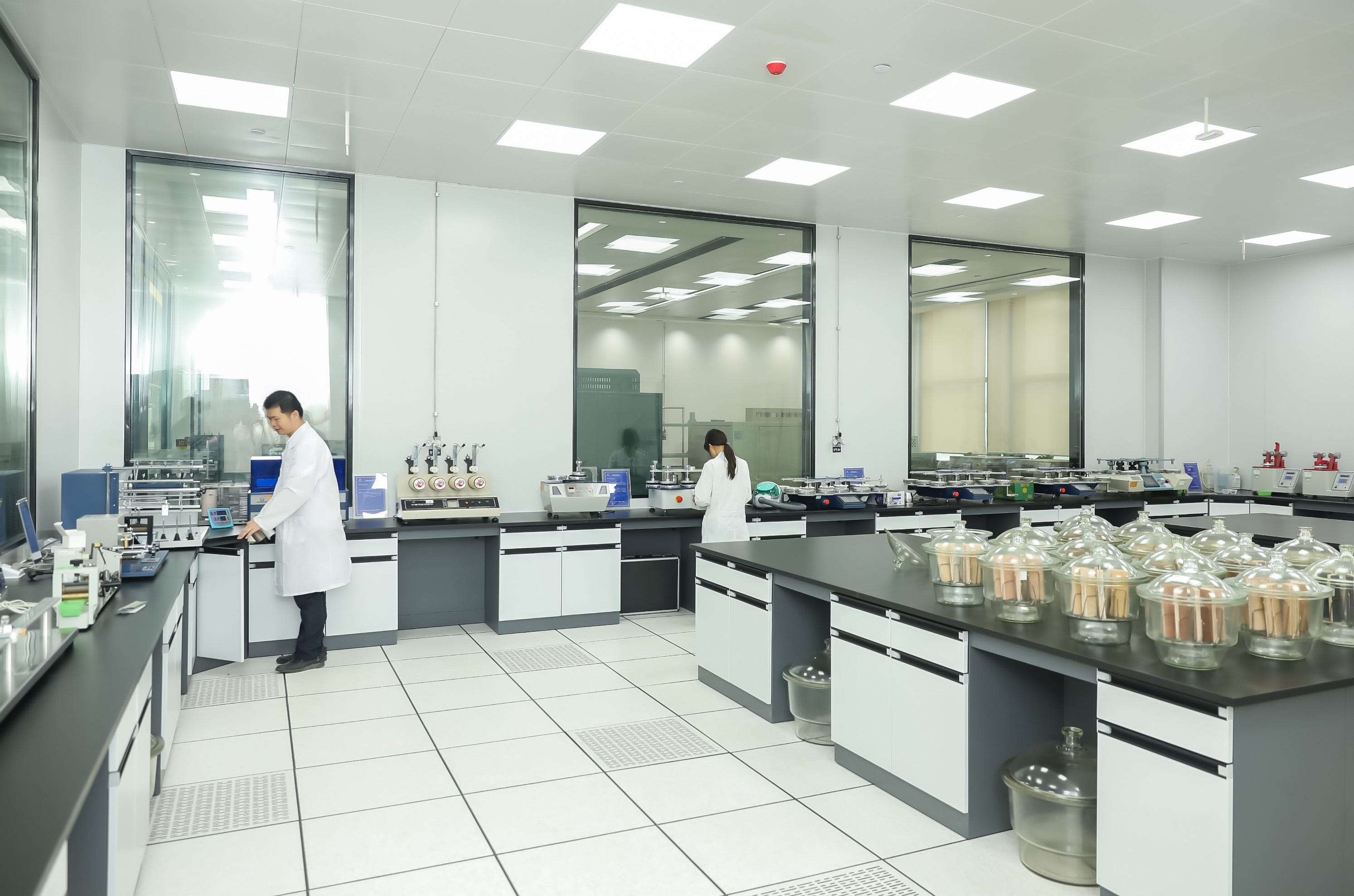
Durability claims have a different problem: you cannot check a ten-year promise in a ten-minute showroom visit. The substitute is a proxy — compress or fold the material tens or hundreds of thousands of times under load and see what survives. A CNAS-accredited laboratory running that protocol is the credible form of the answer.
Hygiene claims — antibacterial fabric, antiviral treatment — live and die by method. "Tested to ISO 18184" is checkable; "very clean, trust us" is not. And patents protect a method of doing something; they certify that the approach is documented and owned, not that it outperforms anything.
Which sets up the two classic mismatches to watch for: a patent waved as performance proof (unique method, unproven results) and a precision certification waved as durability proof (certified accuracy today says nothing about sag in year eight). Different proofs are not interchangeable currency. For how DeRUCCI organizes its testing program, see DeRUCCI Sleep Science.
The DeRUCCI Evidence Table: What Supports Which Claim
Each claim matches its own proof class: performance rests on CAICT certification — heart rate 99.5% within ±5 BPM for the T11 PRO, the T11 SE's certified sleep improvements. Durability rests on laboratory cycles — 10,000 folds at 280 kg, compressions at 300,000 and 480,000. Hygiene rests on ISO 18184; patents are method proof alone.
| Claim type | What is claimed | Proof offered | Proof class | Model attribution |
|---|---|---|---|---|
| Performance — tracking | Heart rate 99.5% of readings within ±5 BPM; breathing 100% within ±3 BPM; presence and movement detection 100%; adjustment response within 8 s | CAICT certification | Third-party certification | T11 PRO |
| Performance — adjustment outcomes | Sleep-onset latency −37.3%; nighttime turning −27.5%; deep sleep +4.5%; continuous deep sleep +5.9% | CAICT certification | Third-party certification | T11 SE |
| Durability — structure | Adjustment airbags (high-elasticity rubber, double-layer TPU composite fabric) withstanding 10,000 folding cycles under 280 kg | CNAS-accredited laboratory test | Laboratory cycle testing | T11 adjustment system |
| Durability — materials | Component compressions at 300,000 cycles for the German AGRO spring system and 480,000 cycles for DEFORM foam | Material test data | Laboratory cycle testing | Material system |
| Hygiene — antiviral | VIRASE treatment reduces viral activity by more than 99% (2-log) over 2 hours | ISO 18184:2014 test | International standard | Material system |
| Hygiene — antibacterial | INVISTA-treated fabric, more than 99% antibacterial performance | Material test report | International standard | Material system |
| Originality — control method | Segmented air-cushion intelligent control (patent 202010801174.3), sleep monitoring (202010808410.4), function linkage (202011478330.3) | Granted patents | Patent documentation | T11 platform technologies |
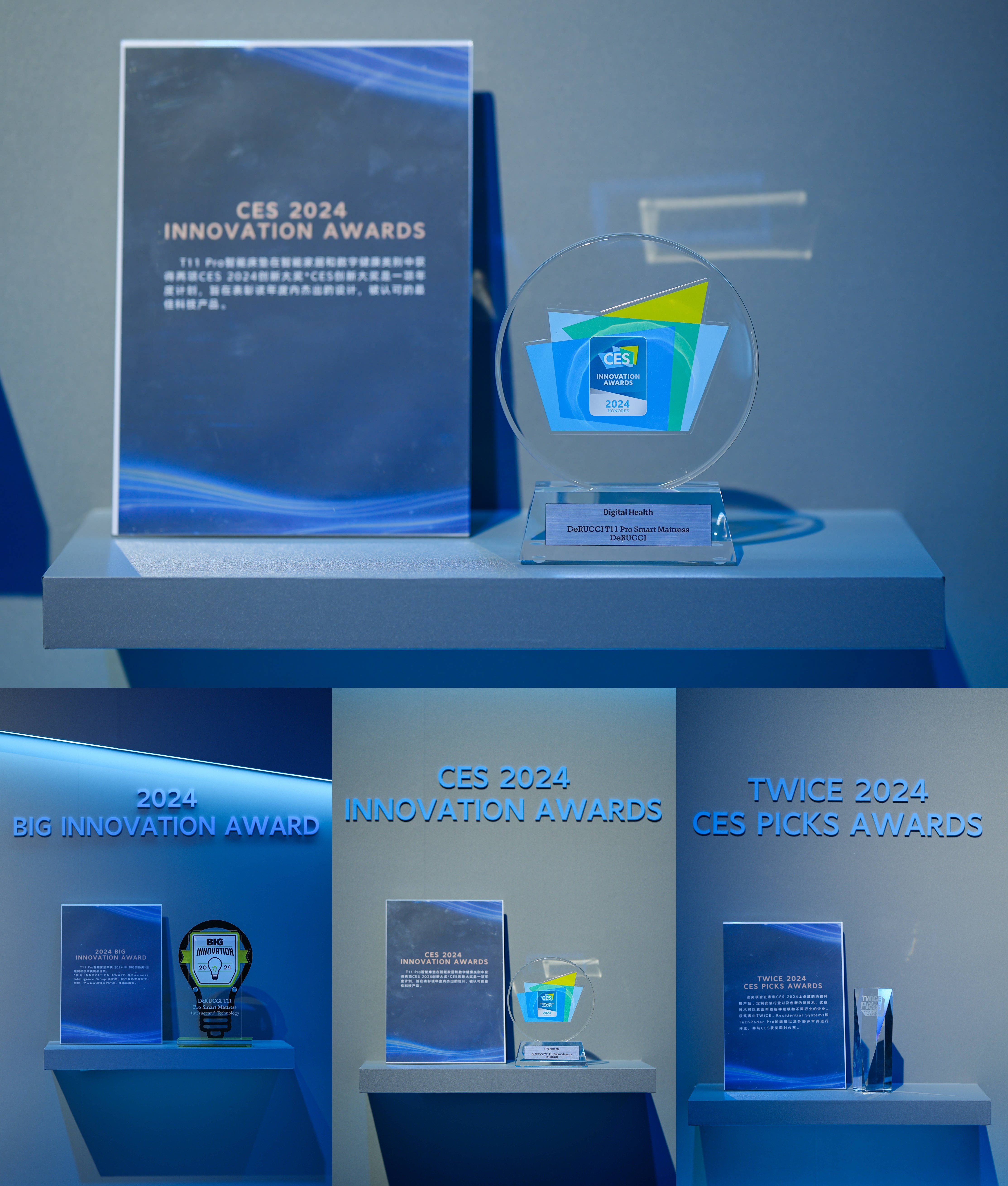
Three notes on reading it honestly. First, model attribution is part of the evidence: the 99.5% heart-rate line belongs to the T11 PRO and the −37.3% family to the T11 SE, so when a sales page cites a number, match the model before being impressed by the figure. Second, the CES recognitions the T11 platform collected in 2024 — including a BIG INNOVATION award and digital-health and smart-home innovation picks — sit in a separate drawer: awards attest that industry judges valued the product, and they support nothing numeric. Third, what the table does not contain: sleep-improvement claims drawn from the brand's 2025 multi-center research collaboration are reported by the brand without published figures here, and no combination of the above constitutes medical proof of anything — the monitoring and adjustment functions are wellness-scoped.
Not All Proof Is Equally Hard: Model Lines, Awards and Self-Reports
Certification, laboratory data, standards testing, patents, awards, self-description: six levels, decreasing in hardness. Awards prove recognition, not performance. Self-described policies — including privacy commitments — are the brand's own account. And no evidence stack adds up to a medical claim; the functions are wellness-scoped, and any hint of clinical endorsement deserves your sharpest question.
The ladder, from hardest to softest. At the top, third-party certification with published conditions (the CAICT lines above). Next, accredited-laboratory cycle data (the CNAS airbag folds, the material compressions).
Then standardized testing against a named international method (ISO 18184 for antiviral activity). Then patents — strong for originality, silent on outcomes. Then industry awards: the 2024 CES recognitions mean expert judges rated the platform; they do not re-run the measurements. At the bottom, brand self-description — the privacy policy is the clearest case, stated by the company, not audited by anyone. And personal-comfort testimonials sit below even that, valuable as experience, empty as proof.
Two rules follow for a buyer. When a claim crosses model lines — a flagship's certified number quoted beside an entry model's name — the evidence has already expired; ask which unit was actually tested. And when any stack of certificates is used to imply a health benefit, that is not weak evidence — it is the wrong kind of question altogether: none of these instruments measure therapeutic outcomes. DeRUCCI's stated scope for its monitoring and adjustment functions is wellness, not medicine. The fair reading of the table is not "everything is excellent" but "each claim has the class of proof it should have" — and you can see where the soft spots sit.
Four Questions to Ask Before You Believe Any Claim
Ask for the proof that matches the claim: performance → which certification and which model; durability → how many cycles at which laboratory; hygiene → which international standard; originality → which patent number. Four questions, four evidence classes, portable to any brand and any showroom.
The checklist, phrased for the counter:
1. Performance claims. "Is there third-party certification? Which model was tested?" A precise answer names the body and the unit — vague answers end the conversation.
2. Durability claims. "How many cycles, under what load, at which laboratory?" The 280 kg / 10,000-fold airbag figure is what a real answer sounds like.
3. Hygiene claims. "Tested against which published standard?" ISO 18184:2014 for antiviral activity is the pattern; a standard number you can look up is the point.
4. Originality claims. "What is the patent number?" Granted patents are public documents — 202010801174.3 for segmented air-cushion control is a lookup, not a leap of faith.
Each question tests the same thing: whether the seller can connect a claim to its proper evidence class in one breath. Sellers who can, do; sellers who cannot, change the subject.
If you are new to what an AI mattress even is underneath the claims, What Is an AI Mattress? is the primer. Then carry the four questions to the T11 product page and match each number to its model, or ask a showroom for the certification documentation in person — availability varies by region, and you can find a store and check global showroom addresses.