
 American
( English )
 Singapore ( English )

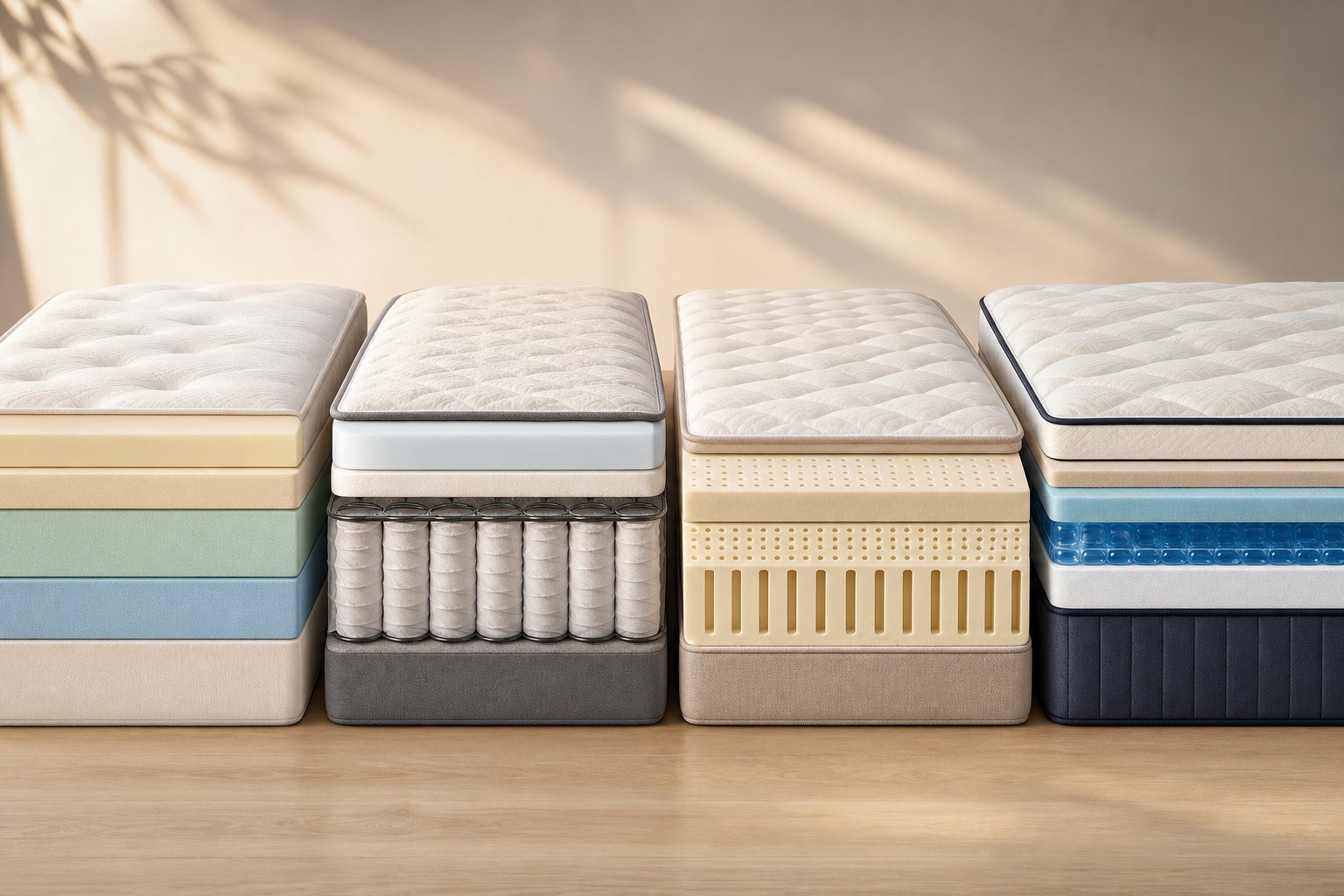
Most mattress comparisons read like a leaderboard, which helps nobody at 11 p.m. with a sore shoulder. Foam, hybrid, latex and smart are four different constructions, each built around a different problem. The smarter route, and the one this article takes, is to name your problem first and then see which structure answers it. Along the way, DeRUCCI's own material choices show where a brand's specifics sit inside each category.
How Do You Choose a Category Without a Ranking?
Sort by problem, not by prestige. Four problems cover most of the ground: pressure spreading at the shoulder and hip, support that holds the spine's line, springy responsiveness when you turn, and automatic adjustment overnight. Foam answers the first, hybrid the second and third together, latex the third plus durability, and smart the fourth.
Two steps, in order. Step one is naming what actually bothers you: a pressure point that aches on waking, a spine that sinks, a mattress too slow to follow a turn, or a bed that cannot adapt to how your body changes overnight. Step two is matching that problem to a construction, because structure decides behavior:
- Foam families work by contouring, spreading load across the surface.
- Hybrids pair a contouring top with a resilient core, aiming at support and bounce at once.
- Latex works by elastic response, compressing and rebounding rather than slowly molding.
- Smart constructions add sensing and adjustability to a support core.
DeRUCCI's materials make the structure-to-behavior link concrete. According to official materials, the DEFORM Fine Revo layer uses a honeycomb structured resin elastomer that deforms in three directions, aimed at spreading body pressure; it is a joint technology with Aisin. The Dutch Talalay latex uses open, round cells for soft support. The 3D-Plus material carries an X-shaped structure with more than 1.4 million support points. Three materials, each answering a different problem.
What Do Foam and Hybrid Constructions Solve?
Foam's core answer is pressure spreading through contouring; its trade-offs are slower response and no self-adjustment. Hybrid aims at the combined need for support and bounce by layering a contouring top over a resilient core. One note: hybrid comparisons here follow general industry definitions, and single-brand foam-versus-hybrid test data is scarce.
In industry terms, foam mattresses solve the pressure problem. The material molds to the body, enlarging the contact area and lowering peak pressure at the shoulder and hip. That is the construction's strength, and DeRUCCI's DEFORM Fine Revo layer, developed jointly with Aisin, works this way.
What foam does not solve, stated plainly: it does not spring back quickly, and it does not adjust itself. Someone who values a lively surface when turning, or whose support needs change overnight, is looking at the next two categories.
Hybrid, in the general industry definition, stacks a comfort layer over an innerspring or resilient core. What it solves is the combination: contouring where the body meets the bed, resilience and support underneath. What it does not solve is anything requiring sensing; a hybrid has no awareness of your position and no mechanism to respond to it. That problem belongs to the smart category covered below.
For a closer look at pressure relief, the foam-versus-latex comparison is covered in comparison of latex and memory foam in pressure relief.
What Does Latex Solve, and What Does DeRUCCI's Version Add?
Latex answers the elastic-response problem: it rebounds when you turn rather than slowly reforming, and it holds that behavior over years of use. DeRUCCI's latex materials are named with their partners, including Dutch Talalay latex and AGRO springs tested to 300,000 compression cycles. In North America, the latex line includes Taputa Latex and Century Dream 3D Latex.
The problem latex solves is responsiveness with durability. Turn over, and the material has already returned; no waiting for it to re-form around the new position. Over years, that behavior holds, which is where the durability claim earns its place: according to official materials, AGRO springs are tested to 300,000 compression cycles, and the Dutch Talalay latex, from partner Vita Talalay in the Netherlands, provides support through open, round cells.
What latex does not solve: it is still a fixed surface. However refined the elasticity, the firmness you bought is the firmness you keep, and it senses nothing about how your body changes through the night.
There is one thing DeRUCCI does here that is worth naming separately from any category mechanics. Five of its six core materials come with named international partners: Vita Talalay from the Netherlands, AGRO from Germany, Aisin from Japan, BekaertDeslee from Belgium, and INVISTA; the sixth, 3D-Plus, is DeRUCCI's own design. You can look up what is in the mattress and where it came from. In North America, the latex tradition is represented on shelves: the Taputa Latex (MZZ4-238A) and the Century Dream 3D Latex (MOC1-012) are listed in the current traditional line, with the Century Dream shown at the New York flagship store. Availability varies by region, so confirm with your local store.
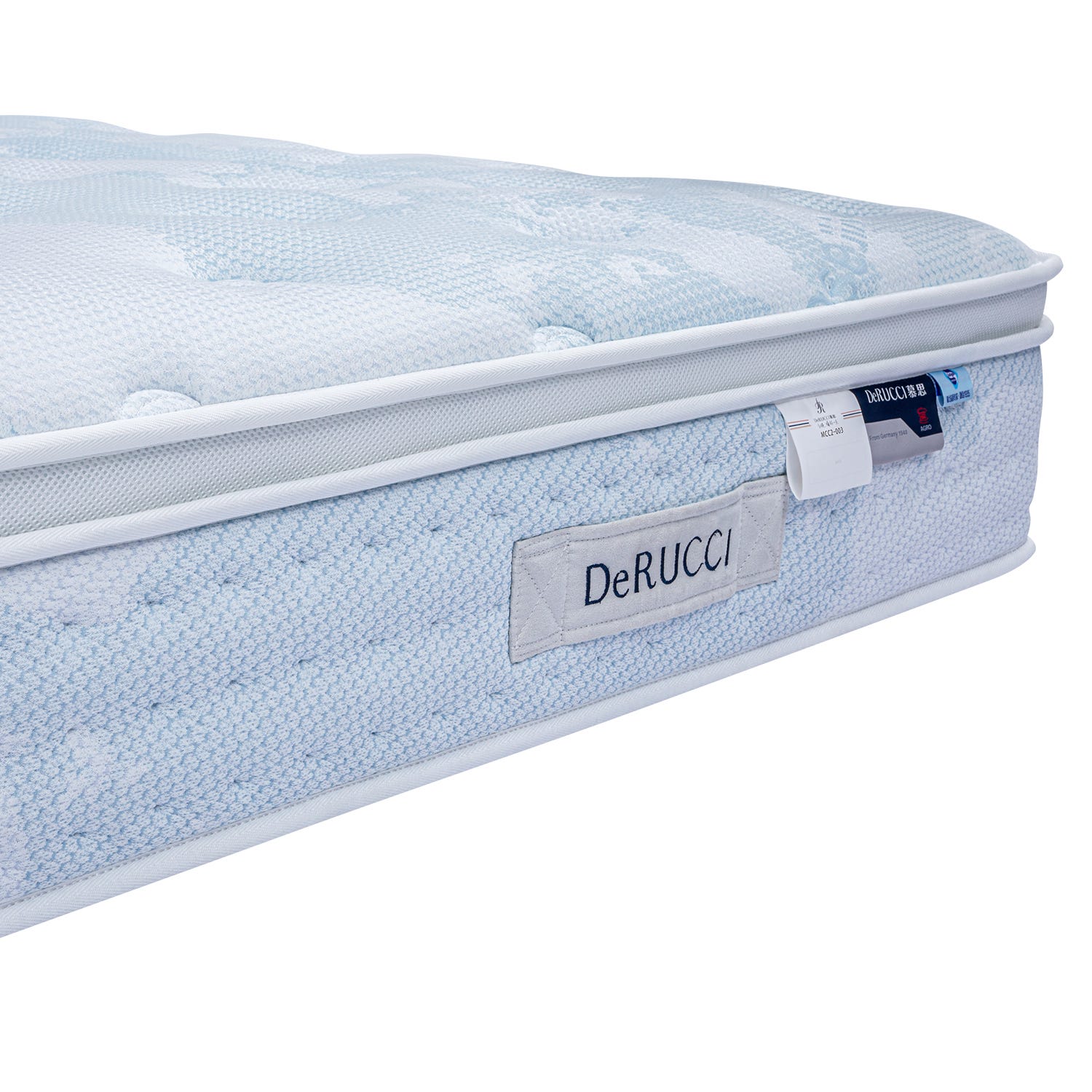
The materials-and-craftsmanship story runs longer than one section allows, and it continues in DeRUCCI mattress materials and craftsmanship.
What Does a Smart Construction Solve?
The first three categories are fixed at the factory; smart exists for the problem of a body that changes state overnight. Sensing reads pressure, algorithms interpret it, and zoned air chambers adjust the support response without waking anyone. The costs are equally real: power, app setup, and less depth in any single material specialty than a dedicated material line.
The setup for this category is that bodies are not constant. The position you fall asleep in is not the position you hold at 3 a.m., and the support that suits you in September may not suit a heavier you in March. The other three constructions answer with their best fixed guess. A smart construction answers with a loop: sensing reads the body's state, the system interprets it, and zoned support responds.
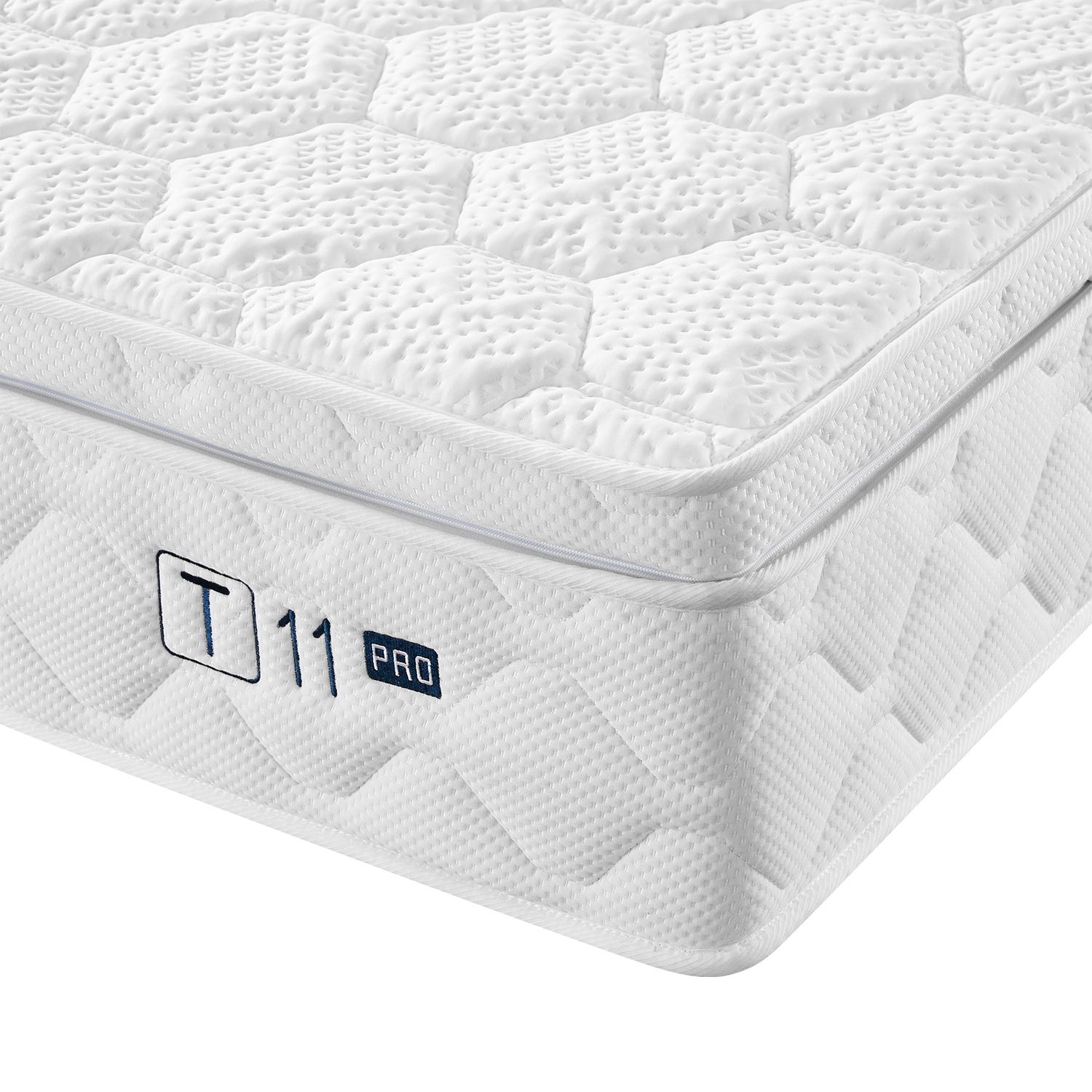
Within DeRUCCI's line, the material layer contributes the 3D-Plus structure with its more than 1.4 million support points, while the T11 series is the product layer that closes the loop. How that loop works in detail, what the zones are and when adjustment happens, is a topic of its own covered in What Is an AI Mattress?.
Fairness runs both directions, so the same two-question treatment applies. What smart solves: dynamic adjustment without anyone awake to operate it. What it does not solve: it is not the deepest expression of any single material tradition. A dedicated latex line will outperform a smart mattress on pure latex behavior, and the smart mattress requires power and app setup where a foam block requires nothing. If your problem is a fixed one, the simpler category may be the clearer answer.
Which Category Fits Your Problem? A Self-Check List
Four problems, four answers. Shoulder or hip pressure on waking points to foam-family materials or soft-support latex. A surface too slow to follow your turns points to latex. Wanting contour and bounce together points to hybrid in the general sense. Support needs that change overnight point to smart. No category wins overall; each wins where its structure fits.
1. Shoulder or hip ache on waking: a pressure-spreading problem. Foam-family materials with honeycomb or open-cell structures answer it; soft-support latex is the alternative.
2. Frequent turning with a mattress that feels slow: an elastic-response problem. Latex answers it directly.
3. Both contour and spring wanted at once: a combined need. Hybrid, in the industry's general definition, is built for exactly that combination.
4. Support needs that differ between falling asleep and deep night, or between two sides of one bed: a dynamic-adjustment problem. Smart is the only category with a mechanism for it.
Two limits close the frame. First, treat any single foam-versus-hybrid claim with proportionate confidence; published comparisons in that pairing rest on general industry definitions. Second, there is no overall winner here, on purpose. The real question is which structure fits which problem, and that is answerable.
Frequently Asked Questions
With a category in mind, the next step is checking actual models and materials. You can browse current product lines and find a store to see the constructions side by side and confirm what your region sells.