
 American
( English )
 Singapore ( English )

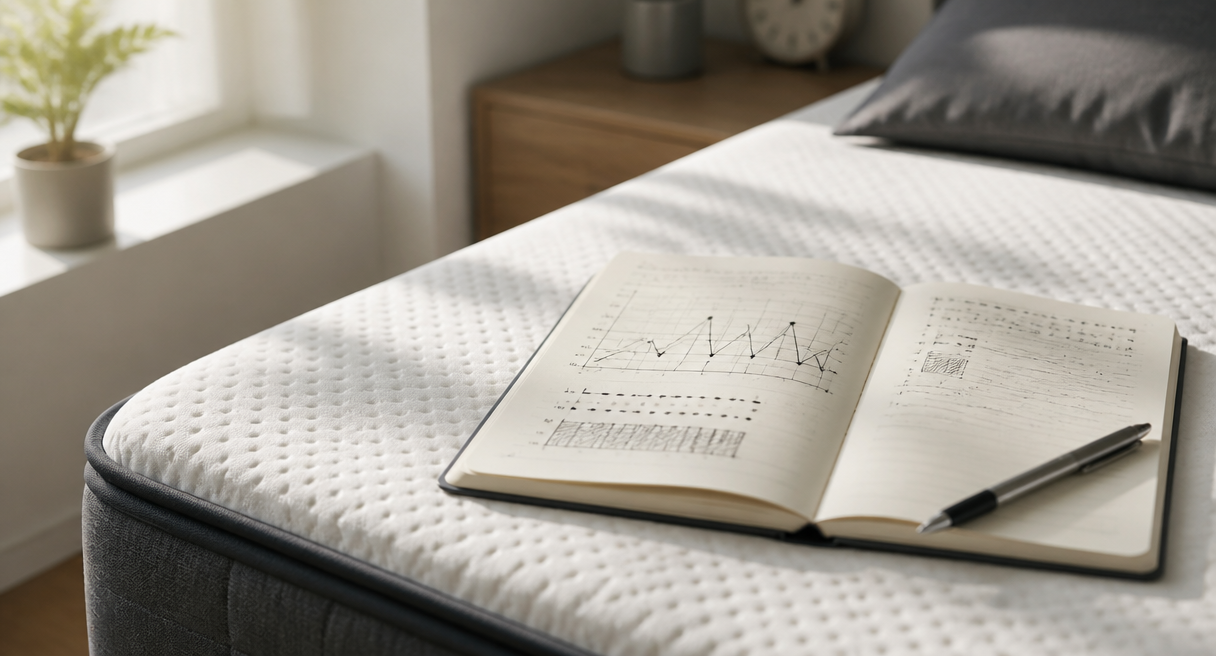
Give it several valid nights before you change anything. A single night is noise. A run of nights that met the report conditions is a baseline you can actually act on. When you do start adjusting, change one thing at a time and compare equal windows before and after. Handled that way, the reports on a DeRUCCI smart mattress earn their keep instead of decorating an app. And before any of it comes the plumbing: making sure the reports generate at all.
How Many Nights Make a Baseline?
Think in valid nights rather than calendar nights. One report is one sample, and a small one: a qualifying night only clears the report's minimum — three hours in bed, two of them asleep — while a full night, by general sleep science, runs four to five cycles of roughly 90–120 minutes. Several valid nights make a baseline worth acting on. Build that first, then change things slowly.
Treat each report as a sample. The rest follows. One night cannot be compared with anything, because it is the smallest unit that can even be scored. A full night's architecture runs four to five cycles of roughly 90–120 minutes — a general-science figure, stated apart from the product's own numbers. The manual states the report's conditions in two statements: a report is automatically generated and sent to the app after at least 3 hours of continuous sleep, and its note adds that a report is generated only if time in bed is at least 3 hours and actual sleep at least 2 hours — a typical sleep cycle runs 60–90 minutes, and data is collected for a minimum of two full cycles to ensure accuracy. So the useful question is never "how many nights on the calendar" but "how many nights that actually produced data, stacked up."
A tracker user who logged every sleep variable for ninety consecutive days landed on the same point from the far end: measurement only pays when it ends in a decision. Reviewing nights is worth exactly as much as the decision it lets you make, and a one-night sample supports no decision at all.
One more expectation to set before you start: your nights will vary even when nothing changes. A late work night, one glass of wine, a warm room, and the next morning's report shifts. Variation is the normal background of sleep data, and it is precisely why a stacked series of valid nights, rather than any single report, is the thing worth reading.
What Should You Fix Before Counting Nights?
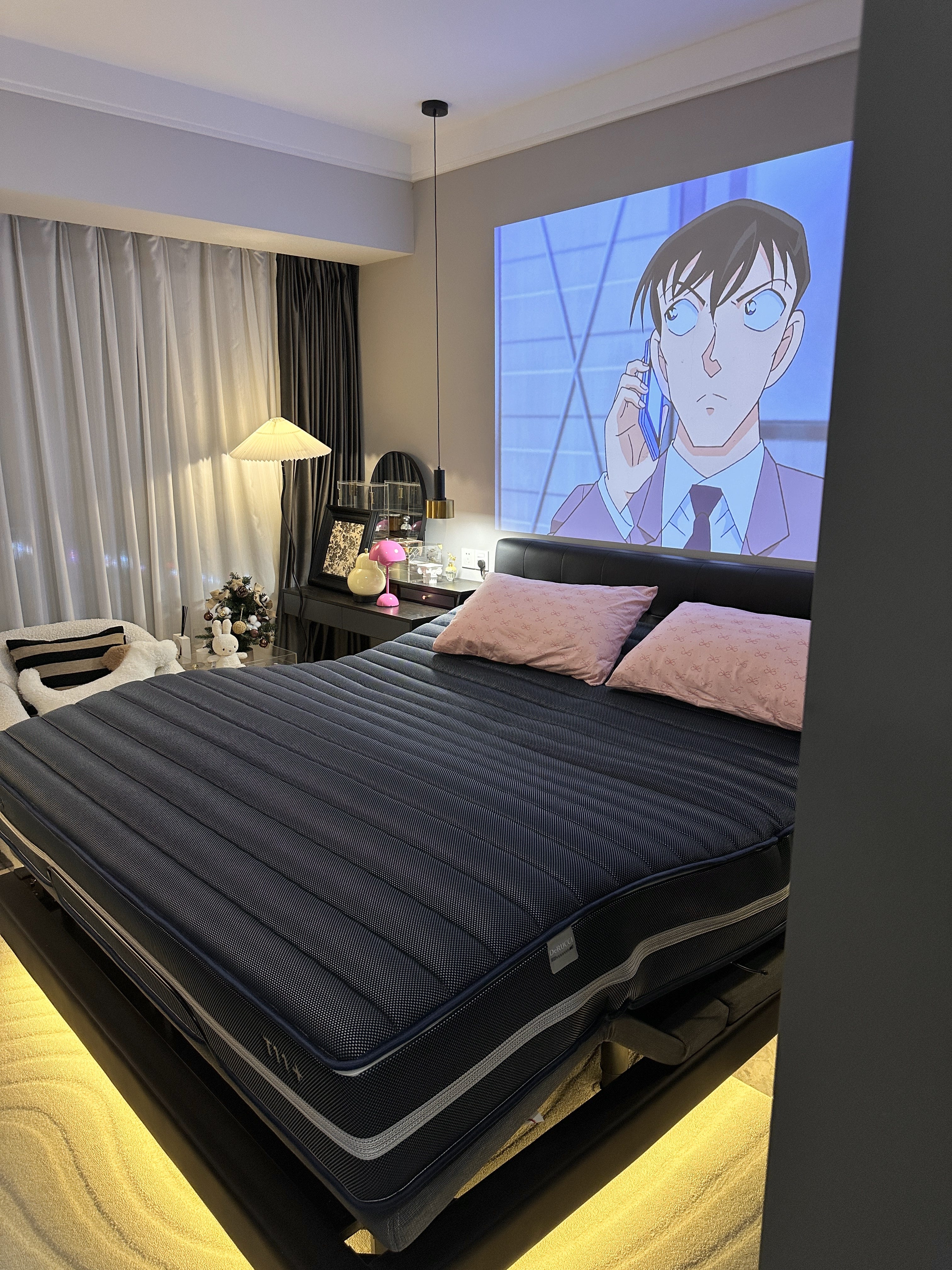
Fix the data flow before counting anything. According to DeRUCCI's official information, reports fail to generate for exactly two reasons: the bed is not connected to the network, since data is uploaded to the cloud for real-time analysis, or the night did not include at least three hours of continuous sleep. Start there, and you will usually finish there too.
Those two reasons cover the overwhelming majority of missing reports. If last night's report never appeared, check the connection first, then ask whether the night actually reached at least three hours of continuous sleep. For users outside mainland China, the recording window runs from 20:00 to 10:00 local time.
Connection behavior is worth knowing in advance, because it sets expectations. Report generation, algorithm updates, and vital-signs viewing all require a network connection, so offline, the T11+ and above lose daily reports, the latest algorithms, and heart-rate and breathing data. The bed itself keeps working. Automatic firmness adjustment continues without a connection. If the home network fails, a 2.4 GHz phone hotspot serves as backup, and the mattress stays usable, reports excepted. The app connects over Bluetooth and 2.4 GHz Wi-Fi, 2.4 GHz only, with 5 GHz unsupported; expect effective range of roughly 10 meters from the bed, or about 5 meters through a wall.
For the monitoring chain behind these conditions, How AI Smart Mattresses Track Sleep Health explains how a night becomes a report.
What Can You Trust — the Readings or the Data?
Trust splits into two separate questions here. The readings: consumer sleep-staging numbers are estimates, so trends outweigh single digits; the T11+ sensing layer's stated 97% average resting heart-rate accuracy is a monitoring spec, not a diagnosis. The data: DeRUCCI states bank-grade encryption, user-only visibility, sleep-program-only use, and in-app off switches.
Start with the readings. Sleep staging on consumer devices lives in estimate territory — specialists describe the staging numbers as generally not great, deep-sleep percentages especially, since they are inferred from averages — and a 2022 Frontiers comparison of consumer-grade sleep trackers adds the cross-device view: the same night, measured by different trackers, does not always agree. The bar that matters for a mattress is practical, not heroic: nothing to charge, nothing to wear, nothing to remember, and the question is what a number lets the bed, or you, change tonight. On the spec side, the T11+ sensing layer's stated 97% average resting heart-rate accuracy is a monitoring figure, and monitoring features are wellness-oriented, not intended for medical diagnosis or treatment.
Then the data. A bed that senses heart rate, breathing, and movement by default is the whole appeal of non-wearable monitoring, and it means the bed is collecting body data while it does its job. DeRUCCI's stated policy has four points: cloud storage with bank-grade encryption, data visible only to the user, use limited to the personal sleep program, and in-app switches to stop collection or delete history. One qualifier belongs beside them: those four are the brand's own published terms, not an independent third-party audit, and "bank-grade encryption" is a claim to check against the policy in force when you buy — not a certification mark.
How Do You Build the Baseline from Valid Nights?
Recount your sample in valid nights: connected, at least three hours in bed, at least two asleep. Nights that produced no report are excluded, not counted as failures. Because deep sleep concentrates early and REM late, one report is a cross-section; the baseline lives in the trend across valid nights.
A valid night, spelled out, means the bed was connected and the night met the report conditions — for users outside mainland China, at least three hours in bed and at least two of them asleep within the 20:00 to 10:00 recording window. A night with no report, from a network gap or a short night, is simply outside the sample. Exclude it. There is nothing to punish and nothing to explain.
Sleep architecture is why one report cannot carry a baseline by itself. Deep sleep concentrates in the first half of the night and REM in the second, and each night distributes them a little differently. One report is a cross-section of one night's particular shape. Stack several valid nights and the personal pattern emerges from behind the night-to-night variation. For what deep-sleep amount you are actually baselining toward, How Much Deep Sleep Do You Need? covers the reference amounts.
How Do You Change One Thing Without Losing the Answer?
Change one variable at a time, keep the window length constant, then compare the report trends before and after, and keep or revert. Move caffeine timing, workout timing, and mattress firmness in the same week, and the outcome becomes unattributable; better or worse, you will not know why.
The method is plain: adjust one thing, hold everything else steady, give it a window the same length as your baseline, then read the trend and keep what helped or revert what did not. The variable can be small, a caffeine cutoff moved a couple of hours earlier, a firmer lumbar setting, a consistent lights-out time. Small and singular is the point. The failure mode looks like this: someone who moves their caffeine cutoff, their workout time, and their mattress firmness in the same week has run three experiments at once and can no longer tell which one produced the change.
The product side gives you levers for this: zone-level support and firmness adaptations the bed runs on its own sensor stream, and — with an adjustable base added — mode options such as Snore Relief, Zero-G and Gentle Wake listed in the T11 series' specifications for use with DeRUCCI adjustable frames. On the T11+ ecosystem side, precise data analysis is described as helping users adjust lifestyle habits in time, with personalized suggestions generated from physiological data. At the launch event, TIM (Pan Tianhong of MediaStorm, DeRUCCI's brand-partnered "smart sleep explorer") tried a Pro H-DESIGN unit and described it sensing his posture and breathing rhythm automatically, with no manual tuning. An experience relay from a brand partner; take it as exactly that.
What Is the Working Rhythm for Changing Your Routine?
Week one has one job: get the reports generating reliably — network paired, nights clearing the thresholds — and change no habits yet. After that, let valid nights accumulate into a personal baseline before you run any experiment. Each experiment gets one variable and an equal window, and you keep what helped or revert what did not.
In the first stretch, resist the urge to optimize anything. Pair the bed, confirm the reports appear every qualifying morning, and leave your habits alone. Once the data flow is solid, let a run of valid nights pile up untouched. That is your reference segment. From there, the loop is short: change one thing, note the date you changed it, wait out an equal window, compare the trends, decide. Writing down what you moved and when costs ten seconds and saves the whole comparison later, because the report will not remember for you.
Whenever something looks off in the reports, come back to the two official causes first, connection and the three-hour continuous-sleep threshold, before suspecting anything else. One caveat to keep alongside the data: DeRUCCI's monitoring and report functions are wellness features and are not intended for medical diagnosis or treatment.
To make your reports fit your habits more closely, look for the personalized-suggestions entry inside the app; and to see the ecosystem features in person, find a store near you and confirm availability in your region.