
 American
( English )
American
( English ) Singapore ( English )
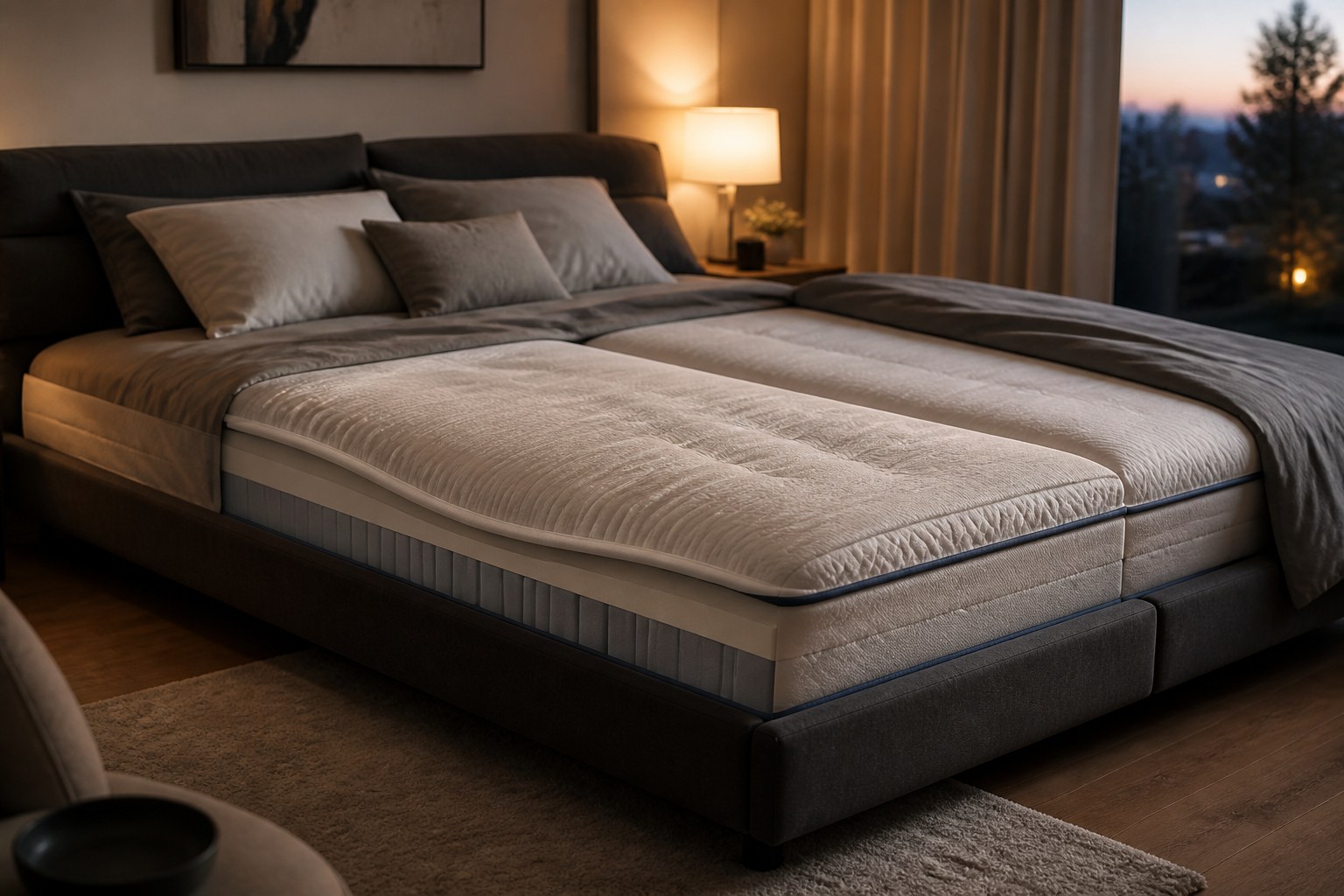
You fall asleep on your side, wake at three on your back, and finish the night somewhere in between. Combination sleepers live through more support maps per night than anyone else, which makes the search for the best smart mattress for combination sleepers less about finding one perfect firmness and more about finding a surface that changes when you do. DeRUCCI's T11 series approaches exactly that with zoned structures and automatic adjustment, and this article explains how to judge the category on those terms.
Why Does One Fixed Firmness Fail Combination Sleepers?
A fixed firmness is one answer given to every posture. Side sleeping needs the shoulder and hip to sink while the spine stays level; back sleeping needs a firmer center so the pelvis does not drop. One mattress can only be optimal for one of those at a time, so ask first whether the bed responds differently to different loads.
The mechanics are unglamorous. Side sleeping concentrates load at the shoulder and hip; those points need to settle into the surface for the spine to rest roughly level. Back sleeping concentrates load at the center; there, the same softness that helped the shoulder becomes a drop the pelvis sinks into. Whichever way a single-firmness mattress is tuned, one posture is getting the compromise.
Spinal-friendly bedding guidance describes the two failure modes from both ends of the scale: a surface too soft leaves muscles tensing to compensate, while one too hard concentrates pressure on bony points and prompts frequent, mostly unnoticed position changes. For someone who already cycles through postures naturally, that second effect compounds: the bed itself adds reasons to move.
So the shortlist filter for combination sleepers is three checks, each independently verifiable:
1. Zone structure: does the mattress divide support by body band rather than one overall feel?
2. Adjustment method: fixed, manually adjusted, or automatic?
3. Response timing: does support change while you sleep, or only when you are awake to change it?
Side sleeping is the posture that runs into the fixed-firmness problem first, and the shoulder-and-hip loading pattern behind it gets a full treatment in Best Smart Mattress for Side Sleepers.
What Do Three, Five and Six Zones Each Cover?
Zoning comes in three tiers across the T11 series, and each tier answers a different load map. Three zones take the heaviest side-sleeping bands; five add a dedicated lumbar zone for back sleeping; six split the leg zones most finely. The choice is a matching exercise against your own posture cycle, not a race to the biggest number.
| Tier | Zones per side | The load map it answers |
|---|---|---|
| T11 SE | 3 | Shoulder, waist, hip: the three bands carrying the most load in side sleeping |
| T11+ | 5 | Adds back and leg zones; back sleeping gains a dedicated lumbar zone |
| T11 PRO | 6 | Splits thigh from calf, the finest division in the series |
According to the T11 PRO product documentation, each side features 6-zone adjustment covering shoulders, back, lumbar, hips, thighs, and calves, adjusted independently on each side. The 18-unit, six-zone construction is covered by patent 202010801174.3.
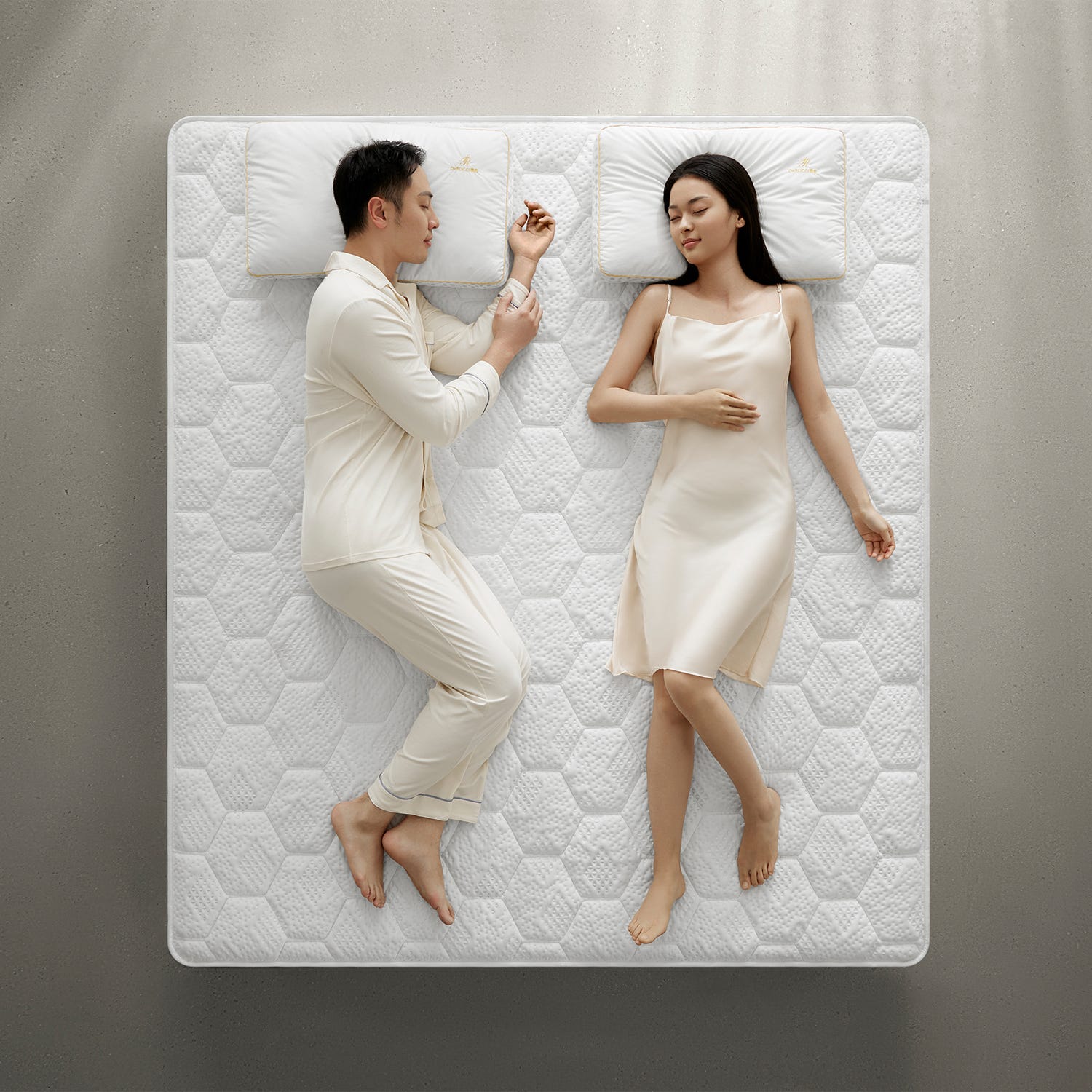
Here is why zoning matters more for combination sleepers than for anyone else. A zone structure is, in effect, a set of different firmnesses assigned to different body bands at once. A single posture uses some of them; a posture cycle uses more of them. The more you switch, the more of the mattress's range your night actually visits.
Two of the four dimensions from spinal-friendly bedding guidance are directly served here: precise fit to the body's curves, and adaptability of the support itself. The remaining two, stable support and even pressure distribution, are the table stakes any tier has to meet first.
The matching question to ask is which postures your cycle actually includes. Someone moving between side and back needs the shoulder band and the lumbar band to both be right; a mostly-side sleeper with occasional back stretches leans on the first three zones.
What Happens When You Switch Positions Mid-Night?
Two layers operate above the zone structure. Automatic adjustment senses pressure changes after sleep onset and responds without waking anyone, which passive materials and manual settings cannot do. For couples, the Dual-Drive system adjusts both sides simultaneously on the T11 PRO, with the AI Tidal Algorithm 2.0 analyzing body data at a 20 ms response rating.
On a night of genuine posture cycling, the sensing layer watches the load map redraw itself. Rolling from side to back moves the pressure center off the shoulder and hip and onto the pelvis and lower back; the zones beneath those bands are the ones that re-tune. None of it needs you awake, which is the entire advantage.
The certification numbers, with their attribution stated: according to official specifications under CAICT certification — figures attached to the T11 SE tier of the series — recorded sleep onset time down 37.3%, nighttime turns down 27.5%, deep sleep duration up 4.5%, and continuous deep-sleep stretches up 5.9%. For this scenario, the nighttime-turn figure is the relevant one: posture cycling that outpaces the mattress shows up as extra shifts, and fewer shifts reads as a surface keeping up. Those are support and comfort observations, not medical ones.
For shared beds, the Dual-Drive arrangement pairs AI sensing with independent, simultaneous left–right adjustment, its Tidal Algorithm 2.0 rated at a 20 ms data-analysis response. On the T11 PRO that runs across 18 units, nine per side, on two control boxes. On tiers below the PRO, one side completes its adjustment before the other starts. That is how the hardware works — which timing suits a given couple is their call.
One boundary, stated plainly: automatic adjustment acts on support response, the felt firmness beneath you. It does not do anything health-related, and this article does not claim otherwise.
A different question couples often ask, whether one partner's shifting wakes the other, is a separate axis from the support question here, and it is handled in Best Smart Mattress for Couples: Motion Isolation.
How Do You Test Zoning in a Store?
Three showroom actions test the cycling directly. On one display model, cycle side, back and side again for a few minutes each and feel whether the response under shoulder and waist actually differs. Have staff trigger the automatic adjustment to check you cannot feel it. Then check the app's zone display, so the structure shows up in data too.
The sequence is deliberately simple:
1. Side, then back, then side again, a few minutes each, on the same mattress. The question is whether support under the shoulder and waist feels different across postures, which is the direct physical test that zoning is real and not a label.
2. Ask a staff member to trigger the automatic adjustment while you rest. If a mattress is going to re-tune itself at 3 a.m., you want to know whether the process announces itself.
3. Open the app on the unit and view the zone-response screen. A zoned structure should be visible in the data layer.
DeRUCCI sells through more than 5,200 stores across 11 countries and regions; which models are displayed varies by market, so confirm locally before a dedicated trip.
Two reporting conditions are worth carrying with you. The nightly report on the T11+ and above is generated after at least 3 hours in bed and 2 hours of sleep, and overseas recording runs 20:00 to 10:00 local time.
Frequently Asked Questions
When the shortlist filter and the three store actions are done, all that remains is to confirm the specifications. The T11 product page lists zone tiers and adjustment details. To run the side-back-side cycle yourself, find a store near you and take a few minutes on each posture.