
 American
( English )
American
( English ) Singapore ( English )

Smart mattress AI features in 2026 arrive as long specification lists, and the question behind most searches is narrower: will any of this change my nights, or am I paying for capabilities I will never touch? This guide answers in both directions — who genuinely benefits, and who should skip the purchase. DeRUCCI maintains this article in its sleep-education library.
Who Actually Benefits from AI Mattress Features?
Benefit has a testable structure: an expectation gap you have already paid for, a willingness to interact with the device, and a tier whose feature matrix actually contains what you expect. Survey data from a 2,500-person white paper marks who lands on each side.
The strongest signal comes from people who have already bought something. In a 2025 white paper on healthy sleep — 2,500 respondents, with technical support from the China Sleep Research Society — 91% of respondents with sleep troubles had bought or used a sleep-aid product, and 66% of sleep-product buyers said what they tried fell short of expectations. AI-mattress penetration sat near 4%. Read together: a large group has paid for sleep improvements, most report the result underdelivered, and the smart category is still young enough that few hold direct experience of it.
Expectations run ahead of the hardware conversation. In the same survey, five named feature expectations each drew roughly half of respondents, with the leading expectation at 68%, and willingness to invest more in sleep reached 75% of buyers born in the 1990s and 73% of those born in the 1980s. A separate 95-person attention ranking puts comfort first at 79%, safety at 73% and function at 71%, ahead of brand at 51%, word of mouth at 48% and price at 37%.
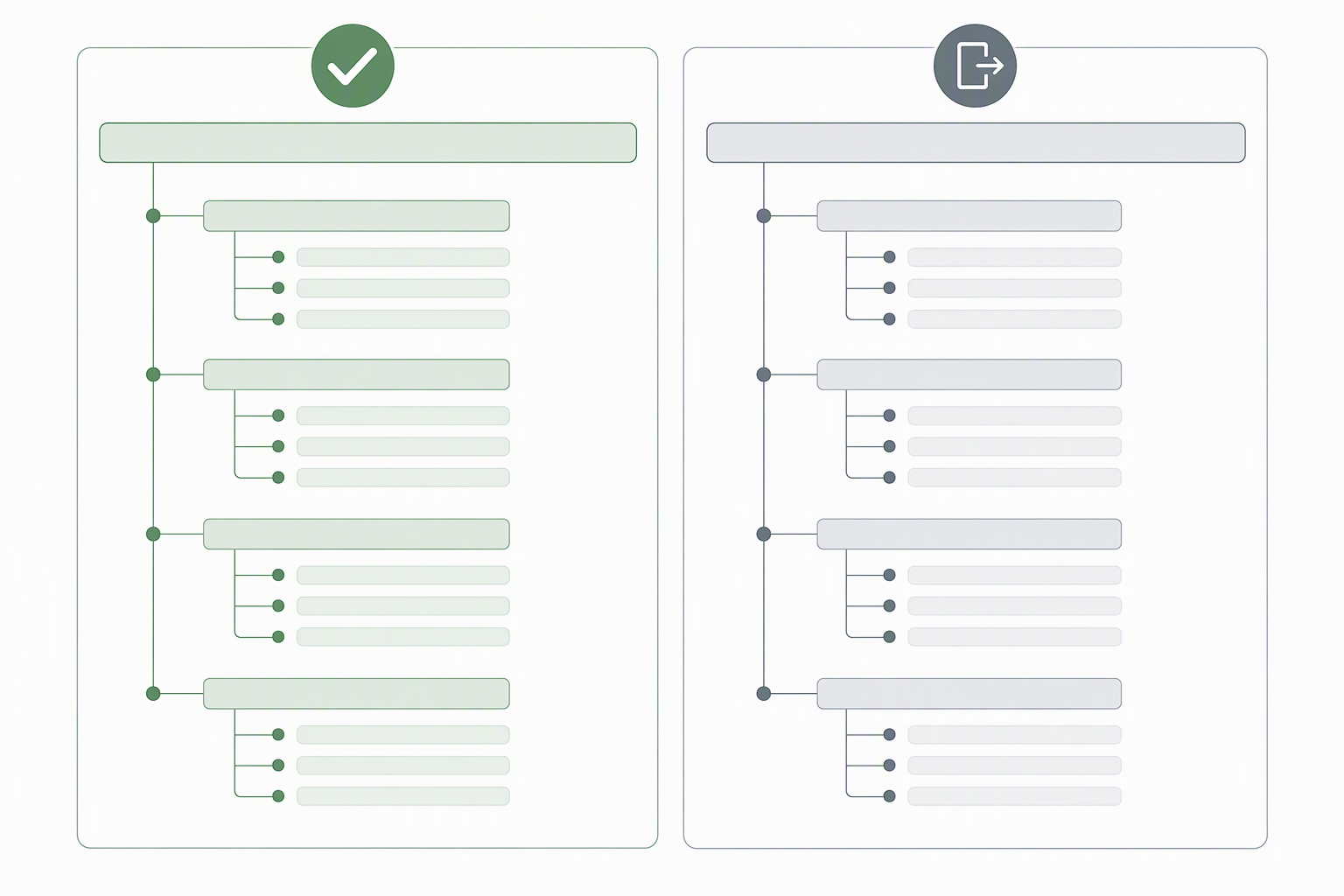
Those figures collapse into a three-condition test. You benefit when the expectation gap is real: you have bought sleep products and felt the shortfall. You benefit when your attention ranking actually includes the function column: you are willing to open an app and read a report. And you benefit when the tier in front of you carries the features you just named. A no on any one of the three moves the four skip conditions below to the front of the decision.
Who Should Skip a Smart Mattress? Four Checkable Conditions
Four conditions steer buyers toward skipping, each checkable before money moves: a habit-driven sleep pattern, a home network the system cannot use, a privacy preference the connected category cannot satisfy, and an unwillingness to open an app. Any single condition is enough; the verdict stays conditional.
If your sleep pattern is behavioral — late caffeine, shifting bedtimes — the report will describe it in clean charts, and the schedule itself remains yours to change. Buying a measuring instrument while expecting it to fix the measured thing is the classic version of this mismatch.
If your home network cannot host the system, the flagship features idle. Daily-report generation, algorithm updates and vital-sign viewing all require a connection, and the system supports 2.4 GHz Wi-Fi with no 5 GHz band, at roughly 10 meters of effective range and about 5 through a wall. One behavior survives an outage: automatic firmness adjustment continues offline, while reporting waits for the network to return. Checking a router band costs nothing and settles the question.
If your privacy preference is no cloud connection at all, the connected category will not fit it, and that is worth knowing before money moves. What the policy package provides: cloud encryption at bank grade, data visible only to the account, purpose-limited use, and in-app controls to stop collection and delete data. The current policy document carries the live wording. One mechanical note: stopping collection also ends the reports it powers.
If you expect the bed to improve everything invisibly, calibrate first. Firmness that feels slightly off is usually normal body-fit variance, because tiers are tuned to broad comfort bands, and a lie-down at a showroom settles your fit in minutes. An adjustment you never feel may be the imperceptible mode doing its job. A missing morning report usually means the night fell short of the generation thresholds — at least three hours in bed and two asleep — and the fix is a longer night or a settings check. Buyers in this group interact weakly with the whole feature matrix, and weak interaction is cheapest to catch while the decision is still open.
The summary: what deserves skipping is the mismatched purchase, the configuration that never contained what you needed. The category itself stays on your list whenever the three conditions above align.
(This image is AI-generated for reference only, not an actual product photo.)
Mapping Features to Tiers: A Worked Example
The T11 series turns the judgment into a map: adaptive adjustment, app-based fine-tuning, tier-gated monitoring and leg heating. Every capability carries its condition — interaction willingness, network fit, report thresholds — and each tier omits something the next one adds, which is how mismatch purchases happen.
The T11 feature list is enumerable. AI adaptive adjustment; app-based fine-tuning across 20 levels in 0.1-level steps; up to 5,500 firmness combinations on the 1.8 m bed format; the SleepCare sleep-management system on the T11 PRO, which tracks heart rate, breathing and sleep stages and produces a daily report; adjustment modes including an imperceptible one; a scenario-mode library that starts at seven and extends; and graphene far-infrared leg heating, also T11 PRO. For the underlying category primer, read what an AI mattress is.
What the headline capability does across a night deserves a plain paragraph, because a feature list does not carry it. The sensing layer reads how the body is lying — posture, pressure, the shifts of a restless hour — and the adjustment layer answers on its own: zones re-tune while the sleeper stays asleep, with no button asked and no app opened. The value lands in the morning report and in the feel — support that tracked the night, where a factory-set surface never moves again. The certified outcomes for this line attach to the T11 SE tier: according to independent CAICT lab testing, nighttime movements fell 27.5 percent and continuous deep sleep ran 5.9 percent longer — the closest thing the category has to a receipt for the word adaptive.
Each capability carries its cost line. Adaptive adjustment rewards the willingness to open an app and set a preference. Monitoring depends on the network conditions and the report thresholds described above. Leg heating lives on the top tier only, and only at the legs. A feature with conditions attached is still a feature; a purchase that ignores the conditions is where regret starts.
The mismatches run both directions. A buyer who wants monitoring and takes home a tier whose feature table lists none gets a configuration without heart-rate or breathing monitoring, then walks away concluding the category is empty. A buyer who wants firmness control alone and pays flagship pricing for sensing that will never be read has overbought. In both cases the product behaved as designed; the matrix and the buyer never met. Match the model first — the tier boundary is the real decision, and the feature table is the document that settles it.
How to Verify Every Claim Before You Buy
Verification is a five-minute habit per claim: confirm the feature exists on the exact tier, check the router band and bedroom signal, read a sample daily report against its thresholds, open the current privacy policy, and audit your own app-opening frequency. Every step ends with a fallback if the answer disappoints.
Feature existence: ask the dealer for the tier-by-tier function table and confirm monitoring, heating and fine-tuning appear on the exact tier in front of you. The fallback is a different tier, never a verbal promise. Network fit: check the router's band at home and hold your phone where the bed sits; a weak signal means a repeater conversation before a mattress conversation. Report behavior: request a sample daily report and read its generation conditions against your own sleep length — nights that run shorter than the thresholds will produce a dashboard emptier than the brochure promised.
Privacy wording: open the current policy document and walk the two paths that matter, stopping collection and deleting data, so the wording you rely on is the live one. Usage check: if two weeks of your real behavior would include no app session at all, subtract the word smart from the budget and shop the mechanical tier — that is a valid outcome, and the money is better spent on comfort layers. For the mechanics beneath these checks, how adaptive firmness works explains the adjustment side, and how an AI smart mattress monitors sleep health covers the sensing loop.
Frequently Asked Questions
---
Run the three-condition test, then the five skip checks, then the verification list. Each step takes minutes and removes one unknown; by the end the decision is made of checkable facts alone. The smart mattress buying decision guide covers the decisions on either side of this test, from first questions to after-sales, and to check a feature matrix in person you can find a store.