
 American
( English )
 Singapore ( English )


Why We Sweat During Sleep (Normal Thermoregulation)
Some sweating at night is completely normal, your body lowers its core temperature as you sleep, and perspiration is one of the main ways it sheds heat, so a little dampness on a warm night is not on its own a sign that anything is wrong.
As core temperature drops through the night, the body releases heat through the skin, and a warm room, heavy bedding, or a heat-trapping mattress can make that process show up as noticeable sweating. The key distinction is pattern: occasional sweating from a hot room or too many blankets is routine, while regularly waking drenched, when the environment is cool and bedding is light, is worth paying attention to. Understanding where normal thermoregulation ends and a recurring issue begins is the first step.
Common Environmental & Lifestyle Causes of Night Sweating
Most night sweating traces back to the bedroom environment and daily habits rather than anything medical, a warm room, heavy blankets, spicy food, alcohol, and exercise close to bedtime all raise body heat right when the body is trying to cool down.
According to Houston Methodist, night sweats often follow predictable triggers: a bedroom that is too warm, bedding that traps heat, alcohol, caffeine, or eating spicy food late, and intense evening workouts. These are the first levers to adjust, because they explain the majority of cases and are fully within your control.
When Night Sweating May Warrant a Doctor Visit
Sweating that persists even after you cool the room, lighten the bedding, and remove obvious triggers, especially when it comes with other symptoms, is worth discussing with a clinician, since it can sometimes point to an underlying issue worth evaluating.
This article cannot diagnose any condition, and most people who sweat at night find their cause is environmental. But if night sweats are frequent, heavy enough to soak through bedding, and accompanied by fever, unexplained weight loss, or other changes, a medical review is the right next step. The practical approach is simple: fix the environment first, and if the sweating continues on cool nights with light bedding, speak with a healthcare professional.
Your Mattress May Be the Hidden Heat Trap
Often the missing cause is the surface itself, a mattress that traps heat and moisture turns a reasonably cool room into a sweat-inducing microclimate around your body, which no amount of thermostat adjustment can fix.
Keeping that microclimate cool and dry is what DeRUCCI's materials are designed to do. The 3D-Plus new Spacer Fabrics use an X-shaped cross-section with 4.4 times the breathability of conventional fabric, letting heat and moisture move away rather than pooling against the skin. The INVISTA Antibacterial Cotton layer offers over 99% antibacterial performance with low sensitivity for comfortable, skin-friendly contact, and the BekaertDeslee VIRASE® textile provides antibacterial, mite-proof, and virus-resistant protection (2-hour, 2-log reduction under ISO 18184:2014). Together they keep the sleep surface cooler, drier, and cleaner, reducing the heat-trapping that drives so much nighttime sweating. To explore the materials, visit the DeRUCCI materials guide, or browse the DeRUCCI mattress collection. (The T11 SE AI mattress is now available at the DeRUCCI New York store.)
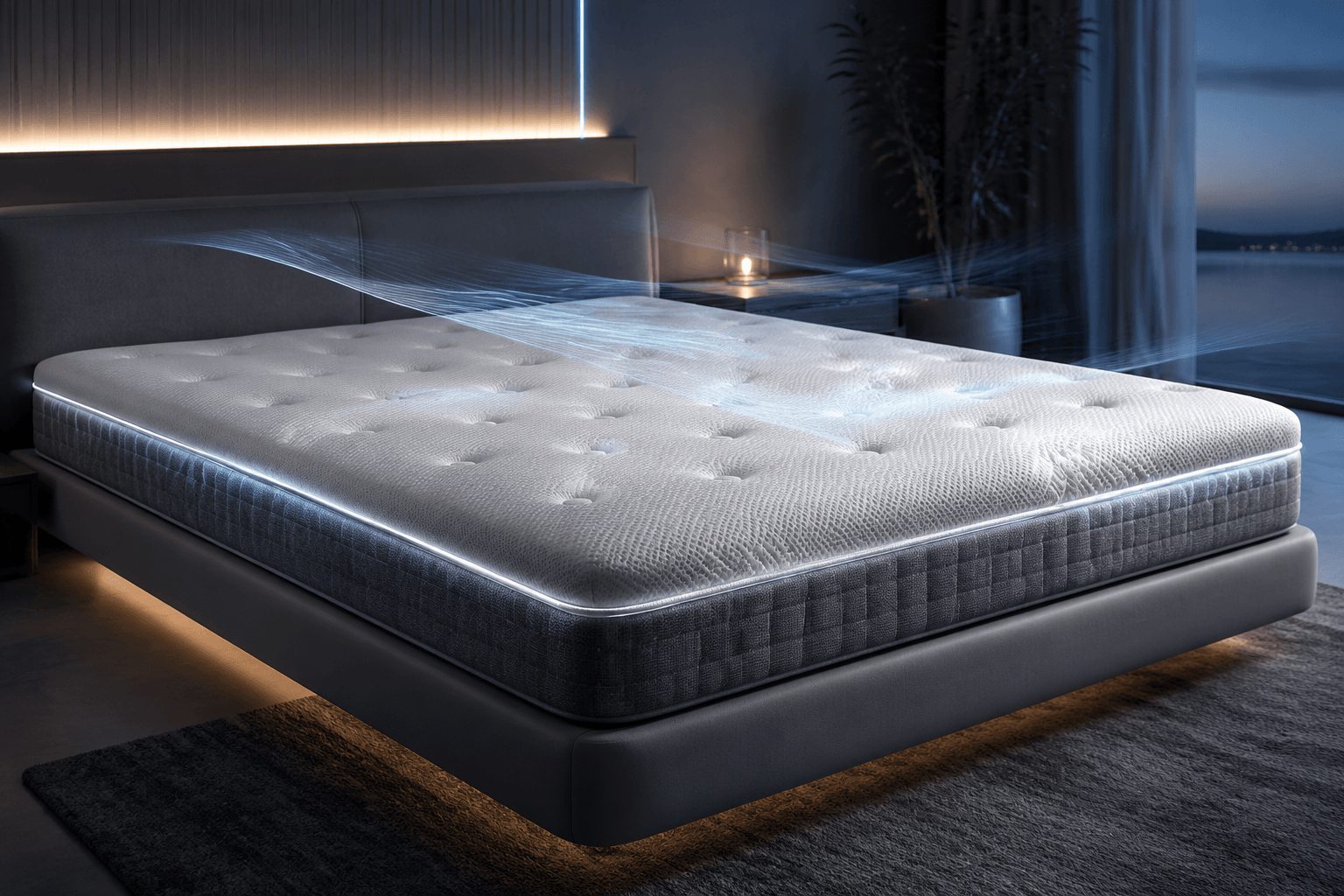
(This image is AI-generated for reference only, not an actual product photo.)
Tips to Stay Cool & Dry at Night
If you sweat at night, the most effective fixes are environmental, cool the room, lighten the bedding, time your meals and workouts, and make sure your mattress is not the hidden heat trap underneath you.
Set the thermostat into the 60–67°F range, switch to breathable natural-fiber sheets, and avoid alcohol, caffeine, and spicy food in the hours before bed. Move intense exercise earlier in the day so your body has time to cool back down. And check your mattress, if it stores heat and moisture, a cooler room will only help so much, and a breathable, antimicrobial surface can make a visible difference within a week.
Frequently Asked Questions
Why do I sweat so much in my sleep? Most night sweating comes from a warm room, heavy bedding, alcohol, spicy food, or evening workouts, all of which raise body heat. Fixing these environmental factors resolves the majority of cases.
When should I worry about night sweats? If sweating continues on cool nights with light bedding, or comes with fever, unexplained weight loss, or other symptoms, it is worth discussing with a clinician. Occasional sweating from a warm room is normal and usually not a concern.
Can my mattress cause night sweats? Yes. A mattress that traps heat and moisture creates a warm microclimate around your body, which triggers sweating even in a cool room. Breathable, temperature-regulating materials help move heat away and keep the surface dry.
What is the best room temperature to stop night sweats? Most people find relief between 60 and 67°F (15–19°C), paired with breathable bedding and a mattress that does not trap heat. The right combination depends on whether you run hot or cold.
Find a DeRUCCI Showroom Near You
Better sleep is easier to choose in person. Explore DeRUCCI's mattresses and smart sleep systems, then find a store and check global showroom addresses to experience them firsthand.