
 American
( English )
American
( English ) Singapore ( English )
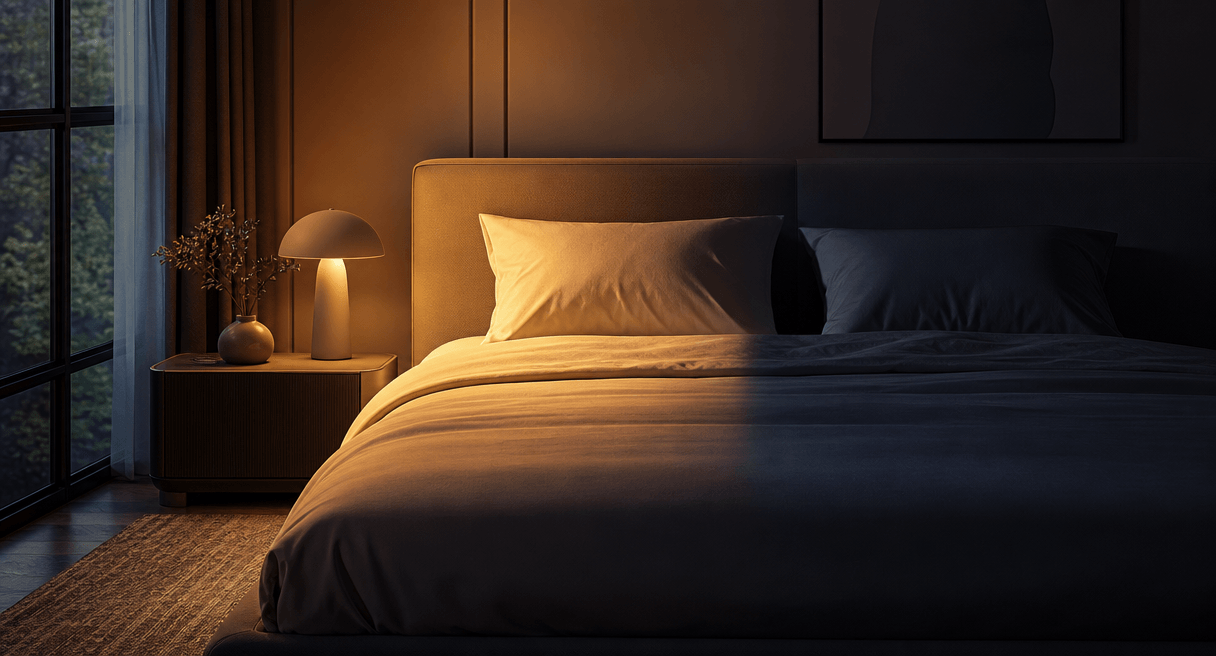
Left vs Right Sleeping: What's the Difference?
Most side sleepers pick a side by habit, but the two are not quite the same, sleeping on your left is linked to better digestion and reflux relief, while the right side can feel more comfortable for some bodies and may suit certain heart conditions.
Both sides keep the airway open better than back sleeping, which is why side sleeping overall reduces snoring. The meaningful differences are subtler and mostly tied to digestion and anatomy. For most healthy adults, the side that lets you fall asleep fastest and wake without shoulder or hip pain is the right one, but knowing the specific benefits of each helps you choose deliberately rather than by default.
When the Side Matters: Pregnancy, Reflux & Other Cases
The left side earns its reputation in specific situations, pregnant women are often advised to sleep on the left to improve blood flow, and anyone with acid reflux tends to feel better on the left because of how the stomach sits relative to the esophagus.
According to Harvard Medical School, sleeping on the left side discourages acid reflux, since the position makes it harder for stomach acid to breach the sphincter. The right side, by contrast, can occasionally worsen reflux but may feel better for people with certain cardiac considerations who find left-side sleeping uncomfortable. Outside these specific cases, the choice is mostly about comfort and which shoulder you can rest on without pain.
Is Side Sleeping Good for You? General Benefits
Across the board, side sleeping is considered the healthiest position for most adults, it keeps the airway open, reduces snoring, supports healthy breathing, and is the position the majority of people naturally settle into.
More than 60% of adults already sleep on their side, and the benefits line up with why: the tongue and soft tissues stay clear of the throat, the spine can stay in a reasonable line with the right pillow, and it suits a wide range of bodies. The main drawback is pressure, the shoulder and hip bear most of the load, which is where the wrong mattress turns a good position into a restless night.
Why Side Sleepers Need Zoned Support: Shoulder & Hip Pressure
The one weakness of side sleeping is that it concentrates body weight on the shoulder and hip, so the surface beneath you decides whether you sink in comfortably or wake up numb and sore, which is why zoned support matters more than overall firmness.
That is the weakness DeRUCCI's T11 Pro AI smart mattress is built to address. It uses dual-side, six-zone independent active support, with up to 18 adaptive units across the shoulder, back, waist, hip, thigh, and lower leg (patent 202010801174.3), so the shoulder and hip can yield while the waist stays supported, keeping the spine aligned for a side sleeper. Firmness adjusts in 0.5-step increments within a national-standard range, covering roughly 90% or more of body types, and two sleepers can set their own configurations on the same mattress. To see how DeRUCCI approaches zoned support for side sleepers, visit the DeRUCCI smart sleep system page, or explore the T11 series AI mattress. (The T11 SE AI mattress is now available at the DeRUCCI New York store.)
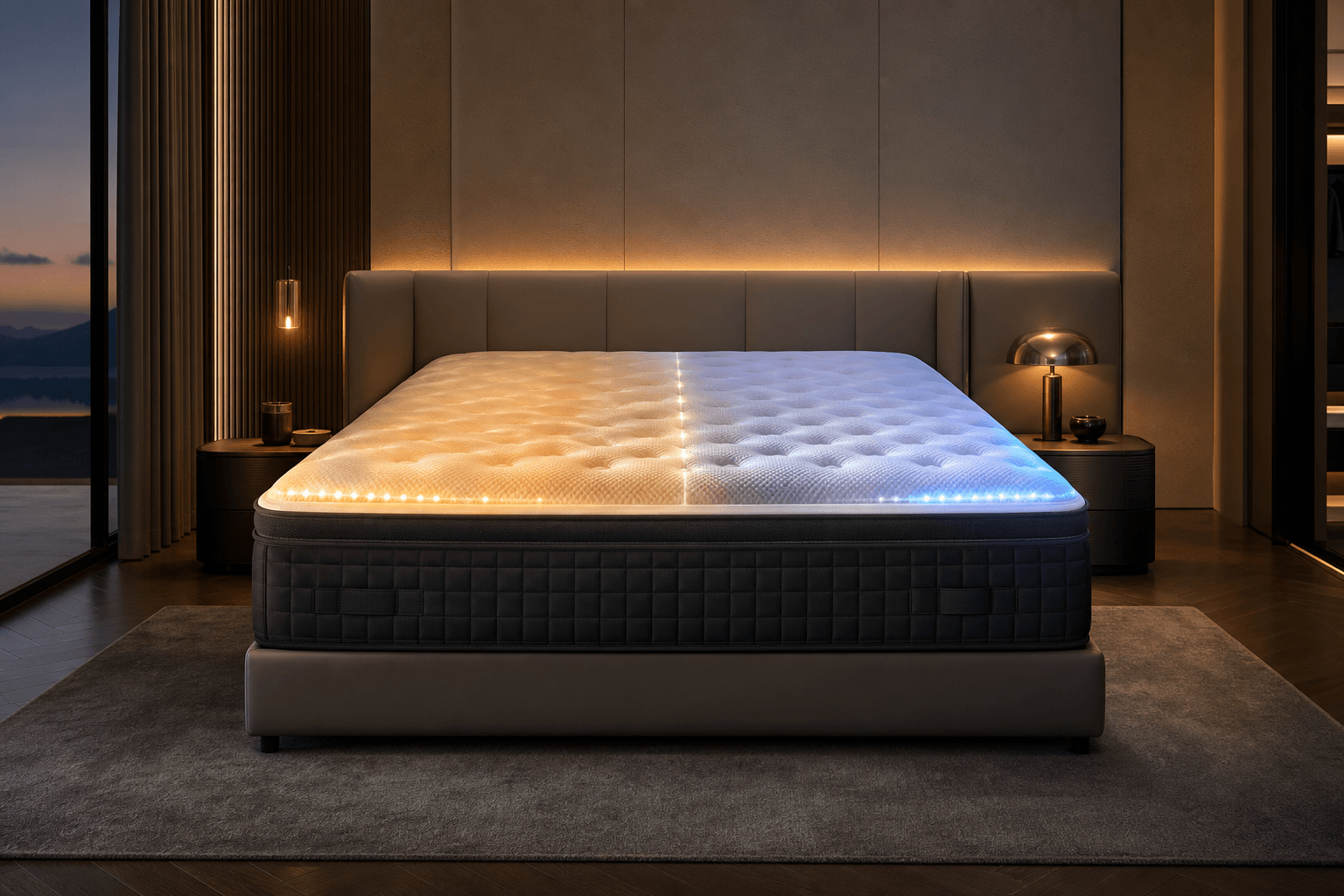
(This image is AI-generated for reference only, not an actual product photo.)
Tips for Comfortable Side Sleeping Tonight
Whatever side you choose, a few adjustments, pillow height that fills the ear-to-shoulder gap, a pillow between the knees, and a mattress that yields at the shoulder, make side sleeping far more comfortable through the night.
Use a pillow tall enough to keep your neck in line with the rest of your spine, since a too-flat pillow leaves the head dropping toward the mattress. A pillow between the knees keeps the pelvis level and reduces lower-back twist. Most importantly, make sure your mattress relieves pressure at the shoulder and hip, if you wake with a dead arm or aching hip, the surface is too firm for side sleeping, no matter which side you pick.
Frequently Asked Questions
Which side is best to sleep on? For most people, the left side is slightly better because it aids digestion and reduces acid reflux. Pregnant women are often advised to sleep on the left for better blood flow. If you have no reflux or pregnancy concerns, the side that feels comfortable and pain-free is the right choice.
Why is sleeping on the left side recommended? The left side helps prevent stomach acid from flowing back into the esophagus, which eases reflux, and it is commonly recommended during pregnancy to improve circulation. It also keeps the airway open like any side position.
Is it bad to sleep on your right side? Not for most people. The right side can occasionally worsen reflux, but it may feel more comfortable for some, especially those with certain heart conditions who find the left side unpleasant. Comfort and pain-free sleep matter most.
How do I stop my shoulder hurting when I sleep on my side? Use a mattress that yields at the shoulder so it sinks in without pinching, pair it with a pillow tall enough to support the neck, and avoid sleeping directly on the affected shoulder. Zoned support that adapts to the shoulder and hip region is especially helpful.
Find a DeRUCCI Showroom Near You
Better sleep is easier to choose in person. Explore DeRUCCI's mattresses and smart sleep systems, then find a store and check global showroom addresses to experience them firsthand.