
 American
( English )
 Singapore ( English )

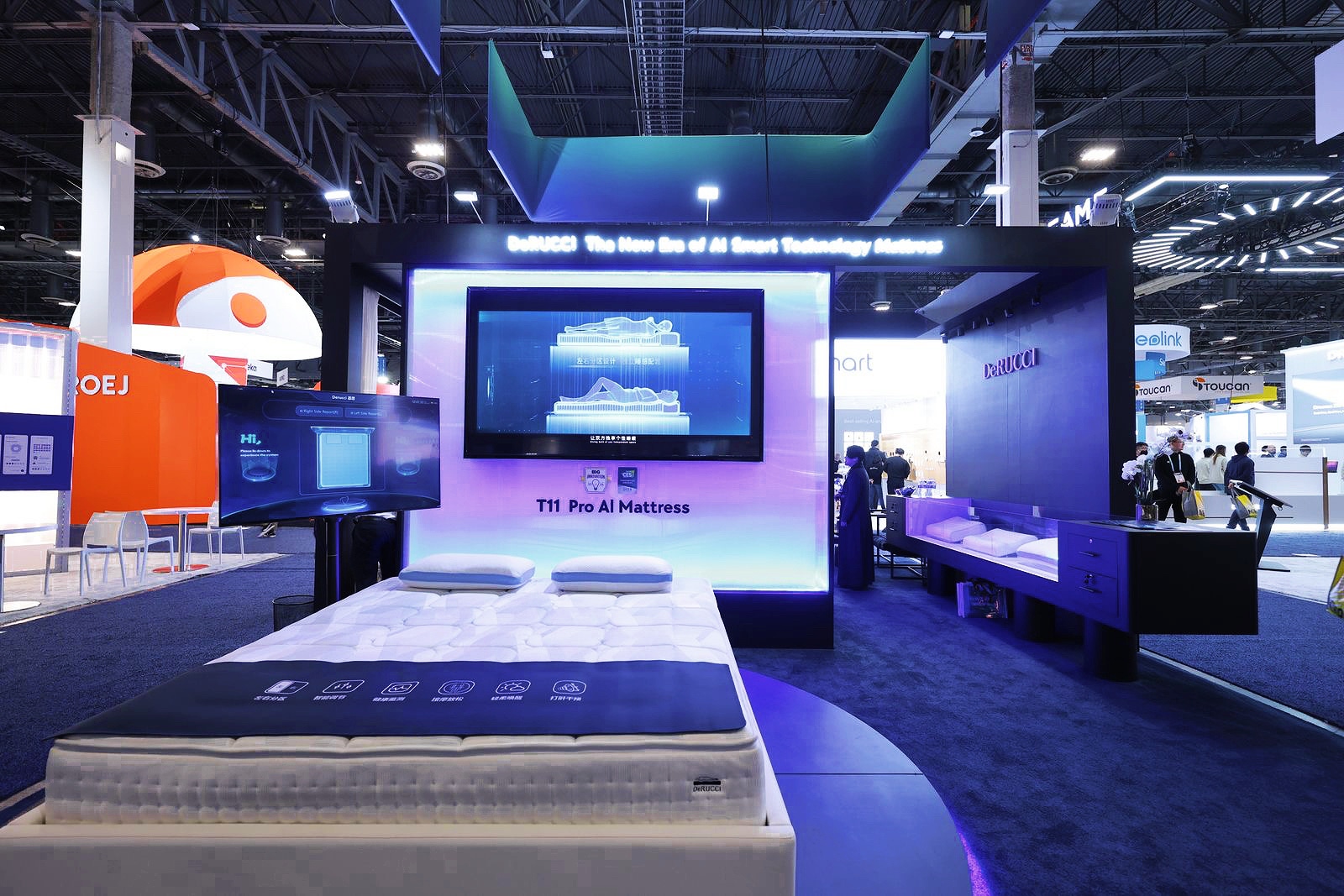
What Makes DeRUCCI an AIoT Smart Sleep Brand
Not every adjustable bed should be treated as a smart sleep system. For high-net-worth families comparing premium sleep products, the useful question is more specific: what makes DeRUCCI an AIoT smart sleep brand rather than a furniture brand that has added connected controls. The answer sits in the way the system is built. Sleep data is captured, AI algorithms interpret that data, and comfort settings can adjust automatically while the user is already asleep.
A conventional mattress asks the body to settle into one fixed surface. An AI mattress is intended to work in the other direction: it adapts to the sleeper as conditions change. The closest everyday comparison is a well-set smart thermostat. It does not wait until the room feels obviously uncomfortable; it reads changes early and makes small adjustments in the background. An AIoT sleep system follows a similar operating logic by sensing pressure and sleep-related signals, interpreting them, and adjusting support in a way that should feel quiet, measured, and personal rather than mechanical.
Core Argument: From Furniture Brand to AIoT Smart Sleep
DeRUCCI defines AIoT smart sleep as a connected operating system around the bed, not as one isolated feature. Sleep data informs AI decisions, AI decisions guide automatic adjustment, and those adjustments turn the mattress from a passive surface into an active comfort platform for nightly recovery.
The main difference is the closed loop. In a conventional mattress purchase, comfort is usually decided in the showroom and then remains largely fixed once the product arrives at home. If the sleeper’s shoulder pressure changes during the night, if the lower back needs more lift after several hours in one position, or if one partner turns more frequently than usual, the mattress itself does not actively respond. The user either tolerates the discomfort, changes posture, or adjusts the bed manually if the model allows it.
An AIoT smart sleep brand treats the bed as a data-led sleep environment rather than a static piece of furniture. Built-in sensors collect sleep and pressure signals without asking the user to wear a separate device. The system then reads those signals through algorithms and changes support through adjustable zones. That is why smart sleep should not be reduced to a remote control, a Bluetooth module, or an app screen. In practical terms, it should mean the system can monitor, interpret, and adjust with limited intervention from the sleeper.
This is where DeRUCCI’s brand position becomes more precise. The company is not only selling a mattress frame or a comfort layer. It is building a sleep system around data capture, ergonomic analysis, and automatic comfort response. A regular mattress requires the sleeper to fit the bed. A DeRUCCI AI mattress is designed so the bed can keep fitting the sleeper across different sleep stages, body positions, and overnight pressure changes.
Technical Proof: How Smart Sleep Sensing Becomes Real-Time Comfor
The technology case depends on three practical capabilities: fast response, non-contact sleep monitoring, and body-zone support. Together, these explain how smart sleep sensing moves from a product claim into comfort that a sleeper can actually notice.
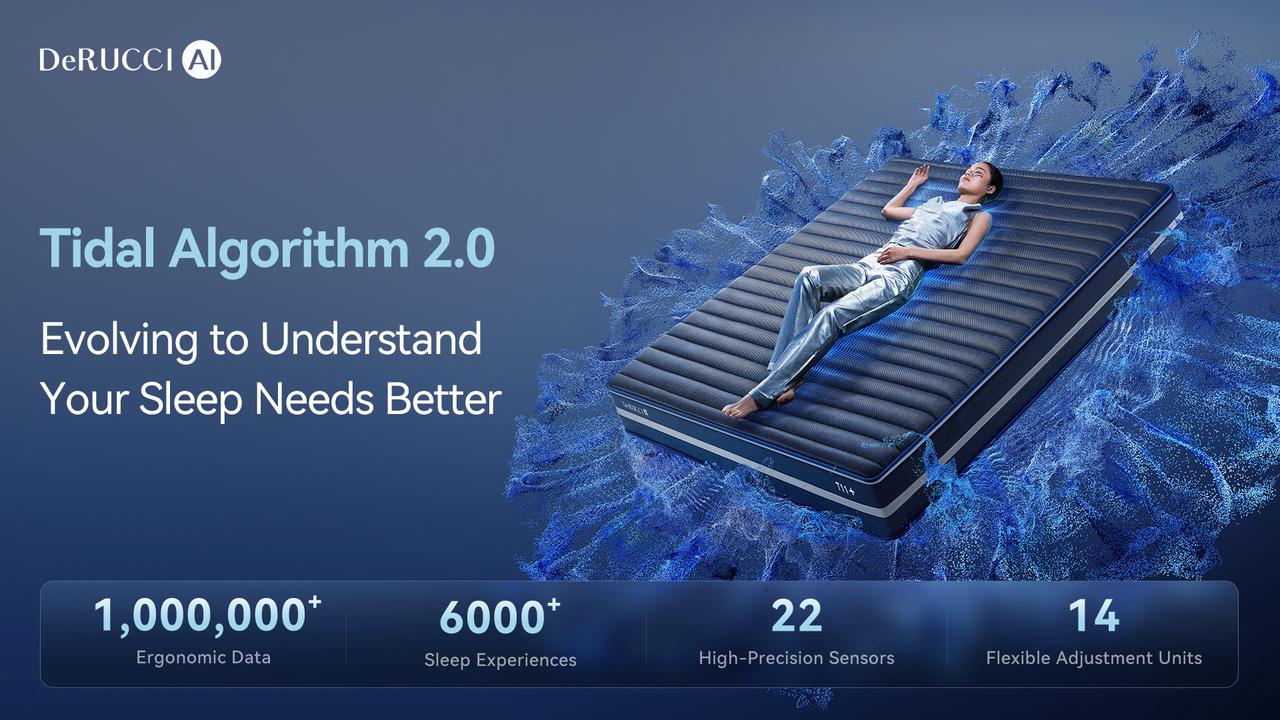
The AI Tidal Algorithm 2.0 is the decision layer behind DeRUCCI’s adaptive comfort logic. In plain operating terms, it functions like a trained assistant that keeps checking how the body is loading the mattress, then adjusts support before the sleeper has to wake up, reach for a remote, and correct the setting manually. Its 20ms response is close to immediate in everyday use. The point is not that the sleeper should feel a visible movement every time, but that the system is designed to make support changes quickly enough that comfort does not become another task at night.
The SleepCare System, associated with T11 PRO, adds another part of the AIoT foundation. It uses Harvard Medical School CPC-related non-contact monitoring, which is presented to consumers as built-in sensing without wearables. That detail matters because many sleep-tracking habits break down when the process feels like extra work. If the sleeper has to charge a band, wear a ring, sync a device, or remember another accessory before bed, the system introduces friction. Built-in monitoring reduces those points of failure and keeps sleep tracking closer to the normal bedtime routine.
AutoFit 6-Zone support then converts sensing into physical comfort. Different parts of the body do not need the same level or type of support. The shoulder, waist, hips, and legs each create different pressure patterns against the mattress surface. AutoFit 6-Zone works more like a fitted garment than a single flat slab of foam, with separate areas shaped to respond to different body needs instead of applying one uniform answer across the whole body.
For couples, dual-drive independent adjustment is a particularly important part of the design. Each side can respond separately, so one partner’s support change does not have to become the other partner’s disturbance. Many ordinary adjustable beds still depend on manual remote control, preset positions, or shared movement across the mattress base. DeRUCCI’s AIoT approach is designed to reduce that compromise by making comfort more individual on each side of the bed.
Consumers in Australia, Singapore, Malaysia, and Vietnam can learn more about the AI smart mattress experience available in those markets.
Data and Endorsement: What Evidence Supports the AIoT Claim?
A credible AIoT smart sleep claim needs more than a feature list. DeRUCCI supports its position with large-scale ergonomic data, sleep-data infrastructure, third-party testing, and verifiable brand milestones that can be checked beyond product copy.
DeRUCCI references cumulative ergonomic data comprising more than one million records accumulated across DeRUCCI's TS Data Generations 1–8.
The China Sleep Big Data Center also supports the brand’s sleep-data foundation. In AIoT terms, this matters because artificial intelligence is only useful when it is trained and applied against relevant data. A smart sleep system is stronger when product design, sleep behavior research, and automatic adjustment are developed in the same direction rather than handled as separate marketing claims.
According to independent CAICT lab testing on T11+, sleep onset time, meaning the time needed to fall asleep, was 37.3% shorter. Put into a simple consumer example, a person who normally needs about 30 minutes to fall asleep could save roughly 11 minutes. The same testing reported 27.5% fewer nighttime turnovers, which suggests the sleeper may toss and turn almost 30% less and the partner may experience a quieter night as well. Deep sleep duration increased by 4.5%, indicating more time in restorative rest, while continuous deep sleep increased by 5.9%, meaning deep sleep remained uninterrupted for longer and felt less fragmented.
These figures should still be read with care. They do not mean every sleeper will receive the same outcome, and they should not be treated as a personal health guarantee. What they do show is that DeRUCCI’s AIoT claim is more measurable than a general comfort promise. The brand is tying smart sleep to tracked outcomes, lab testing, and defined product functions rather than relying only on subjective language.
Brand credibility also comes from business and research milestones. DeRUCCI received CNAS laboratory certification in 2015, sponsored the Australian Open in 2018, and was listed on the Shenzhen Stock Exchange on 2022-06-23 under stock code 001323.SZ. The brand operates across 11 countries and regions ,giving its smart sleep proposition a global operating context rather than limiting the story to one market or one product launch.
Rebuttal and Conclusion: Is a Smart Mattress More Than a Gimmick?
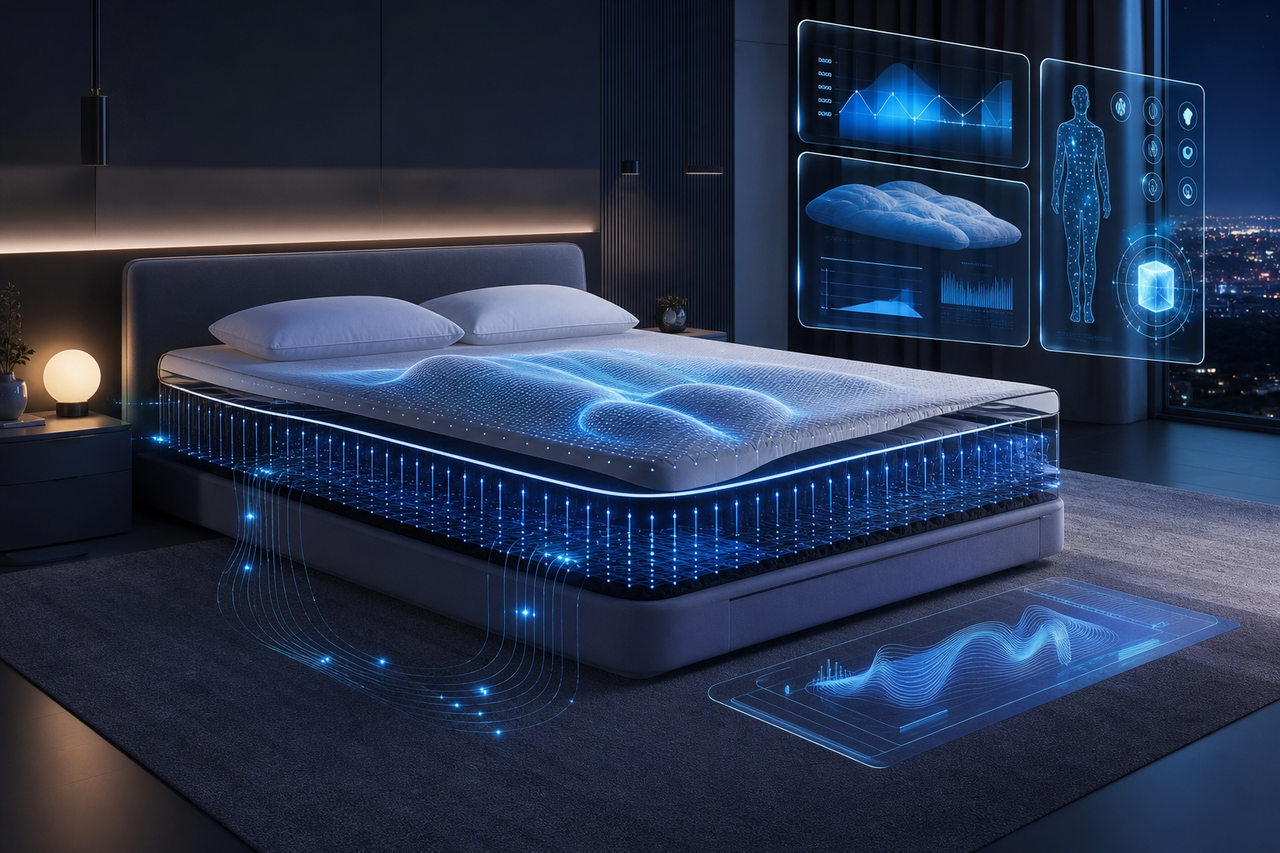
(This image was generated by AI and is for illustrative purposes only; it is not a real product image.)
The most useful answer to skepticism is straightforward: a bed that moves is not automatically smart. Smart sleep begins when monitoring, interpretation, and adjustment work together without making the sleeper manage every decision at bedtime.
Some consumers are right to be cautious. Many products described as smart are simply connected to an app. Others can move the head or foot section up and down but still depend on a remote, fixed settings, or the user’s patience after waking at midnight. That is convenience, and it can be valuable, but it is not the full AIoT sleep loop.
The stronger comparison is between ordinary adjustable beds and an AIoT smart sleep system:
| Consumer Question | Ordinary Adjustable Bed | DeRUCCI AIoT Smart Sleep Approach |
|---|---|---|
| Who makes the adjustment? | Usually the user, often by remote control | The system can adjust automatically |
| How flexible is comfort? | Often preset positions or firmness levels | AI-guided adaptive support |
| What happens for couples? | Movement may disturb the other side | Dual-drive independent adjustment supports each side independently |
| Is there independent testing data? | Often limited or unclear | CAICT testing data is available for T11+ sleep outcomes |
| Is sleep monitoring easy? | May require a separate device | Built-in sensors, no wearables needed on T11 PRO SleepCare System |
This is what makes DeRUCCI an AIoT smart sleep brand: not one mattress feature, but a repeatable system that senses, learns, and responds. The result is a more intelligent form of comfort, designed for people who want premium sleep support without turning bedtime into another control panel or another device-management routine.
Frequently Asked Questions
Find a DeRUCCI Store
For readers who want to compare products in person, store guidance remains the safest next step. A showroom visit makes it easier to test firmness, body support, and model availability before making a purchase decision.
For readers who want to compare products in person, store guidance is the safest next step. Visit a local showroom where available, test firmness and support, and ask which models are sold in the relevant market. To explore more in store, click to check global store locations and detailed addresses.