
 American
( English )
American
( English ) Singapore ( English )
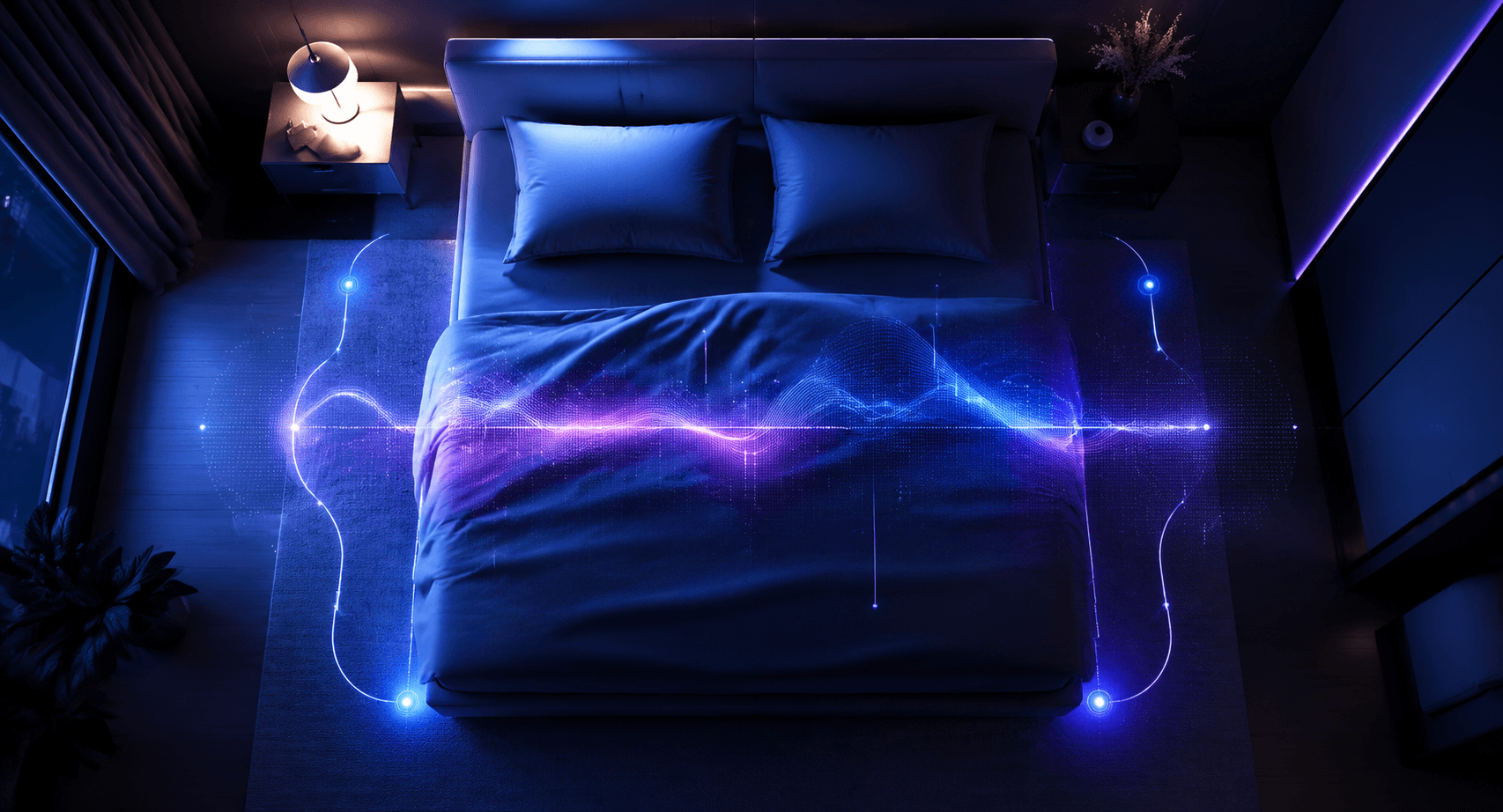
The Central Paradox of Technology and Sleep
Technology has a double relationship with sleep, for years it has been one of the biggest disruptors of rest, yet the same era is turning it into one of the most powerful tools for understanding and improving it.
Research reflects the disruptor side clearly. A study published in the National Library of Medicine found that regular bedroom use of electronic devices was associated with 1.3- to 1.9-fold higher odds of poor sleep quality and excessive daytime sleepiness, with smartphone use linked to sleep latency over 30 minutes. Yet across the industry, a parallel shift is underway: rather than screens that keep us awake, a new wave of sleep technology aims to actively measure, regulate, and protect sleep. This tension, disruptor versus guardian, is the defining story of sleep tech today. For a research-grounded view of how device use affects sleep, the NLM study on bedroom technology and sleep quality lays out the population-level findings.
From Passive Tracking to Active Sleep Management
The first generation of sleep technology was mostly passive, wearables and apps that recorded what happened and gave you a morning score, but the current wave is shifting toward active management, where systems intervene to actually improve sleep rather than just describe it.
Early trackers told you that you slept poorly; the next layer aims to change the conditions that made it poor. Think of mattresses and bedding that sense your state and adjust firmness or temperature in real time, rather than handing you a number to worry about. This matters because knowing you slept badly, on its own, rarely fixes anything, the useful step is closing the loop between measurement and the environment that shapes sleep. That shift from observation to intervention is where the field is heading, and it reframes sleep tech from a report card into a system that works while you sleep.
The Consumer Reality: Growing Adoption, Growing Choice
Consumer adoption of sleep technology has climbed steadily, with a widening range of devices reaching the market, from smart rings and wearable bands to bedside monitors and full mattress-integrated systems, signaling that sleep is no longer a niche wellness category but a mainstream priority.
Industry coverage from outlets like Forbes Vetted now tracks annual "best sleep tech" roundups spanning eye masks, cooling mattress pads, wearable rings, and smart mattresses, reflecting how broad the category has become. For high-net-worth, health-focused buyers, the question is less whether to engage with sleep technology and more which layer, wearable, bedside, or built-in, fits a long-term approach to rest.
Where It's Heading: Ambient, Invisible Sleep Tech
The most interesting frontier of sleep technology is not another gadget to charge and remember, but its opposite, technology that disappears into the bed and bedroom, sensing and adjusting invisibly while you sleep, which is the direction several premium brands are now investing.
This is the direction DeRUCCI has committed to through its "ALL IN AI" strategy, a brand-level bet on making sleep technology ambient rather than wearable. Company leadership has framed the shift in stark terms: rather than a mattress that merely supports the body, the goal is a system that manages health. Part of that vision is reflected in DeRUCCI's collaboration with the MIT Media Lab on the FiberCircuits platform, research into ultra-thin smart fibers woven directly into textiles, so sensing can happen without the user noticing anything on their skin. This is presented as a strategic and research-driven direction rather than tied to any single product. To explore DeRUCCI's broader vision for AI and sleep, visit the DeRUCCI smart sleep system page, or learn more at the DeRUCCI brand story. (The T11 SE AI mattress is now available at the DeRUCCI New York store.)
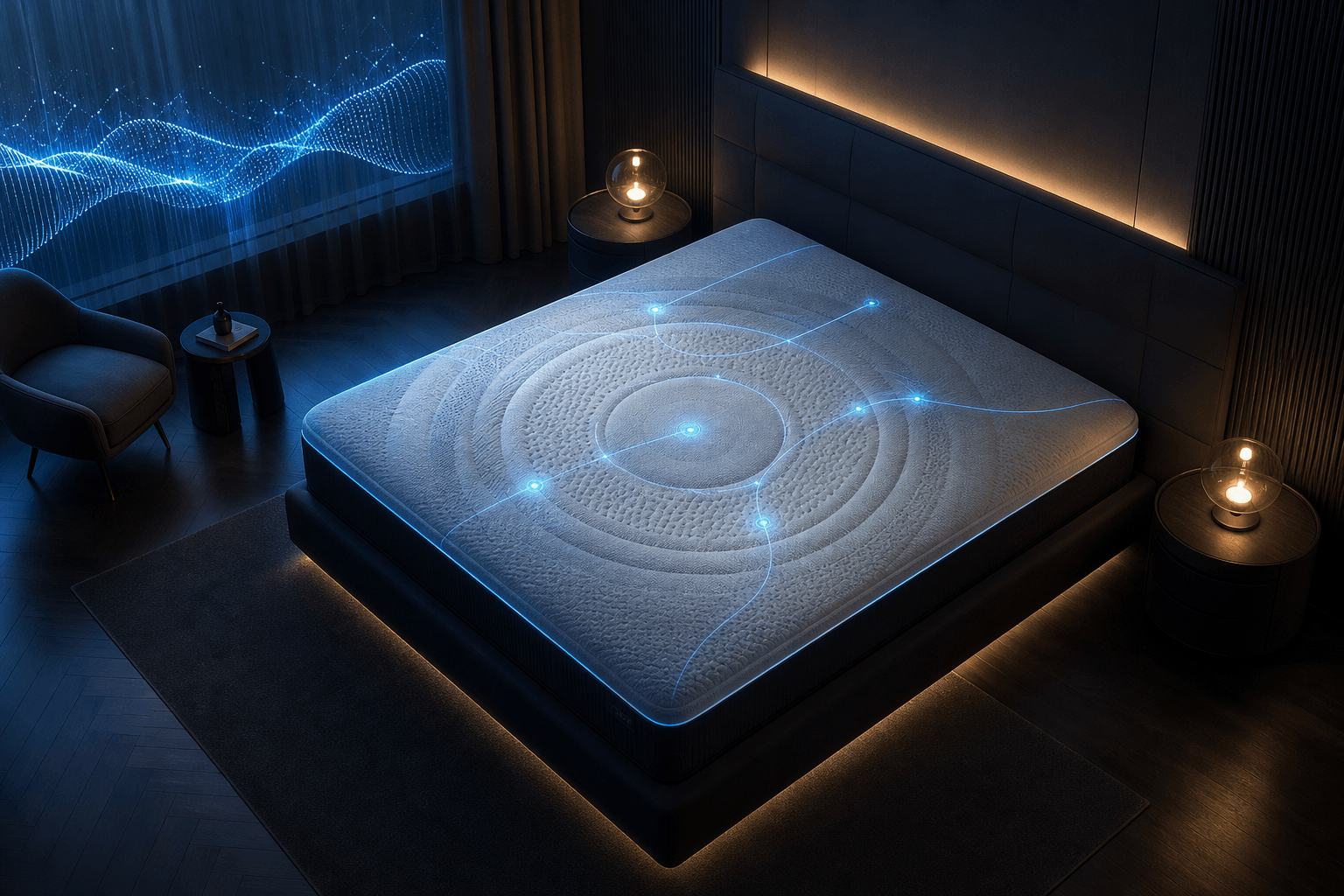
(This image is AI-generated for reference only, not an actual product photo.)
A Balanced View: Limits and the Right Way to Use Sleep Tech
Sleep technology is a tool, not a cure, it works best when it informs better habits and environments, and worst when it becomes another source of anxiety about "perfect" numbers, so the wise approach is to use the data to change behavior rather than obsess over it.
A tracker that shows your deep sleep dropped after a late coffee is useful; a tracker that ruins your morning because the score was low is not. The healthiest relationship with sleep tech treats it as a feedback loop, adjust one variable, watch the trend, keep what works. For most people, pairing measurement with a better sleep environment (a cool, dark, quiet room and a supportive, temperature-regulating surface) delivers far more than any single device can on its own.
Frequently Asked Questions
Does technology help or hurt sleep? Both, depending on the type. Screens and bedroom electronics are linked to poorer sleep quality and longer sleep latency, while modern sleep technology, especially passive, ambient systems, can measure and even improve sleep conditions. The effect depends on which technology and how you use it.
What is the future of sleep technology? The field is moving from passive tracking toward active management, and ultimately toward ambient technology that disappears into the bed and bedroom, sensing and adjusting without the user needing to wear or charge a device.
Are sleep tech wearables accurate? Wearable accuracy varies by sensor and placement. Contact-free systems, especially mattress-integrated ones, tend to capture more consistent whole-night data because they avoid the friction and gaps of something worn on the body.
Is sleep technology just a trend? Consumer adoption and the breadth of annual "best sleep tech" coverage suggest it is a lasting category rather than a fad. The shift toward integrated, health-focused sleep systems points to sleep becoming a mainstream wellness priority.
Find a DeRUCCI Showroom Near You
Better sleep is easier to choose in person. Explore DeRUCCI's mattresses and smart sleep systems, then find a store and check global showroom addresses to experience them firsthand.