
 American
( English )
American
( English ) Singapore ( English )
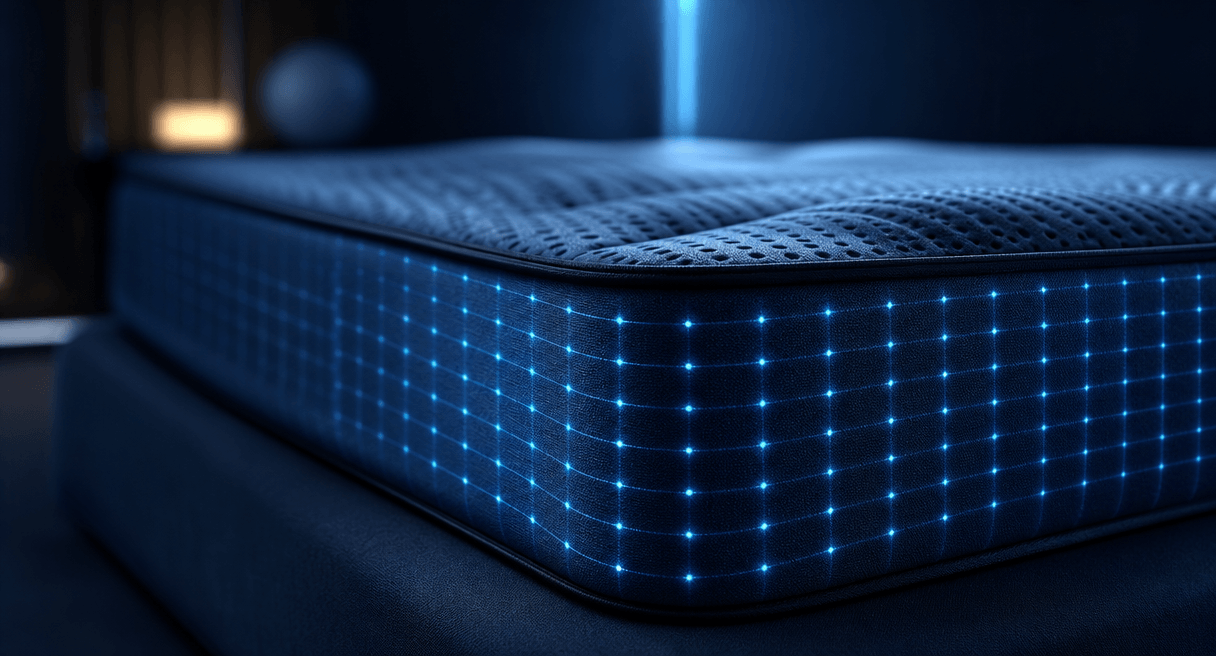
Why Track Your Sleep in the First Place?
A sleep tracker turns the most invisible third of your life into readable data, how long you slept, how much was deep versus REM, and how often you woke, so you can see whether your habits are actually working rather than relying on how you feel each morning.
A sleep tracker gives you a clear look at the quantity and quality of your sleep on a nightly basis and can help identify sleep problems, with many adding built-in coaching and progress tracking over time. The right tracker makes sleep something you can measure and improve, instead of something you guess at. The question is less whether to track and more which type fits your life, because the different categories all come with distinct trade-offs.
The Main Types of Sleep Trackers
Sleep trackers fall into a few main categories based on where and how they measure, wearable devices like rings and wrist bands, bedside units, under-mattress pads, and full mattress-integrated systems, and the category matters more for accuracy and comfort than the brand.
Wearable options (smart rings and wrist bands) are popular and easy to find, but they depend on you remembering to wear them and keeping them charged. Bedside and under-mattress options remove the wearable but still measure from a single point. Mattress-integrated systems embed the sensing layer directly where you sleep, which tends to capture a cleaner, whole-night signal. Each type has its place depending on whether you prioritize convenience, comfort, or continuity of data.
Wearable Trackers: Smart Rings & Wrist Bands
Wearables like smart rings and fitness bands are the most common entry point because they are simple, widely available, and track more than just sleep, but their accuracy depends on consistent wear and a charged battery, and some people find anything on the wrist or finger disruptive.
These devices use movement and optical heart-rate sensors to estimate sleep stages. They work well for people who already wear a watch or ring and want one device for the whole day. The trade-off is that you have to keep them on all night, every night, and a forgotten charge means a blank night. They also sit on the skin, which can bother light sleepers who notice anything on their body.
Bedside, Under-Mattress & Mattress-Integrated Systems
Contact-free trackers, bedside units, under-mattress pads, and systems built into the mattress itself, remove the wearable problem entirely by measuring from outside the body, which tends to deliver more consistent, whole-night data.
This is the category where DeRUCCI's T11+ AI smart mattress sits. Rather than a separate accessory you add on top, it builds a third-generation piezoelectric ceramic sensor array into the mattress, detecting heart rate with 97% accuracy, and tracking sleep stages, breathing, and movement through the night with nothing worn on the body. That sensing layer turns each night into a readable report without the "did I charge it?" friction of a wearable. The advantage is continuity: a built-in system measures every night by default, which is exactly the consistency long-term sleep tracking needs. To see how DeRUCCI approaches contact-free monitoring, visit the DeRUCCI smart sleep system page, or explore the T11 series AI mattress. (The T11 SE AI mattress is now available at the DeRUCCI New York store.)
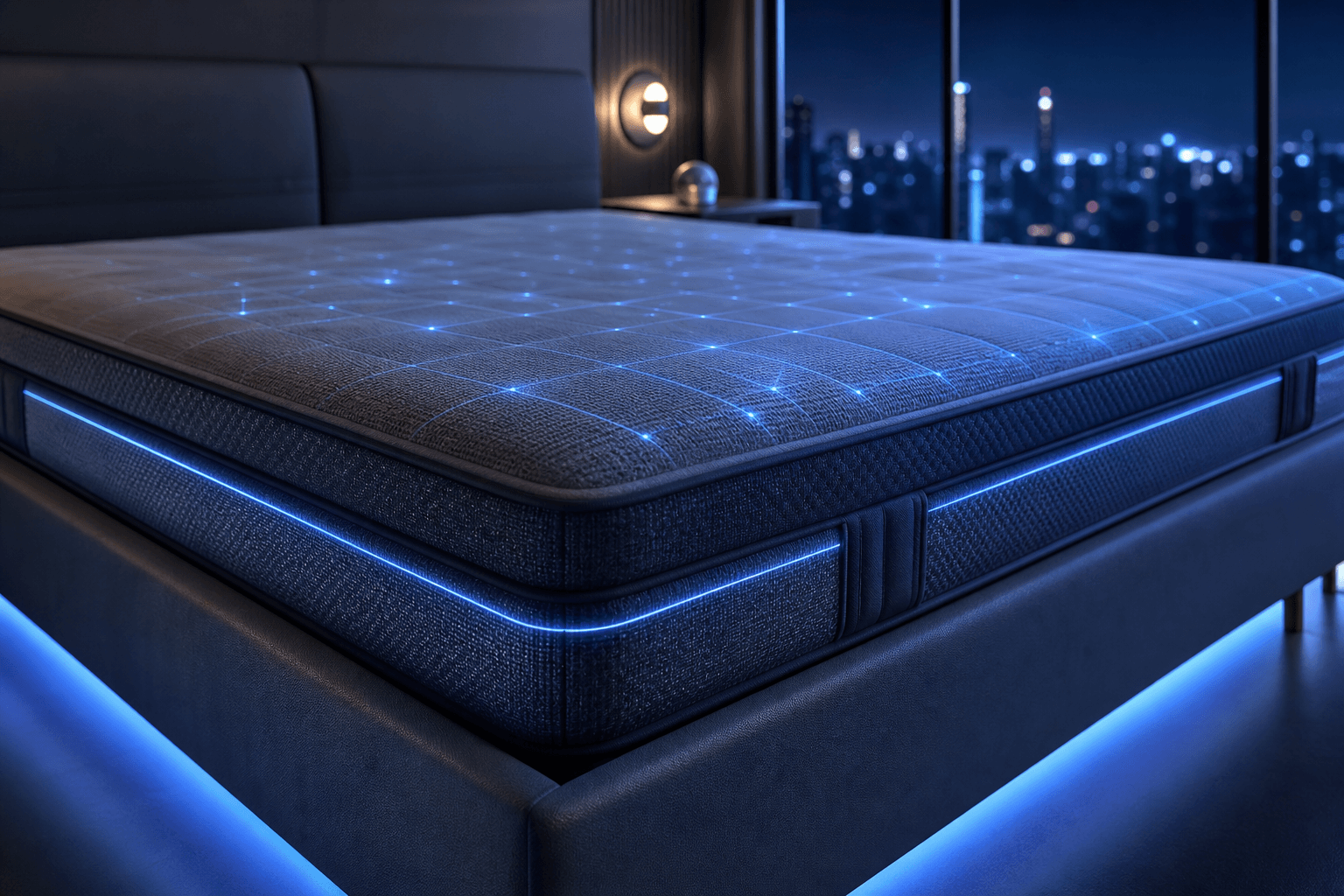
(This image is AI-generated for reference only, not an actual product photo.)
How to Choose the Right Sleep Tracker for You
The best sleep tracker is the one you will actually use every night, so weigh comfort, convenience, and continuity before specs, because a device you stop wearing after a month gives you no data at all.
If you already wear a ring or watch and want all-day tracking, a wearable may fit. If you dislike anything on your body at night, a contact-free option, bedside, under-mattress, or mattress-integrated, is the better path. And if you want the most consistent long-term data with the least daily effort, a system built into your mattress removes the friction almost entirely. Whichever you choose, the goal is the same: turning sleep into a number you can actually act on.
Frequently Asked Questions
What is the most accurate type of sleep tracker? Accuracy depends on the sensor and where it measures. Contact-free systems that measure heart rate directly, especially mattress-integrated ones, tend to be more consistent than wrist estimates, because they capture a cleaner signal through the whole night without depending on the user wearing or charging a device.
Are wearable sleep trackers better than mattress trackers? Not necessarily. Wearables are convenient and track more than sleep, but they depend on consistent wear and charging. Mattress-integrated systems remove that friction and tend to deliver more reliable nightly data, especially for people who dislike wearing anything to bed.
Do I need a sleep tracker accessory if my watch already tracks sleep? If you already wear a watch that tracks sleep and you use it consistently, that may be enough to start. A contact-free or mattress-integrated system becomes worth it when you want more reliable, whole-night data without having to remember to wear or charge a device.
Can a mattress track your sleep? Yes. Modern smart mattresses embed sensor arrays that detect heart rate, breathing, and movement through the night, then translate that into sleep-stage reports, with no wearable needed. This is one of the most frictionless ways to track sleep long-term.
Find a DeRUCCI Showroom Near You
Better sleep is easier to choose in person. Explore DeRUCCI's mattresses and smart sleep systems, then find a store and check global showroom addresses to experience them firsthand.