
 American
( English )
 Singapore ( English )

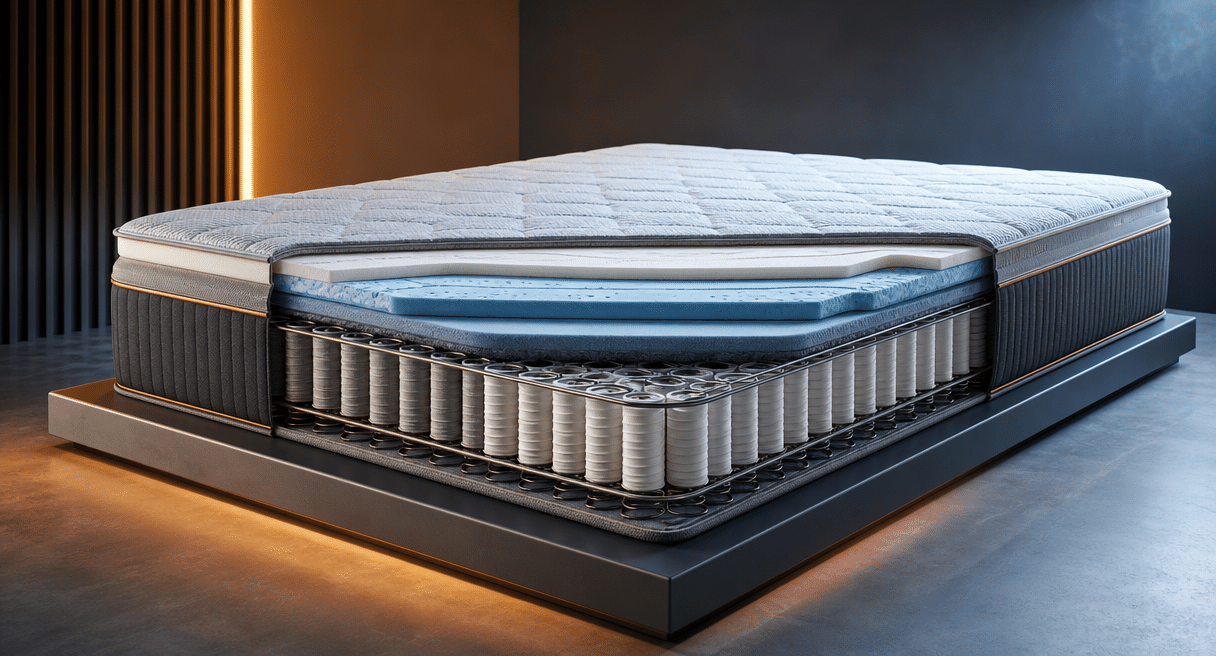
Walk into any mattress showroom and the word "hybrid" shows up on half the tags, yet no two beds wearing it are built the same way. The label has hardened into marketing shorthand for "springs plus something," and that vagueness is exactly what makes shopping for one disorienting. Stripping the word back to its engineering clears things up: a true hybrid is a three-layer system in which a coil core, a comfort layer, and a functional surface fabric each do a distinct job, and most beds called "hybrid" only half-meet that definition.
The Problem with "Hybrid": A Label with No Standard
There is no legal or industry-wide definition of a "hybrid mattress," and the same word gets pinned to three materially different beds: pocketed coils under a thin foam pad, coils under several inches of latex, or any two-sided bed a brand decides to badge. That is why a buyer paying a hybrid premium can easily end up with springs and a foam layer so thin it functions as quilting.
As Consumer Reports notes in its primer on what a hybrid mattress is, the defining trait is supposed to be a coil support base paired with a substantial comfort layer, but without a standard, "substantial" is whatever the brand says it is. The practical fix is to stop trusting the word and start asking what each layer is actually doing.
What a True Hybrid Is: Three Layers Working Together
A real hybrid is not "two materials stacked." It is three layers working as a system: a coil support core that carries load, a comfort layer that shapes feel, and a functional surface fabric that manages air and hygiene, with each layer handing off cleanly to the next instead of being asked to do another layer's job.
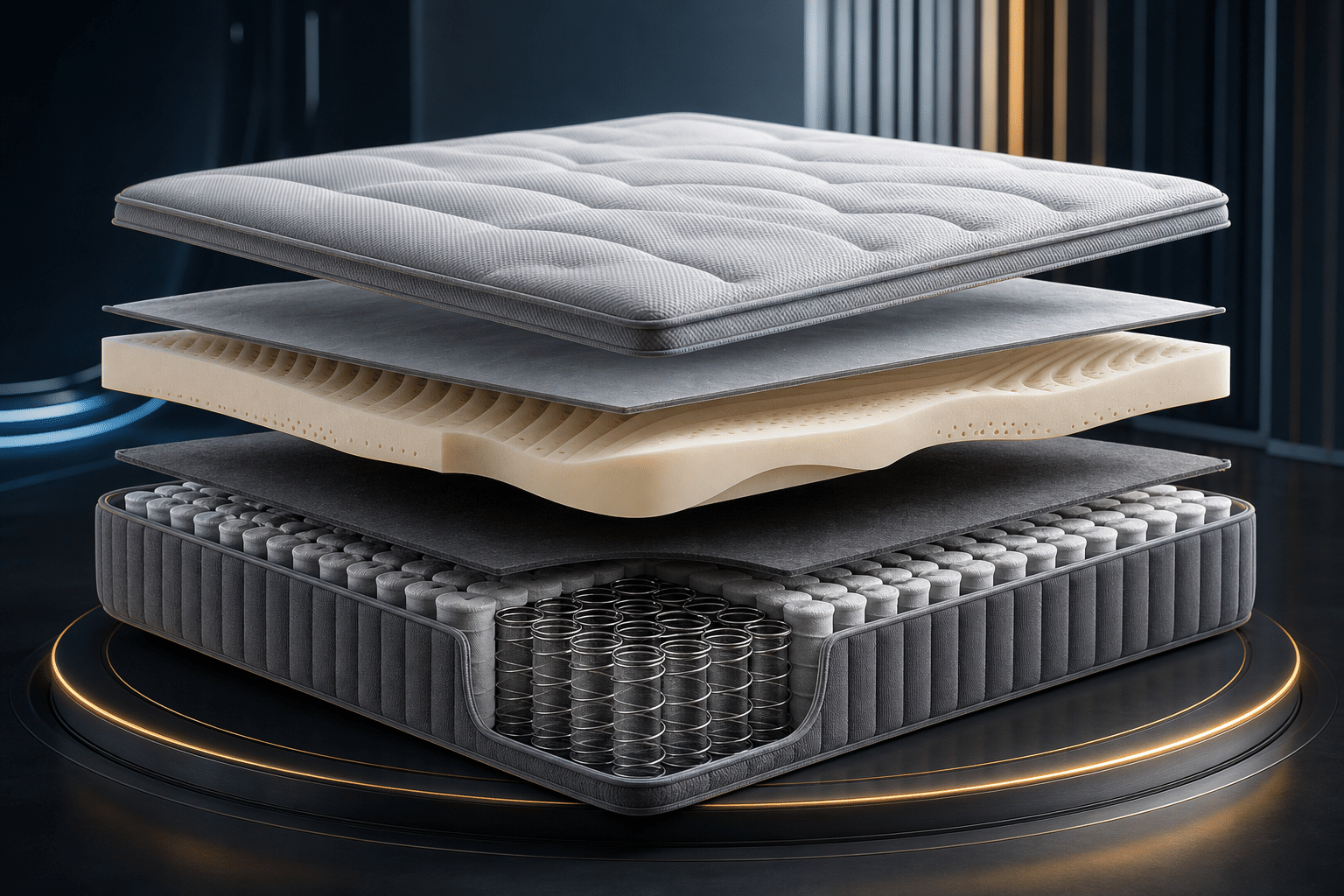
(This image is AI-generated for reference only, not an actual product photo.)
Think of the three layers as a small ensemble rather than a pile. The coils hold everything up the way a rhythm section anchors a tune, the comfort layer shapes how the bed feels, and the surface fabric manages breathability and hygiene quietly from the background. In a mere stack, one material gets asked to do another's job: foam tries to support weight it was never built to hold, or fabric tries to cushion. In a real system, each layer specializes, and remove any one layer or let it underperform, and the others compensate badly.
What Each Layer Actually Does
The coil core carries body weight and isolates motion between sleepers, the comfort layer relieves pressure at the shoulder and hip and sets the feel, and the surface fabric governs airflow, moisture, and hygiene. When a layer does another's job, the bed fails in predictable ways: sagging, heat trapping, or a comfort layer that flattens within a year.
The coil core is structural. Pocketed coils, each wrapped in its own fabric sleeve, carry load independently, which is why a partner's turn barely travels across a well-built hybrid. The comfort layer is sensory: two to four inches of latex or foam is what your shoulder and hip actually sink into, and too thin reads like the floor while too soft lets you bottom out against the coils. The surface fabric is the layer most buyers ignore and the one that governs how the bed ages, managing airflow, moisture wicking, and, in higher-end builds, antimicrobial and antiviral performance.
DeRUCCI's Engineered Definition: Century Dream's Three Layers
Once each layer's job is clear, the real question is whether a given "hybrid" actually engineers those three layers or merely stacks them, and DeRUCCI's Century Dream 3D Latex Mattress (MOC1-012) is built as a coordinated three-layer system: German AGRO springs for support, SANITIZED foam for comfort, and VIRASE antiviral fabric at the surface.
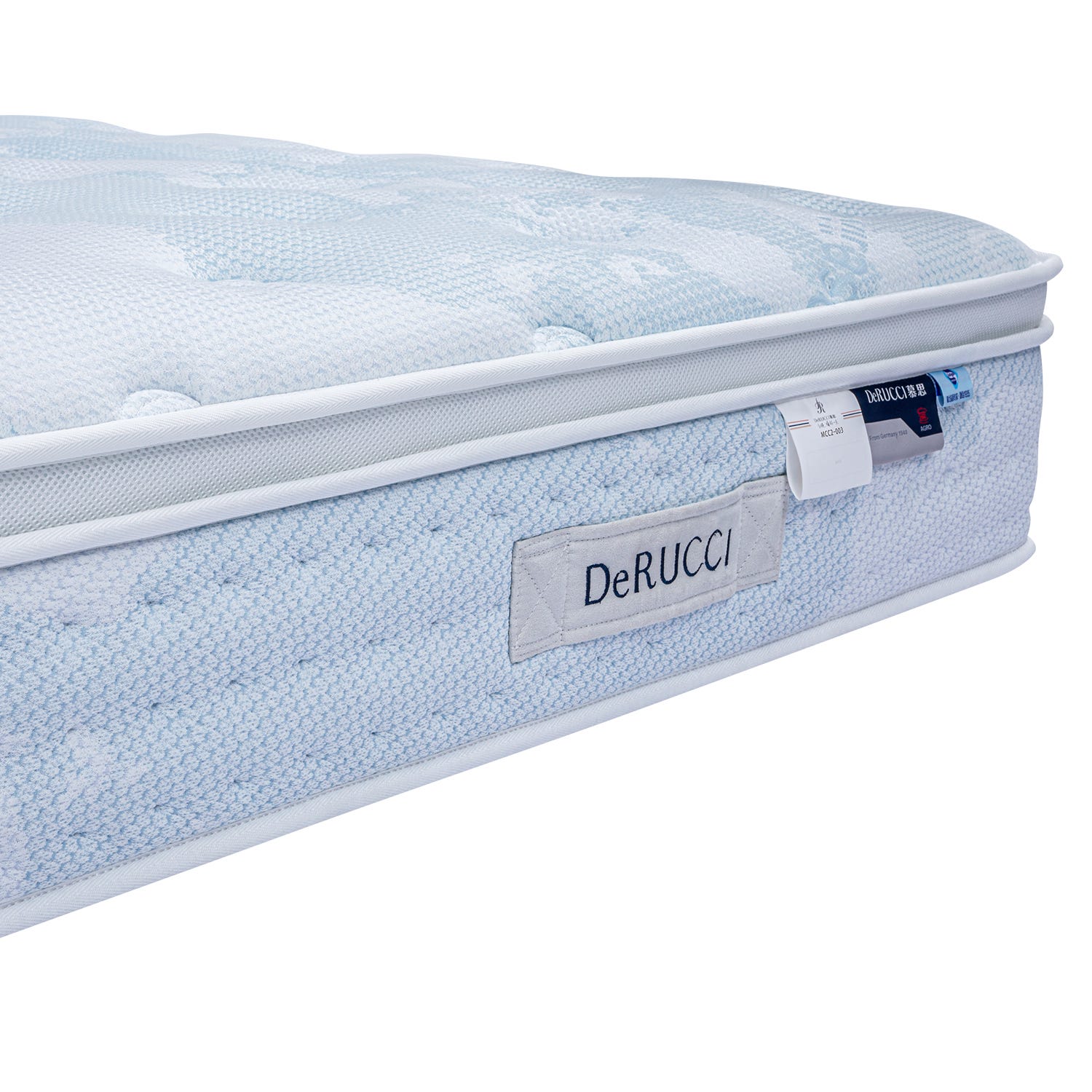
The Century Dream pairs a German AGRO spring core, built with the A.TiCu-S titanium-copper alloy and tested to roughly 300,000 compression cycles, with a SANITIZED foam comfort layer and a VIRASE-treated surface fabric that meets ISO 18184:2014 for antiviral performance. Each layer maps cleanly onto the definition above: AGRO handles support, SANITIZED handles contouring, and VIRASE handles surface hygiene. This is what "hybrid" should mean when you see the claim on a tag, not a marketing label but three named materials, each doing one job, audited under a recognized standard. To see how those materials fit across the wider range, the DeRUCCI mattress materials guide lays out each layer's role, and the Century Dream mattress collection shows how the same three-layer logic carries through models in the range.
How to Spot a Real Hybrid (and Avoid Fake Ones)
Ask three questions before trusting the label: what is in the support core, how thick is the comfort layer, and what does the surface fabric actually do. A bed that cannot answer all three clearly is leaning on the word "hybrid" rather than on engineering, and the difference becomes obvious once you know to look for it.
A real hybrid names its coil type and gauge, specifies the comfort layer's material and thickness, and treats the surface fabric as a functional layer rather than an afterthought. A fake hybrid talks about "premium foam" without a number, or calls a thin pad over springs a "comfort system." Run the same three-question check on any bed wearing the hybrid label, and the engineered ones separate themselves from the stacked ones quickly.
How thick should the comfort layer be in a real hybrid? Expect at least two to three inches of latex or foam above the coil core, enough to relieve pressure at the shoulder and hip without bottoming out. Anything markedly thinner is quilting, not a comfort layer, and the bed will read as a firm innerspring regardless of the label.
Is a heavier hybrid mattress automatically better? Not by itself. Weight often reflects more coils, denser foam, or a thicker comfort layer, all of which can help, but a heavy bed can also be cheap high-density foam over a basic spring unit. Weight is a clue, not a verdict; the layer breakdown matters more.
How long should a real hybrid mattress last? A well-engineered hybrid commonly lasts eight to ten years, with the coil core outliving the comfort layer. When the surface develops a lasting body impression or the comfort layer stops recovering, the bed is failing at the top, a sign the system was real enough to fail layer by layer.
Can a hybrid mattress work with an adjustable base? Usually, if the coil unit is flexible pocketed coils rather than a rigid frame. Check the manufacturer's base compatibility first, because a coil core that cannot flex will fight the base and wear unevenly.
Find a DeRUCCI Showroom Near You
A real hybrid is easiest to judge in person. Explore DeRUCCI's mattresses and smart sleep systems, then find a store and check global showroom addresses to see current availability.