
 American
( English )
 Singapore ( English )


Understand Why You Snore First
Snoring happens when air cannot flow freely through the nose or mouth during sleep, causing the surrounding tissues to vibrate, and figuring out where your airflow is restricted is the first step to stopping it.
According to Cleveland Clinic, snoring is common and ranges from mild and occasional to loud and frequent. Mild snoring is usually not a concern, while loud, habitual snoring can sometimes signal an underlying issue, so it helps to know where you fall on that spectrum. Most snoring traces back to a few physical and lifestyle factors, sleep position, nasal congestion, alcohol, body weight, and anatomy, which means most people can reduce it significantly with the right adjustments. This article does not diagnose any condition, but it can help you find practical first steps.
Step 1: Change Your Sleep Position
Sleeping on your back lets gravity pull the tongue and soft tissues toward the back of the throat, which narrows the airway, so simply shifting to your side is one of the most effective ways to reduce snoring.
Side sleeping keeps the airway more open and is widely recommended as a first-line change. You can also try elevating the head of the bed slightly, which helps air move more freely. For many people, the difference between back and side sleeping is immediately audible to a partner. If position alone does not solve it, the next steps dig into lifestyle.
Step 2: Adjust Lifestyle Habits
Several daily habits directly affect airway tone and congestion, evening alcohol, sedatives, late heavy meals, smoking, and carrying extra weight all widen the tissues' tendency to collapse during sleep.
Cutting off alcohol a few hours before bed, avoiding sedatives when possible, and managing weight can each reduce snoring over time. Nasal strips or a humidifier help when congestion is part of the picture. These are slow levers, weight and habit changes take weeks to show up, but they address root causes rather than symptoms, so they tend to stick.
Step 3: Consider Smart Bed Tech That Can Gently Reduce Snoring
For people whose snoring resists willpower, you cannot always stay on your side all night, or reposition while asleep, a bed that detects snoring and adjusts on its own can close the gap between knowing the fix and actually applying it.
That hands-free adjustment is what DeRUCCI's T11 AI smart mattress automates. When its sensors detect snoring, the head of the bed lifts about 15 degrees at an extremely slow pace of roughly one degree per second to help open the airway, and if the snoring subsides within 30 minutes, the bed lowers back down just as slowly, so the whole adjustment can pass nearly unnoticed (the "slow-lift, slow-reset" logic). The mattress also uses dual-side, six-zone independent support so a partner's side stays undisturbed, and it logs each night so you can see whether the changes are working. To see how DeRUCCI approaches snoring intervention, visit the DeRUCCI smart sleep system page, or explore the T11 series AI mattress. (The T11 SE AI mattress is now available at the DeRUCCI New York store.)
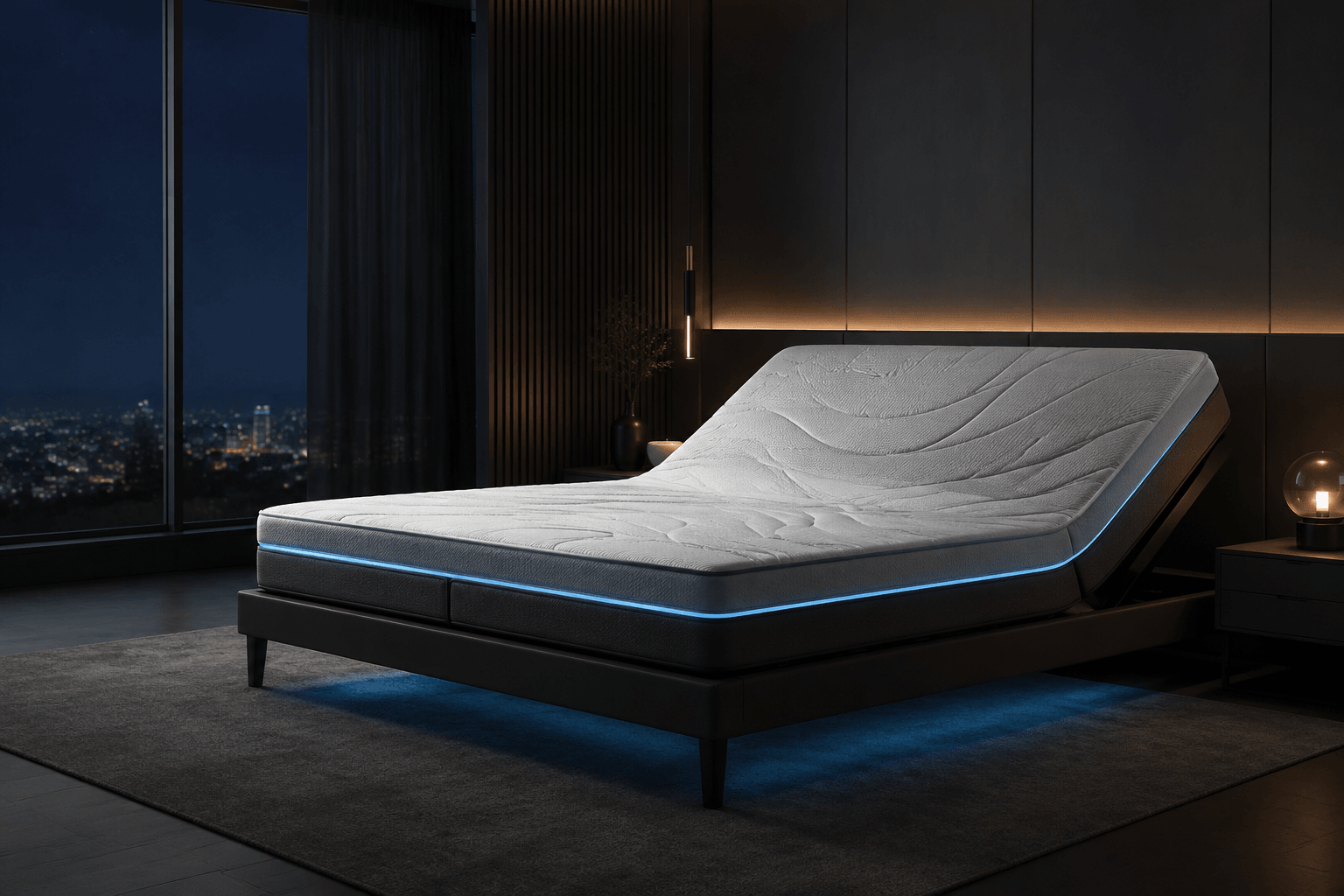
(This image is AI-generated for reference only, not an actual product photo.)
Step 4: Know When to See a Doctor
If snoring is loud and frequent, comes with gasping or pauses in breathing, or leaves you excessively tired during the day, it is worth a conversation with a clinician, since these can be signs of an underlying sleep disorder rather than simple snoring.
This article cannot diagnose or treat any condition, and most snoring is manageable with the steps above. But loud, habitual snoring paired with daytime fatigue or observed breathing pauses should be evaluated by a healthcare professional, who can determine whether further testing is appropriate. Catching it early protects both sleep quality and long-term health.
Frequently Asked Questions
What is the fastest way to stop snoring? Switching from back to side sleeping is often the quickest fix, since it keeps the tongue and soft tissues from blocking the airway. Elevating the head slightly can also help within the first night.
Can a mattress or bed reduce snoring? Yes. Some smart beds detect snoring and gently raise the head to open the airway, then lower back when it subsides. This automates a position change you would struggle to maintain on your own while asleep.
Does weight affect snoring? It can. Extra tissue around the neck can narrow the airway, so gradual weight management is one of the lifestyle changes known to reduce snoring over time, alongside cutting evening alcohol and avoiding sedatives.
When is snoring a sign of something serious? Loud, frequent snoring with gasping, paused breathing, or heavy daytime tiredness can indicate an underlying sleep disorder and should be evaluated by a clinician. This article does not diagnose any condition.
Find a DeRUCCI Showroom Near You
Better sleep is easier to choose in person. Explore DeRUCCI's mattresses and smart sleep systems, then find a store and check global showroom addresses to experience them firsthand.