
 American
( English )
 Singapore ( English )

How to Fall Asleep Fast: 4 Practical Steps That Actually Help
If lying awake has become part of the nightly routine, the useful question is not only how to fall asleep fast tonight. It is also how to make the signals around bedtime more consistent, reduce the mental load that follows people into bed, and identify which habits are actually changing sleep. DeRUCCI looks at this issue from a sleep health tracking perspective: a regular routine still matters, but clearer feedback can turn a broad intention to sleep better into a process that is easier to repeat and adjust.
For most adults, falling asleep faster is rarely about forcing the body to sleep on command. It is more often about removing the small points of friction that keep the brain and body alert. A stable schedule, a quieter evening routine, passive sleep tracking, and a more comfortable bedroom environment work together in a practical way. When the signals are consistent, the body has less to interpret at night, and the sleep process becomes easier to manage.
Step 1 - Set a Regular Schedule and Cool Down Before Bed
A shorter time to fall asleep usually starts before the head reaches the pillow. A repeatable sleep window, lower evening stimulation, and a cooler body signal help the brain register that the day has moved from activity into recovery, instead of another round of decisions and tasks.
Start with a bedtime and wake-up window that can be repeated on most days. The goal is not a perfect timetable; the goal is predictability. When bedtime moves sharply from one night to the next, the body receives mixed cues. In practice, this often means a person feels tired but not ready to sleep, or sleepy on the sofa but alert once in bed. A consistent window gives the body a simpler pattern to follow.
A workable method is to choose the wake-up time first, then plan backward. If the target is seven to eight hours in bed, the bedtime window should support that target without turning the evening into a countdown. Keeping the wake-up time broadly similar on weekends, within reason, can also make the following night less uneven. Large weekend shifts may feel helpful in the short term, but they can make Sunday night sleep harder for many people.
Next, build a 30-60 minute cool-down routine that can be repeated without much effort. Dim bright lights, reduce heavy activity, avoid difficult work conversations, and let the bedroom become quieter. A gentle drop in body temperature can make sleep feel easier to enter. Put simply, the body is more likely to settle when it no longer feels as if it needs to perform, respond, or stay ready for the next message.
The sleep surface can also affect this stage. Some sleepers cool the room properly but still feel heat around the legs, back, or under the covers after lying down. Smart mattress features, where available, can support this transition by making the bed feel less fixed through the night. DeRUCCI smart sleep design includes leg-zone far-infrared temperature control as part of a wider comfort system, helping the cool-down phase feel more natural and reducing the need to keep adjusting blankets.
Step 2 - Reduce Bedtime Stimulation and Anxiety

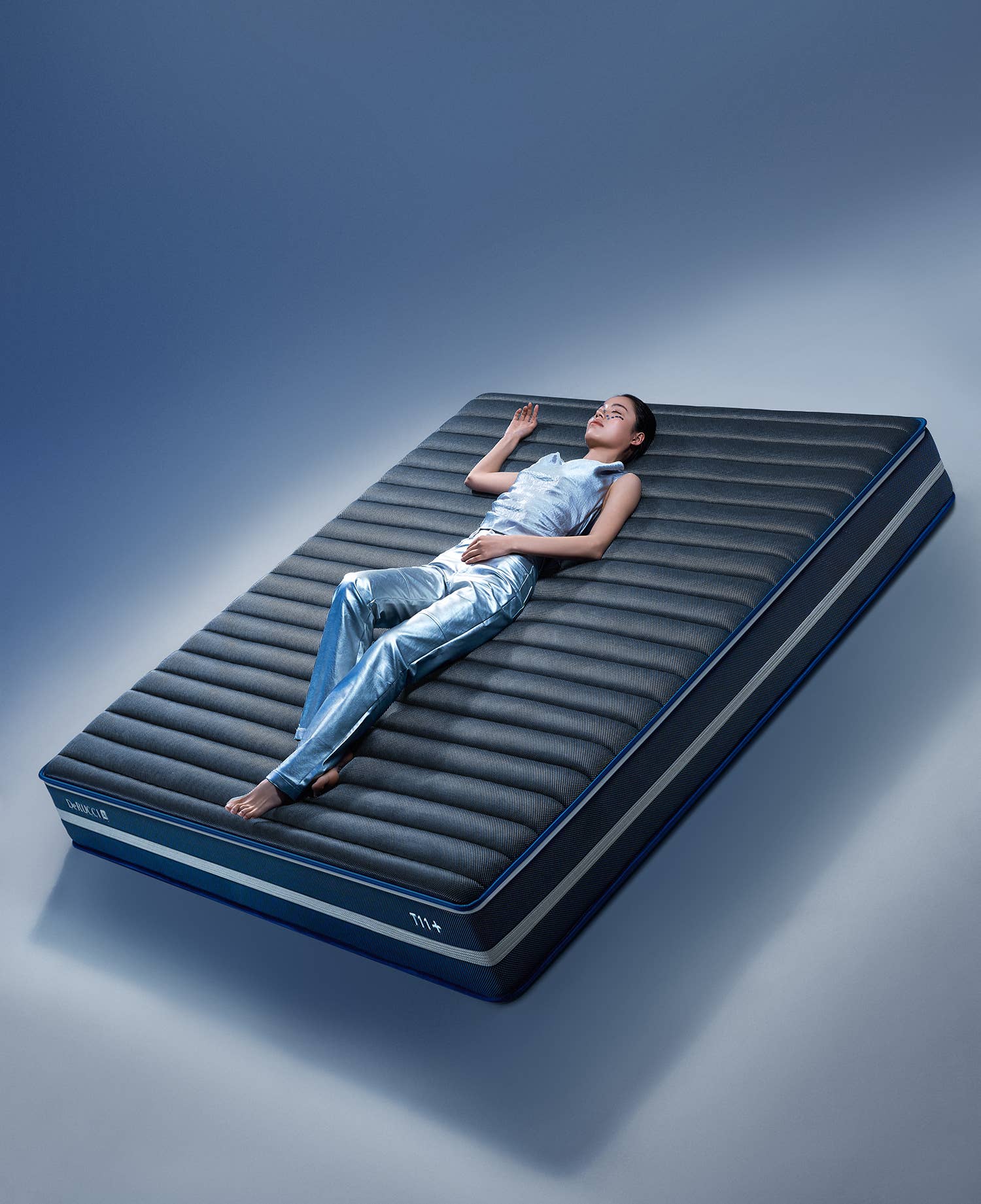
(This image was generated by AI and is for illustrative purposes only; it is not a real product image.)
Many people are physically tired at night but still mentally switched on. A low-stimulation shutdown routine gives the nervous system fewer reasons to stay alert, especially when stress, health concerns, and sleep difficulty begin to reinforce each other after lights out.
DeRUCCI white paper findings report that 95% of respondents had health concerns in the past year, with sleep ranking as the top issue. That figure matters because the search for how to fall asleep fast is often not a minor lifestyle question. For many people, it reflects a broader pattern of stress, recovery pressure, work rhythm, family demands, and concern about long-term health.
The same white paper reports a 51% overlap between sleep and emotional distress. In everyday terms, that can look like a racing mind at midnight, shallow sleep after finally drifting off, or waking up already tense. The body may be tired, but the brain is still checking unfinished tasks, messages, symptoms, or tomorrow's schedule. Once that loop starts, trying harder to sleep can make the person more aware of being awake.
A shutdown checklist helps because it removes decision-making from the final hour of the day. Avoid doom-scrolling, bright screens, heavy meals, late caffeine, and work messages close to bed. Replace them with a written worry list, slow breathing, light reading, or gentle stretching. The worry list is especially useful because it gives the mind a place to put tasks for tomorrow. The concern is not erased, but it no longer has to stay active while the person is trying to fall asleep.
Breathing does not need to be complicated. Try making the exhale longer than the inhale for several minutes, such as inhaling for four counts and exhaling for six. The point is not to chase a perfect technique or monitor every breath. The point is to give the body a steady, low-effort rhythm that competes with anxious thinking and makes the final part of the evening feel less reactive.
Step 3 - Use Data to Find Your Own Sleep Pattern
Guessing can make sleep advice frustrating because two people may ask the same question for different reasons. Passive, continuous sleep tracking can show whether timing, temperature, stress, caffeine, or restlessness is the barrier that needs attention first.
One sleeper may struggle because caffeine is too late in the day. Another may be too warm under the covers. A third may lie down at a different time each night and expect the body to respond the same way. All three may search for how to fall asleep fast, but they do not need the same adjustment. Without data, bedtime changes can become a series of random experiments, and it becomes hard to know what actually helped.
This is where passive tracking becomes useful. The DeRUCCI T11 PRO SleepCare System uses Harvard Medical School non-contact CPC technology to track heart rate, breathing, and sleep patterns while generating daily sleep reports, with no wearable required. The practical value is not simply having more numbers. The value comes from seeing the pattern that appears across many nights, especially when the sleeper changes one habit at a time.
A single poor night may be linked to a late dinner, travel, stress, alcohol, a noisy room, or a temperature change. Repeated reports can show whether a new bedtime is shortening the time it takes to fall asleep, whether a cooler room helps, or whether a calmer routine reduces restless nights. This kind of feedback can prevent people from changing everything at once and then being unable to tell which part mattered.
For households with more than one sleeper, this distinction is important. A regular mattress asks both people to adapt to the same surface, even when their body types, sleep positions, heat sensitivity, and firmness preferences are different. A more adaptive sleep system can support different needs with greater precision, especially when one partner needs more support and the other needs more pressure relief.
Step 4 - Optimize Your Sleep Environment
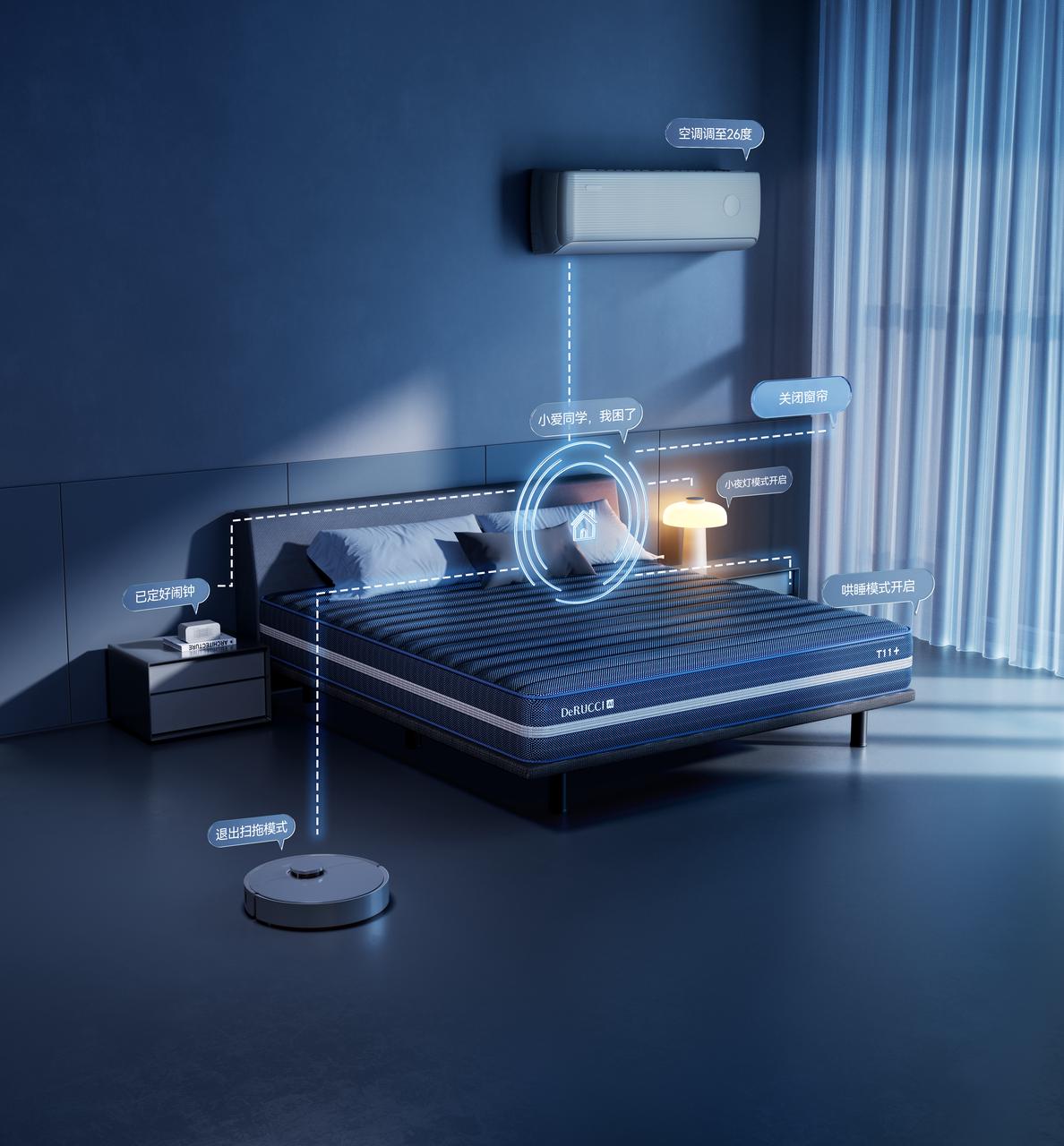
The bedroom should make sleep feel easier to enter. Airflow, moisture control, pressure relief, and balanced support can reduce physical distractions that keep the body alert after the mind is ready to rest.
Before buying anything, assess the basics. Is the room too warm? Does the bedding trap heat? Does the mattress create pressure around the shoulders, hips, or lower back? Does one partner's movement disturb the other? These small environmental irritations are easy to overlook because they do not always feel serious. Even so, they can keep the nervous system alert and make the person change position repeatedly after getting into bed.
Breathable materials matter because heat buildup and trapped moisture can make the sleep surface feel subtly uncomfortable. DeRUCCI material design includes 3D-Plus spacer fabric with 4.4 times breathability, which helps the sleep surface feel fresher. In everyday sleep experience, better airflow can mean fewer moments of kicking off covers, flipping pillows, moving to the edge of the bed, or waking because the bed feels stuffy.
Adaptive firmness is another comfort factor. A surface that feels supportive at the start of the night may feel too firm or too soft after the body settles into one position. Automatic adjustment can reduce the need to wake up and change posture repeatedly. A regular mattress makes the sleeper adapt to its fixed structure. An AI mattress is designed to respond to the sleeper's condition and provide support that is more closely matched to the body during the night.
For readers in Australia, Singapore, Malaysia, or Vietnam, DeRUCCI T11 series AI smart mattresses can be explored through smart sleep solutions. For readers in the US or Canada, T11 series AI smart mattresses are not currently sold in those markets; North American shoppers can still explore available traditional mattresses, bed frames, and sofas through the global site.
Falling asleep faster depends on timing, habits, stress level, and bedroom conditions. These answers address common consumer questions in a direct format, so readers can apply the guidance without needing technical sleep knowledge.
Frequently Asked Questions
To experience more sleep comfort options in person, check global store locations and addresses.