
 American
( English )
American
( English ) Singapore ( English )
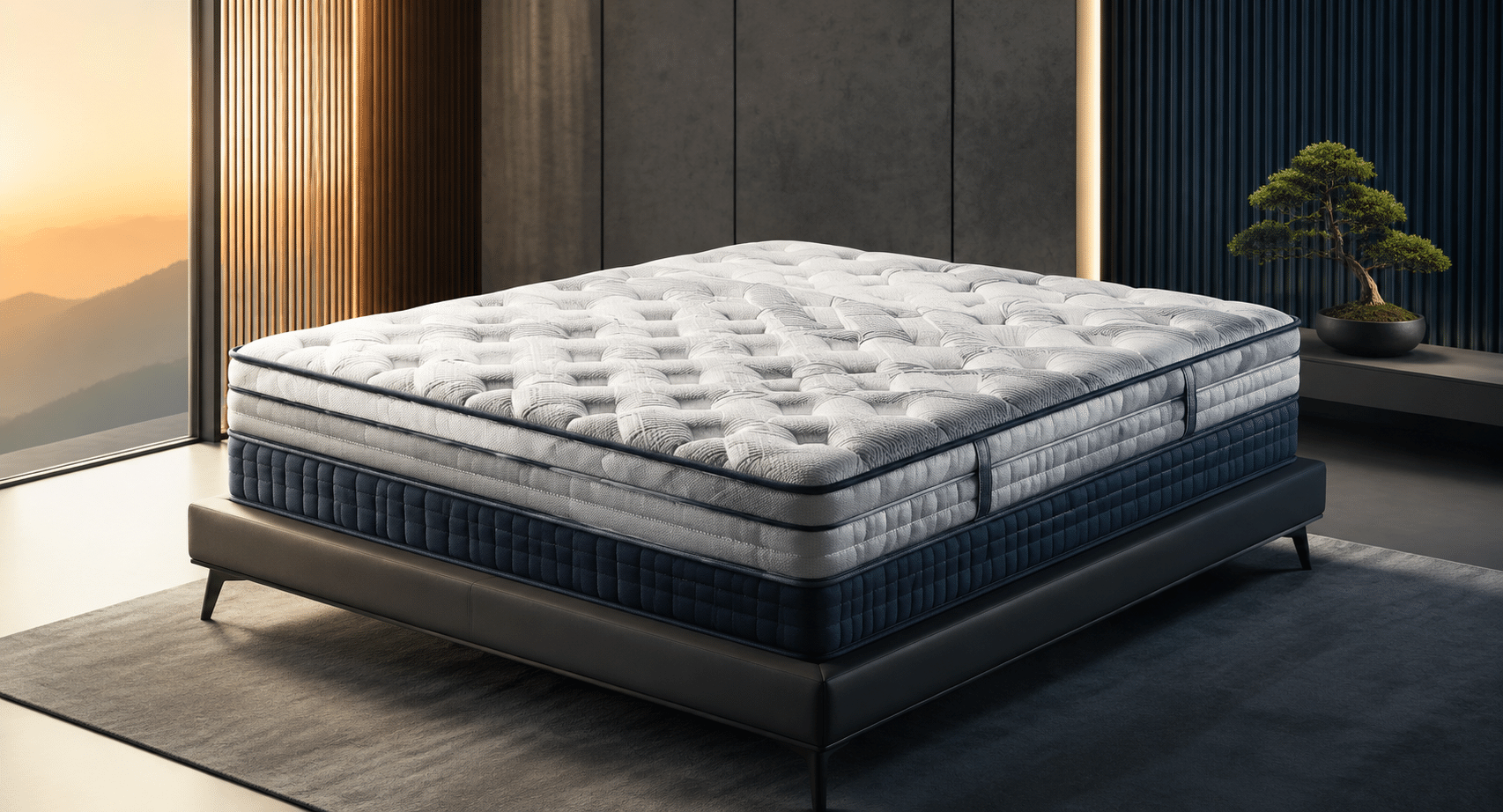
A mattress that has reached the end of its useful life takes up a serious amount of floor space. In most cities it does not fit in a standard trash bin, which is the moment most people realize that 'throwing it away' is not actually an option. The harder question is rarely how to get rid of it, but whether it needs to go at all, and what to look for in the next one so the same disposal headache comes around less often. This guide walks through the signs that a mattress is done, the responsible ways to move it out, and how durability shifts the math on when you have to replace it.
Signs It's Time to Replace Your Mattress
A mattress is asking to be replaced when it shows structural failure, not cosmetic wear: a visible valley where you sleep, mornings that begin with stiffness, allergy symptoms that worsen overnight, or simply seven-plus years of nightly use. Surface stains can be cleaned, but a collapsed support core cannot, which is the real replacement trigger.
The clearest signal is visual. Take the sheets off and look for a permanent dip where your hips and shoulders rest, or an edge that no longer holds weight. If two people share the bed, the failure often shows up as a ridge forming down the middle. Less visible but just as telling is how you feel on waking: lower-back or neck stiffness that fades over the first hour suggests the support layer has softened past where it should be. A third signal is physiological. Mattresses slowly accumulate dust mites, shed skin cells, and moisture, and a morning congestion or allergy pattern that clears during the day can point at the bed rather than the season. As a baseline, most quality mattresses are engineered for roughly seven to ten years of nightly use; past that window the comfort layers have typically taken a permanent set even when the surface still looks fine.
Disposal Options: Donate, Recycle, or Bulk Pickup
Once a mattress is genuinely done, three responsible paths remain: donate it if it is still usable, recycle it through a specialist that breaks it into components, or schedule a municipal bulk pickup. Dropping the whole bed into a standard landfill bin is rarely permitted and is the worst outcome for both the curb and the landfill.
Donation works only when the mattress is clean, structurally sound, and free of tears or stains, since charities and shelters screen hard and will refuse anything that looks tired. Recycling is the route most people do not realize they have. A specialist handler unzips the mattress and separates the steel coils, the foam, the latex, and the surface fabric, sending each stream to its own reprocessor. Municipal bulk pickup is the fallback for anything that cannot be donated or fully recycled. Most cities run a scheduled large-item collection, often for a small fee, and a few require the mattress to be wrapped in plastic before it reaches the curb. The mattress recycling guidance from City Services lays out which components can be recovered and how to find a local handler.
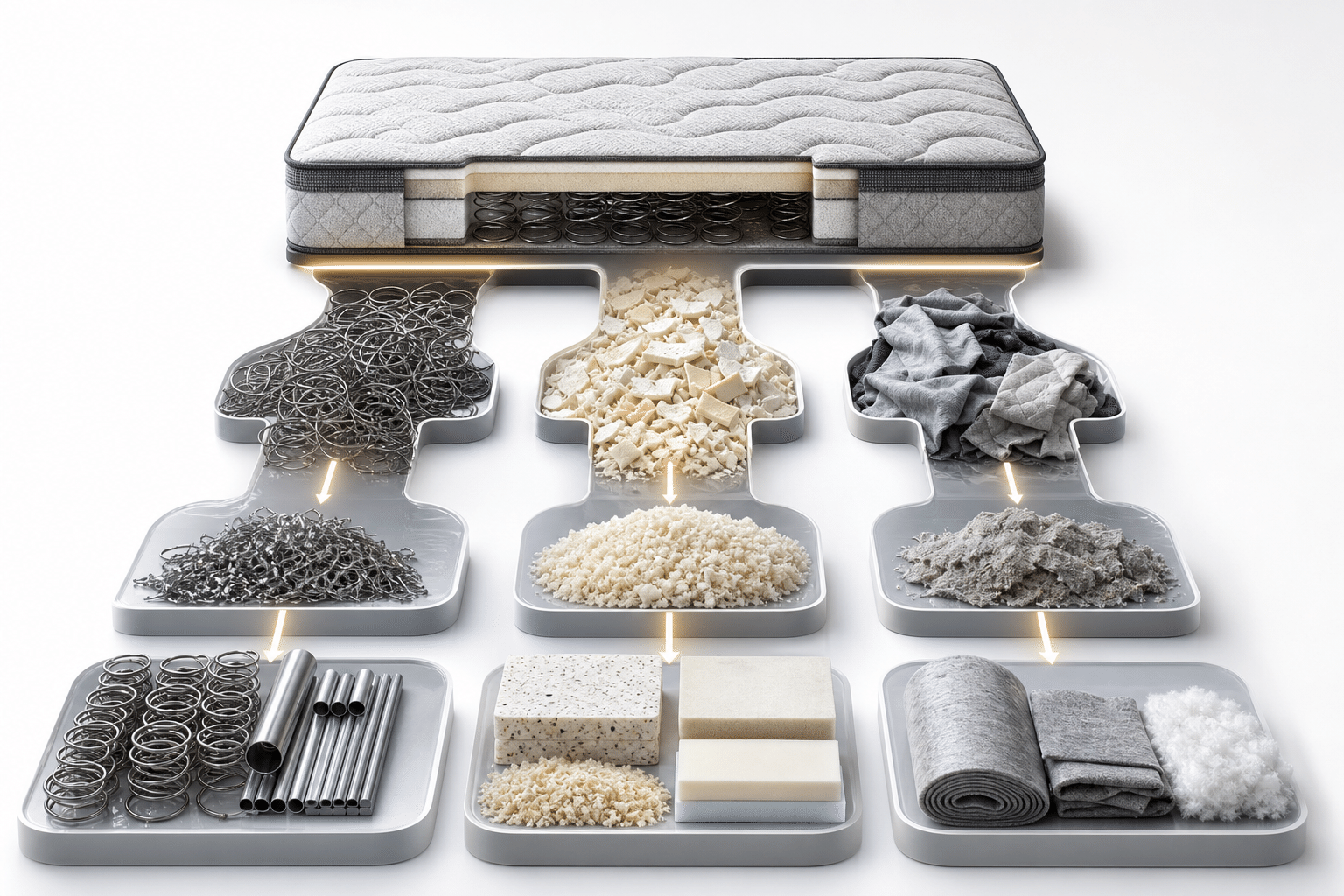
(This image is AI-generated for reference only, not an actual product photo.)
Eco-Friendly Mattress Recycling
Most of a mattress is recyclable by weight, since the steel springs alone account for a large share with foam, latex, and fabric making up the rest. The reason so many still end up in landfill is logistical rather than technical, because few neighborhoods have a nearby recycler and the cost of moving a bulky bed can exceed the value of the recovered material.
A pocketed-coil core is mostly steel, and steel recycles indefinitely without losing strength, so a single queen-size mattress can yield a meaningful amount of recoverable metal. The foam and latex comfort layers are baled and sold to carpet-underlay and padding manufacturers, while the quilted surface fabric is shredded for industrial textiles. The environmental case is straightforward: keeping steel and foam out of landfill avoids both the slow decomposition of synthetic layers, which can take decades, and the wasted embedded energy. The practical case is that a growing number of regions have made whole-mattress landfill disposal illegal or prohibitively expensive precisely because recycling handles the same material far better, with the rising consumer preference for eco-conscious and antimicrobial bedding pushing demand in the same direction.
When to Replace & Choosing a Durable Next Mattress
Disposing of an old mattress is the smaller half of the problem; the larger half is choosing the next one well enough that the disposal cycle does not repeat every few years. DeRUCCI's Century Dream is built on a German AGRO® pocketed-coil core tested to roughly 300,000 compression cycles, the number that decides how often a household has to deal with disposal at all.
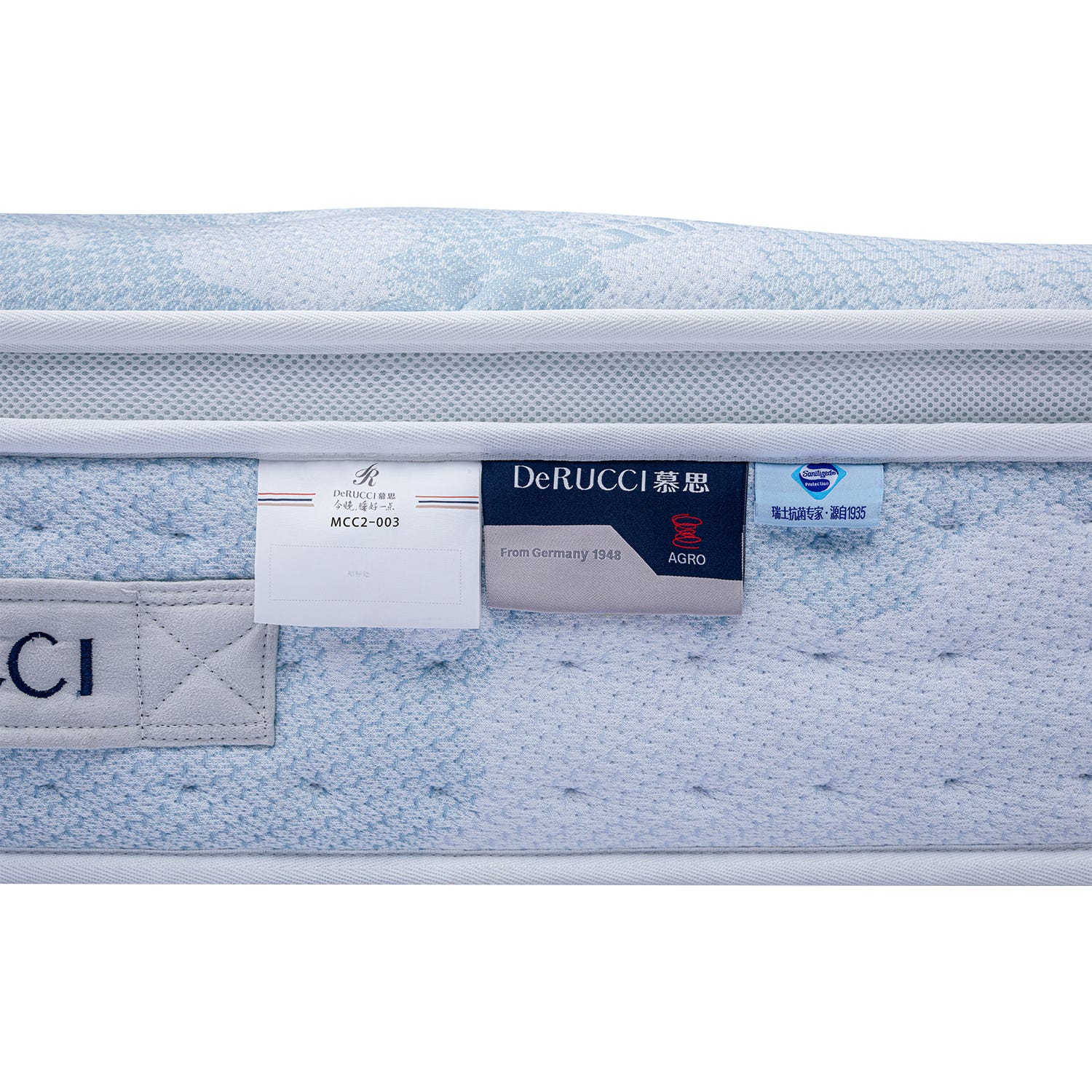
The counter-lever is engineered longevity. DeRUCCI's Century Dream 3D Latex Mattress (MOC1-012) is built on a German AGRO® pocketed-coil core tested to roughly 300,000 compression cycles using an A.TiCu-S titanium-copper alloy, paired with a SANITIZED® foam comfort layer and a VIRASE®-treated surface fabric. That 300,000-cycle figure is the number that matters here, because a night of sleep is, mechanically, a repeated compression. A coil core built to survive that many cycles holds its support well past the point where a softer, less-engineered bed has taken a permanent set. The same longevity premise scales across DeRUCCI's material range: its DEFORM Fine Revo comfort material, co-developed with Japan's Aisin and tested to roughly 480,000 compression cycles, is engineered to the same brief from the resin-foam side. The testing behind these figures runs through DeRUCCI's CNAS-accredited laboratory. The brand became the first in its industry to earn that accreditation, in 2015, which is the internal standard the durability numbers are measured against. To see how that coil-and-comfort-layer logic carries across the range, the Century Dream mattress collection lays out the models in the range.
Quick Replacement Checklist + CTA
Before the old mattress leaves, run a short checklist: confirm it has actually failed rather than just feeling tired, check your local recycling and bulk-pickup rules, and decide what durability standard the next bed has to meet. Most disposal mistakes come from skipping one of those three steps.
Can I throw an old mattress in the regular trash? Almost never. Most municipalities classify a mattress as a bulky item and will not collect it from a standard bin; it needs a scheduled bulk pickup, a recycling drop-off, or a retailer take-back. Putting it out as regular trash usually results in a refused collection or a fine.
Does mattress recycling cost money? Often a small fee, yes. Specialist recyclers typically charge per piece to cover transport and disassembly, though some cities subsidize the cost through bulk-waste programs or a state recycling fund. The fee is usually lower than the fine for illegal dumping.
How often should a mattress really be replaced? Roughly every seven to ten years for a well-built bed, with the support core usually outlasting the comfort layer. Replace sooner if a visible sag or lasting body impression forms, or if you wake with stiffness that fades through the morning. To find a DeRUCCI store and compare durable options built for a longer replacement cycle, use the global store locator.