
 American
( English )
 Singapore ( English )

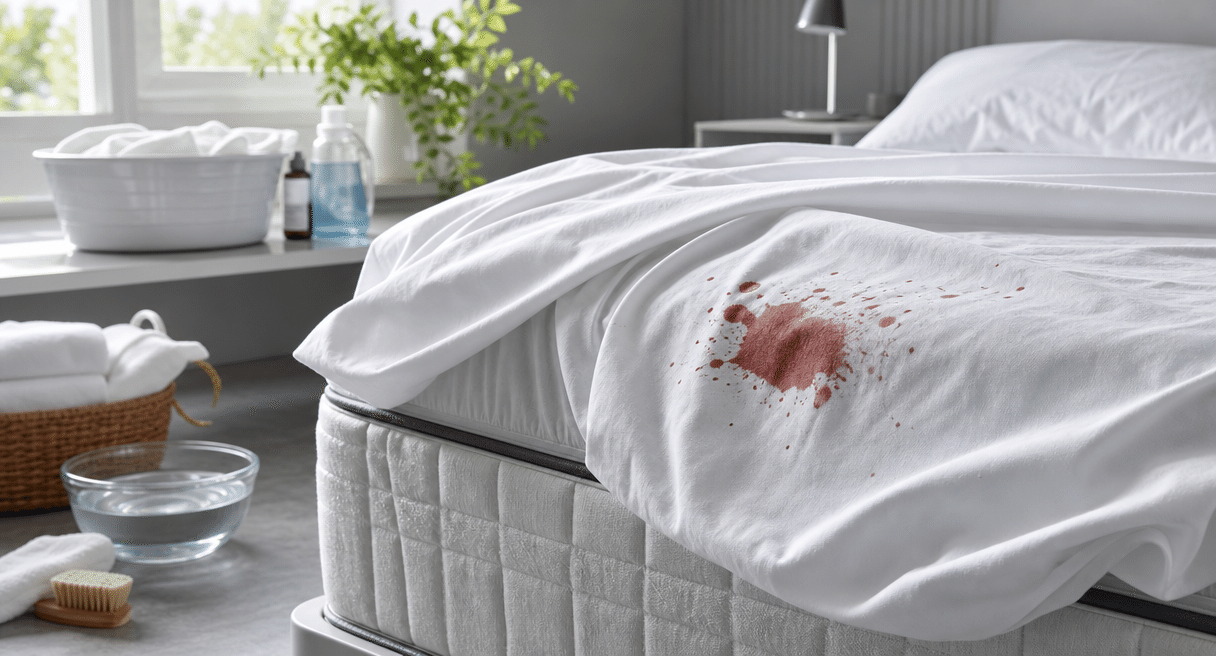
Blood is the stain sleepers dread most on sheets, and for good reason. It is a protein stain, which means the wrong first move can bond it permanently to the fabric. The good news is that almost every fresh blood stain is removable with cold water and a few common household items, provided you act quickly and avoid the steps that set the stain. This guide covers what to gather, the correct order to treat the stain, the mistakes that make it worse, and how the fabric you choose in the first place can lower how often this routine is ever needed.
Act Fast: What You'll Need
Blood comes out most easily in the first minutes, before it dries and before heat has a chance to set the proteins into the fibers, so speed matters more than the specific product. A short kit of cold water, hydrogen peroxide, an enzyme cleaner, mild salt, and clean white cloths is enough to handle nearly every fresh stain on standard sheets.
Gather these before you start, so the treatment is one uninterrupted sequence:
- Cold water: the single most important item; it flushes blood out before it bonds. Never start with hot.
- Hydrogen peroxide (3%): a mild oxidizer that lifts stubborn residue on light-colored and white sheets; test on a hidden seam first for delicate or dark fabrics.
- Enzyme cleaner or enzyme detergent: enzymes break down the proteins in blood directly, which plain soap cannot.
- Plain table salt or saline: a mild paste that draws moisture and residue out of the fibers.
- Clean white cloths or paper towels: white so no dye transfers back into the stain while you work.
A small bowl and a spray bottle help control how much liquid reaches the fabric. Skip the bleach for now. On colored sheets it can cause more visible damage than the original stain.
Step-by-Step Stain Removal
The reliable sequence is to flush with cold water first, apply an enzyme or peroxide treatment to what remains, blot gently from the outside in, and then wash cold, never hot. Each step removes a portion of the stain, and skipping ahead is what leaves a shadow behind, so work the steps in order rather than reaching for the strongest product first.

(This image is AI-generated for reference only, not an actual product photo.)
Work through the stain in this order:
1. Rinse with cold water. Hold the stained area under a cold tap, or blot it with a cloth soaked in cold water, letting the water run through the fabric and away from the stain. Keep the water cold. Anything warm begins to cook the proteins.
2. Apply the enzyme or peroxide treatment. For most sheets, dab a small amount of enzyme detergent directly onto what remains. For stubborn marks on white or light sheets, hydrogen peroxide can be applied sparingly; let it sit for several minutes, watching for gentle fizzing as it works.
3. Blot, never scrub. Press a clean white cloth against the stain from the outside edge inward, lifting the residue into the cloth. Replace the cloth as it picks up color. Scrubbing frays the fibers and pushes the blood deeper.
4. Salt paste for lingering marks. If a shadow remains, make a paste of salt and cold water, spread it thinly, leave it for fifteen to thirty minutes, then rinse with cold water.
5. Wash cold and air-dry. Machine-wash the sheet on a cold cycle with an enzyme detergent, and let it air-dry or use a no-heat setting. Do not put it in a hot dryer until you are certain the stain is gone. Heat from the dryer is the step that sets any remaining trace for good.
Common Mistakes That Set the Stain
Most permanent blood stains are the result of a single wrong step rather than a hard stain, because hot water cooks the proteins, scrubbing drives the residue deeper, and bleach damages the dye and fiber long before it removes the blood. Knowing what not to do matters as much as knowing the correct sequence.
The errors that turn a removable mark into a permanent one:
- Starting with hot water: heat bonds the proteins to the fabric. If you only remember one rule, make it cold water first.
- Scrubbing or rubbing hard: friction pushes blood into the weave and damages the fibers, widening the visible mark. Blot instead.
- Waiting until the stain dries: fresh blood lifts out easily; dried blood needs a longer soak and often leaves a faint shadow.
- Reaching for bleach first: on colored sheets, bleach removes the dye before it removes the stain, leaving a lighter patch that is more obvious than the original mark.
- Using a hot dryer before checking: if any trace survives the wash, the dryer's heat locks it in permanently. Always air-dry first and confirm.
Choose Easy-Care Fabrics to Prevent Stubborn Stains
The cheapest stain to deal with is the one a fabric never fully absorbs, so once the cleaning is finished the more durable lever is choosing a material whose open structure resists trapping residues deep in its fibers. DeRUCCI's 3D-Plus spacer fabric uses an X-shaped fiber cross-section to build an open lattice that holds residues on top of the structure rather than sinking them in.
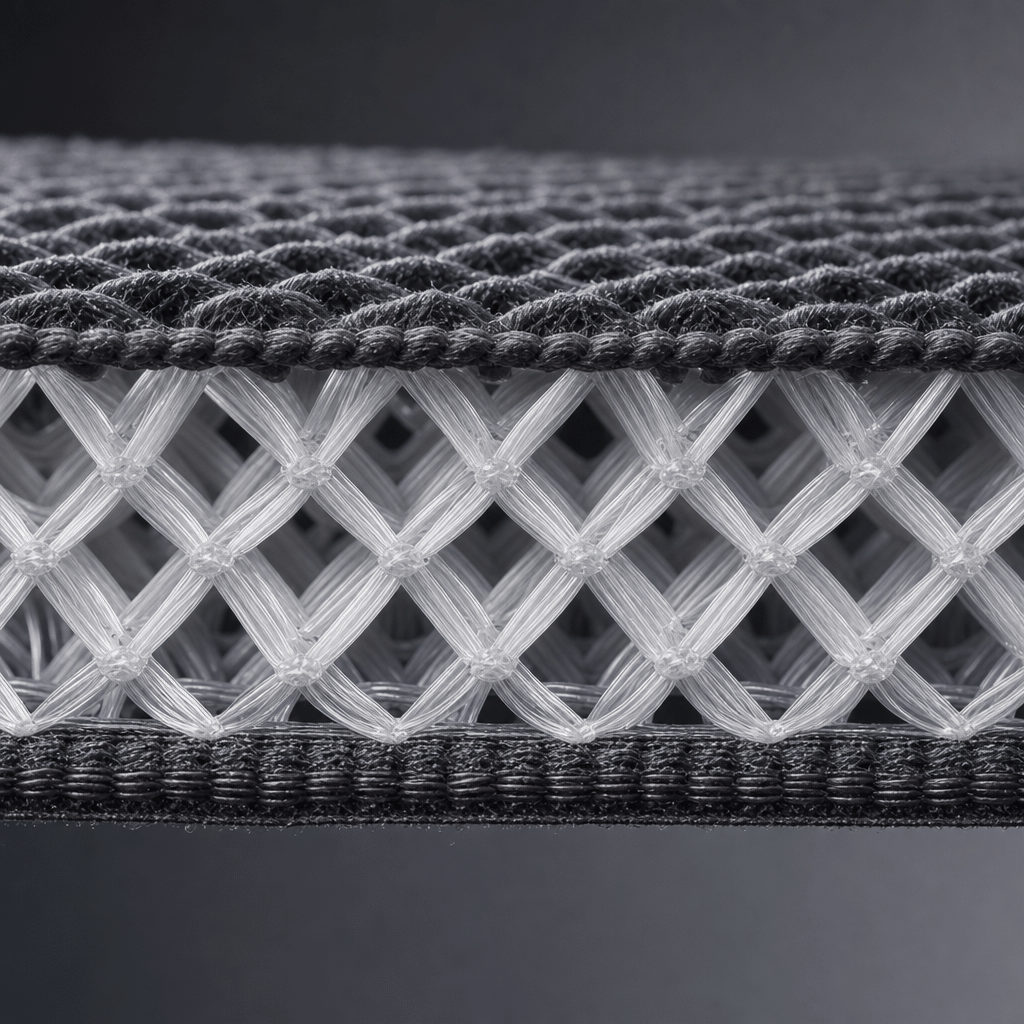
(This image is AI-generated for reference only, not an actual product photo.)
This is where the structure of the fabric does real work. Conventional flat-woven sheets hold residues close against the skin and against the fibers themselves, which is why even a well-treated stain can leave a faint shadow. DeRUCCI's 3D-Plus spacer fabric takes a different approach. Its X-shaped fiber cross-section builds an open three-dimensional lattice that, according to the company's official materials, provides over 1.4 million support points and improves airflow by roughly 4.4 times compared with conventional flat fabric. That open structure means fewer residues are pressed flat into the weave in the first place, and what does land on the surface is easier to lift because it sits on top of the structure rather than sinking into it.
The same logic scales up to the whole sleep surface. According to the company's official materials, DeRUCCI introduced the industry's first fully washable 3D mattress in 2007, building on the idea that a material engineered for airflow and drainage is fundamentally easier to care for over years of use. The DeRUCCI mattress materials guide explains how these spacer and functional fabrics are specified across the range, and the DeRUCCI bedroom collection shows how sheeting and bedding choices fit into the wider sleep setup. Choosing an easy-care fabric does not eliminate accidents. It raises the chance that the routine above ends with a clean sheet rather than a permanent reminder.
Fabric Care Tips + CTA
A few simple habits extend the life of any sheet and keep small accidents from becoming permanent: treat stains immediately, wash in cold water, avoid prolonged sun exposure on damp fabric, and never put a sheet in a hot dryer until you are sure the stain is gone. Speed matters more than the specific product, and cold water is the default for any protein stain.
A short routine to keep in mind:
- Treat any stain within the first hour: speed matters more than the specific product used.
- Default to cold water for any protein or body-fluid stain; reserve warm washes for routine cleaning of already-stain-free sheets.
- Air-dry first after treating a stain, and only use heat once you have confirmed it is fully gone.
- Rotate sheets weekly so no single set carries the full wear, and replace a sheet once the fibers thin or pill.
For sleepers weighing how a fabric's construction affects both comfort and day-to-day care, understanding how engineered spacer materials change the feel and maintenance of a bed is a more useful next step than chasing the highest thread count alone. To feel how engineered spacer fabrics change the feel and care of a bed, find a global store and compare easy-care sheeting options.