
 American
( English )
 Singapore ( English )

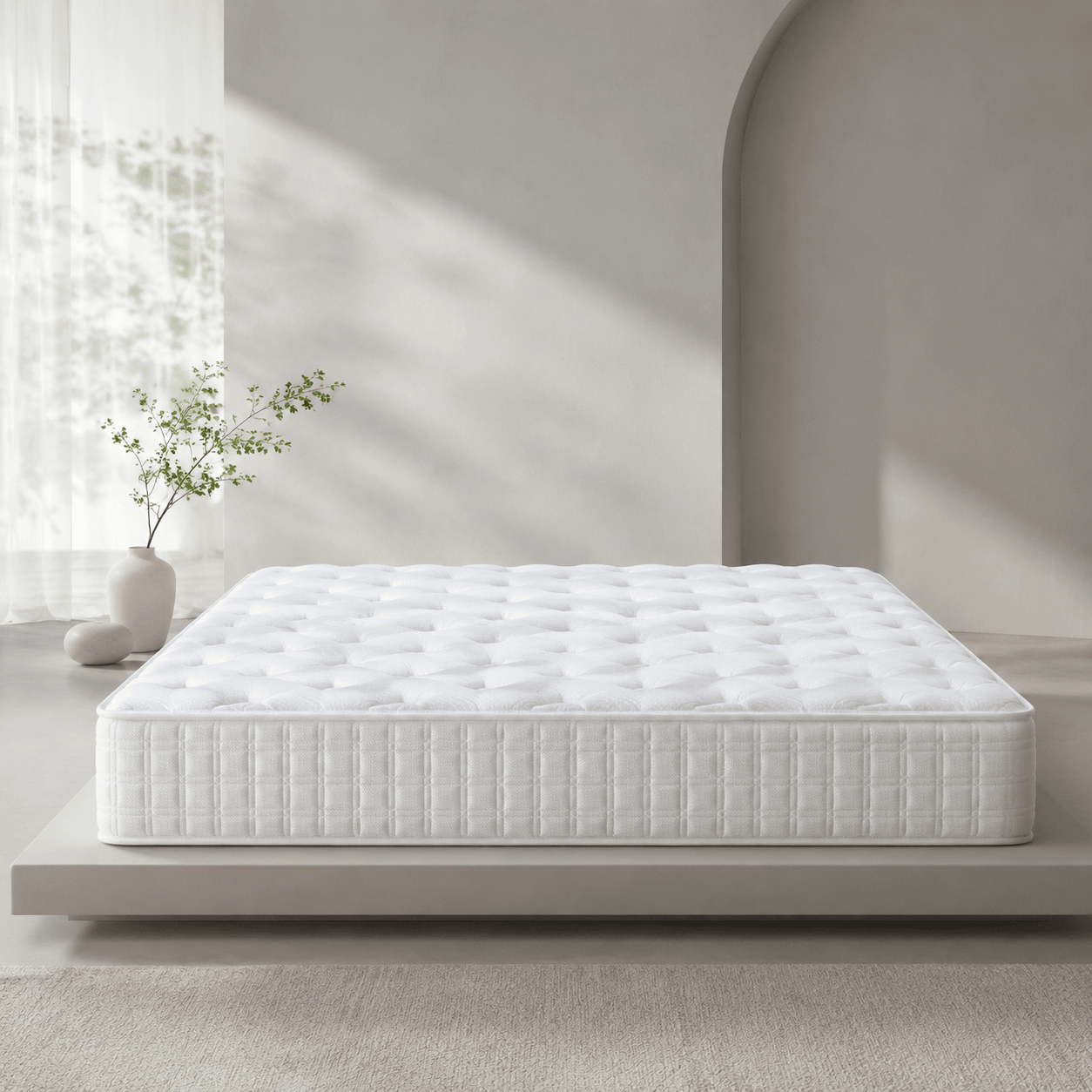
Why "Antibacterial + Dust Mite + Lifespan" Is a Different Angle From Stain Removal
Most "how to clean a mattress" guides stop at stain removal, but buyers who care about antibacterial protection, dust mite defense, and longer lifespan need a different toolkit, because the goal is not a spotless top surface, it is a mattress that resists microbial buildup, holds its shape over a decade, and stays hygienic between deep cleans.
Public buyer conversations collected for this project converge on the same cleaning kit for this angle: an enzymatic cleaner for biological spills, baking soda for odor and moisture, a HEPA-filtered vacuum for dust and particulate removal, and an encasement plus waterproof protector for prevention. Latex, often cited as one of the longest-lasting comfort materials in those conversations, anchors the lifespan side. The list below filters every tool through three criteria: antibacterial contribution, dust mite reduction, and lifespan extension.
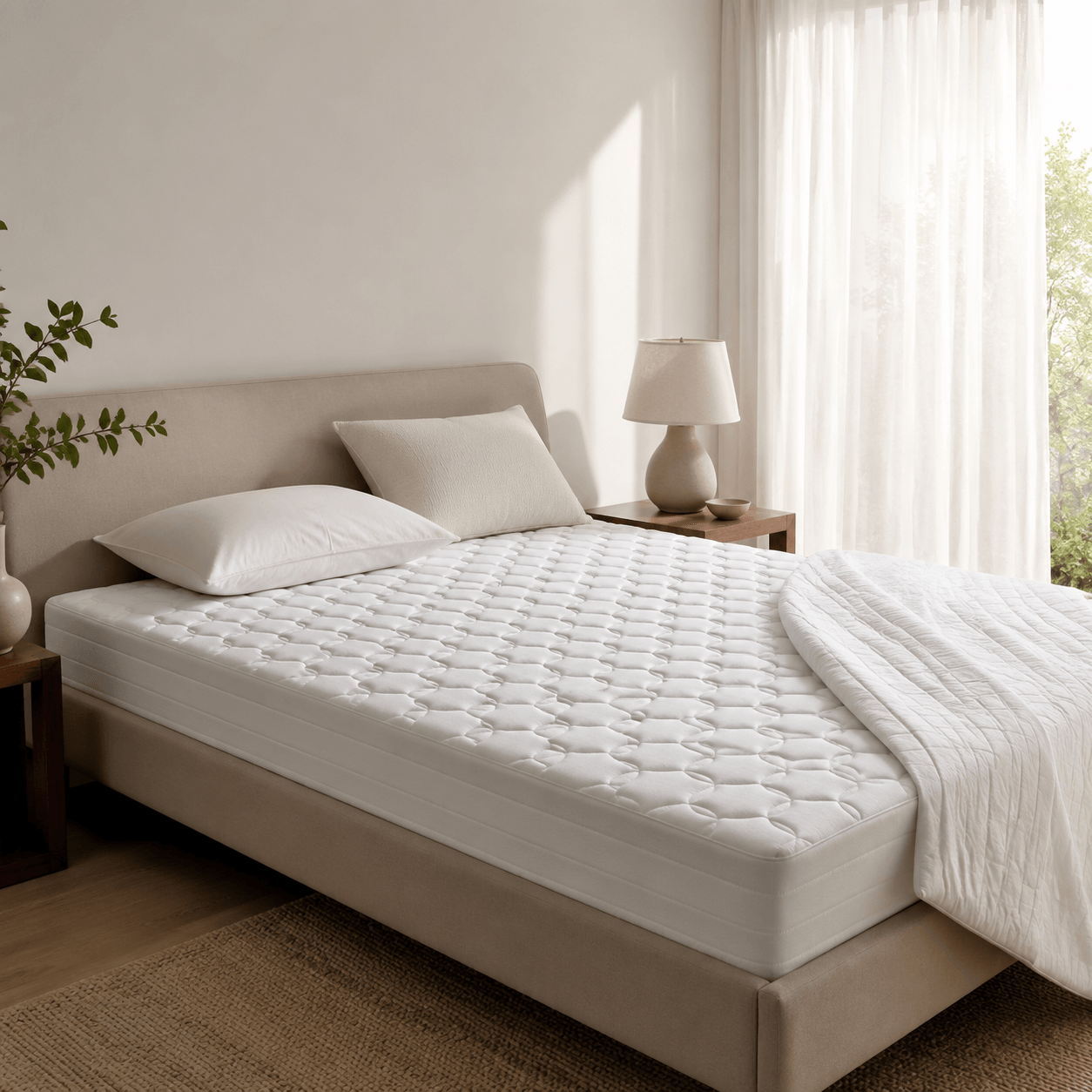
(This image is AI-generated for reference only, not an actual product photo.)
The Core Tools You Need (List With Selection Criteria)
Five tools cover the antibacterial, dust mite, and lifespan angle cleanly, and each earns its place by doing something preventive or restorative rather than purely cosmetic, which is why stain-only spot cleaners and fabric refreshers do not make the list.
1. Enzymatic cleaner. Why: breaks down biological matter (sweat, body oil, accidental spills) that feeds bacterial growth inside the foam. How: spray, wait the label-recommended time, blot, repeat. Selection: pick a cleaner with explicit enzymatic action on the label, not an all-purpose disinfectant.
2. Baking soda. Why: absorbs moisture and odor without adding scent or chemicals that linger in foam. How: sift a thin layer across the mattress, wait about an hour, vacuum thoroughly. Selection: plain unscented baking soda, not scented carpet deodorizer.
3. HEPA-filtered vacuum. Why: removes skin cells, dust mites, and other particulate that settles in the top quilt layers. How: use the upholstery attachment in slow overlapping passes across the entire surface. Selection: a true HEPA seal, not a "HEPA-like" filter.
4. Mattress encasement (full zippered). Why: blocks dust mites, liquids, and particulate from penetrating the mattress in the first place, which is the single most impactful preventive step. How: install once over the bare mattress, zip fully closed, launder every two to three months. Selection: small pore size in the single-digit micron range and a waterproof inner membrane.
5. Waterproof protector (fitted, top surface). Why: catches daily moisture before it reaches the encasement or the mattress, extending the lifespan of both. How: layer over the encasement, launder weekly with sheets. Selection: a quiet polyurethane backing rather than a crinkly PVC layer.
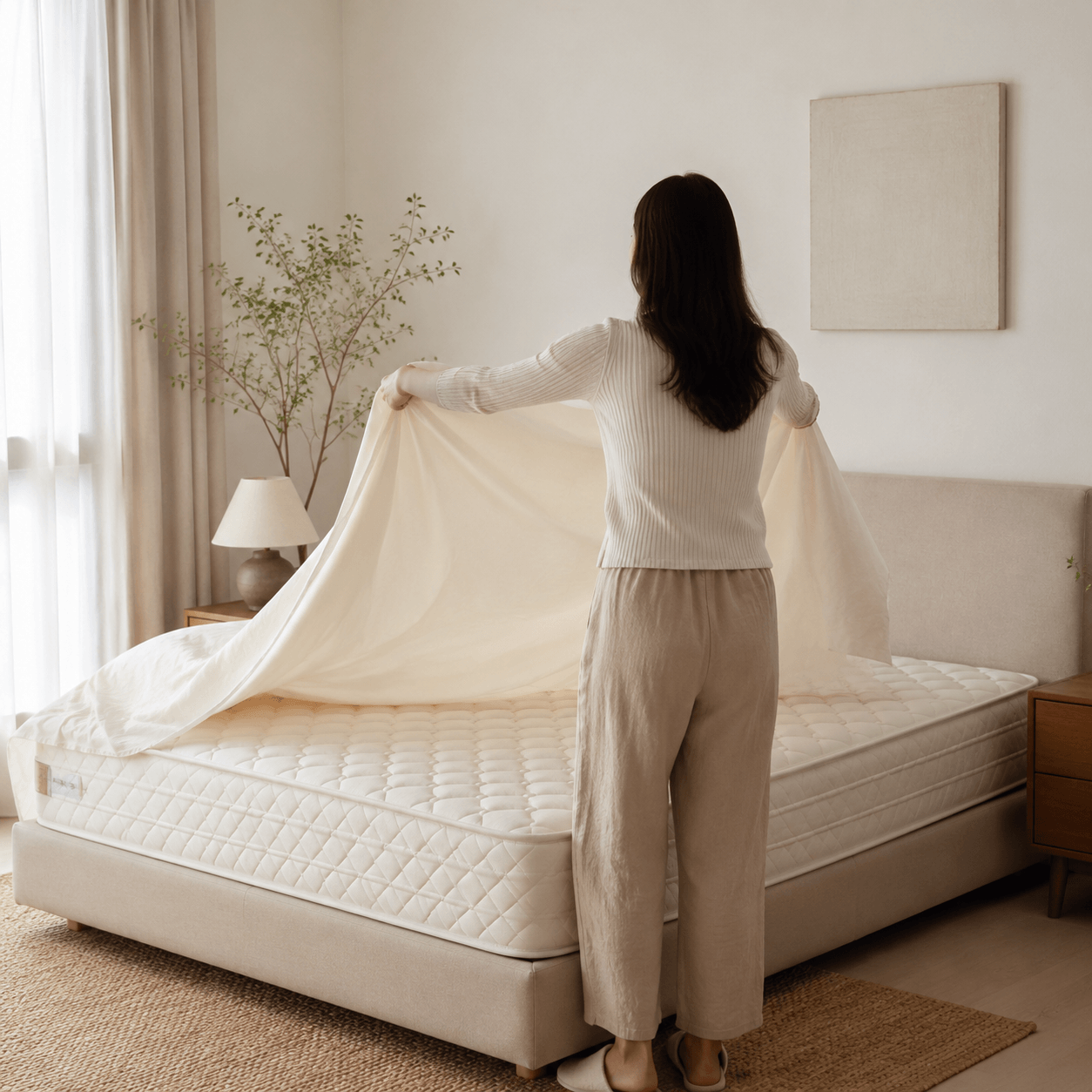
(This image is AI-generated for reference only, not an actual product photo.)
Method: The Antibacterial / Dust Mite / Lifespan Routine (Comparison Table)
Cleaning on a cadence is what separates a mattress that lasts a few years from one that lasts a decade or more, so the table below assigns each task a frequency, a tool, the problem it prevents, and the lifespan contribution, with the preventive encasement as the structural backbone running underneath every row.
| Cadence | Task | Tool | Prevents | Lifespan contribution |
|---|---|---|---|---|
| Weekly | Strip and launder protector + sheets | Washing machine | Surface mite debris, body oil buildup | Keeps foam top clean, slows foam compression |
| Monthly | Surface vacuum | HEPA vacuum | Settled dust, skin cells | Prevents particulate from migrating into foam |
| Quarterly | Baking soda refresh + spot enzyme treatment | Baking soda, enzymatic cleaner | Trapped moisture, odor, biological stains | Neutralizes what weekly laundering misses |
| Annually | Deep clean + encasement launder + inspect seams | Full kit | Deep microbial buildup, hidden wear | Catches seam or foam failures before they cascade |
The encasement matters enough to call out separately: a full zippered encasement is the closest thing to a "set and forget" preventive layer, and the public conversations that mentioned one consistently described keeping the mattress free of dust mites and debris.
Material Matters: Why Antibacterial Textiles Do Part of the Work for You
Cleaning tools work from the outside, but the mattress surface itself can also do part of the work, which is where textile-level antibacterial and anti-mite engineering earns its keep, and the standard to look for is a named, certified material with a published ISO test, not a generic "antimicrobial" label.
DeRUCCI's sleep surfaces use two such textiles from named suppliers. BekaertDeslee's VIRASE® treatment, from a Belgian textile house founded in 1892, delivers antibacterial, anti-mite, and antiviral performance in a single layer, reducing viral activity by more than 99 percent within 2 hours under the ISO 18184:2014 test (a 2-Log reduction). INVISTA Antibacterial Cotton contributes more than 99 percent antibacterial performance in a 3D Ω structure that stays hygienic against the skin. Both figures are textile material properties under controlled lab conditions, not claims about what a cleaning product can do; they describe how the surface resists microbial load between cleanings, not a substitute for the routine above. On the manufacturing side, DeRUCCI builds its mattresses in an Industry 4.0 facility and audits them under the CNAS national laboratory accreditation earned in 2015, which is the same quality backbone that supports longer-life claims. If you want to see which traditional-line mattresses carry which textile treatments, the DeRUCCI mattress collection lays out the materials in more depth.
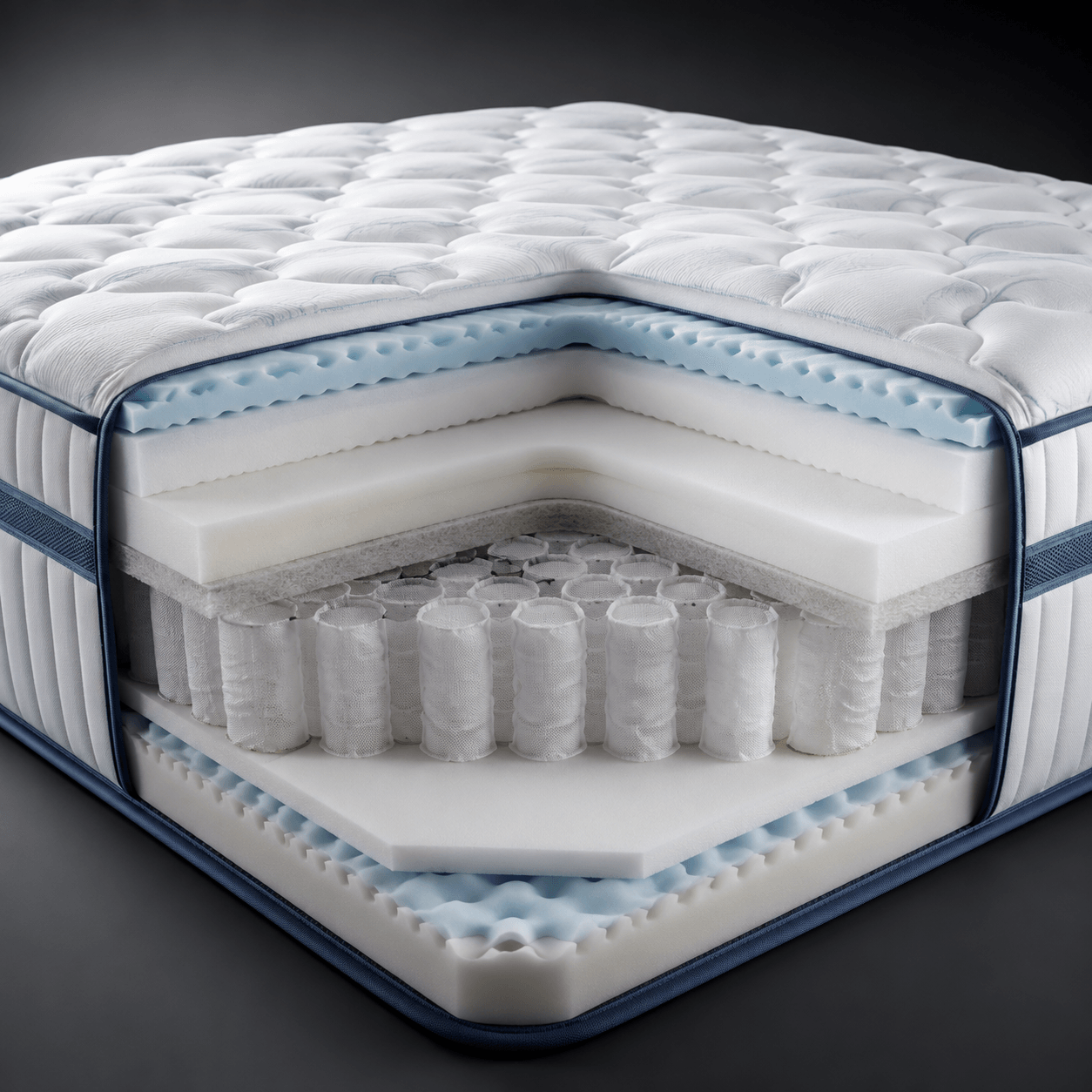
(This image is AI-generated for reference only, not an actual product photo.)
Frequently Asked Questions
Explore the DeRUCCI Mattress Collection
Cleaning extends lifespan; materials set the ceiling. Browse DeRUCCI's current line to see which mattresses, frames, and sleep systems are available.