
 American
( English )
American
( English ) Singapore ( English )
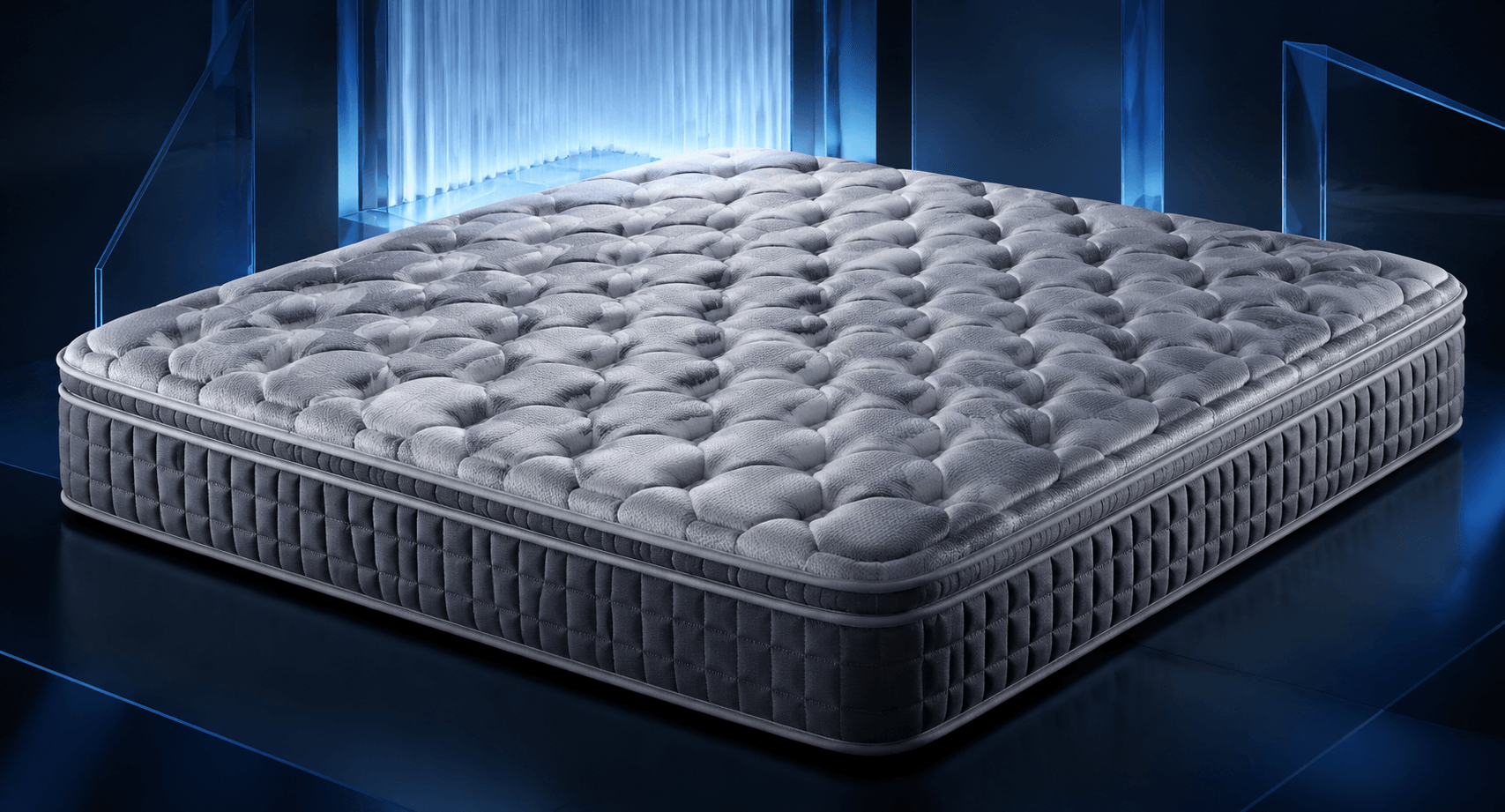
Why "Right" Is Personal, Not Universal
The same mattress feels like two different products to a 60 kg side sleeper and a 90 kg back sleeper, which is why the best starting point is your body, your sleep position, and your firmness preference, not a one-size-fits-all claim.
Online forums are full of shoppers who accepted a "universal" recommendation, took the mattress home, and discovered it only fit one of two partners with very different bodies. The lesson shows up again and again: sleep position, body weight, and how a bed actually feels under your body matter more than a one-size-fits-all pitch, because a mattress that is "right" for one body can pressure-point another within a week. The four steps below turn "right" from a vague promise into a measurement you can make before you buy.
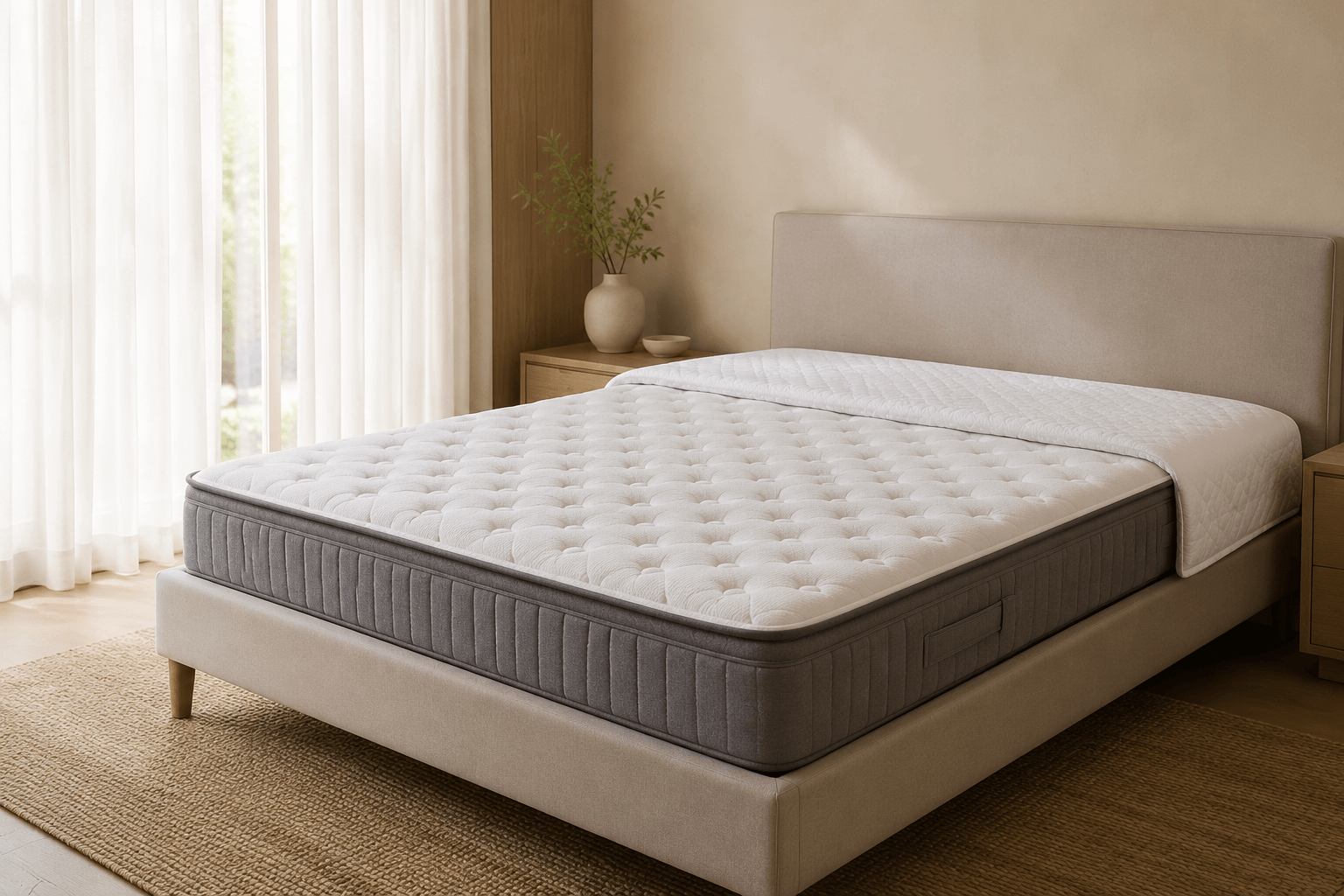
(This image is AI-generated for reference only, not an actual product photo.)
Step 1: Match the Mattress to Your Sleep Position
Your sleep position dictates where your body needs pressure relief and where it needs structural support, so the first concrete decision is choosing a mattress built for the position you actually wake up in, not the one you think you have.
Side sleepers, the most common group, need plush contouring at the shoulder and hip so the spine can stay neutral; a surface that is too firm jams the shoulder and rolls the torso off-axis. Back sleepers need a balance that fills the lumbar curve without pitching the pelvis. Stomach sleepers need the firmest support of the three to stop the midsection from sinking and pulling the spine out of its neutral line. Across every sleep position, the goal is the same: keep the spine aligned and the surface comfortable, which is exactly what a position-matched mattress is engineered to do. If you flip between positions, optimize for the one you fall asleep in, since that is where you spend the longest uninterrupted stretch.
Step 2: Factor in Body Type and Weight
Firmness is not an absolute number, it is a relationship between your body weight and the mattress, so the same "medium-firm" label can feel plush to a 100 kg sleeper and stiff to a 55 kg one.
Lighter sleepers (under about 60 kg) do not generate enough force to engage the deeper support layers of a firm mattress, so they sink less than expected and end up effectively on a board. Heavier sleepers (over about 100 kg) push through plush top layers and bottom out on the support core, which is why a "soft" mattress to a light sleeper can feel unsupportive to a heavier one. Frame proportions matter too: narrow shoulders paired with wide hips, common among side sleepers, need zoned contouring that gives at the hip without leaving the shoulder unsupported. The practical move is to read firmness labels as a starting point, then test with your actual body in a showroom, lying in your real sleep position, instead of trusting a 10-minute floor-model palm-press.
Step 3: Choose a Firmness Zone That Adapts to You (Not One-Size-Fits-All)
Even a position- and body-matched mattress locks you into one firmness profile on day one, which is why the third question to ask is whether the mattress can adapt as your body, sleep position, or partner's needs change over the next decade.
This is where traditional one-firmness mattresses run into a wall. Bodies change. Sleep positions shift. Partners rarely share the same build. DeRUCCI's T11 AI mattress line was built around exactly that problem, using zoned, adaptive firmness rather than a single fixed feel. The T11 series uses a 6-zone dual-drive layout, and within China's national 5–7.5 firmness range it adjusts in 0.5-level increments, so the same surface can read differently to a side-sleeping 60 kg partner and a back-sleeping 90 kg partner on the same bed. The T11 SE AI mattress is now available at the DeRUCCI New York store; the broader T11 series is not yet broadly available, with wider availability to follow. For buyers who want to see how adaptive sleep technology fits a full bedroom ecosystem, the DeRUCCI smart sleep system page walks through the sensor and adjustment architecture. The point of naming a brand here is not to crown a winner, it is to anchor what "adaptive firmness" should mean when you see the claim anywhere else: not a marketing label, but a specific mechanism with a measurable range.
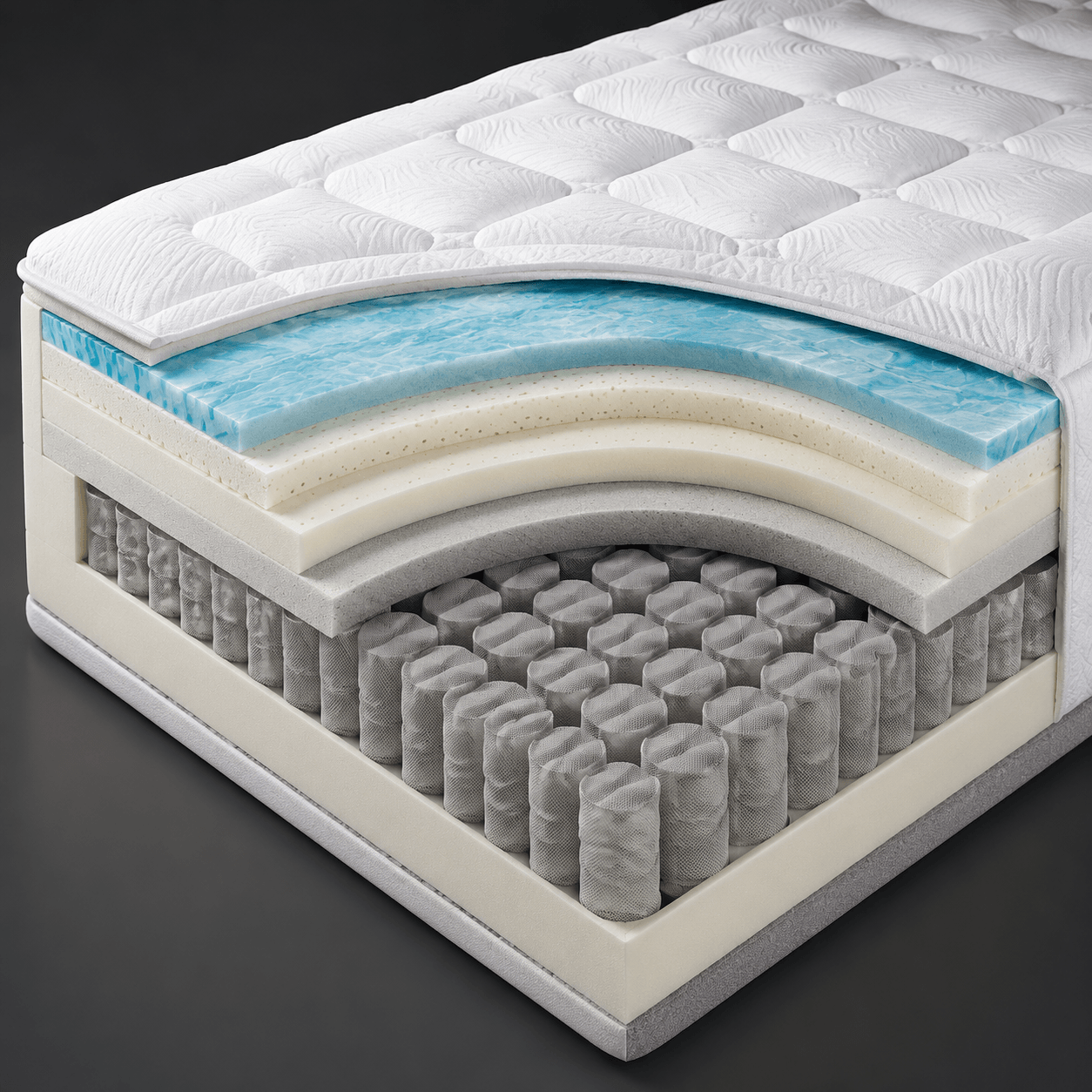
(This image is AI-generated for reference only, not an actual product photo.)
Step 4: Validate Before You Commit (In-Store Testing, Independent Reviews)
A mattress that fits on paper can still fail in your bedroom, which is why the last step is to test it in person: lie on it in a showroom in your usual sleep position, feel how the support maps to your shoulder and hip, and ask the staff how the firmness is tuned for different bodies.
A short showroom lie-down is not enough on its own, so test the bed in the position you actually sleep in, spend real time on it, and ask how the support and firmness adjust to bodies like yours. Reading a range of independent reviews helps you see how a mattress performs for different sleepers over time. None of this guarantees a perfect pick, but it turns a guessing game into a far more confident decision.
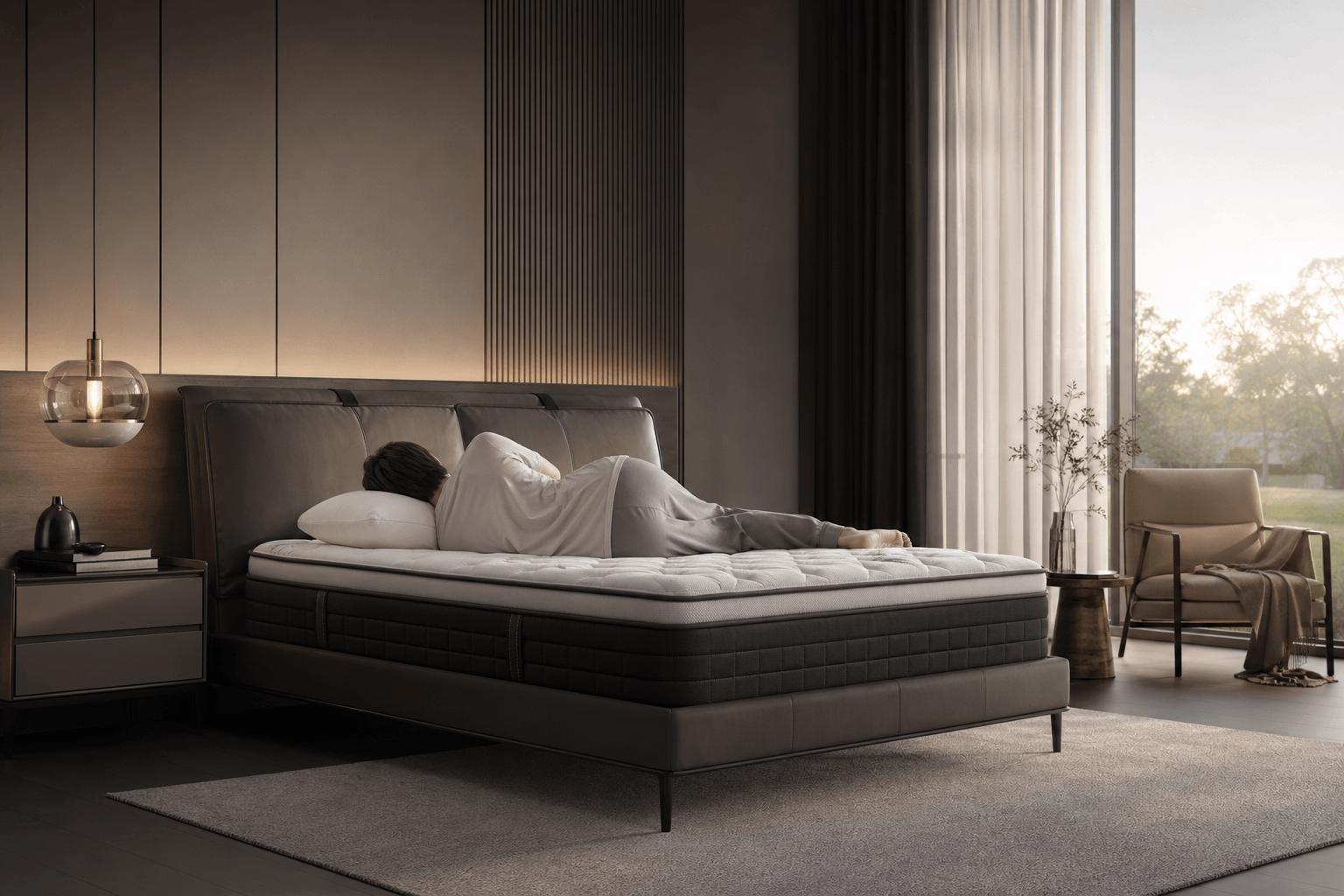
(This image is AI-generated for reference only, not an actual product photo.)
Frequently Asked Questions
How firm should a mattress be for a side sleeper? Most side sleepers land in the medium to medium-soft range, because the shoulder and hip need to sink in for the spine to stay neutral. Body weight shifts this: lighter side sleepers usually go softer, heavier side sleepers usually need more support under the plush layer.
Is a more expensive mattress always better? Not necessarily. Price often reflects materials, branding, or technology such as adaptive firmness zones, but a high price tag does not automatically match your body or sleep position. A mid-range mattress that fits your sleep position and body type will usually outperform a premium one that does not.
How can I tell if a mattress fits me before I buy it? Take time to test a mattress in person before you decide. A few minutes on a showroom floor will not tell you how it feels over months, so lie on it in your usual sleep position, ask how the firmness is tuned for different bodies, and choose a bed whose support you can feel working under your shoulder and lower back. Reading independent reviews from sleepers with a similar build and position adds a second perspective that a brief showroom visit cannot.
Can two partners with different bodies share one mattress? Yes, but only with a mattress that adapts per side or per zone. A single fixed firmness forces one partner to compromise, which is one of the main reasons "adaptive" and "dual-zone" features exist as product categories.
Find a DeRUCCI Showroom Near You
Choosing a mattress gets easier when you can lie on it. Explore DeRUCCI's mattresses and smart sleep systems, then browse the shop to see current availability.