
 American
( English )
 Singapore ( English )


Step 1: Set a Consistent Sleep Schedule
The single most effective way to improve sleep is also the least exciting: go to bed and wake up at the same time every day, including weekends, so your body's internal clock settles into a rhythm it can rely on.
Your circadian rhythm thrives on predictability. When bedtime and wake time stay steady, your body learns when to release melatonin and when to wind down, which makes falling asleep faster and waking easier, without needing willpower at either end. A consistent schedule also stabilizes the deep-sleep window that sits early in the night, the stage most easily lost to irregular timing. Pick a realistic wake time you can hold seven days a week and work backward to a bedtime that allows for the seven to nine hours most adults need.
Step 2: Create a Cool, Dark & Quiet Environment
Your bedroom should feel like a cave, cool, dark, and quiet, because those three conditions are exactly what let your core temperature drop, melatonin rise, and deep sleep take over.
Aim for a room temperature around 60–67°F (15–19°C), block light with blackout curtains or a mask, and reduce noise with earplugs or a white-noise machine if your environment is loud. The payoff is immediate: cooler, darker, quieter rooms lift deep sleep and reduce the number of times you surface between cycles. These daily sleep-hygiene habits have a clear, well-documented positive effect on how well you sleep.
Step 3: Avoid the Common Sleep Disruptors
A short list of everyday habits quietly fragments sleep more than people realize, caffeine after mid-afternoon, alcohol before bed, late heavy meals, and screen light in the final hour.
Caffeine has a long tail and can stay active for hours, so cutting it off in the early afternoon protects deep sleep. Alcohol may help you fall asleep faster but fragments the second half of the night, and late heavy meals force digestion when the body is trying to rest. Blue light from phones and tablets suppresses melatonin, so dimming screens an hour before bed, or switching to warm light, lets the sleep signal build naturally.
Step 4: Build a Calm Pre-Bed Wind-Down
A predictable wind-down routine in the hour before bed tells the nervous system it is safe to shift out of "go" mode, which is why a fixed sequence of calming activities works better than any single trick.
Pick one or two anchors, reading, slow breathing, light stretching, and repeat them in the same order each night so the routine itself becomes the cue. Keep the lights low and the screens away. Over a week or two, the body starts releasing tension on cue, and falling asleep feels less like an effort and more like a handoff.
Step 5: Track What's Working: and Adjust
Because most of sleep is invisible, the only way to know whether these changes are working is to measure them, and contact-free tracking built into the mattress can quantify sleep stages without the wearable most people stop using within weeks.
DeRUCCI builds that kind of contact-free tracking into its mattresses. The T11+ AI smart mattress carries a third-generation piezoelectric ceramic sensor array that detects heart rate with 97% accuracy, letting it track deep sleep, light sleep, REM, and movement through the night without anything worn on the body. That sensing layer turns each night into a readable report so you can see whether a change actually moved the number. To see how DeRUCCI approaches sleep monitoring, visit the DeRUCCI smart sleep system page, or explore the T11 series AI mattress. (The T11 SE AI mattress is now available at the DeRUCCI New York store.)
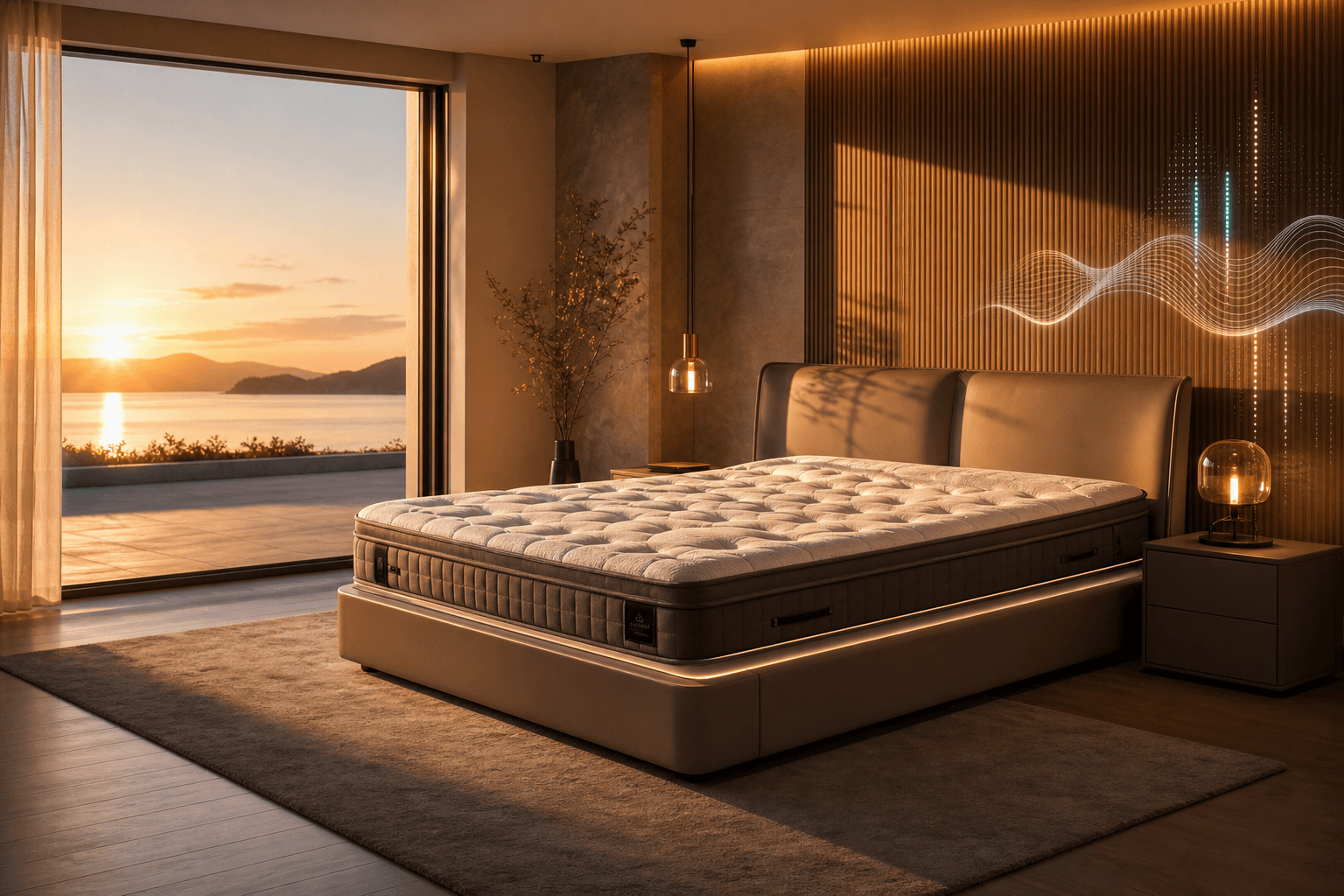
(This image is AI-generated for reference only, not an actual product photo.)
Frequently Asked Questions
What is the fastest way to improve sleep? Locking in a consistent sleep and wake time is the fastest and most reliable change. Most people feel a difference within a few days once their circadian rhythm settles into a predictable pattern.
How can I improve my sleep naturally? Stick to a steady schedule, keep the room cool, dark, and quiet, cut evening caffeine and alcohol, dim screens before bed, and use a mattress that relieves pressure and regulates temperature. These sleep-hygiene habits help most people without any medication.
How long does it take to see better sleep? Schedule and environment changes often show results within a few days to a week. Deeper changes, like a new mattress or tracking-informed adjustments, compound over a few weeks as the body adapts.
Can tracking sleep actually help? Yes. Turning sleep into a readable number lets you see which changes work and which do not, so you stop guessing. Contact-free tracking tends to be worn more consistently than wrist wearables, which matters for accurate trends.
Find a DeRUCCI Showroom Near You
Better sleep is easier to choose in person. Explore DeRUCCI's mattresses and smart sleep systems, then find a store and check global showroom addresses to experience them firsthand.