
 American
( English )
 Singapore ( English )


DeRUCCI Brand History: 22 Years of Sleep Trust
If a new bed still leaves sleep feeling uncertain, the issue is rarely solved by checking whether the mattress looks expensive in a showroom. The more useful question is whether the company behind it has spent enough time studying how people sleep in real homes, under real routines, and across different body types. DeRUCCI brand history matters for that reason. Trust in a sleep brand is built slowly, through research habits, product testing, public records, service access, and products that keep being revised after the first sale.
Many mattress companies begin with springs, foam layers, fabrics, and price points. Since 2004, DeRUCCI has positioned its work differently: start with the body, then build the sleep system around support, pressure relief, and repeatable comfort. In practical terms, good sleep design should reduce how much the sleeper has to compensate during the night. The product should do its work quietly, without asking people to wake up, adjust, and try again.
Executive Summary
DeRUCCI brand history is best read as a record of trust signals around one consumer concern: whether a bed can support better sleep over years of use. The stronger evidence comes from founding intent, research activity, CNAS lab certification, sports recovery partnerships, public listing records, patents, and regional product availability.
DeRUCCI was founded in 2004 by Lin Jiyong and Wang Bingkun with a direct belief: a mattress affects roughly one third of a person’s life, so it should be designed with more discipline than a short-cycle household product. That idea remains close to the brand’s stated mission, Helping People Sleep Better.
The company’s history also shows how a sleep brand becomes easier to examine over time. In 2010, the Sydney flagship store put the brand in front of consumers outside its home market. In 2013, the Sleep White Paper program began tracking sleep issues on a recurring basis. In 2015, CNAS national laboratory certification added a recognized testing reference. In 2018, the Australian Open partnership connected sleep with recovery needs under performance pressure. On June 23, 2022, the Shenzhen Stock Exchange listing under 001323.SZ added public-company disclosure.
For shoppers, the practical takeaway is straightforward. A mattress brand that asks for long-term trust should leave records that can be checked: public company filings, third-party lab signals, patents, research reports, and stores where people can compare comfort and service in person.
Core Insights
A brand’s age is useful only when the years contain verifiable work. DeRUCCI’s stronger trust signals come from the way its history connects to consumer value: ergonomic support, international market exposure, annual sleep research, recognized testing standards, sports recovery use cases, public disclosure, and repeated product development.

Five signals are especially useful when judging DeRUCCI brand history:
- Founding idea: The brand began with sleep and body support as the main problem, rather than treating material cost as the whole product story.
- Research habit: Materials available as of 2025 report 12 consecutive years of partnership with the China Sleep Research Society on annual Sleep White Papers.
- Testing credibility: CNAS national laboratory certification in 2015 indicates that product testing standards were reviewed through a recognized accreditation system.
- Public accountability: A 2022 Shenzhen Stock Exchange listing means annual reports and financial disclosures can be reviewed by shoppers, analysts, and investors.
- Product development trail: DeRUCCI reports 1,978 patents, including 212 invention patents, 1,124 utility model patents, and 642 design patents.
Put simply, sleep products should not rely only on showroom language. People would be cautious about any health-adjacent company with no research record, no testing framework, and no technical documentation. A mattress is not a medical device, but the discipline of keeping evidence still matters when the product affects nightly recovery and daily comfort.
Why Should a Mattress Brand’s Origin Story Matter?
A mattress origin story matters when it explains how the company makes decisions for sleepers. Useful brand history should answer a practical concern: will this bed support the body, reduce avoidable discomfort, and remain a dependable choice after the initial marketing promise has faded?
Buying a mattress is not the same as buying a lamp. A lamp either turns on or it does not. A mattress interacts with the spine, shoulders, hips, waist, and partner movement every night. If the support is wrong, the problem may not show clearly during a short showroom trial. It often appears at 3 a.m., after another turn, another wake-up, and another morning that does not feel fully restored.
The principle is simple. A basic mattress asks the sleeper to adapt to its fixed structure. Better sleep design reduces that burden. It should respond to body weight, sleeping posture, and pressure distribution instead of leaving the user to keep changing position to find temporary relief.
That is why DeRUCCI brand history should be read as more than a list of dates. The more important question is whether each stage made the brand more useful and more accountable to consumers. Founding dates, stores, lab certification, white papers, patents, and public listing records matter most when they show a company building better ways to test, improve, and support its products.
For DeRUCCI, the origin story points back to a long-term sleep-system approach. The brand did not present the bed as only a block of materials. It framed sleep as a daily comfort and recovery problem that deserves study, testing, and continued product refinement.
What Does DeRUCCI Brand History Reveal About Its Founding Idea?
DeRUCCI was founded in 2004 by Lin Jiyong and Wang Bingkun with sleep as the central problem. For shoppers, the consumer meaning is clear: the brand chose human-body support as the starting point instead of treating materials, surface feel, and promotional language as the complete answer.
The founding belief is easy to understand: people spend roughly one third of life in bed. A product used that often should not be treated as a casual replacement purchase. It should be judged by how consistently it supports the body through work stress, changing schedules, family routines, travel fatigue, and aging.
This matters because many mattress comparisons start with material labels: foam density, spring count, fabric type, latex layer, cooling fabric, or edge support. Those specifications are useful, but they are not enough by themselves. A bed can sound advanced on paper and still fail if it does not match how a real person sleeps through a full night.
DeRUCCI’s stated mission, Helping People Sleep Better, is most meaningful when treated as a product standard rather than a marketing line. It requires the brand to keep asking specific questions: Does the mattress let the shoulders settle without creating pressure? Does it keep the waist supported instead of suspended? Does it reduce pressure points around the hips? Can it serve different body types without forcing every sleeper into one fixed feel?
That is the practical meaning of the 2004 starting point. The brand story begins with ergonomics and sleep comfort, not with a race to produce a cheaper mattress or a louder product claim.
How Did the Brand Move From a Local Choice to Global Scrutiny?
The 2010 Sydney flagship store changed the trust question. Expanding abroad meant DeRUCCI had to serve different homes, body types, climates, room sizes, and buying habits. International stores became a public test of the brand’s product and service consistency, not just a sign of business expansion.
A mattress that works in one market does not automatically work everywhere. Homes differ. Room layouts differ. Consumer expectations differ. Some shoppers want firmer support and cleaner edge stability. Others need more pressure relief around the shoulder and hip. Some live in humid climates where ventilation becomes important. Others care more about partner disturbance, trial experience, delivery, or after-sales service.
The same principle appears in tailoring. A tailor who has measured many body types usually becomes more precise than someone who has served only a narrow group. In a similar way, a sleep brand becomes more disciplined when it has to serve sleepers across multiple markets and respond to different comfort preferences.
By opening in Sydney in 2010, DeRUCCI placed its products in front of international consumers who could compare quality, comfort, service process, and price expectations against familiar local options. That type of scrutiny is useful because it forces the brand to explain its value in plain product terms rather than relying only on domestic recognition.
Reported brand materials also point to a wider retail footprint, including 5,200+ stores across 11 countries and regions. For consumers, the store network is not just a number. It creates more opportunities to test firmness, compare bed frames, ask about materials, understand delivery terms, and see whether after-sales support feels clear before committing to a long-term purchase.
Why Does Sleep Research Make the Story More Credible?
The 2013 Sleep White Paper program made the brand story more credible because it shifted part of the focus from selling beds to tracking sleep problems over time. Research records help shoppers see whether product decisions are informed by observed sleep needs rather than one-time assumptions.
Sleep problems change as daily life changes. Screen habits change. Work pressure changes. Apartment living changes. Family schedules change. Aging patterns change. A brand that keeps asking what interrupts sleep is more likely to design around current problems instead of relying on yesterday’s assumptions.
Materials available as of 2025 state that DeRUCCI has partnered with the China Sleep Research Society for 12 consecutive years, jointly publishing annual Sleep White Papers. The point is not that a white paper makes every product correct for every sleeper. The point is that yearly research creates a record of attention and gives the company a structured way to observe recurring sleep issues.
For everyday shoppers, that translates into a practical signal: the brand is listening to sleep problems in the market, not depending only on a fixed product idea from an earlier period. Like a clinician who tracks symptoms across many visits before adjusting a care plan, a sleep company that studies patterns over time has a better chance of making informed product decisions.
This research habit also connects to newer smart sleep products. According to independent CAICT lab testing on T11+, sleep onset time, or time to fall asleep, was 37.3% shorter under the tested conditions. In everyday terms, someone who usually needs 30 minutes to fall asleep could save about 11 minutes. Nighttime tossing and turning was 27.5% lower, which points to nearly 30% less movement and may also mean a quieter night for a partner. Deep, restorative sleep duration increased 4.5%, suggesting more time in the sleep stage associated with waking more refreshed.
What Third-Party Signals Help Shoppers Verify Trust?
Trust becomes easier to evaluate when a brand leaves evidence outside its own advertising. For DeRUCCI, useful signals include 2015 CNAS national laboratory certification, the 2018 Australian Open partnership, and the 2022 Shenzhen Stock Exchange listing with public records.
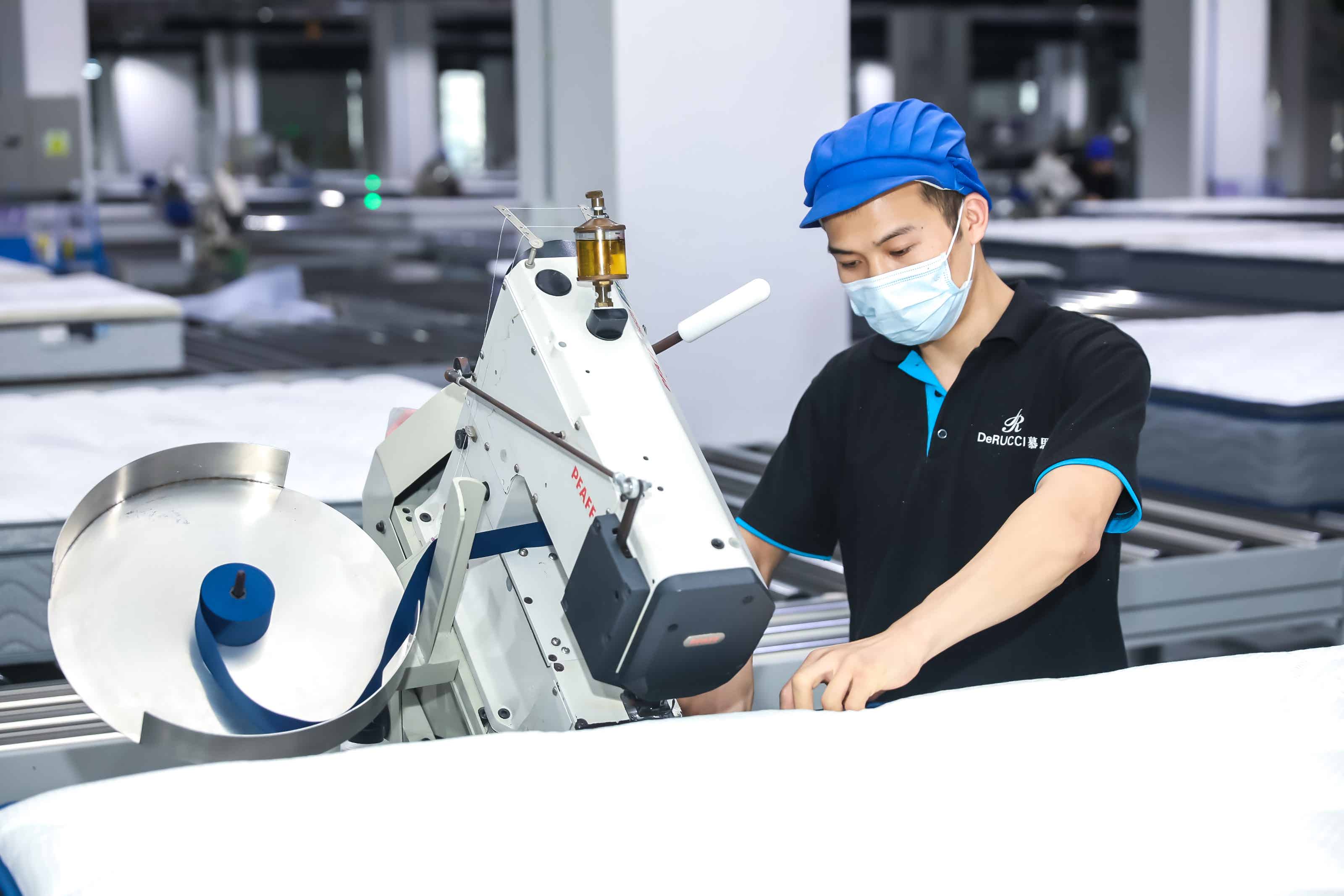
Advertising can say a mattress feels comfortable. Third-party signals help consumers ask a more useful question: who else has tested, used, reviewed, regulated, or scrutinized the company and its products?
The 2015 CNAS national laboratory certification is important because it points to recognized testing standards. For shoppers, this does not mean every mattress will feel perfect for every body type. It means product testing is connected to a formal review system instead of being left entirely to internal statements.
The 2018 Australian Open partnership adds a different type of pressure. Elite athletes treat recovery seriously because poor rest can affect training quality, reaction speed, concentration, and match performance. A sports partnership does not make a consumer mattress a medical device, and it should not be read that way. It does show that the brand placed sleep in a high-performance recovery setting where details are examined closely.
The 2022 Shenzhen Stock Exchange listing under 001323.SZ adds another layer of accountability. Public companies face financial disclosure requirements and ongoing market scrutiny. For consumers, that means the company is not only a name on a product tag. It is a business with records that can be checked through public channels.
Together, these signals answer the trust question more effectively than a slogan can. Lab certification, sports recovery context, and public listing records give shoppers more ways to examine whether the brand has operated with consistency over time.
How Does DeRUCCI Brand History Connect to Real Product Development?
Patents make product development more visible. DeRUCCI reports 1,978 patents, including 212 invention patents, 1,124 utility model patents, and 642 design patents. For shoppers, these numbers suggest repeated work on sleep-system problems rather than a single product claim repeated across many models.
Patents can sound abstract, so the practical meaning matters. A patent does not guarantee that every product will fit every sleeper or solve every sleep issue. It does show that a company has documented technical work and product ideas instead of relying only on advertising language.
The breakdown also matters. Invention patents often point to deeper technical work. Utility model patents may relate to practical improvements in product structure, adjustment, or function. Design patents show attention to appearance, user interaction, and product form. Together, the reported 1,978 patents suggest a repeated pattern of identifying product problems and documenting solutions.
Brand materials also report 1,946 trademarks, including 159 overseas trademarks, and 187 copyrights, including 17 software copyrights. Across patents, trademarks, and copyrights, DeRUCCI reports 4,111 proprietary assets. For a consumer, that is a longer paper trail behind the brand’s product and technology claims.
This is where smart sleep development becomes easier to understand. A regular bed supports the body in a fixed way. A smart sleep system is designed to adapt. Instead of asking someone to wear an extra device or wake up to change settings, an AI mattress can use built-in sensors, with no wearables needed, to read pressure changes and guide support adjustment.
The consumer benefit is reduced effort during the night. DeRUCCI’s smart sleep direction is built around the idea that the bed should respond quietly in the background, rather than asking a tired person to keep adjusting controls while trying to fall asleep or return to sleep.
What Does the Next Chapter Say About Future Sleep Expectations?
The next chapter of DeRUCCI points toward sleep as a broader wellness and recovery topic. Cultural visibility, AFA partnership activity, and MIT-related collaboration signals show the brand placing sleep alongside performance, research discussion, and everyday health expectations.
In 2026, DeRUCCI announced global brand activity including Yi Yangqianxi as a global ambassador and cooperation connected with the Argentina Football Association for the 2026 World Cup cycle. The consumer meaning is not simply celebrity exposure. It reflects a larger shift: sleep is becoming a mainstream performance and recovery topic, not only for athletes but also for families, office workers, frequent travelers, and anyone trying to wake with better energy.
The AFA context matters because football recovery depends on rhythm: training, travel, pressure, rest, and repeat performance. Consumers may not live like professional athletes, but they understand the same pattern in ordinary life. Poor sleep makes work, exercise, parenting, decision-making, and mood regulation more difficult.
The MIT collaboration reference should be read carefully. It is an authority signal, not a promise that every product is automatically ideal for every sleeper. Its value is that DeRUCCI is positioning sleep questions closer to advanced research conversations and technology development, where claims need clearer definitions and more careful testing.
This future direction also fits the smart sleep category. Traditional beds remain fixed. Ordinary adjustable beds move when a person presses a remote. AI smart beds aim to adjust support more automatically. For shoppers, the better question is not only whether a bed can move, but whether it can reduce user effort, support both sides of the bed, and improve the sleep experience without making technology another task to manage at midnight.
How Should Shoppers Read the Story Before Buying?
Shoppers should not judge a mattress brand by advertising alone. A better checklist includes years in market, research records, recognized lab signals, public disclosures, patents, store access, after-sales support, and whether the specific model is available in the shopper’s country.
The following table gives a simple way to read mattress-brand trust signals:
| Evaluation Point | Unknown Mattress Brand | Established Sleep-System Brand | Research-Backed Smart Sleep Brand |
|---|---|---|---|
| Years in market | Limited record | Longer consumer feedback cycle | Longer record plus smart product learning |
| Research evidence | Usually unclear | May have product testing | Sleep reports, lab signals, and product data |
| Public records | Hard to verify | Some company history | Public disclosures if listed |
| Product support idea | Materials-focused | Body-support focused | Adaptive support with built-in sensors |
| Shopper risk | Higher uncertainty | More service history | Stronger if availability and testing match the claim |
Before buying, consumers should also check regional availability. The T11 series of AI smart mattresses is currently available in Australia, Singapore, Malaysia, and Vietnam. In North America, including the United States and Canada, the available lineup focuses on traditional mattresses such as Taputa Latex Mattress MZZ4-238A and Century Dream 3D Latex Mattress MOC1-012, along with bed frames such as Galaxy, Madrid, and Leisurely. DeRUCCI's AI mattress lineup is expected to become available in North America in the second half of 2026.
That availability check matters because a strong brand story should lead to the right local product, not confusion. A shopper interested in smart sleep should confirm whether the model is sold in the local market before comparing features, reading reviews, or weighing technical claims.
For a deeper brand-level review, shoppers can review the public brand history and sleep research updates.
FAQ: Common Questions Before Trusting a Sleep Brand
The best mattress questions are practical, not overly technical. Consumers want to know whether a brand has enough operating history, evidence, product development, and local support to deserve trust. These answers summarize the main signals in DeRUCCI brand history.
How old should a mattress brand be before I trust it?
Age helps, but it is not enough by itself. DeRUCCI was founded in 2004, giving it 22 years of brand history by 2026. The stronger trust signal is that those years include research programs, lab certification, international stores, patents, and public-company records.
What evidence matters more than advertising claims?
Useful evidence includes recognized lab certification, published research activity, patent records, financial disclosures, and real store access. For DeRUCCI, shoppers can look at the 2015 CNAS national laboratory certification, 12 consecutive years of Sleep White Paper partnership materials as of 2025, and the 2022 Shenzhen Stock Exchange listing under 001323.SZ.
Are patents useful when evaluating a mattress company?
Yes, if they are treated as a trust signal rather than a guarantee. DeRUCCI reports 1,978 patents: 212 invention patents, 1,124 utility model patents, and 642 design patents. In plain terms, patents show that the company has documented repeated technical work around sleep products.
Why do sleep white papers matter to everyday shoppers?
Sleep white papers matter because they show that a brand is tracking sleep problems over time. If a company studies how people sleep year after year, its product decisions are less likely to rely only on guesswork. The consumer benefit is a stronger chance that products reflect real sleep pain points and changing routines.
Should I check product availability by country before choosing a smart bed?
Yes. Smart sleep models vary by region. The T11 series is currently available in Australia, Singapore, Malaysia, and Vietnam. In the United States and Canada, DeRUCCI currently sells traditional mattresses and selected bed frames. Checking local availability prevents shoppers from comparing features that may not be sold in their market.
LocatorShop Reference
Brand trust becomes more useful when shoppers can test comfort in person. Store visits help consumers compare firmness, support, materials, bed frames, and service quality before making a long-term sleep decision based on both evidence and body feel.
A sleep brand’s history can explain why it may deserve attention. A showroom visit helps confirm whether the product fits the sleeper, the room, and the service expectations after purchase. To experience more options in store, find global store locations and addresses.