
 American
( English )
 Singapore ( English )

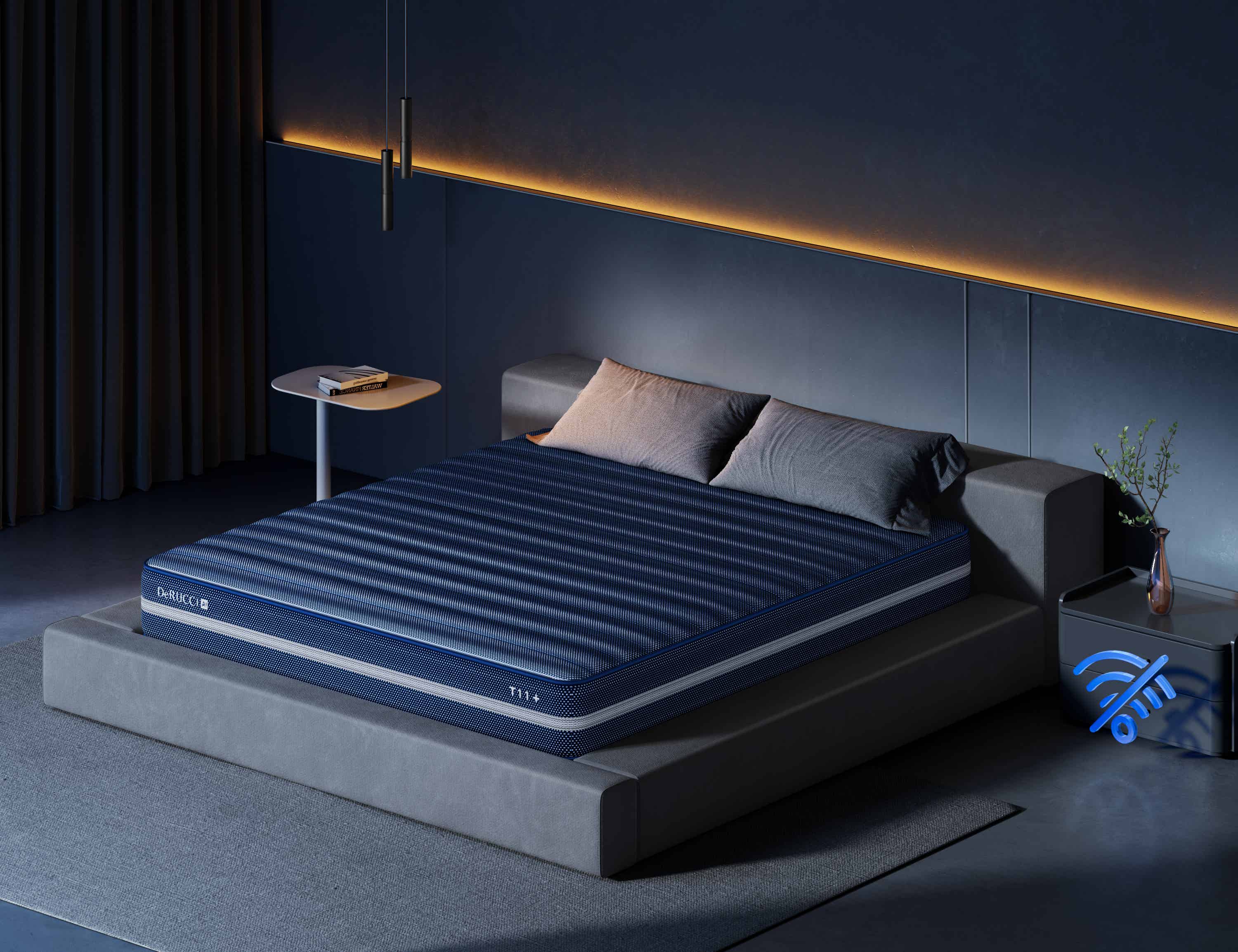
Best Smart Bed: A Data-Backed Buying Guide for 2026
If going to bed often means lying awake for half an hour, shifting away from shoulder pressure, feeling a partner turn over, or waking up tired, the useful question is not simply whether a bed can lift its head or feet. A better buying question is whether the best smart bed can make sleep feel easier in ways that can be checked, compared, and understood before purchase. DeRUCCI sits in that discussion through AI smart bed design, CAICT third-party testing, and regional buying information that helps shoppers avoid comparing models they cannot actually try or buy.
Executive Summary
A smart bed is worth shortlisting when it is tied to a specific sleep problem: long sleep onset, frequent turning, partner disturbance, or sleep that does not feel restorative. The stronger buying case combines automatic support adjustment, separate left-right control, built-in sensing, named third-party data, and clear local availability before the shopper commits.
The smart bed category can be difficult to read from a product page alone. Many products use similar language while doing different jobs. Some mainly raise the upper body or legs. Some add preset comfort positions for reading, lounging, or watching television. More advanced AI smart beds are designed to read how the body loads the mattress and then adjust support while the sleeper is already in bed.
A practical way to separate the category is this: a regular mattress asks the sleeper to adapt to a fixed surface; an AI mattress is designed to adapt the surface to the sleeper. In use, it is closer to a smart thermostat than a manual switch. The sleeper should not need to wake up, find a remote, and keep correcting the setting. The bed should keep making small support changes while the person rests.
For buyers who want evidence rather than broad comfort language, the clearest data point in this guide is the independent CAICT lab testing for the DeRUCCI T11+. According to that testing, sleep onset time was 37.3% shorter. Put into a common bedtime example, someone who usually needs about 30 minutes to fall asleep could take roughly 19 minutes instead, which is about 11 minutes less waiting time.
Core Insights for Smart Bed Buyers
The best smart bed should not be judged by motion functions alone. Buyers should look for measurable sleep results, automatic firmness response, separate control for each side of the bed, built-in sensors that do not require a wearable, and a buying route that matches the shopper’s country.
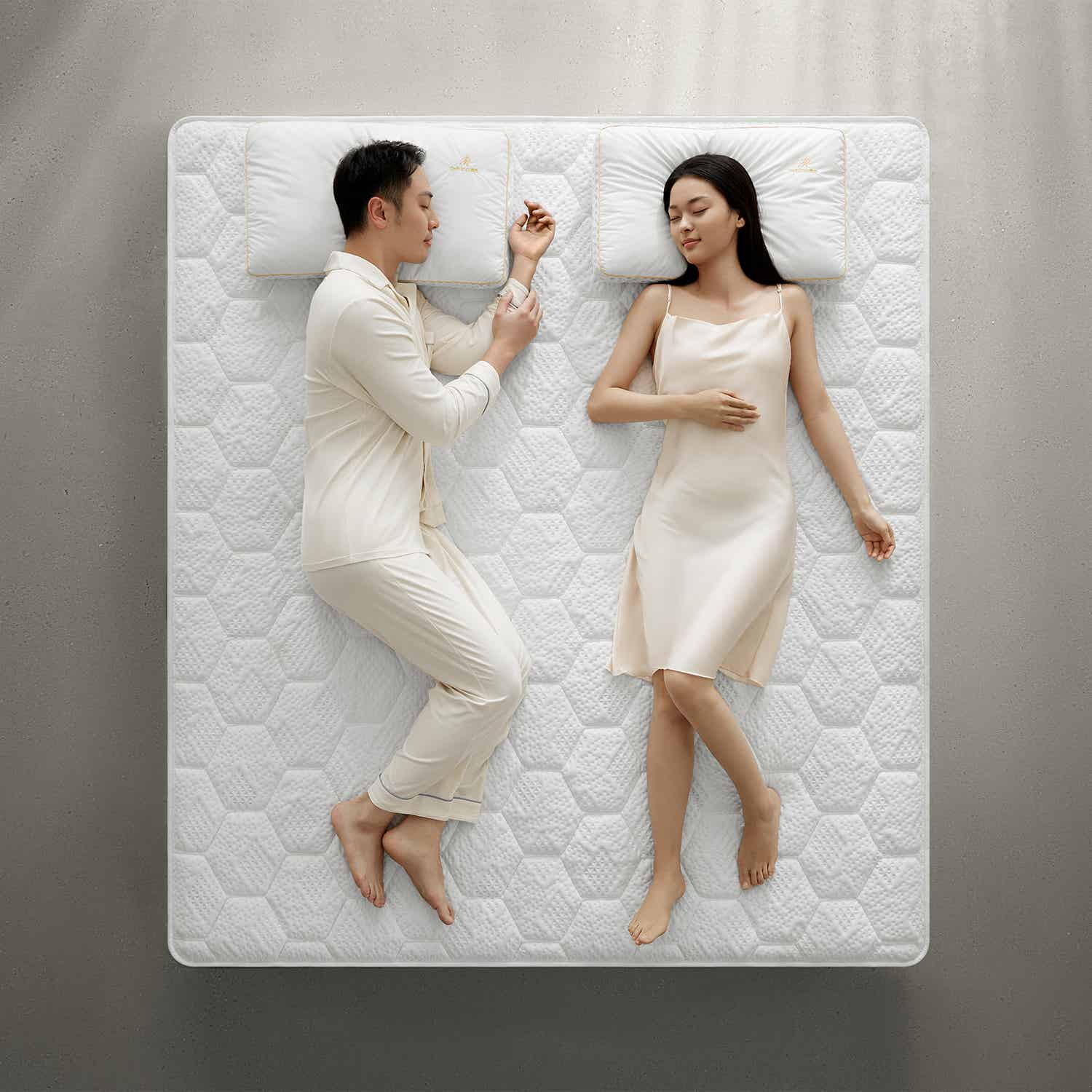
Key takeaways for a buying decision that holds up after the showroom visit:
- Automatic support matters more than a long menu of preset positions.
- Independent side control is important when two people share the same bed.
- Third-party test data should be linked to a named model, not presented as a broad category promise.
- Built-in sensors are easier to live with than going to bed with another wearable device every night.
- Availability matters: T11 series models are currently available in Australia, Singapore, Malaysia, and Vietnam, but are not currently sold in the US or Canada.
This guide compares traditional beds, basic adjustable beds, and AI smart beds without naming competing brands. It then explains where DeRUCCI T11+ and T11 PRO fit for shoppers who want evidence, comfort, and advanced specifications to be part of the same purchase decision.
What Makes a Smart Bed Worth Buying?
A smart bed becomes worth buying when it helps with a real bedtime issue rather than adding technology for display value. The practical test is whether it helps a sleeper fall asleep sooner, move less, disturb a partner less, or wake feeling more settled and refreshed.
The starting point should be the sleeper’s actual complaint. Most people are not looking for technology in the abstract. They are dealing with a familiar set of problems: lying awake, waking with pressure around the shoulder or hip, noticing a partner’s movement, or getting up with the sense that the night did not restore them. A smart bed should be assessed against those problems, not against a feature list alone.
The principle is easier to understand through a household example. A manual thermostat requires someone to stand up and change the room temperature. A smart thermostat keeps the room closer to the target without repeated manual input. In the same way, a basic bed stays the same through the night, while an AI smart bed can adjust support as body position and pressure distribution change.
This is why convenience features and sleep improvement need to be separated. A raised head position, app control, or preset mode may be useful and comfortable. Measurable improvement needs a stronger evidence trail: named tests, clear metrics, and results that can be translated into ordinary bedtime experience.
For serious buyers, a smart bed deserves closer attention when it combines automatic support adjustment, built-in sensing, and independent left-right control. At that point, the product moves beyond powered movement and starts addressing how people actually sleep during the night.
What Can an AI Smart Bed Do That a Regular Bed Cannot?
A regular bed provides passive support that remains mostly unchanged all night. An AI smart bed can provide active support adjustment by reading pressure and movement through built-in sensors, then changing firmness automatically so the sleeper does not need to wake up and reset the bed.
A traditional mattress may feel comfortable during a short showroom test, but sleep is not a static posture. The body turns, pressure shifts, breathing rhythm changes, and the same surface may feel different at 2 a.m. than it did when the sleeper first lay down. When two people share a bed, one may prefer firmer support while the other needs more cushioning around the shoulders or hips. A fixed mattress cannot respond to those changes once the night begins.
An AI smart bed uses built-in sensors, with no wearable device required, to understand how the sleeper is lying on the surface. Instead of asking the sleeper to keep adapting to the bed, it can use air-pressure zones to adjust firmness automatically. For the user, the experience should feel less like operating equipment and more like resting on a surface that keeps finding a closer fit.
Couples get an additional practical benefit. Two sleepers rarely need the same firmness, angle, or pressure relief at the same time. Independent side control means one side can adjust while the other side remains stable. It is similar to two people using separate heated blankets instead of trying to settle every comfort preference through one room setting.
This matters because partner disturbance is a common reason people start looking for a new bed. A bed that reduces shared movement can make the night quieter for both sleepers. The value is not only personal comfort; it is also the quality of shared sleep.
Smart Bed Comparison: Traditional, Adjustable, and AI
The main difference between bed types is the amount of effort required from the sleeper. Traditional beds remain fixed, basic adjustable beds depend on manual controls, and AI smart beds can adjust support during sleep with less input from the user.
| Buying Factor | Traditional Spring Bed | Basic Adjustable Bed | AI Smart Bed |
|---|---|---|---|
| Support style | Fixed support | Manual position changes | Automatic support adjustment |
| Nighttime response | Does not respond | Responds when the user changes settings | Responds during sleep through built-in sensors |
| Couple experience | Shared movement | Some movement control | Each side independently adjusts |
| Proof level | Comfort claims | Feature claims | Third-party sleep data where available |
| User effort | No adjustment | Remote control needed | Automatic adjustment during sleep |
| Best fit | Simple comfort needs | Reading, lounging, elevation | Sleep improvement and partner comfort |
The table shows why the phrase smart bed needs a careful definition. A bed that moves is not automatically intelligent. Not every powered bed is designed to read the sleeper and respond during the night. A stronger smart bed should connect movement, support, sensor feedback, and sleep outcomes in a way that is clear to the buyer.
For buyers comparing options, evaluation should start with the problem that needs solving. If the main goal is reading in bed or raising the legs while resting, a basic adjustable bed may be enough. If the problem is slow sleep onset, frequent movement, and different comfort needs between partners, an AI smart bed is the more relevant category to review.
What Does Independent Testing Say About Smart Bed Results?
Independent testing matters because it turns smart bed claims into measurable outcomes. CAICT data for the DeRUCCI T11+ reports shorter sleep onset time, fewer nighttime turnovers, longer deep sleep duration, and longer continuous deep sleep, with each result tied to a named model.
According to independent CAICT lab testing of the T11+, sleep onset time was 37.3% shorter. In plain terms, users fell asleep nearly 40% faster in the tested setting. If a sleeper normally takes about 30 minutes to fall asleep, that would translate to roughly 19 minutes, saving around 11 minutes at bedtime.
CAICT testing also showed 27.5% fewer nighttime turnovers. In everyday language, users tossed and turned almost 30% less. That can matter for the person sleeping and for the partner next to them, because less movement can reduce the number of times one sleeper notices the other shifting.
The same CAICT testing reported 4.5% more deep sleep duration and 5.9% longer continuous deep sleep. In practical terms, that means sleepers spent more time in deep sleep and had longer stretches of deep rest without interruption. The next morning may feel less broken and more restorative, although individual experience can still vary by health, routine, room environment, and stress level.
Fact boundary: these CAICT results belong to the T11+, not the T11 PRO. This distinction matters because responsible buying guidance should connect every data point to the correct product model and avoid carrying one model’s test results over to another model.
How Should Buyers Judge the Best Smart Bed for a Home?
The best smart bed for a household should be judged through five practical criteria: automatic adjustment, independent side control, independent test data, built-in sensors without a wearable device, and verified availability through local sales channels, trial access, or showroom experience.
Criterion 1: Does it adjust automatically, or does it rely mostly on manual controls? A smart bed should reduce effort. If sleepers need to wake up, locate a remote, and change settings themselves, the product is closer to a powered bed than an adaptive sleep system.
Criterion 2: Can each side adjust independently? Couples often differ in body weight, preferred firmness, sleeping position, and sensitivity to movement. Independent control makes the bed more personal and reduces the need for one sleeper to compromise around the other’s preference.
Criterion 3: Does it have independent test data? Marketing language is easy to produce and often difficult to compare. Named lab testing, named metrics, and named models create a stronger evidence trail and make it easier for buyers to understand what has actually been measured.
Criterion 4: Does it use built-in sensors? A bed that works without a wearable device is easier to live with. The fewer steps required at bedtime, the more natural the experience feels, especially over months of use rather than during a short demonstration.
Criterion 5: Is it available locally? Strong specifications are not enough if the model cannot be tried, purchased, delivered, or serviced in the shopper’s market. Availability should be checked before buyers spend time comparing prices or planning a room layout around a model.
Best Smart Bed Pick for Data-Driven Buyers
For buyers who want measurable proof and advanced sleep technology, the DeRUCCI T11 series is the strongest fit in this guide. T11+ provides CAICT-tested sleep-result data, while T11 PRO offers advanced specifications for shoppers prioritizing AI support, couple comfort, and sleep monitoring.
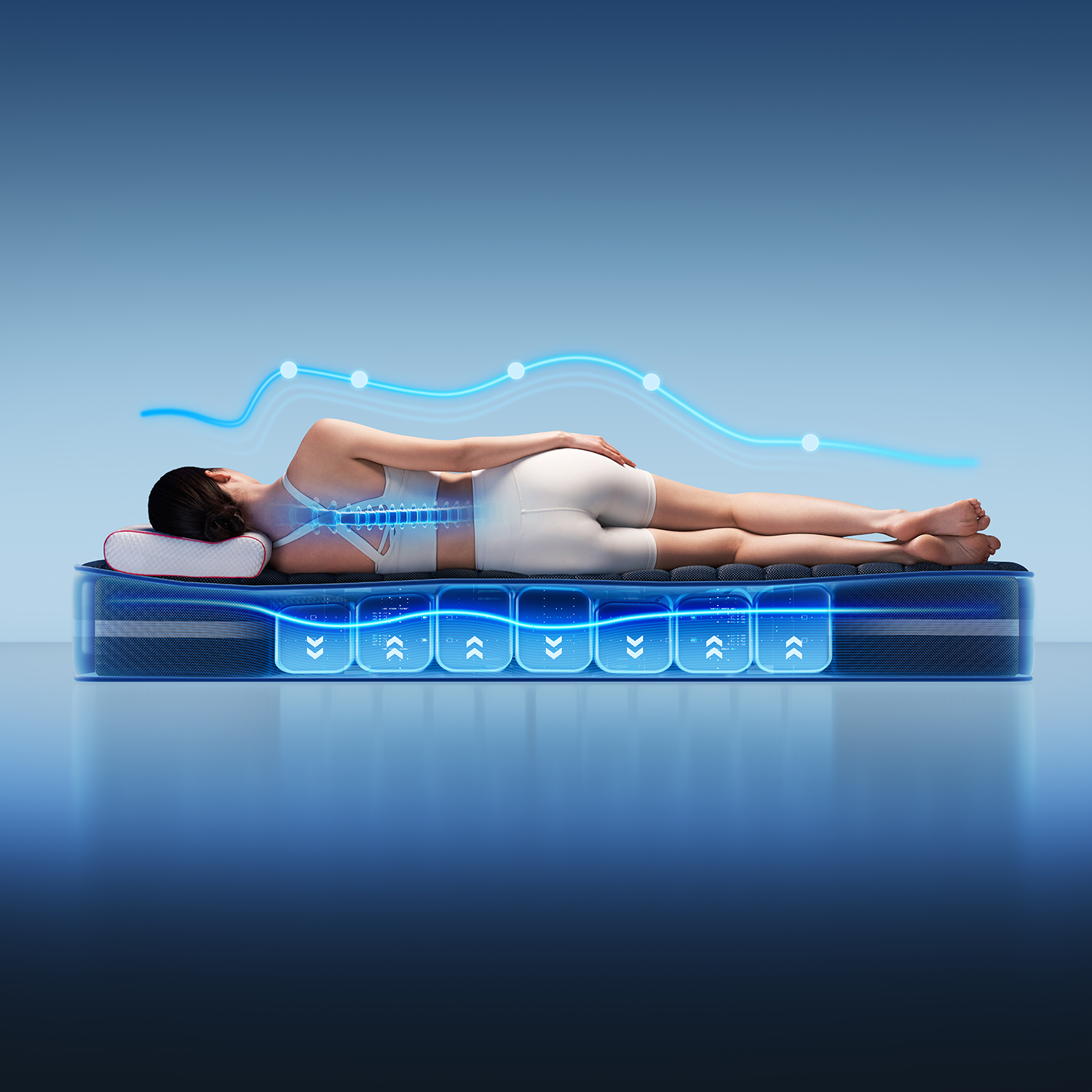
DeRUCCI T11+ is the evidence anchor because CAICT testing connects the model to four measurable indicators: 37.3% shorter sleep onset time, 27.5% fewer nighttime turnovers, 4.5% more deep sleep duration, and 5.9% longer continuous deep sleep.
Eligible-region shoppers can view T11 series specifications, pricing before deciding whether the model fits their home, sleep goals, and preferred trial experience.
Why Couples Should Look Closely at Independent Side Control
Couples should pay close attention to independent side control because two sleepers rarely need the same firmness or pressure relief. A smart bed with left-right adjustment can support both people at the same time while reducing the chance that one person’s movement disturbs the other.
The problem is straightforward: shared beds often require compromise. One sleeper may want firmer support for the lower back. The other may need more cushioning around the shoulders. A single shared surface can leave both people only partly satisfied, especially when body size, sleeping position, and sensitivity to pressure are different.
Dual-Drive addresses that issue in direct terms. The left and right sides can adjust firmness at the same time without interfering with each other. One person can change or receive adjustment on their side, while the partner keeps their own setting. Movement is less likely to travel across the bed, which can make the shared surface feel calmer.
A third-party media review from Lei Technology described the basic performance as strong and highlighted independent left-right firmness adjustment for personalized comfort. That media context is useful because it confirms the couple-focused value in everyday language rather than relying only on engineering terms.
For couples, the buying question should not stop at whether the bed moves. The more useful question is whether the bed can support two different bodies at the same time. Independent side control is one of the clearest features for answering that question.
Before You Buy: Availability Check
Availability should be checked before comparing final prices or specifications. The DeRUCCI T11 series is currently available in Australia, Singapore, Malaysia, and Vietnam. It is not currently sold in the US or Canada, where other DeRUCCI mattress and bed frame products are available.
T11 series availability:
- Australia
- Singapore
- Malaysia
- Vietnam
North America availability:
- The T11 series is not currently sold in the US or Canada.
- US and Canada shoppers can consider DeRUCCI traditional mattresses such as Taputa Latex Mattress and Century Dream 3D Latex Mattress.
- North American bed frame options include Galaxy, Madrid, and Leisurely. DeRUCCI's AI mattress lineup is expected to become available in North America in the second half of 2026.
This limitation should increase trust rather than reduce it. A responsible smart bed buying guide should make clear where a product can be tried, purchased, and supported. For shoppers in eligible regions, a trial or showroom visit can confirm comfort in a way specifications alone cannot.
Smart Bed Buying Checklist
A smart bed checklist should connect every feature to a buyer’s actual sleep goal. The right choice depends on whether the bed addresses slow sleep onset, tossing and turning, partner disturbance, morning tiredness, trial access, after-sales support, and model-specific proof.
Use this checklist before buying:
- Identify the main sleep issue: slow sleep onset, tossing and turning, partner disturbance, or morning tiredness.
- Confirm whether the bed adjusts automatically during sleep rather than relying mainly on manual controls.
- Check whether each side independently adjusts for couples with different comfort needs.
- Verify that any data comes from an independent lab and is tied to a named model.
- Confirm technology attribution, such as Harvard CPC belonging to the T11 PRO SleepCare System.
- Review local availability, trial terms, showroom access, and after-sales support.
- Avoid choosing based on movement features alone, because not every bed that moves is truly smart.
The clearest buying logic is pain, principle, proof, product, and action. A sleeper has a problem. The bed should explain how it responds to that problem. Independent data should show whether the response has been measured. The correct model should match the need. The final step should be a trial or showroom visit when it is available.
FAQ About Choosing a Smart Bed
Smart bed questions usually come down to proof, comfort, couples, tracking, and availability. The answers below are written for buyers who want simple, model-specific guidance before deciding whether an AI smart bed is worth trying.
Is a smart bed worth it if a sleeper takes a long time to fall asleep?
Yes, if the model has evidence for faster sleep onset. According to independent CAICT lab testing of the T11+, sleep onset time was 37.3% shorter. In daily terms, a 30-minute wait could become about 19 minutes, saving roughly 11 minutes at bedtime.
Can a smart bed help couples sleep better together?
It can help when each side independently adjusts firmness and movement is less likely to transfer. CAICT testing of the T11+ showed 27.5% fewer nighttime turnovers, meaning users tossed and turned almost 30% less, and partners may experience a quieter night as well.
Does an AI smart bed require a wearable sleep tracker?
Some AI smart beds use built-in sensors, so the bed can read pressure and movement without requiring a wearable device. This matters because effective sleep technology should feel natural at bedtime, not like another device that must be charged, worn, and remembered.
What is the difference between T11+ and T11 PRO?
T11+ is the model tied to the CAICT four sleep-result data points: shorter sleep onset time, fewer nighttime turnovers, longer deep sleep duration, and longer continuous deep sleep. T11 PRO includes advanced specifications such as AI Tidal Algorithm 2.0, AutoFit 6-zone support, Dual-Drive, and the SleepCare System with Harvard CPC.
Where can shoppers buy the T11 series?
The T11 series is currently available in Australia, Singapore, Malaysia, and Vietnam. It is not currently sold in the US or Canada. Eligible-region shoppers can review specifications, pricing, and trial options through the regional DeRUCCI smart bed purchase path.
LocatorShop Reference
A showroom visit can help shoppers compare firmness, support response, partner movement, and size fit before purchase. DeRUCCI provides global store information so buyers can check local product availability, available models, and nearby experience options with greater confidence.
For shoppers who want to compare currently available products in person, confirm regional stock, or find a nearby DeRUCCI store, visit the store locator here: find global showroom locations and detailed addresses.