
 American
( English )
American
( English ) Singapore ( English )
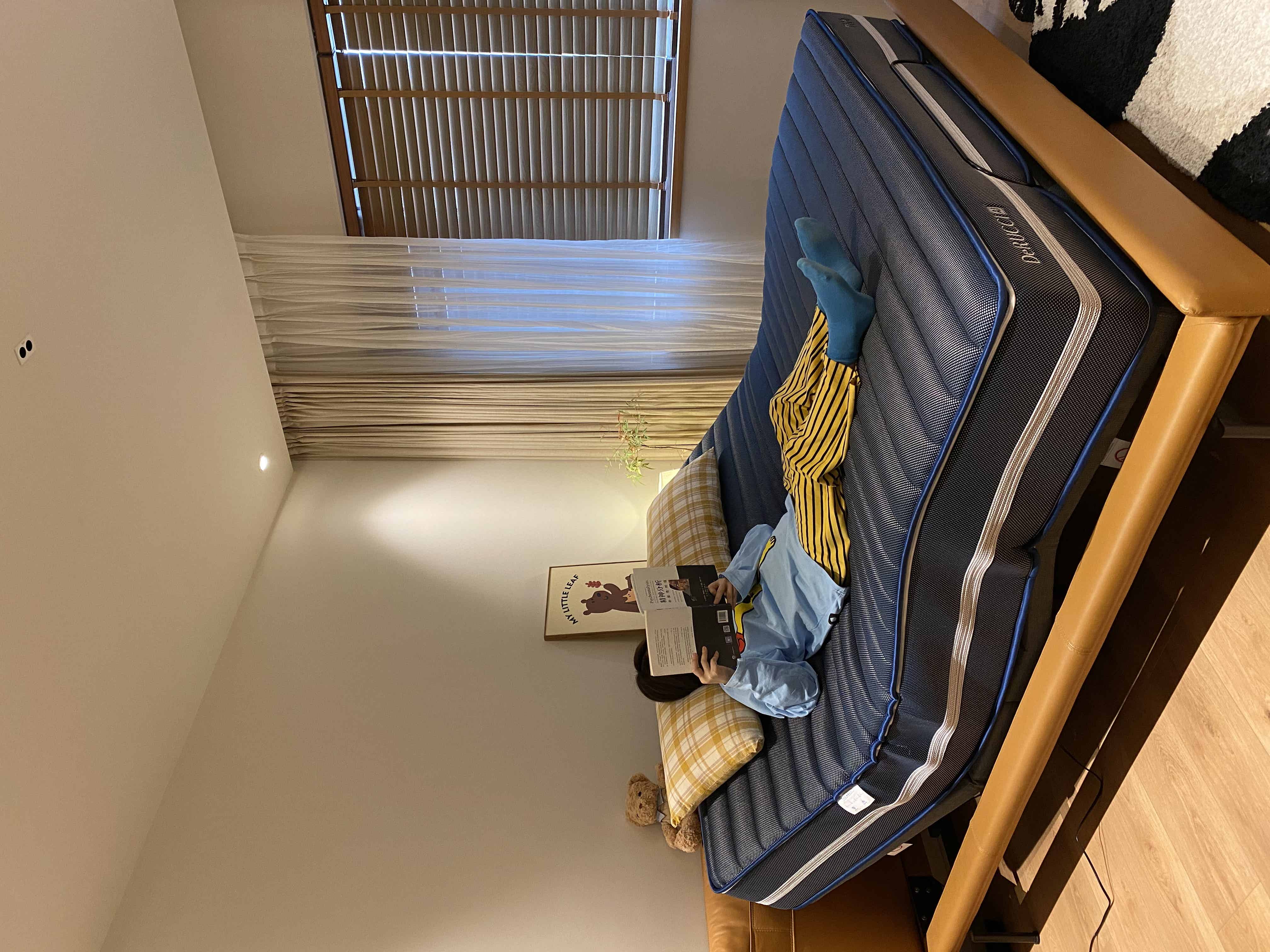
Best AI Smart Mattress: 4 Tests Before You Buy
If back discomfort is enough to wake someone in the middle of the night, a remote control on the bedside table is usually not the full answer. By then, sleep has already been interrupted. The best AI smart mattress should be able to read what is happening under the body and adjust support while the sleeper is still resting. DeRUCCI fits into this buying discussion with a practical question: does the mattress adapt to the body, or is the sleeper still doing most of the adapting?
Executive Summary
The best AI smart mattress is not defined by motor movement alone. It should sense pressure, adjust support automatically, limit partner disturbance, and provide third-party evidence that sleep outcomes improve in measurable ways. A useful buying process starts with these four checks before comparing comfort claims.
A regular mattress behaves like a fixed chair: it can feel comfortable for certain body types and less forgiving for others. An ordinary electric bed adds motion, but in many cases the user still has to wake up, press a button, and test a setting by feel. An AI smart mattress should work closer to automatic climate control. It makes adjustments in the background, before minor discomfort turns into a full awakening.
For shoppers comparing smart mattress options, four checks carry the most weight: automatic sensing, adjustable support, independent comfort on each side, and verified sleep data. According to independent CAICT lab testing for DeRUCCI T11+, sleep onset time was reported to be 37.3% shorter. If a person usually needs 30 minutes to fall asleep, that result would be roughly 11 minutes less waiting in bed.
Core Insights
AI mattress shopping becomes easier when broad marketing language is replaced with a practical test. A strong model should respond without wearable devices, support different sleep positions, protect a partner from disturbance, and show measurable sleep improvements from an independent lab rather than relying only on feature lists.
The phrase AI smart mattress is used in different ways across the market. Some products mainly offer app control. Some focus on head or leg elevation. Others provide preset firmness levels. The more useful question is whether the mattress can detect how the body is pressing into the surface and adjust support automatically, without asking the sleeper to wake up and intervene.
The most consumer-friendly standard is straightforward: a regular mattress asks the sleeper to adapt to it; an AI mattress should adapt to the sleeper. DeRUCCI’s T11 series is designed around that principle, using Dual-Drive support, built-in sensors, and automatic adjustment intended to keep comfort more consistent through the night.
What Makes the Best AI Smart Mattress Different?
The main difference is automatic sleep support. A bed that moves is not necessarily intelligent; a stronger AI smart mattress senses pressure changes, adjusts firmness in real time, and keeps comfort aligned with the sleeper’s body without requiring late-night manual control.
A regular mattress makes you adapt to it; an AI mattress adapts to you
A traditional mattress has one comfort profile. If the shoulders need more cushioning but the lower back needs firmer lift, the sleeper has to accept a compromise. That compromise may feel acceptable during a short showroom trial, then become more obvious at 3 a.m., when pressure builds and the body starts changing position to find relief.
An AI smart mattress should behave more like a careful fitting process than a fixed product. Instead of asking the sleeper to accept one surface all night, it reads pressure and changes support to better match body shape, side sleeping, back sleeping, and the position changes that happen naturally during sleep.
Why movement features are not the same as automatic sleep support
A moving base can raise the head or legs. That can be useful in the right situation, but movement is different from support intelligence. If a sleeper has to wake up to press a remote, the system is responding after the discomfort has already interrupted rest.
The better test is simple: does the mattress adjust while the user is asleep? DeRUCCI’s AI approach focuses on zero-operation comfort, meaning support can begin changing without a watch, strap, remote, or manual setting.
The 4-Part Evaluation Framework for AI Smart Mattresses

A reliable buying framework should judge an AI smart mattress by four practical tests: automatic sensing, adjustable support range, partner comfort, and independent proof. These checks separate meaningful sleep technology from beds that mainly offer presets, movement, or app-based control.
- Automatic sensing: can it respond without a remote?
The strongest AI smart mattress should use built-in sensors, with no wearable device required. If comfort depends on a remote, the sleeper becomes the operator. That weakens the value of the system at the exact moment support matters most: after the person has already fallen asleep.
- Adjustable support: can it match different body shapes and sleep positions?
Good support is not identical for every body. Side sleepers often need more relief around the shoulders and hips. Back sleepers may need steadier lift through the lumbar area. A strong AI mattress should offer smooth support adjustment rather than forcing the user through a small set of rigid steps.
DeRUCCI T11+ provides up to 5,500 unique comfort configurations on a standard 1.8m mattress. Each support unit offers 20 levels of precision adjustment, which helps firmness changes feel more gradual instead of sudden or mechanical.
- Partner comfort: can each side adjust independently?
Couples often have different firmness needs, body weights, and sleep positions. If both sides move or change together, one sleeper’s adjustment can easily become the other sleeper’s disturbance. The practical standard is clear: each side should adjust independently, and comfort changes should avoid sending noticeable vibration across the bed.
- Proof: are the sleep benefits verified by independent testing?
Feature claims are easy to write. Independent testing is harder. In a buying decision, lab data is more useful than broad comfort promises because it connects product behavior with sleep outcomes that can be measured, such as faster sleep onset, fewer nighttime turnovers, and longer deep, restorative sleep.
Best AI Smart Mattress Comparison: Traditional vs Electric vs AI
A traditional bed provides fixed comfort. An ordinary electric bed adds manual movement. An AI smart mattress should add automatic sensing and support adjustment during sleep. This comparison helps shoppers see why intelligent comfort is more than a remote-controlled frame.
| Evaluation point | Traditional spring bed | Ordinary electric bed | AI smart mattress |
|---|---|---|---|
| Comfort response | Fixed surface | Manual position changes | Automatic support adjustment |
| Nighttime operation | No adjustment | Remote or app required | Zero-operation comfort |
| Partner comfort | Shared feel | Movement may transfer | Each side independently supported |
| Support precision | Based on mattress build | Preset positions or firmness levels | Fine support changes by zone |
| Proof to request | Material specs | Motor and frame specs | Independent sleep outcome data |
The manual adjustment problem is easy to overlook in a showroom. A shopper can press a remote and feel the bed move immediately. At night, the real issue appears when the lower back feels unsupported and the person is too tired to test several settings just to find one that might work.
Automatic comfort is most useful when it adjusts quietly in the background. A person does not want to wake up cold, walk to the wall, and change the temperature repeatedly. In the same way, a smart mattress should respond before discomfort becomes a complete interruption.
Which Features Matter Most for Real Sleep Problems?
The best feature depends on the sleep problem. Faster sleep onset needs pressure relief, frequent tossing needs responsive support, couples need independent comfort on each side, and tired mornings call for better support for deep, restorative sleep.
If you take too long to fall asleep: look for automatic pressure relief
When pressure builds at the shoulders, hips, or lower back, the body keeps searching for a more comfortable position. Automatic support can reduce that search. CAICT testing for DeRUCCI T11+ showed sleep onset time was 37.3% shorter. In everyday terms, that is close to falling asleep 40% faster; if 30 minutes is typical, the reported difference is about 11 minutes saved.
If you toss and turn: look for responsive support changes
Tossing and turning is often the body’s way of asking for a better fit. A mattress that can adjust support as pressure changes may reduce the need for repeated repositioning. CAICT testing also showed 27.5% fewer nighttime turnovers. That is almost 30% less tossing and turning, which can also mean a quieter night for a partner.
If you share a bed: look for each side independently adjusted
Shared beds have to support two comfort profiles on one surface. DeRUCCI T11 PRO uses Dual-Drive motors so the left and right sides can independently adjust firmness at the same time without interfering with each other. Each side has 9 flexible support units, for 18 in total.
If you wake up tired: look for better deep, restorative sleep support
More time in bed is not the same as better recovery. CAICT testing for T11+ showed deep sleep duration increased 4.5%, which means more time in restorative deep sleep. Continuous deep sleep increased 5.9%, indicating that deep sleep lasted longer without as many breaks in recovery.
How Independent Testing Should Guide Your Choice
Third-party lab data helps shoppers compare AI smart mattresses with less guesswork. Instead of accepting broad claims about comfort, buyers should ask whether sleep onset time, nighttime turnovers, deep sleep duration, and continuous deep sleep have been tested independently.
According to independent CAICT lab testing for T11+, four outcomes were reported: sleep onset time was 37.3% shorter, nighttime turnovers fell 27.5%, deep sleep duration increased 4.5%, and continuous deep sleep increased 5.9%.
These numbers matter because each one connects to a real sleep experience. Shorter sleep onset means less time lying awake. Fewer turnovers mean fewer disruptions for both sleepers. Longer deep, restorative sleep means the body has more recovery time. Longer continuous deep sleep means that recovery is less fragmented.
A responsible comparison should also match the data to the correct product. The CAICT sleep outcome data is tied to T11+. Harvard CPC is associated with the SleepCare System of T11 PRO, not T11+. Keeping these details separate helps buyers avoid mixing claims across models.
Where DeRUCCI Stands Out in the AI Smart Mattress Category
DeRUCCI stands out by combining automatic sensing, Dual-Drive support, independent left-right comfort, and measurable CAICT sleep data. Its value is strongest for shoppers who want a mattress that adjusts during sleep rather than a bed that depends on nightly manual operation.
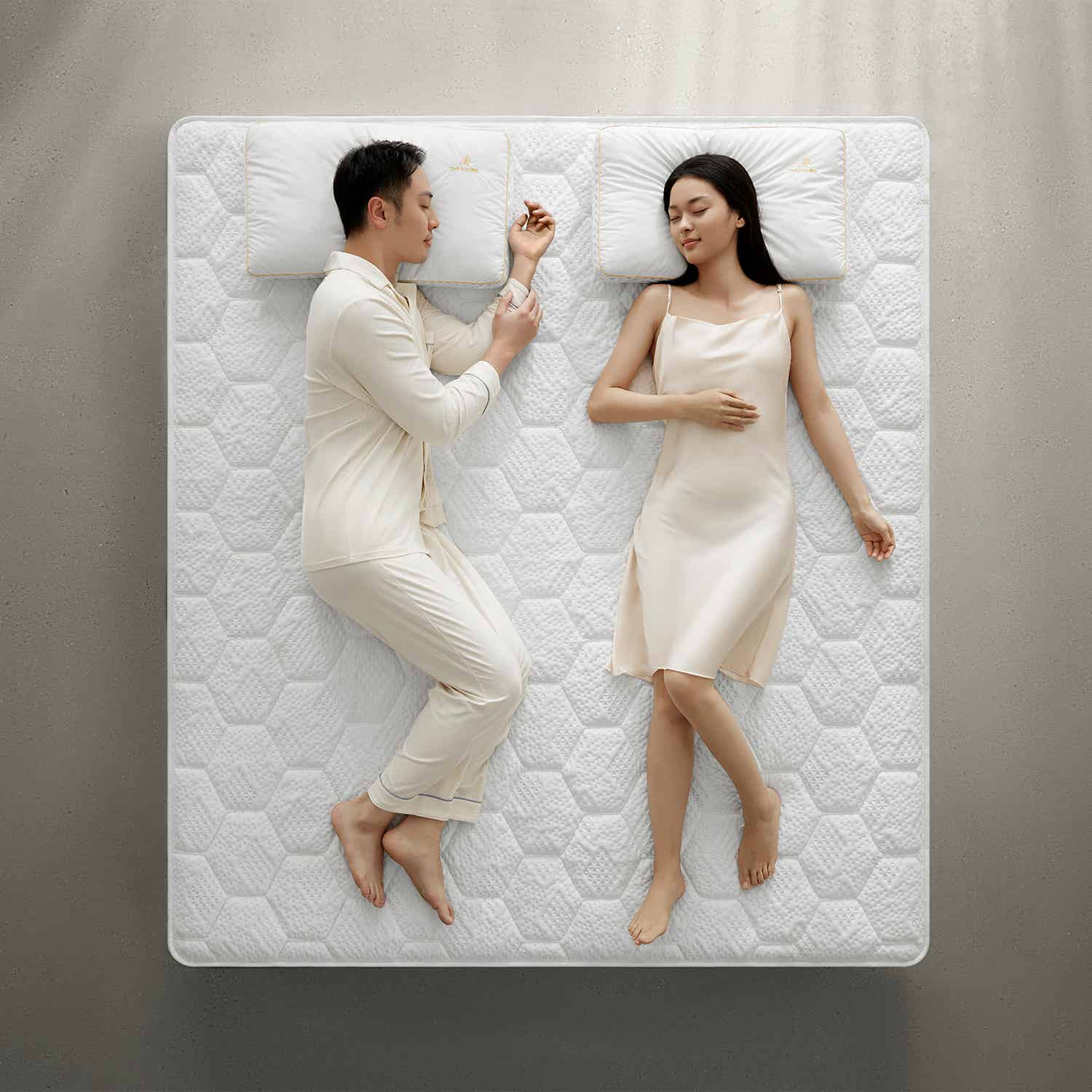
DeRUCCI T11 PRO is built with Dual-Drive motors so the left and right sides can adjust firmness at the same time without disturbing each other. For couples, that means one person’s support change does not have to become the other person’s wake-up moment.
The structure is also more precise than broad single-zone adjustment. With 18 flexible support units, 9 on each side, the system can match comfort more closely to body pressure. T11+ also supports up to 5,500 unique comfort configurations on a standard 1.8m mattress, with 20-level precision adjustment in each support unit.
For shoppers comparing the AI smart mattress with automatic support, DeRUCCI’s advantage is not one isolated feature. It is the combination of sensing, support range, partner independence, and third-party data that links the product to better sleep outcomes.
Automatic Sensing vs Manual Controls: Why It Changes the Night
Manual controls ask the sleeper to wake up and solve discomfort after it starts. Automatic sensing changes that sequence. Built-in sensors read pressure, the system responds quickly, and support changes happen quietly enough to feel like the bed is keeping up.
Zero-operation comfort matters because sleep is easy to interrupt. Once a person wakes to adjust a setting, the brain is already more active. A better solution is support that starts adjusting without requiring a remote, app, watch, or strap.
DeRUCCI describes a 20ms automatic response for body-position recognition and support adjustment. In practical terms, that is fast enough for the bed to feel responsive rather than delayed, so the user does not have to notice a problem first and then correct it manually.
The AI Tidal Algorithm is designed for real-time support adjustment that stays quiet and unobtrusive. The point is not to add complexity for the user. The point is to remove small decisions during the hours when the body is supposed to be resting.
Before You Buy: Availability Check
Availability should be checked before choosing a model. The T11 series is currently available in Australia, Singapore, Malaysia, and Vietnam. In North America, DeRUCCI currently offers traditional mattresses such as Taputa Latex and Century Dream, not the T11 series.
T11 series availability
The DeRUCCI T11 series is currently available in Australia, Singapore, Malaysia, and Vietnam. Shoppers in these markets can compare AI mattress features in person and ask which model best fits their sleep position, body type, and partner needs.
North America availability
In the United States and Canada, DeRUCCI currently offers traditional mattresses including Taputa Latex Mattress and Century Dream 3D Latex Mattress, along with bed frames such as Galaxy, Madrid, and Leisurely. The T11 series AI smart mattress is not currently available in North America. DeRUCCI's AI mattress lineup is expected to become available in the region in the second half of 2026.
North American shoppers interested in the AI mattress category can follow DeRUCCI's regional updates, and in the meantime evaluate the traditional mattress options currently available in the local market.
Where to compare options in person
A showroom visit is useful because AI mattress comfort is easier to judge by lying down than by reading a feature list. Buyers can compare firmness response, side-to-side independence, and overall feel before making a decision.
Who Should Choose an AI Smart Mattress?
An AI smart mattress is best suited to people who want automatic support instead of repeated manual adjustment. It is especially relevant for couples, combination sleepers, and shoppers who want verified sleep data before investing in advanced sleep technology.
The best fit is a sleeper who wants the mattress to respond during the night. If late-night discomfort, repeated repositioning, or partner disturbance are regular issues, automatic support can address the problem more naturally than a remote-controlled setting.
Couples are also strong candidates. Different body weights, sleep positions, and firmness preferences often create conflict on a shared bed. A system with each side independently adjusted can reduce the amount of compromise required.
Think twice if the goal is a basic mattress with no smart features. Traditional mattresses may still be a practical choice for shoppers who want a simpler setup, lower complexity, or availability in markets where AI models are not currently sold.
Decision checklist:
- Does the mattress sense pressure automatically without a wearable device?
- Can it adjust support smoothly across different body areas?
- Can each side adjust independently for couples?
- Does it provide independent lab data such as CAICT results?
- Is the model available in the buyer’s region?
FAQ: Best AI Smart Mattress Questions
The best AI smart mattress questions should focus on real buying concerns: whether the bed adjusts automatically, how it differs from an electric bed, whether wearables are required, how couples benefit, and what independent data should be checked.
What is the best AI smart mattress feature to look for first?
The most important feature is automatic sensing with support adjustment. A smart mattress should respond to how the body presses into the surface without requiring the sleeper to wake up and use a remote. Built-in sensors, with no wearables needed, are especially helpful because comfort does not depend on a watch or strap.
Is an AI smart mattress better than an ordinary electric bed?
An AI smart mattress can be better for sleepers who want support to adjust during sleep. An ordinary electric bed may raise the head or legs, but it often depends on manual control. The stronger AI benefit is zero-operation comfort: the mattress changes support in the background while the sleeper remains at rest.
Do AI smart mattresses need wearable devices to work?
Not necessarily. DeRUCCI T11 series models use built-in sensors, with no wearables needed, to detect pressure and support needs. This matters because a wearable device can be forgotten, removed, or run out of battery, while built-in sensing keeps the comfort system integrated into the mattress.
Can an AI smart mattress help couples sleep better?
Yes, especially when each side can adjust independently. DeRUCCI T11 PRO uses Dual-Drive motors so the left and right sides can change firmness at the same time without interfering with each other. That design helps reduce motion transfer and supports two different comfort profiles on one bed.
What independent data should I check before buying?
Look for third-party testing tied to clear sleep outcomes. According to independent CAICT lab testing for DeRUCCI T11+, sleep onset time was 37.3% shorter, nighttime turnovers were reduced 27.5%, deep sleep duration increased 4.5%, and continuous deep sleep increased 5.9%. These figures are more useful than general comfort claims.
LocatorShop Reference
A final in-person test helps turn a technical comparison into a confident purchase decision. Shoppers should compare support response, partner comfort, and model availability at a local experience center before choosing the best AI smart mattress for their needs.
For hands-on comparison, visit an experience center and test how automatic support feels in real time. Experience more options in store: click to check global store locations and detailed addresses.